
Posture Correction Exercises Modern work has quietly created a global posture crisis. Hours spent hunched over laptops, slouched in office chairs, and staring at screens are taking a serious toll on the body. Neck pain, tight shoulders, lower back discomfort, and chronic fatigue are no longer rare—they’re normal for desk workers.
The good news? Poor posture is not permanent.
With the right Posture Correction Exercises, desk workers can reverse damage, relieve pain, improve breathing, and even increase daily energy levels. This guide explains why posture breaks down, which muscles need attention, and how simple daily exercises can restore healthy alignment.
1. Why Desk Workers Develop Poor Posture
Posture problems are not caused by laziness—they’re caused by environment.
Common posture stressors
- Prolonged sitting
- Forward head position
- Rounded shoulders
- Weak core and glutes
- Tight hip flexors
Over time, the body adapts to these positions, making poor posture feel “normal.”
2. Why Posture Correction Matters More Than You Think
Posture affects more than appearance.
Consequences of poor posture
- Chronic neck and back pain
- Reduced lung capacity
- Frequent headaches
- Decreased focus and productivity
- Long-term spinal stress
Correcting posture improves both physical health and mental performance.
3. How Posture Correction Exercises Actually Work
Posture Correction Exercises focus on two key goals:
- Stretch tight muscles
- Strengthen weak, underactive muscles
Muscles usually tight
- Chest
- Upper traps
- Hip flexors
Muscles usually weak
- Upper back
- Deep core
- Glutes
Balancing these restores natural alignment.
4. Neck and Upper Spine Posture Correction Exercises
Desk work often pushes the head forward.
Effective exercises
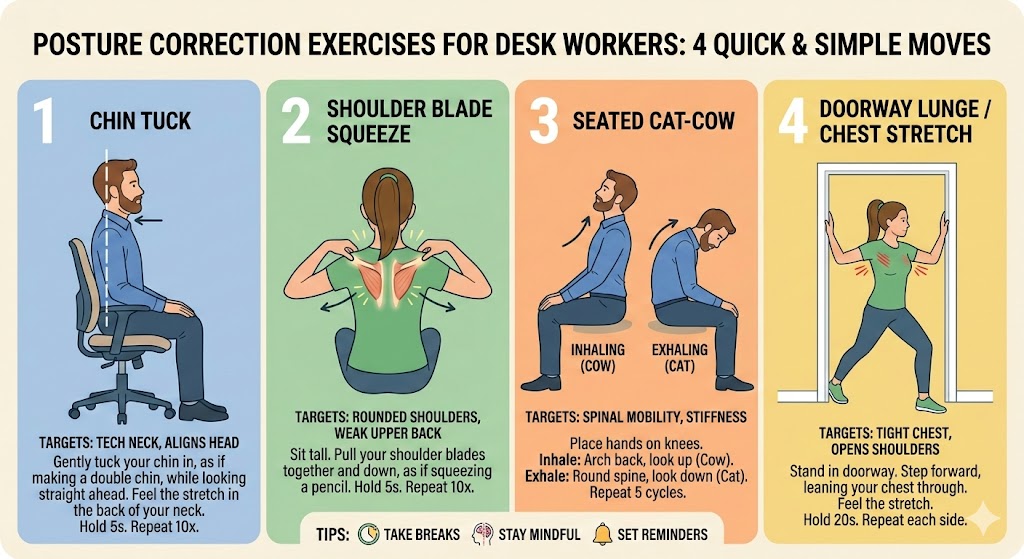
- Chin tucks
- Neck retractions
- Gentle cervical mobility drills
These movements reduce forward head posture and neck strain.
5. Shoulder and Upper Back Posture Correction Exercises
Rounded shoulders are one of the most common desk-related issues.
Key exercises
- Band pull-aparts
- Wall angels
- Scapular retractions
These strengthen the upper back and open the chest.
6. Chest and Front-Body Stretching
Tight chest muscles pull the shoulders forward.
Helpful stretches
- Doorway chest stretch
- Arm-opening stretches
- Thoracic extension movements
Stretching the front of the body allows the spine to return to neutral.
7. Core Strengthening for Posture Support
A weak core forces the spine to compensate.
Core-focused exercises
- Dead bugs
- Planks
- Bird dogs
These build spinal stability without stressing the lower back.
8. Hip Flexor and Lower Body Posture Correction Exercises
Sitting shortens hip flexors and weakens glutes.
Essential movements
- Hip flexor stretches
- Glute bridges
- Split squats
Healthy hips play a major role in upright posture.
9. Posture Correction Exercises You Can Do at Your Desk
You don’t need a gym to fix posture.
Desk-friendly exercises
- Seated chin tucks
- Shoulder blade squeezes
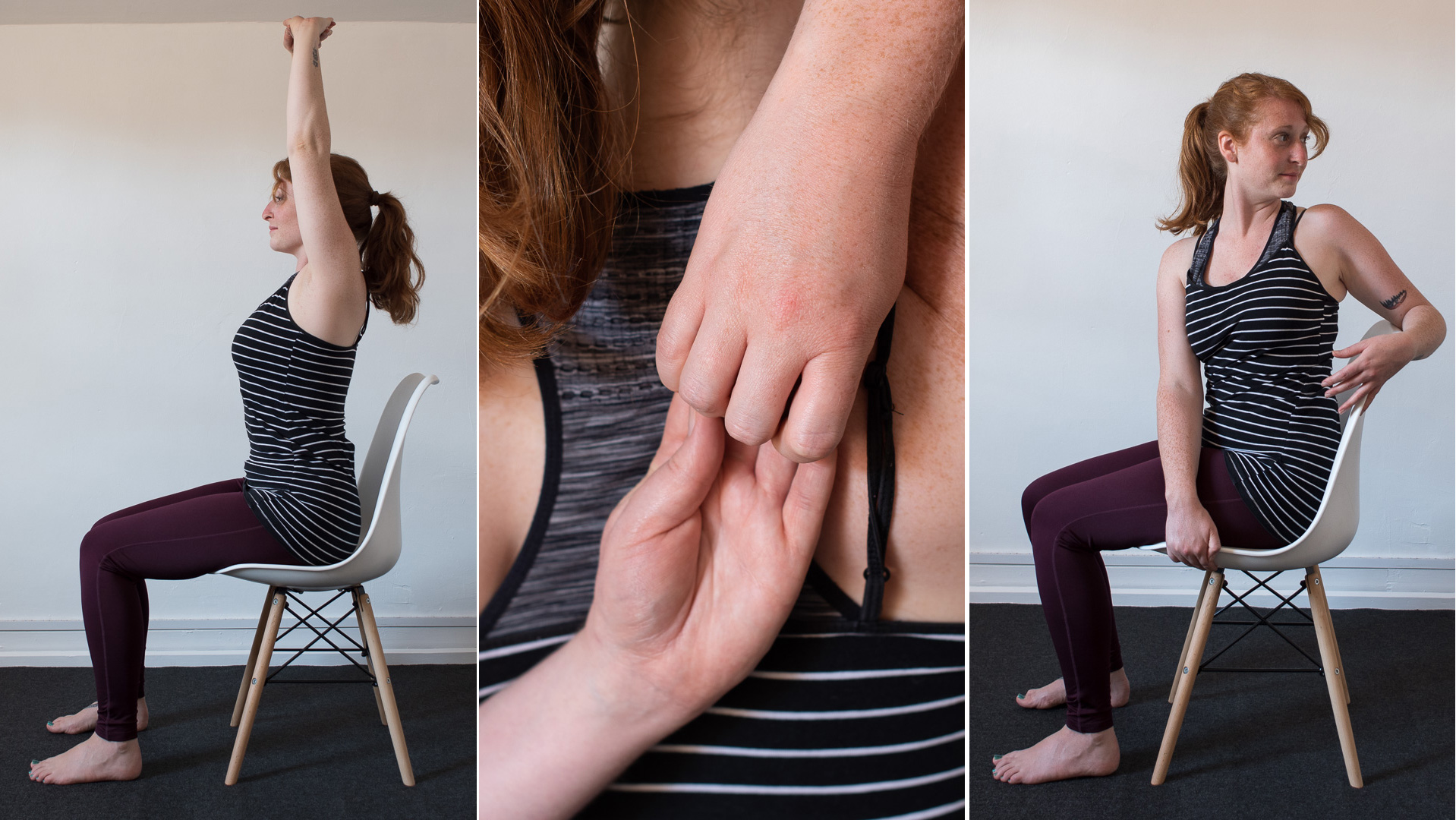
- Seated spinal extensions
- Standing posture resets
Short, frequent movement breaks are more effective than one long session.
10. How Often Should You Do Posture Correction Exercises?
Consistency matters more than intensity.
Recommended frequency
- Daily light mobility (5–10 minutes)
- Strength exercises 3–4 times per week
- Posture awareness throughout the day
Posture improves through repetition, not force.
11. How Long Until You See Results?
Posture correction is gradual—but noticeable.
Typical timeline
- 1–2 weeks: reduced stiffness
- 3–4 weeks: improved comfort
- 6–8 weeks: visible posture improvement
The key is staying consistent.
12. Ergonomics and Exercise: Why Both Matter
Exercises help—but environment matters too.
Ergonomic basics
- Screen at eye level
- Feet flat on the floor
- Chair supporting lower back
- Keyboard at elbow height
Exercises fix the body; ergonomics prevent relapse.
13. Common Mistakes Desk Workers Make
Avoid these posture pitfalls.
Mistakes to avoid
- Overstretching without strengthening
- Doing exercises once a week
- Ignoring lower body posture
- Expecting instant results
Balanced routines work best.
14. Posture Correction Exercises and Mental Focus
Better posture improves brain function.
Cognitive benefits
- Improved oxygen intake
- Reduced fatigue
- Better concentration
- Increased confidence
Posture influences how you feel and perform mentally.
15. Who Benefits Most From Posture Correction Exercises?
These exercises are ideal for:
- Office workers
- Remote employees
- Students
- Gamers
- Anyone sitting more than 6 hours daily
If you sit a lot, posture correction is essential.
16. Final Verdict: Fix Posture Before Pain Becomes Permanent
Poor posture doesn’t appear overnight—and it doesn’t disappear overnight either. But with consistent Posture Correction Exercises, desk workers can reverse damage, reduce pain, and move through the day with more comfort and energy.
Think of posture correction not as rehab—but as daily maintenance for a body under modern stress.
Frequently Asked Questions (FAQ)
Q1. Can posture correction exercises really fix bad posture?
Yes. With consistency, they can significantly improve posture and reduce pain.
Q2. How long should posture exercises take each day?
Even 5–15 minutes daily can make a noticeable difference.
Q3. Is stretching alone enough for posture correction?
No. Strengthening weak muscles is just as important.
Q4. Can posture correction reduce neck and back pain?
Yes. Many posture-related pains improve with proper exercise.
Q5. Should I do posture exercises every day?
Light mobility can be daily; strengthening 3–4 times per week is ideal.
Conclusion
Desk work doesn’t have to damage your body. Posture Correction Exercises give desk workers a practical way to undo daily strain, restore alignment, and feel better both physically and mentally.
Posture isn’t about standing rigid—it’s about moving well, sitting smart, and giving your body the support it needs to thrive in a seated world.
More Related Topics:
Zone 2 Cardio Benefits for Fat Loss & Longevity (The Smartest Way to Train)
Blood Flow Restriction Bands Benefits and Safety: A Practical Guide
Postbiotic Supplements Benefits for Gut and Immunity: A Modern Digestive Health Guide