
What are Hormones and Why Balance Matters?
Signs of Hormonal Imbalance appear when the body produces too much or too little of certain hormones that regulate vital functions like metabolism, mood, sleep, and reproduction.
Hormones act as chemical messengers controlling everything from energy levels to skin health. When they are out of balance, multiple systems in the body can be affected, leading to noticeable Signs of Hormonal Imbalance.
Common Signs of Hormonal Imbalance
Recognizing Signs of Hormonal Imbalance early can help prevent serious health issues.
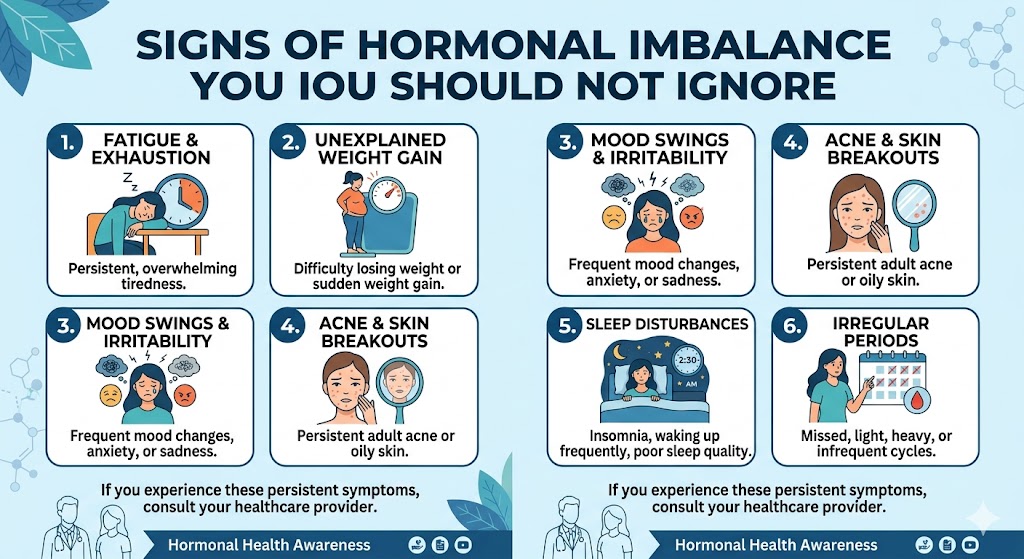
1. Unexplained Weight Gain or Loss
Sudden weight changes are one of the most common Signs of Hormonal Imbalance.
2. Persistent Fatigue
Low energy even after rest can indicate hormonal issues.
3. Mood Swings and Anxiety
Hormones directly affect emotional stability.
4. Irregular Periods
A major indicator of Signs of Hormonal Imbalance in women.
5. Acne and Skin Problems
Hormonal fluctuations often trigger breakouts.
6. Hair Loss or Excess Hair Growth
Changes in hair patterns can signal imbalance.
7. Sleep Problems
Difficulty falling or staying asleep.
8. Low Libido
Reduced interest in sexual activity.
9. Brain Fog
Difficulty concentrating or remembering things.
10. Digestive Issues
Bloating and gut discomfort.
Causes of Hormonal Imbalance
Several factors can lead to Signs of Hormonal Imbalance:
- Chronic stress
- Poor diet
- Lack of sleep
- Sedentary lifestyle
- Medical conditions like Polycystic Ovary Syndrome
- Thyroid disorders
Signs of Hormonal Imbalance in Women
Women are more likely to experience noticeable Signs of Hormonal Imbalance due to menstrual cycles.
Key Symptoms:
- Irregular or painful periods
- Severe PMS
- Weight gain around hips and thighs
- Acne and hair fall
Signs of Hormonal Imbalance in Men
Men can also experience Signs of Hormonal Imbalance.
Common Signs:
- Low testosterone
- Reduced muscle mass
- Fatigue
- Mood changes
Long-Term Effects of Ignoring Signs of Hormonal Imbalance
Ignoring Signs of Hormonal Imbalance can lead to:
- Chronic fatigue
- Infertility
- Metabolic disorders
- Mental health issues
- Increased risk of lifestyle diseases
How to Balance Hormones Naturally
1. Eat a Balanced Diet
Whole foods help regulate hormones.
2. Manage Stress
Reducing stress improves Signs of Hormonal Imbalance.
3. Get Quality Sleep
Essential for hormone regulation.
4. Exercise Regularly
Supports metabolic and hormonal health.
5. Avoid Processed Foods
Reduces inflammation.
Daily Tips to Reduce Signs of Hormonal Imbalance
- Stay hydrated
- Maintain a routine
- Avoid sugar spikes
- Practice mindfulness
- Get sunlight exposure
Who is at Risk?
- People with high stress
- Individuals with poor lifestyle habits
- Women with menstrual issues
- People with thyroid problems
Precautions
- Do not ignore symptoms
- Avoid self-medication
- Consult a healthcare professional
- Monitor changes in your body
Conclusion
Signs of Hormonal Imbalance should never be ignored, as they can affect multiple aspects of your health—from mood and energy to metabolism and reproductive health. Early identification and lifestyle changes can make a significant difference.
By maintaining a healthy routine, managing stress, and seeking medical advice when needed, you can effectively control and reduce Signs of Hormonal Imbalance and improve your overall well-being.
FAQ’s
What are the main Signs of Hormonal Imbalance?
Weight changes, fatigue, mood swings, acne, and sleep problems.
Can hormonal imbalance be cured?
It can be managed with lifestyle changes and medical support.
How do I test for hormonal imbalance?
Through blood tests recommended by a doctor.
Is hormonal imbalance common?
Yes, especially due to modern lifestyle factors.
Can diet fix hormonal imbalance?
A healthy diet can significantly improve symptoms.
More Related Topics:
How to Recover After Emotionally Exhausting Days