
What is Jaw Tension and Health?
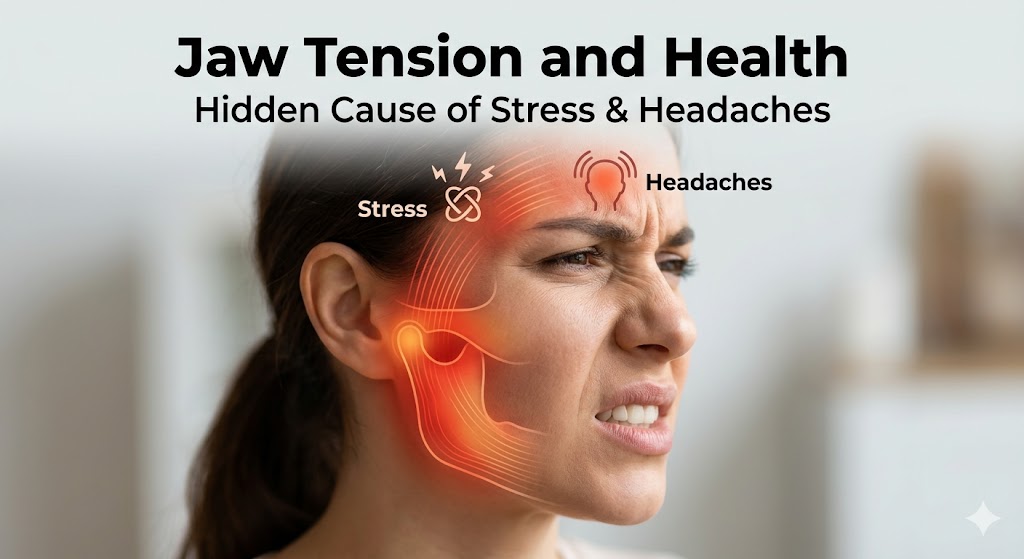
Jaw Tension and Health refers to the connection between tight jaw muscles and overall physical and mental well-being. Many people unknowingly clench their jaw or grind their teeth, especially during stress, which leads to multiple health issues.
This condition is commonly linked to Temporomandibular Joint Disorder, affecting the jaw joint and surrounding muscles. Poor Jaw Tension and Health can contribute to headaches, facial pain, and even posture problems.
Common Symptoms of Jaw Tension and Health Issues
Recognizing Jaw Tension and Health problems early can prevent long-term complications.
1. Jaw Pain and Stiffness
Tightness or discomfort in the jaw area.
2. Frequent Headaches
One of the most common Jaw Tension and Health symptoms.
3. Teeth Grinding (Bruxism)
Often happens during sleep.
4. Ear Pain or Pressure
Pain without ear infection.
5. Clicking or Popping Sounds
When opening or closing the mouth.
6. Neck and Shoulder Pain
Tension spreads to nearby muscles.
7. Facial Pain
Especially around cheeks and temples.
8. Difficulty Chewing
Discomfort while eating.
9. Stress and Anxiety
Closely linked with jaw clenching.
10. Limited Mouth Movement
Reduced ability to open the mouth fully.
Causes of Jaw Tension and Health Problems
Several factors contribute to poor Jaw Tension and Health:
- Stress and anxiety
- Teeth grinding or clenching
- Poor posture
- Misaligned bite
- Excessive chewing (gum, hard foods)
- Sleep disorders
Jaw Tension and Health and Stress Connection
Jaw Tension and Health is deeply connected to stress levels.
How Stress Affects the Jaw:
- Increased muscle tension
- Unconscious clenching
- Nervous system imbalance
Chronic stress worsens Jaw Tension and Health, creating a cycle of pain and discomfort.
Jaw Tension and Health and Headaches
One of the biggest impacts of Jaw Tension and Health is headaches.
Types of Headaches:
- Tension headaches
- Migraines
- Pressure around temples
Tight jaw muscles can trigger pain that radiates to the head, making Jaw Tension and Health a hidden cause of frequent headaches.
Long-Term Effects of Poor Jaw Tension and Health
Ignoring Jaw Tension and Health may lead to:
- Chronic pain
- TMJ disorders
- Sleep problems
- Facial structure imbalance
- Reduced quality of life
How to Relieve Jaw Tension and Health Issues
1. Jaw Relaxation Exercises
Gently stretch and relax jaw muscles.
2. Stress Management
Meditation and breathing techniques help improve Jaw Tension and Health.
3. Warm Compress
Relieves muscle tightness.
4. Avoid Hard Foods
Reduce strain on jaw muscles.
5. Improve Posture
Keeps jaw aligned properly.
6. Use Mouth Guards
Helpful for teeth grinding.
Daily Tips to Improve Jaw Tension and Health
- Keep your jaw relaxed (lips closed, teeth apart)
- Avoid clenching your teeth
- Practice deep breathing
- Limit chewing gum
- Stay aware of jaw position
Who is at Risk?
- People under high stress
- Individuals with anxiety
- Those with poor posture
- People who grind teeth at night
Precautions
- Do not ignore persistent pain
- Avoid self-diagnosis
- Consult a dentist or specialist if needed
- Monitor stress levels
Conclusion
Jaw Tension and Health is often overlooked but plays a major role in overall well-being. From headaches and stress to sleep and posture issues, jaw tension can silently affect daily life.
By improving awareness, reducing stress, and practicing simple relaxation techniques, you can significantly improve Jaw Tension and Health and prevent long-term complications.
FAQ’s
What is Jaw Tension and Health?
It refers to how jaw tightness affects overall health, including stress and headaches.
Can jaw tension cause headaches?
Yes, it is a common cause of tension headaches.
How do I relax my jaw?
Through exercises, stress management, and proper posture.
Is jaw tension serious?
If untreated, it can lead to chronic pain and TMJ disorders.
Can stress cause jaw tension?
Yes, stress is one of the main causes of poor Jaw Tension and Health.
More Related Topics:
Curry Leaf Water Benefits for Hair Growth & Sugar Control