
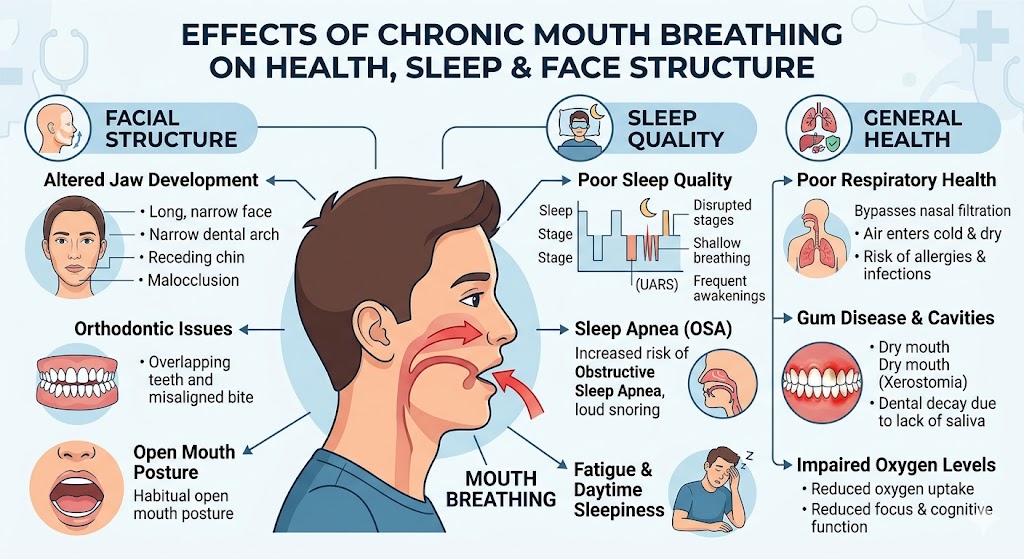
What is Mouth Breathing?
Mouth Breathing Effects refer to the physical and health changes that occur when a person breathes primarily through the mouth instead of the nose. While occasional mouth breathing is normal (like during exercise or nasal congestion), chronic mouth breathing can negatively impact overall health.
Nasal breathing is the body’s natural and optimal way to breathe. It filters air, adds moisture, and regulates oxygen intake—functions that are bypassed during mouth breathing, leading to multiple Mouth Breathing Effects.
Common Mouth Breathing Effects
Understanding Mouth Breathing Effects early can help prevent long-term damage.
1. Dry Mouth and Bad Breath
Mouth breathing reduces saliva, leading to dryness and bad breath.
2. Poor Sleep Quality
One of the most serious Mouth Breathing Effects is disrupted sleep.
3. Snoring and Sleep Disorders
Increases the risk of snoring and conditions like Sleep Apnea.
4. Fatigue and Low Energy
Poor oxygen balance leads to tiredness.
5. Dental Problems
Cavities, gum disease, and misalignment may develop.
6. Frequent Infections
Lack of nasal filtration increases exposure to bacteria.
7. Brain Fog and Poor Focus
Reduced oxygen efficiency affects cognitive function.
8. Dry Throat
Constant irritation in the throat area.
9. Increased Stress Levels
Improper breathing patterns affect the nervous system.
10. Reduced Athletic Performance
Less efficient oxygen delivery impacts stamina.
Mouth Breathing Effects on Sleep
Mouth Breathing Effects on sleep are significant and often overlooked.
- Interrupted sleep cycles
- Increased snoring
- Lower oxygen levels
- Poor REM sleep
Chronic mouth breathing during sleep may lead to conditions like Sleep Apnea, affecting overall health.
Mouth Breathing Effects on Face Structure
One of the most noticeable Mouth Breathing Effects occurs in facial development, especially in children.
Facial Changes May Include:
- Long, narrow face
- Receding chin
- Crooked teeth
- Narrow jaw
- Poor posture
These structural changes are often referred to as “mouth breather face.”
Causes of Mouth Breathing
Several factors contribute to Mouth Breathing Effects:
- Nasal congestion
- Allergies
- Deviated septum
- Enlarged tonsils or adenoids
- Habitual breathing patterns
Long-Term Mouth Breathing Effects
If untreated, Mouth Breathing Effects can become serious:
- Chronic fatigue
- Sleep disorders
- Facial structure changes
- Poor oral health
- Reduced immunity
How to Stop Mouth Breathing
Reducing Mouth Breathing Effects requires consistent effort.
1. Practice Nasal Breathing
Train yourself to breathe through the nose.
2. Improve Nasal Health
Use saline sprays or steam inhalation.
3. Correct Sleep Position
Sleep on your side instead of your back.
4. Use Mouth Tape (Carefully)
Helps encourage nasal breathing at night.
5. Consult a Doctor
For structural or chronic issues.
Daily Tips to Reduce Mouth Breathing Effects
- Stay hydrated
- Avoid allergens
- Maintain good posture
- Practice breathing exercises
- Keep nasal passages clear
Who is at Risk?
- Children with enlarged tonsils
- People with allergies
- Individuals with nasal blockages
- Those with poor breathing habits
Precautions
- Do not ignore chronic symptoms
- Avoid self-treatment for structural issues
- Seek medical advice if needed
- Monitor sleep patterns
Conclusion
Mouth Breathing Effects can impact your health far more than most people realize—from poor sleep and fatigue to long-term facial changes and oral health issues. The good news is that with awareness and simple lifestyle changes, these effects can be prevented and even reversed in some cases.
Prioritizing nasal breathing, improving sleep habits, and addressing underlying causes can significantly improve your overall health and quality of life.
FAQ’s
What are the main Mouth Breathing Effects?
Poor sleep, dry mouth, fatigue, dental issues, and facial changes.
Can mouth breathing change face shape?
Yes, especially in children, it can affect jaw and facial development.
Is mouth breathing dangerous?
Long-term mouth breathing can lead to serious health problems.
How do I know if I breathe through my mouth at night?
Signs include dry mouth, snoring, and poor sleep quality.
Can mouth breathing be cured?
Yes, with proper treatment, breathing habits can be improved.
More Related Topics:
Skin Microbiome Health: The New Skincare Trend (2026)
Histamine Intolerance Symptoms: Causes, Foods to Avoid & Complete Guide