
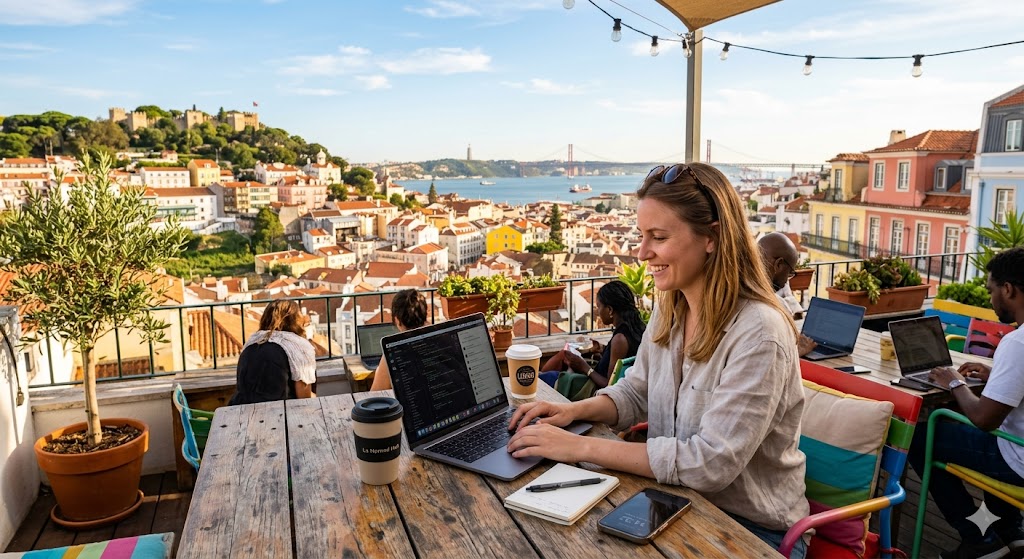

Over the past few years, one city has quietly transformed into a global hotspot for remote workers—and now it’s official: Lisbon Is Becoming the Digital Nomad capital of 2026.
With its stunning views, affordable lifestyle (compared to other European capitals), strong internet infrastructure, and vibrant culture, Lisbon is attracting freelancers, entrepreneurs, and remote workers from around the world.
In this guide, you’ll discover why Lisbon Is Becoming the Digital Nomad hub, what makes it so appealing, and how you can take advantage of this trend.
1. Why Lisbon Is Becoming the Digital Nomad Hub
There are many reasons behind this shift.
Key Factors:
Sub Points:
- Warm climate year-round
- Affordable cost of living (compared to Western Europe)
- Fast and reliable internet
- Growing international community
These factors are driving why Lisbon Is Becoming the Digital Nomad destination of choice.
2. Cost of Living in Lisbon
One of the biggest advantages is affordability.
Monthly Estimate:
Sub Points:
- Rent: €700–€1500
- Food: €200–€400
- Transport: €40–€60
- Coworking spaces: €100–€250
While prices are rising, Lisbon is still more affordable than cities like London or Paris.
3. Best Areas for Digital Nomads in Lisbon
Location matters.
Popular Neighborhoods:
Sub Points:
- Alfama: Historic and scenic
- Bairro Alto: Vibrant nightlife
- Cais do Sodré: Trendy and central
- Chiado: Modern and upscale
These areas support why Lisbon Is Becoming the Digital Nomad hotspot.
4. Coworking Spaces and Work Culture
Lisbon offers excellent work environments.
Sub Points:
- Modern coworking spaces
- Networking opportunities
- Startup-friendly ecosystem
- Remote work culture
You’ll find professionals from all over the world.
5. Lifestyle and Quality of Life
Lisbon offers more than just work.
Sub Points:
- Beautiful beaches nearby
- Rich culture and history
- Delicious food and cafes
- Relaxed lifestyle
This balance is a major reason why Lisbon Is Becoming the Digital Nomad paradise.
6. Visa Options for Digital Nomads
Portugal supports remote workers.
Options:
Sub Points:
- Digital Nomad Visa
- Temporary stay visas
- Residency options
These policies make it easier to relocate.
7. Internet and Connectivity
Reliable internet is essential.
Sub Points:
- High-speed broadband
- Strong mobile networks
- Wi-Fi in cafes and public spaces
Connectivity is one reason Lisbon Is Becoming the Digital Nomad hub.
8. Community and Networking
Lisbon has a growing nomad community.
Sub Points:
- Meetups and events
- Startup communities
- Online groups
Building connections is easy here.
9. Challenges to Consider
It’s not perfect.
Sub Points:
- Rising rent prices
- Tourist crowds
- Language barrier (in some areas)
However, benefits still outweigh the challenges.
10. Future of Lisbon as a Digital Nomad Capital
The trend is only growing.
Predictions:
Sub Points:
- More coworking spaces
- Increased international population
- Stronger startup ecosystem
- Higher demand for housing
Clearly, Lisbon Is Becoming the Digital Nomad capital for the long term.
Conclusion
There’s no doubt that Lisbon Is Becoming the Digital Nomad capital of 2026. With its perfect mix of affordability, lifestyle, infrastructure, and community, it offers everything a remote worker could want.
If you’re considering working remotely while exploring Europe, Lisbon should be at the top of your list. The opportunity is growing—and now is the best time to experience it.
FAQs
1. Why is Lisbon popular among digital nomads?
Because of affordability, lifestyle, and strong infrastructure.
2. Is Lisbon expensive?
It’s more affordable than many European capitals but rising in cost.
3. Do I need a visa to work remotely in Lisbon?
Yes, depending on your country, you may need a digital nomad visa.
4. Is internet reliable in Lisbon?
Yes, it’s fast and widely available.
5. What are the best areas to live in Lisbon?
Alfama, Bairro Alto, Cais do Sodré, and Chiado.
6. Is Lisbon safe?
Yes, it’s considered a safe city.
7. Can beginners move there as digital nomads?
Yes, it’s very beginner-friendly.
More Related Topics:
Regenerative Travel: Give Back While You Explore