
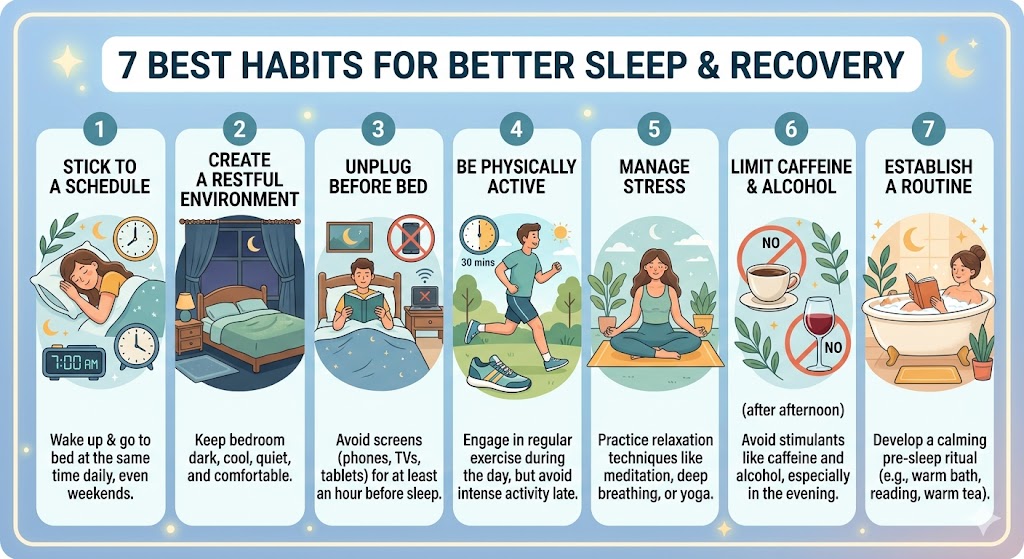

Quality sleep is one of the most important foundations of good health. Yet many people struggle with poor sleep due to stress, busy schedules, excessive screen time, and irregular routines. Developing the Best Habits for Better Sleep can significantly improve both physical recovery and mental well-being.
Sleep is essential for muscle repair, brain function, immune health, and emotional balance. Without proper rest, the body cannot fully recover from daily activities. This is why experts often emphasize the importance of building the Best Habits for Better Sleep as part of a healthy lifestyle.
In this guide, we will explore the Best Habits for Better Sleep that can help improve sleep quality, enhance recovery, and support overall health.
1. Maintain a Consistent Sleep Schedule
One of the most effective Best Habits for Better Sleep is maintaining a consistent bedtime and wake-up schedule.
Your body operates on a natural internal clock known as the circadian rhythm. When you sleep and wake at the same time every day, your body adapts to a stable routine.
Tips for Consistency
Sub points:
- go to bed at the same time each night
- wake up at a consistent time
- avoid large schedule changes
Consistency strengthens the Best Habits for Better Sleep and improves sleep quality.
2. Limit Screen Time Before Bed
Digital devices emit blue light that can interfere with the body’s natural sleep signals.
Reducing screen exposure before bedtime is one of the most recommended Best Habits for Better Sleep.
Screen Time Tips
Sub points:
- stop using devices 30–60 minutes before bed
- avoid social media late at night
- dim screen brightness in the evening
These changes support the development of Best Habits for Better Sleep.
3. Create a Relaxing Night Routine
A calm bedtime routine helps signal to the body that it is time to sleep.
Establishing a relaxing routine is an important part of the Best Habits for Better Sleep.
Night Routine Ideas
Sub points:
- reading a book
- light stretching or meditation
- listening to relaxing music
These activities help the body transition into restful sleep.
4. Optimize Your Sleep Environment
The environment in which you sleep plays a major role in sleep quality.
Creating a comfortable bedroom is one of the practical Best Habits for Better Sleep.
Ideal Sleep Environment
Sub points:
- dark and quiet room
- comfortable mattress and pillows
- cool room temperature
A well-designed sleep environment supports the Best Habits for Better Sleep.
5. Manage Caffeine Intake
Caffeine is a stimulant that can interfere with sleep if consumed too late in the day.
Monitoring caffeine intake is one of the important Best Habits for Better Sleep.
Caffeine Management Tips
Sub points:
- avoid caffeine in the evening
- limit energy drinks and coffee late in the day
- choose herbal tea before bedtime
These adjustments help maintain the Best Habits for Better Sleep.
6. Exercise Regularly
Physical activity can improve sleep quality and overall recovery.
Regular exercise is among the most effective Best Habits for Better Sleep.
Exercise Benefits
Sub points:
- improved sleep cycles
- reduced stress levels
- enhanced physical recovery
Active lifestyles support the Best Habits for Better Sleep.
7. Reduce Stress and Mental Overload
Stress and anxiety are common causes of sleep disturbances.
Learning to relax mentally is a crucial component of the Best Habits for Better Sleep.
Stress Reduction Techniques
Sub points:
- mindfulness meditation
- journaling thoughts before bed
- deep breathing exercises
Managing stress helps maintain the Best Habits for Better Sleep.
Why Sleep Is Important for Recovery
Sleep plays a major role in the body’s natural recovery processes.
Benefits of Quality Sleep
Sub points:
- muscle repair and growth
- improved memory and concentration
- stronger immune system
These benefits highlight the importance of following the Best Habits for Better Sleep.
How Long Should You Sleep?
Sleep requirements vary by age and lifestyle.
Most adults need between 7 and 9 hours of sleep per night to experience the full benefits of the Best Habits for Better Sleep.
Conclusion
Quality sleep is essential for physical health, mental clarity, and long-term well-being. By adopting the Best Habits for Better Sleep, individuals can improve their nightly rest and support their body’s natural recovery processes.
Simple lifestyle adjustments such as maintaining a consistent sleep schedule, reducing screen time, and creating a relaxing bedtime routine can make a significant difference.
Practicing the Best Habits for Better Sleep consistently can lead to better energy levels, improved mood, and stronger overall health.
Frequently Asked Questions (FAQ)
1. What are the best habits for better sleep?
The Best Habits for Better Sleep include maintaining a regular sleep schedule, reducing screen time before bed, and creating a relaxing bedtime routine.
2. How many hours of sleep do adults need?
Most adults need 7–9 hours of sleep each night for optimal health.
3. Does exercise improve sleep quality?
Yes. Regular physical activity is one of the most effective Best Habits for Better Sleep.
4. Can stress affect sleep?
Yes. Stress and anxiety can disrupt sleep patterns and make it harder to fall asleep.
5. Why is sleep important for recovery?
Sleep helps the body repair muscles, strengthen the immune system, and improve mental function.
More Related Topics:
Coffee vs Green Tea: Which Drink Is Healthier? Complete Health Guide
Strength Training Benefits for Long-Term Health: Complete Guide
HIIT Fitness Workout Plan for Fast Fat Loss: Complete Guide for Beginners