
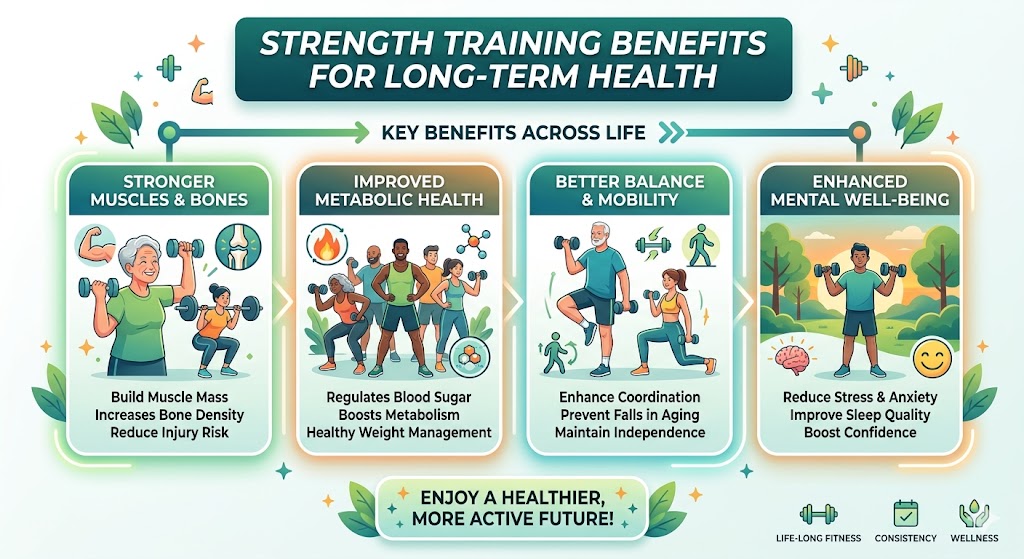

Maintaining long-term health requires a combination of proper nutrition, regular physical activity, and balanced lifestyle habits. Among all forms of exercise, strength training has become one of the most effective methods for improving overall health and physical fitness.
The Strength Training Benefits extend far beyond building muscle. Research shows that regular strength training can improve bone density, enhance metabolism, support mental health, and reduce the risk of chronic diseases.
Because of these advantages, many health experts now recommend strength training as an essential component of a balanced fitness routine. Understanding the full range of Strength Training Benefits can help individuals make better decisions about their health and fitness goals.
In this comprehensive guide, we will explore the most important Strength Training Benefits, how strength training supports long-term health, and how beginners can safely start a strength training routine.
1. What Is Strength Training?
Strength training refers to exercises designed to improve muscle strength and endurance by working against resistance.
Resistance can come from various sources such as weights, resistance bands, or bodyweight exercises.
Common Strength Training Methods
Sub points:
- weightlifting exercises
- resistance band workouts
- bodyweight strength exercises
- functional strength training
These training methods help individuals experience the full range of Strength Training Benefits.
2. Strength Training Benefits for Muscle Development
One of the most well-known Strength Training Benefits is muscle growth and improved physical strength.
Strength training stimulates muscle fibers, leading to increased muscle size and strength over time.
Muscle-Related Benefits
Sub points:
- increased muscle mass
- improved physical strength
- enhanced muscular endurance
These improvements support daily physical activities and overall fitness.
3. Strength Training Benefits for Bone Health
Bone health becomes increasingly important as people age.
Regular strength training helps improve bone density and reduce the risk of osteoporosis.
Bone Health Advantages
Sub points:
- stronger bones
- improved bone density
- reduced fracture risk
These Strength Training Benefits are particularly valuable for long-term health and aging populations.
4. Strength Training Benefits for Metabolism
Strength training can significantly influence metabolic health.
Muscle tissue burns more calories than fat tissue, which helps increase overall metabolism.
Metabolic Advantages
Sub points:
- improved metabolic rate
- increased calorie burn
- enhanced fat loss
These metabolic Strength Training Benefits help individuals maintain a healthy body composition.
5. Strength Training Benefits for Heart Health
Cardiovascular health is another area where strength training can make a difference.
Although often associated with aerobic exercise, strength training also supports heart health.
Heart Health Improvements
Sub points:
- improved blood circulation
- reduced blood pressure
- improved cholesterol balance
These cardiovascular Strength Training Benefits contribute to long-term wellness.
6. Strength Training Benefits for Mental Health
Exercise has a strong influence on mental well-being, and strength training is no exception.
Mental Health Advantages
Sub points:
- improved mood and emotional balance
- reduced stress levels
- increased self-confidence
These psychological Strength Training Benefits make strength training valuable for overall wellness.
7. Strength Training Benefits for Aging and Longevity
Maintaining muscle strength becomes increasingly important with age.
Strength training helps preserve mobility, independence, and quality of life.
Longevity Benefits
Sub points:
- improved physical independence
- better mobility and balance
- reduced risk of falls
These long-term Strength Training Benefits support healthy aging.
8. Strength Training Benefits for Daily Functionality
Strength training improves functional fitness, which refers to the ability to perform everyday activities.
Functional Fitness Improvements
Sub points:
- easier lifting and carrying
- improved posture
- enhanced balance and coordination
These functional Strength Training Benefits improve daily quality of life.
9. Beginner Tips for Strength Training
Starting a strength training routine does not require advanced equipment or experience.
Beginner Guidelines
Sub points:
- start with light weights or bodyweight exercises
- focus on proper technique
- gradually increase intensity
Following these guidelines helps beginners safely experience the Strength Training Benefits.
10. Future of Strength Training and Fitness
Fitness technology and personalized training programs are shaping the future of strength training.
Emerging Fitness Trends
Sub points:
- AI-powered workout programs
- wearable fitness tracking devices
- digital personal training platforms
These innovations may further enhance the accessibility of Strength Training Benefits.
Conclusion
Strength training is one of the most effective forms of exercise for maintaining long-term health and physical fitness. The wide range of Strength Training Benefits includes improved muscle strength, better bone health, enhanced metabolism, and improved mental well-being.
Incorporating strength training into a regular fitness routine can help individuals build stronger bodies, prevent chronic diseases, and maintain independence as they age.
By understanding the full range of Strength Training Benefits, individuals can make informed decisions about their health and develop sustainable fitness habits that support long-term wellness.
Frequently Asked Questions (FAQ)
1. What are the main Strength Training Benefits?
The main Strength Training Benefits include increased muscle strength, improved bone density, enhanced metabolism, and better overall health.
2. How often should strength training be performed?
Most experts recommend strength training at least two to three times per week.
3. Is strength training safe for beginners?
Yes. Beginners can start with simple exercises and gradually increase resistance.
4. Can strength training help with weight loss?
Yes. One of the key Strength Training Benefits is improved metabolism, which supports fat loss.
5. Do you need a gym for strength training?
No. Many strength training exercises can be performed at home using bodyweight or basic equipment.
More Related Topics:
HIIT Fitness Workout Plan for Fast Fat Loss: Complete Guide for Beginners
Sunlight Therapy Benefits for Mental and Physical Health: A Complete Guide