
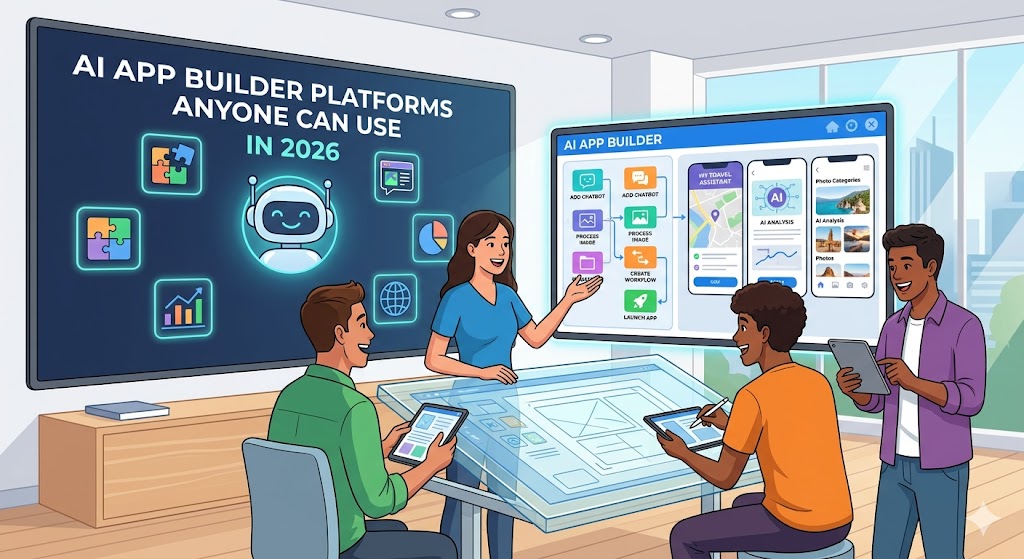
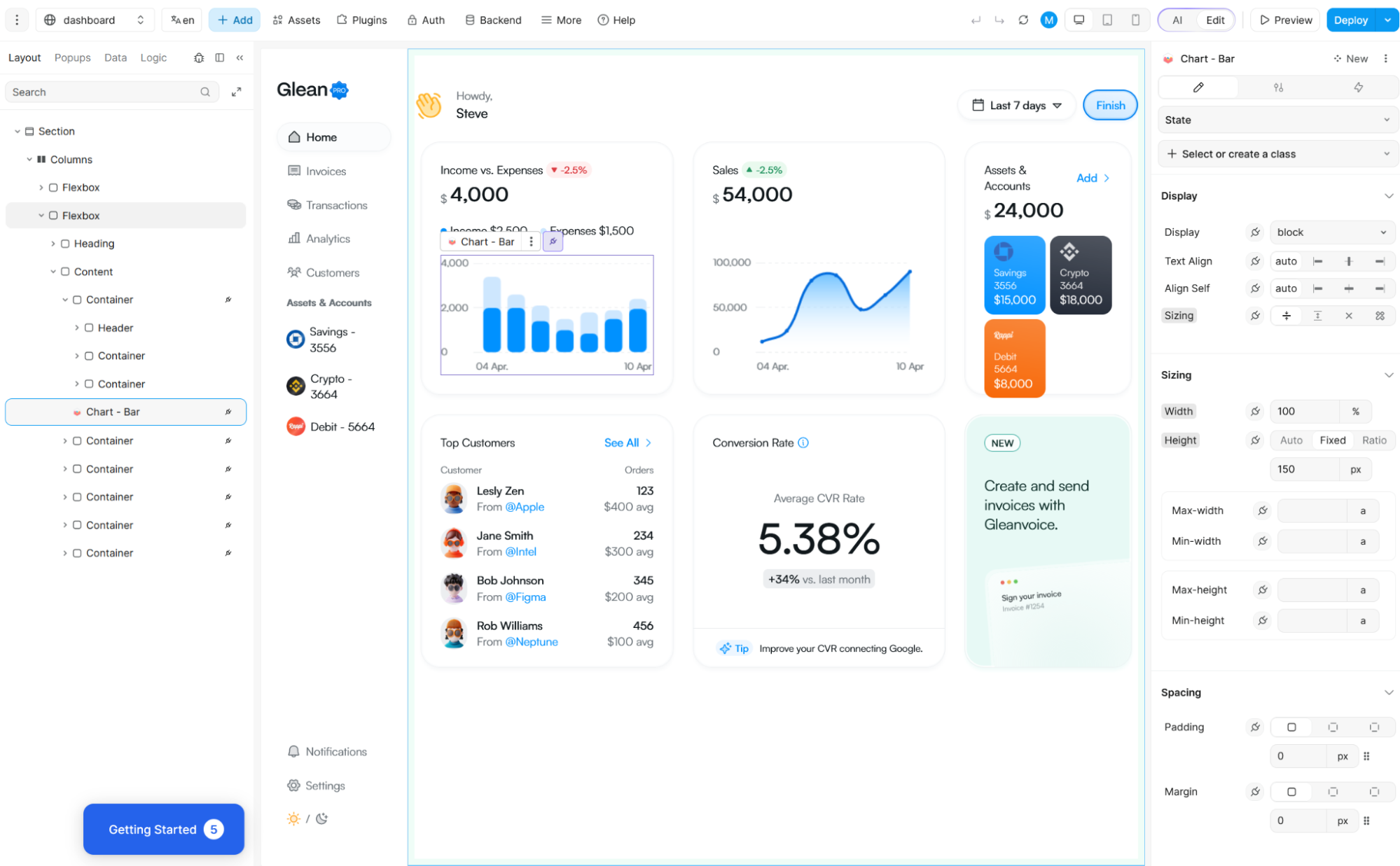

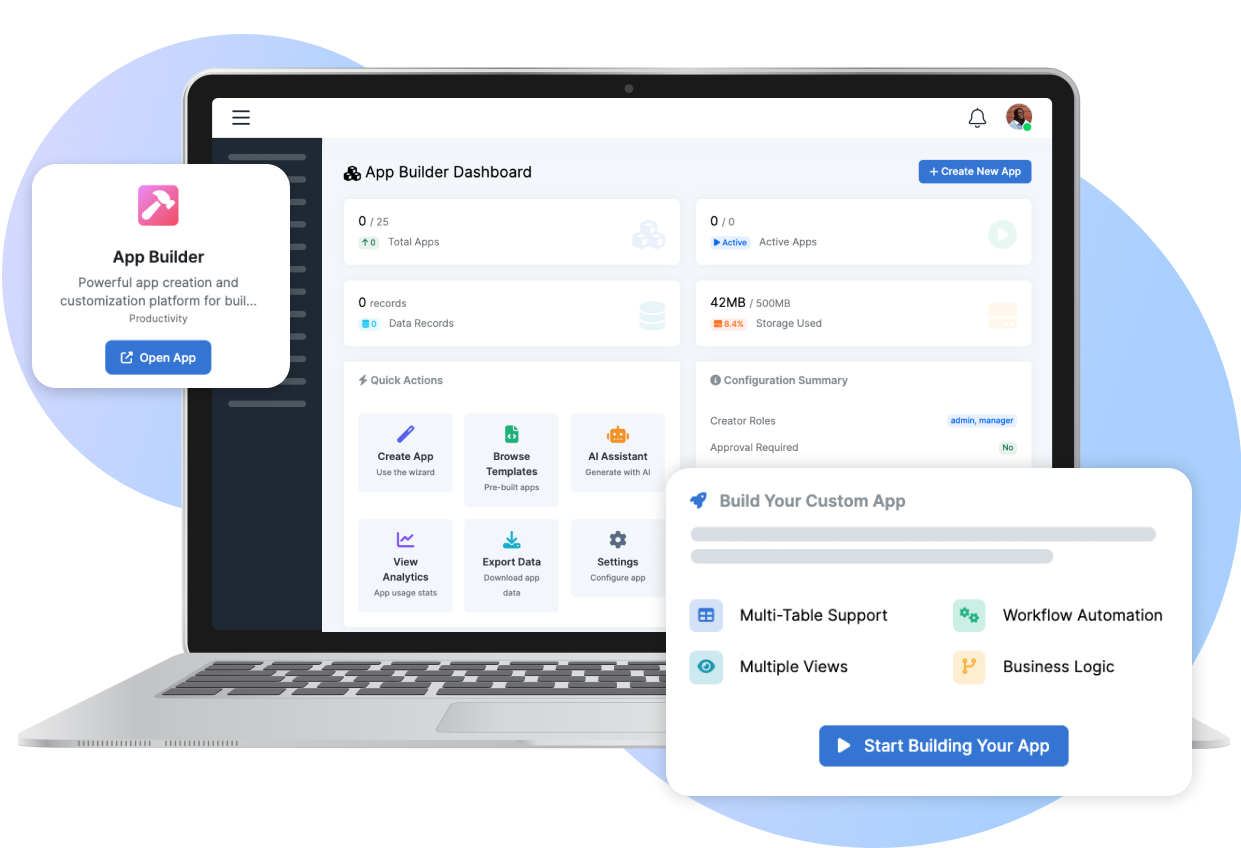
Artificial intelligence is no longer limited to software engineers and advanced developers. In 2026, powerful AI App Builder Platforms are making it possible for anyone to create AI-powered applications without writing complex code.
These AI App Builder Platforms allow entrepreneurs, freelancers, startups, and even small businesses to build intelligent apps using drag-and-drop interfaces, automation tools, and pre-built AI models.
The rise of AI App Builder Platforms is transforming the tech industry by lowering the barrier to entry for app development. Today, people with creative ideas can turn those ideas into real applications quickly and affordably.
In this comprehensive guide, we will explore the best AI App Builder Platforms, how they work, and how anyone can use them to create powerful AI applications in 2026.
1. What Are AI App Builder Platforms?
AI App Builder Platforms are software tools that allow users to create applications powered by artificial intelligence without needing extensive programming knowledge.
These platforms combine several technologies such as machine learning models, automation systems, and visual development interfaces.
Key Features of AI App Builder Platforms
Sub points:
- drag-and-drop app creation tools
- built-in AI models and APIs
- workflow automation systems
- integration with external services
Because of these features, AI App Builder Platforms make AI app development accessible to a much wider audience.
2. Why AI App Builder Platforms Are Growing Rapidly
The demand for AI-powered applications is increasing across industries such as marketing, finance, healthcare, education, and e-commerce.
Many entrepreneurs are now using AI App Builder Platforms to quickly develop solutions that automate business processes.
Reasons Behind the Growth of AI App Builder Platforms
Sub points:
- rising demand for AI automation
- increasing popularity of no-code development
- faster product development cycles
- reduced development costs
These advantages make AI App Builder Platforms one of the most important technological trends in 2026.
3. Who Can Use AI App Builder Platforms?
One of the biggest advantages of AI App Builder Platforms is their accessibility.
You do not need to be a professional developer to build AI applications.
Ideal Users of AI App Builder Platforms
Sub points:
- entrepreneurs launching tech startups
- freelancers building digital tools
- small businesses creating automation apps
- creators developing SaaS products
These platforms empower anyone with ideas to build applications using AI App Builder Platforms.
4. Types of Applications You Can Build With AI App Builder Platforms
The possibilities with AI App Builder Platforms are incredibly diverse.
1. AI Chatbots
Chatbots are among the most popular AI applications.
Sub points:
- customer support chatbots
- website virtual assistants
- automated messaging bots
2. AI Content Tools
Content automation tools are widely used by businesses and creators.
Sub points:
- AI blog writing assistants
- social media content generators
- marketing copy creation tools
3. AI Productivity Applications
Productivity apps help individuals and teams work more efficiently.
Sub points:
- AI meeting summary tools
- task automation assistants
- document processing systems
4. AI Data Analysis Tools
Businesses rely heavily on data insights.
Sub points:
- analytics dashboards
- predictive analytics systems
- automated reporting platforms
All these solutions can be created using modern AI App Builder Platforms.
5. Benefits of Using AI App Builder Platforms
There are many advantages to building applications with AI App Builder Platforms.
1. No Coding Required
Users can create complex applications without writing code.
2. Faster Development
Applications can be built much faster compared to traditional development.
3. Lower Development Costs
Startups and entrepreneurs can build products without hiring large development teams.
4. Rapid Experimentation
Users can test ideas quickly and improve products based on feedback.
These benefits make AI App Builder Platforms highly valuable for entrepreneurs and startups.
6. Key Features to Look for in AI App Builder Platforms
Not all AI App Builder Platforms are created equal. Choosing the right platform is essential.
Important Features
Sub points:
- visual drag-and-drop interface
- AI model integration
- automation capabilities
- cloud hosting support
These features allow creators to build powerful apps using AI App Builder Platforms.
7. How to Start Building AI Apps
If you want to start using AI App Builder Platforms, follow a simple process.
Step 1: Identify a Problem
Every successful app solves a specific problem.
Sub points:
- business workflow inefficiencies
- repetitive manual tasks
- customer service challenges
Step 2: Choose an AI App Builder Platform
Select a platform that matches your project requirements.
Sub points:
- automation capabilities
- scalability options
- integration features
Step 3: Create a Minimum Viable Product
Start with a simple version of your application.
Sub points:
- core AI functionality
- basic interface
- essential features
Step 4: Test With Users
Gather feedback and improve the app.
Sub points:
- usability improvements
- feature optimization
- performance adjustments
These steps help beginners build successful products using AI App Builder Platforms.
8. Challenges of AI App Builder Platforms
While AI App Builder Platforms offer many advantages, there are also some limitations.
Common Challenges
Sub points:
- limited customization in some platforms
- dependency on platform providers
- scaling limitations for complex apps
However, for most entrepreneurs, AI App Builder Platforms provide more benefits than drawbacks.
9. Future of AI App Builder Platforms
The technology behind AI App Builder Platforms continues to evolve rapidly.
Future innovations may include:
- fully automated AI app generation
- personalized AI development assistants
- AI-generated user interfaces
- advanced AI integration capabilities
As these technologies improve, AI App Builder Platforms will become even more powerful and widely used.
Conclusion
The rise of AI App Builder Platforms is transforming the world of software development. By removing technical barriers, these platforms enable entrepreneurs, creators, and small businesses to build powerful AI-powered applications.
With the right idea and the right platform, anyone can create innovative digital products without extensive coding knowledge.
As artificial intelligence continues to grow, AI App Builder Platforms will play a major role in shaping the future of entrepreneurship and technology.
For individuals interested in building digital products and launching tech startups, learning how to use AI App Builder Platforms may be one of the most valuable skills in the coming years.
Frequently Asked Questions (FAQ)
1. What are AI App Builder Platforms?
AI App Builder Platforms are tools that allow users to create AI-powered applications without extensive programming knowledge.
2. Can beginners use AI App Builder Platforms?
Yes. Many AI App Builder Platforms are designed specifically for beginners and non-developers.
3. What types of apps can be built with AI App Builder Platforms?
You can build chatbots, automation tools, AI productivity apps, and data analytics platforms.
4. Are AI App Builder Platforms expensive?
Many platforms offer affordable plans or free versions suitable for startups and small businesses.
5. Do AI App Builder Platforms replace traditional developers?
No. While they simplify development, complex applications may still require professional developers.
Also read this:
AI Content Automation Systems for Online Growth: The Ultimate Guide for 2026
Launch a Profitable AI Startup With Minimal Investment: Complete Beginner Guide
AI Driven Customer Support Systems for Small Companies: The Complete Guide for 2026