
Modern nutrition science is beginning to focus not only on what we eat but also on when we eat. One of the most powerful strategies gaining attention in health and wellness is the Circadian Eating Timing Diet.
The Circadian Eating Timing Diet is based on aligning meal timing with the body’s natural biological clock, also known as the circadian rhythm. Instead of eating randomly throughout the day, this diet encourages people to eat during specific time windows that match the body’s metabolic cycles.
Researchers have found that following a Circadian Eating Timing Diet may improve metabolism, support weight management, enhance sleep quality, and promote long-term health.
In this detailed guide, we will explore how the Circadian Eating Timing Diet works, its benefits, and how to implement this powerful nutrition strategy in your daily life.
1. What Is the Circadian Eating Timing Diet?
The Circadian Eating Timing Diet is a nutrition strategy that aligns meal times with the body’s internal biological clock.
The human body operates on a 24-hour cycle known as the circadian rhythm. This rhythm controls many physiological functions including:
- metabolism
- hormone release
- digestion
- sleep cycles
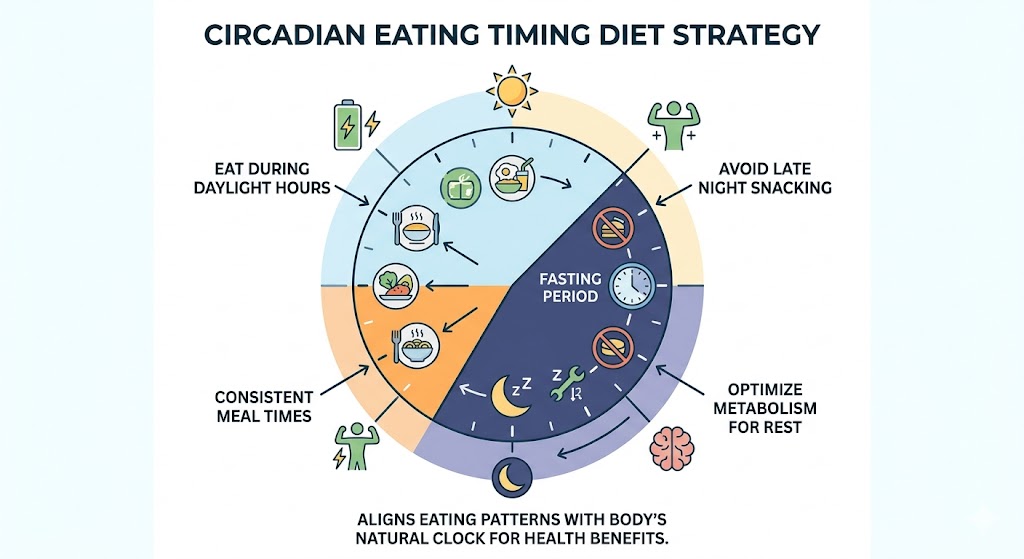
The Circadian Eating Timing Diet encourages eating during daylight hours when metabolism and digestion are most active.
Core Principles of Circadian Eating Timing Diet
Sub points:
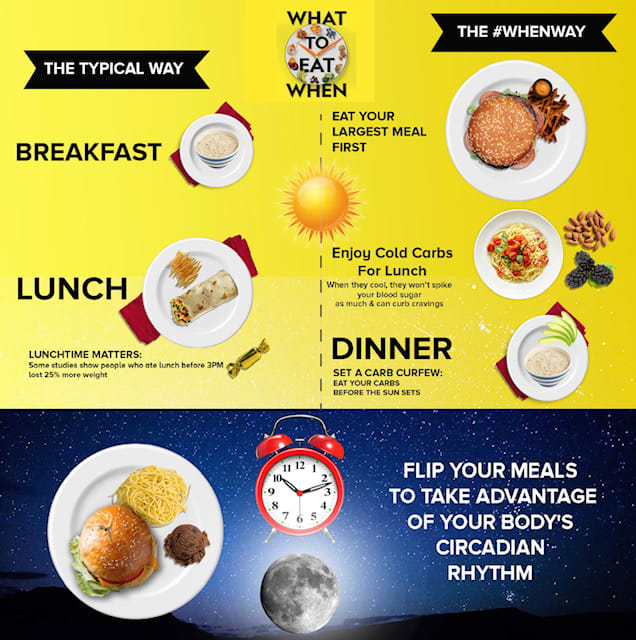
- eat most calories earlier in the day
- avoid late-night meals
- follow consistent eating schedules
- allow overnight fasting periods
By following these principles, the Circadian Eating Timing Diet helps synchronize nutrition with the body’s natural metabolic rhythm.
2. The Science Behind Circadian Eating Timing Diet
The body’s metabolism changes throughout the day based on circadian rhythms.
During the morning and afternoon, the body is more efficient at processing carbohydrates, fats, and proteins.
At night, metabolic activity slows down.
This means eating large meals late at night can lead to:
- poor digestion
- increased fat storage
- disrupted sleep
The Circadian Eating Timing Diet prevents these problems by aligning food intake with periods of optimal metabolic activity.
How Circadian Rhythms Affect Metabolism
Sub points:
- insulin sensitivity is higher in the morning
- digestion efficiency declines at night
- hormone levels fluctuate during the day
Following a Circadian Eating Timing Diet ensures that meals are consumed when the body is best equipped to process nutrients.
3. Key Benefits of the Circadian Eating Timing Diet
The Circadian Eating Timing Diet offers multiple health benefits supported by emerging research.
1. Supports Weight Management
Eating earlier in the day improves metabolic efficiency.
Sub points:
- better calorie utilization
- reduced fat storage
- improved metabolic rate
2. Improves Blood Sugar Regulation
Proper meal timing can help stabilize glucose levels.
Sub points:
- improved insulin sensitivity
- reduced blood sugar spikes
- better metabolic balance
3. Enhances Sleep Quality
Late-night eating can interfere with sleep hormones.
Sub points:
- improved melatonin production
- better sleep cycles
- deeper sleep quality
Following a Circadian Eating Timing Diet promotes healthier sleep patterns.
4. Improves Digestive Health
Digestive processes follow circadian rhythms.
Sub points:
- improved gut function
- reduced digestive discomfort
- better nutrient absorption
4. Ideal Meal Timing in the Circadian Eating Timing Diet
The success of the Circadian Eating Timing Diet depends on structured meal timing.
Morning: Primary Energy Intake
Breakfast should be one of the most important meals.
Sub points:
- high protein foods
- complex carbohydrates
- healthy fats
Midday: Balanced Lunch
Lunch provides sustained energy for the rest of the day.
Sub points:
- lean proteins
- vegetables
- whole grains
Evening: Light Dinner
Dinner should be lighter and consumed earlier.
Sub points:
- easily digestible foods
- smaller portions
- low sugar intake
In the Circadian Eating Timing Diet, dinner is typically recommended before sunset or at least 3 hours before sleep.
5. Circadian Eating Timing Diet vs Intermittent Fasting
Many people confuse the Circadian Eating Timing Diet with intermittent fasting, but they are slightly different.
Key Differences
Sub points:
- circadian diet follows biological clock timing
- intermittent fasting focuses on fasting duration
- circadian eating prioritizes daylight eating
However, both approaches share similar benefits when practiced correctly.
6. Common Mistakes in the Circadian Eating Timing Diet
Some people struggle to follow the Circadian Eating Timing Diet effectively due to common mistakes.
1. Late Night Snacking
Eating late disrupts circadian metabolic rhythms.
Sub points:
- increased fat storage
- digestive discomfort
- sleep disturbances
2. Skipping Breakfast
Skipping breakfast may reduce metabolic efficiency.
Sub points:
- energy imbalance
- poor nutrient distribution
- reduced productivity
3. Inconsistent Eating Times
Irregular meal schedules can disrupt circadian rhythms.
Sub points:
- hormonal imbalance
- metabolic confusion
- digestive problems
Consistency is essential for success with the Circadian Eating Timing Diet.
7. Foods That Work Best With Circadian Eating Timing Diet
The Circadian Eating Timing Diet works best with nutrient-dense foods.
Recommended Foods
Sub points:
- whole grains
- lean proteins
- fruits and vegetables
- healthy fats
Balanced nutrition combined with proper meal timing enhances the effectiveness of the Circadian Eating Timing Diet.
8. Who Should Try the Circadian Eating Timing Diet
Many individuals can benefit from the Circadian Eating Timing Diet.
Ideal Candidates
Sub points:
- people trying to lose weight
- individuals with irregular eating habits
- those experiencing digestive issues
- people looking to improve sleep quality
Following the Circadian Eating Timing Diet may help improve overall lifestyle and health.
9. Tips to Successfully Follow Circadian Eating Timing Diet
Implementing the Circadian Eating Timing Diet requires consistent habits.
Practical Tips
Sub points:
- start eating earlier in the day
- avoid late-night snacks
- maintain regular meal times
- prioritize balanced meals
These strategies help maximize the benefits of the Circadian Eating Timing Diet.
10. Future of Circadian Eating Timing Diet
Nutrition science continues to explore the relationship between circadian rhythms and metabolic health.
Future trends may include:
- personalized circadian nutrition plans
- AI-driven meal timing recommendations
- wearable technology tracking metabolic cycles
As research evolves, the Circadian Eating Timing Diet may become a cornerstone of modern nutritional strategies.
Conclusion
The timing of meals plays a critical role in overall health and metabolism. The Circadian Eating Timing Diet offers a science-based approach to nutrition that aligns eating patterns with the body’s natural biological clock.
By consuming meals earlier in the day and avoiding late-night eating, individuals can improve metabolism, enhance sleep quality, and support long-term wellness.
The Circadian Eating Timing Diet represents a powerful shift in nutrition thinking—focusing not only on what we eat but also on when we eat.
Adopting this strategy may help individuals achieve better health, improved energy levels, and a more balanced lifestyle.
Frequently Asked Questions (FAQ)
1. What is the Circadian Eating Timing Diet?
The Circadian Eating Timing Diet is a nutrition strategy that aligns meal times with the body’s natural circadian rhythm.
2. Can Circadian Eating Timing Diet help with weight loss?
Yes. By improving metabolic efficiency and reducing late-night eating, the Circadian Eating Timing Diet may support healthy weight management.
3. What time should dinner be in the Circadian Eating Timing Diet?
Dinner is typically recommended earlier in the evening, ideally 3 hours before bedtime.
4. Is Circadian Eating Timing Diet similar to intermittent fasting?
Both approaches involve structured eating windows, but the Circadian Eating Timing Diet focuses on aligning meals with the body’s biological clock.
5. Who should avoid the Circadian Eating Timing Diet?
People with specific medical conditions should consult healthcare professionals before adopting the Circadian Eating Timing Diet.
More Related Topics:
Neuroplasticity Workouts for Faster Learning: Learn Smarter and Faster
Indoor Air Quality and Respiratory Health: Why Clean Indoor Air Matters for Your Health
Mushroom Complex Supplements Ranked: The Best Functional Mushroom Blends in 2026