
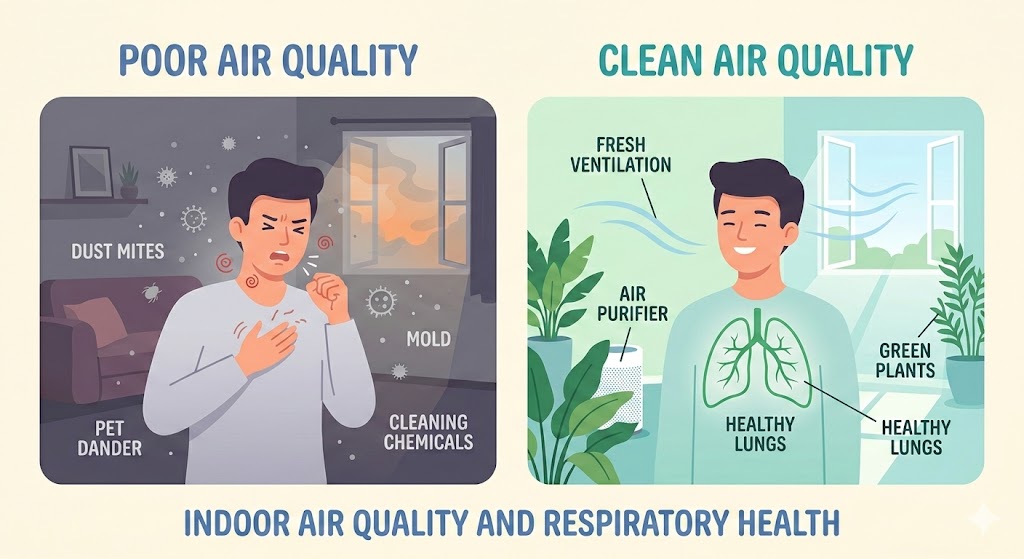
Many people focus on outdoor pollution when thinking about air quality, but the air inside homes and buildings can have an even greater impact on health. Indoor Air Quality plays a crucial role in respiratory health, comfort, and overall well-being.
Since people spend a large portion of their time indoors—whether at home, in offices, or in schools—understanding how Indoor Air Quality affects breathing and lung health is extremely important.
In this guide, we’ll explore what Indoor Air Quality means, the factors that affect it, and practical steps you can take to improve it.
1. What Is Indoor Air Quality?
Indoor Air Quality refers to the condition of the air inside buildings and enclosed spaces. It involves the presence of pollutants, ventilation levels, humidity, and airborne particles that can affect human health.
Good Indoor Air Quality means:
- low levels of pollutants
- adequate ventilation
- balanced humidity
- minimal allergens and irritants
Poor Indoor Air Quality can negatively impact respiratory health and overall comfort.
2. Why Indoor Air Quality Matters for Respiratory Health
The respiratory system is highly sensitive to air pollutants. When Indoor Air Quality is poor, harmful particles and gases can irritate the lungs and airways.
Health effects linked to poor Indoor Air Quality may include:
- coughing and throat irritation
- allergies and asthma flare-ups
- breathing difficulty
- headaches and fatigue
Maintaining good Indoor Air Quality helps protect lung health and improve overall wellness.
3. Common Sources of Indoor Air Pollution
Several everyday sources can affect Indoor Air Quality.
3.1 Household Cleaning Products
Some cleaning products release chemicals into the air that may irritate the respiratory system.
Using natural or low-chemical cleaning products can help improve Indoor Air Quality.
3.2 Cooking Emissions
Cooking, especially with gas stoves, can release pollutants such as nitrogen dioxide and particulate matter.
Proper kitchen ventilation helps maintain healthy Indoor Air Quality.
3.3 Dust and Allergens
Dust mites, pet dander, and pollen can accumulate indoors and affect breathing.
Regular cleaning helps reduce these allergens and improve Indoor Air Quality.
3.4 Mold and Moisture
Excess moisture can lead to mold growth, which releases spores into the air.
Controlling humidity is essential for maintaining good Indoor Air Quality.
4. How Indoor Air Quality Affects the Lungs
When pollutants enter the respiratory system, they can irritate the airways and trigger inflammation.
Poor Indoor Air Quality may worsen conditions such as:
- asthma
- allergies
- chronic respiratory conditions
Children, older adults, and individuals with existing lung conditions may be particularly sensitive to changes in Indoor Air Quality.
5. Signs of Poor Indoor Air Quality
Some indicators that Indoor Air Quality may need improvement include:
- persistent coughing indoors
- frequent headaches or fatigue
- allergy symptoms at home
- musty odors
- visible mold growth
Recognizing these signs can help address Indoor Air Quality issues early.
6. Ways to Improve Indoor Air Quality
Improving Indoor Air Quality often involves simple lifestyle changes and environmental adjustments.
6.1 Increase Ventilation
Opening windows or using ventilation systems helps circulate fresh air and reduce indoor pollutants.
Proper airflow is one of the most effective ways to improve Indoor Air Quality.
6.2 Use Air Purifiers
Air purifiers equipped with high-efficiency particulate filters can help remove airborne particles such as dust and pollen.
These devices can contribute to better Indoor Air Quality in enclosed spaces.
6.3 Maintain Proper Humidity
Ideal indoor humidity levels typically range between 30–50%.
Balanced humidity helps prevent mold growth and improves Indoor Air Quality.
6.4 Clean Regularly
Routine cleaning helps remove dust, allergens, and particles that accumulate indoors.
Vacuuming with high-quality filters and wiping surfaces can significantly improve Indoor Air Quality.
6.5 Choose Low-Emission Products
Selecting products that emit fewer chemicals—such as low-VOC paints and cleaning supplies—can reduce indoor pollution.
This contributes to healthier Indoor Air Quality.
7. Indoor Plants and Air Quality
Some people use indoor plants to enhance Indoor Air Quality.
While plants may contribute to a healthier indoor environment, they should complement—not replace—proper ventilation and air filtration.
8. Indoor Air Quality in Workspaces
Offices and shared indoor spaces can also experience air quality challenges.
Factors affecting Indoor Air Quality in workplaces include:
- ventilation systems
- crowded environments
- indoor pollutants from equipment
Ensuring proper building ventilation helps maintain healthy Indoor Air Quality for employees.
9. Who Is Most Affected by Poor Indoor Air Quality?
Certain groups may be more vulnerable to poor Indoor Air Quality.
These include:
- children
- older adults
- individuals with asthma or allergies
- people with weakened immune systems
Maintaining healthy Indoor Air Quality is particularly important for these populations.
Frequently Asked Questions (FAQ)
Q1: Why is Indoor Air Quality important?
Indoor Air Quality affects respiratory health, comfort, and overall well-being.
Q2: Can poor Indoor Air Quality cause breathing problems?
Yes. Air pollutants and allergens can irritate the lungs and worsen respiratory conditions.
Q3: How can I test Indoor Air Quality?
Air quality monitors and professional inspections can help evaluate Indoor Air Quality levels.
Q4: Do air purifiers improve Indoor Air Quality?
Air purifiers can help reduce airborne particles, improving Indoor Air Quality in enclosed spaces.
Q5: How often should homes be ventilated?
Regular ventilation—such as opening windows daily—can help maintain good Indoor Air Quality.
Final Thoughts
Clean air inside homes and workplaces is essential for maintaining healthy lungs and overall well-being. Indoor Air Quality influences how comfortably we breathe and how effectively our respiratory system functions.
By improving ventilation, reducing indoor pollutants, and maintaining proper humidity levels, individuals can significantly improve Indoor Air Quality and create healthier indoor environments for themselves and their families.
More Related Topics:
Mushroom Complex Supplements Ranked: The Best Functional Mushroom Blends in 2026
Attention Span Recovery Strategy: How to Rebuild Focus
Protein Water Trend Explained 2026: Why This Fitness Drink Is Taking Over the Market