
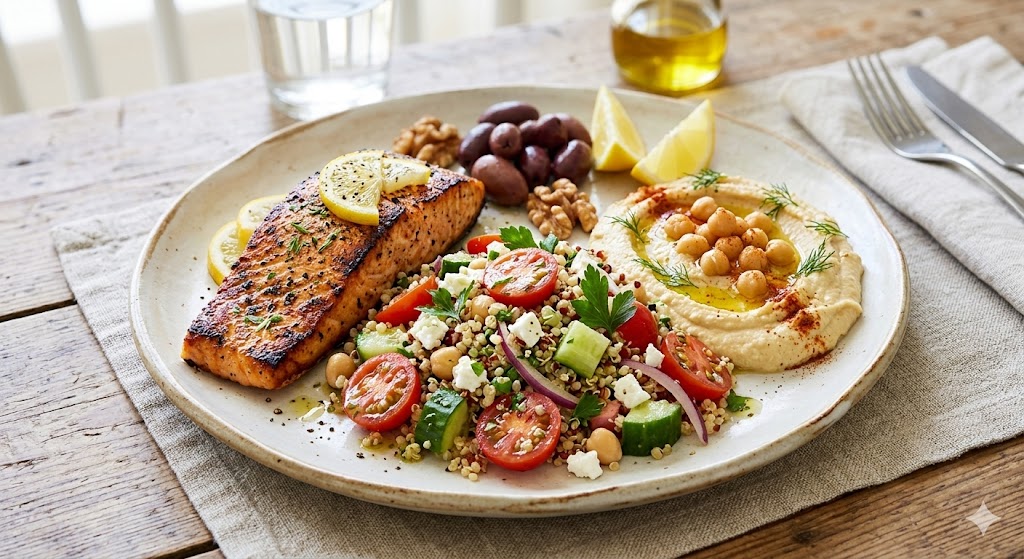
The Mediterranean diet is widely considered one of the healthiest eating patterns in the world. But many people want to increase protein intake for fat loss, muscle support, and metabolic health. That’s where the High Protein Mediterranean Diet comes in.
This modern approach combines the heart-healthy principles of Mediterranean eating with higher protein intake to support weight management, muscle preservation, and stable energy levels.
In this guide, you’ll learn how a High Protein Mediterranean Diet works, which foods to eat, a full meal plan example, and how to follow it successfully.
1. What Is the High Protein Mediterranean Diet?
The High Protein Mediterranean Diet is a modified version of the traditional Mediterranean diet that increases daily protein intake while maintaining the core principles of:
- Whole foods
- Healthy fats
- Lean proteins
- Vegetables and fruits
- Minimal processed foods
Traditional Mediterranean diets contain moderate protein, but a High Protein Mediterranean Diet boosts protein intake to support:
- Muscle maintenance
- Fat loss
- Blood sugar stability
- Long-term metabolic health
2. Why the High Protein Mediterranean Diet Is So Effective
Several reasons explain why the High Protein Mediterranean Diet is gaining popularity.
2.1 Supports Fat Loss
Higher protein intake increases satiety and reduces cravings. People following a High Protein Mediterranean Diet often eat fewer calories naturally.
2.2 Protects Muscle Mass
When losing weight, maintaining muscle is important. A High Protein Mediterranean Diet helps preserve lean muscle while burning fat.
2.3 Improves Heart Health
The Mediterranean eating pattern emphasizes:
- Olive oil
- Nuts
- Fish
- Vegetables
These foods are linked to improved cardiovascular health.
2.4 Stabilizes Blood Sugar
Combining protein with healthy fats and fiber helps prevent glucose spikes. A High Protein Mediterranean Diet can support better insulin sensitivity.
3. Core Principles of the High Protein Mediterranean Diet
To follow a High Protein Mediterranean Diet correctly, focus on these guidelines.
3.1 Increase Lean Protein
Protein sources include:
- Fish
- Eggs
- Greek yogurt
- Chicken
- Lentils
- Beans
- Cottage cheese
Protein should be included in every meal.
3.2 Prioritize Healthy Fats
Healthy fats remain a key part of the High Protein Mediterranean Diet.
Primary sources:
- Olive oil
- Avocados
- Nuts
- Seeds
These fats support heart health and satiety.
3.3 Eat Plenty of Vegetables
Vegetables provide fiber, antioxidants, and micronutrients.
Examples:
- Spinach
- Zucchini
- Tomatoes
- Eggplant
- Broccoli
Vegetables should appear in most meals.
3.4 Choose Smart Carbohydrates
Carbohydrates are not eliminated, but they are chosen carefully.
Best options:
- Whole grains
- Quinoa
- Lentils
- Chickpeas
- Oats
Balanced meals prevent blood sugar spikes.
4. Best Foods for a High Protein Mediterranean Diet
High Protein Foods
- Salmon
- Tuna
- Sardines
- Chicken breast
- Eggs
- Greek yogurt
- Cottage cheese
- Lentils
- Chickpeas
Healthy Fats
- Extra virgin olive oil
- Almonds
- Walnuts
- Pistachios
- Avocado
Vegetables
- Leafy greens
- Bell peppers
- Tomatoes
- Cucumbers
- Asparagus
- Zucchini
Whole Grains
- Brown rice
- Quinoa
- Whole grain bread
- Farro
5. Example High Protein Mediterranean Diet Day
Here is a sample day following a High Protein Mediterranean Diet.
Breakfast
Greek yogurt bowl with:
- Berries
- Chia seeds
- Almonds
Protein: ~25g
Lunch
Mediterranean chicken salad:
- Grilled chicken
- Olive oil dressing
- Tomatoes
- Cucumbers
- Feta cheese
Protein: ~35g
Snack
Hummus with:
- Carrot sticks
- Bell peppers
Protein: ~10g
Dinner
Grilled salmon with:
- Roasted vegetables
- Quinoa
Protein: ~35g
Total protein: ~100g+
6. Weekly High Protein Mediterranean Diet Plan
Monday
Egg omelet + vegetable salad + grilled fish dinner
Tuesday
Greek yogurt breakfast + lentil soup + chicken dinner
Wednesday
Cottage cheese breakfast + tuna salad + salmon dinner
Thursday
Protein smoothie + chickpea salad + grilled chicken dinner
Friday
Eggs + avocado toast + shrimp with vegetables
Saturday
Greek yogurt + nuts + lamb and vegetable stew
Sunday
Omelet breakfast + Mediterranean grain bowl + grilled fish
A rotating plan keeps the High Protein Mediterranean Diet sustainable.
7. Who Should Try the High Protein Mediterranean Diet?
This diet works especially well for:
- People trying to lose weight
- Individuals with insulin resistance
- Athletes
- People wanting heart-healthy nutrition
- Adults seeking longevity-focused diets
The High Protein Mediterranean Diet is flexible and adaptable.
8. Common Mistakes to Avoid
When following a High Protein Mediterranean Diet, avoid:
- Too many refined carbs
- Low protein intake
- Overeating cheese
- Ignoring vegetables
- Using processed oils instead of olive oil
Balance remains essential.
9. How Much Protein Should You Eat?
Typical protein recommendations:
- Sedentary adults: 0.8g/kg body weight
- Active individuals: 1.2–1.6g/kg
- Athletes: 1.6–2.2g/kg
A High Protein Mediterranean Diet usually falls between 1.2–1.8g/kg.
10. Benefits Beyond Weight Loss
Long-term benefits of a High Protein Mediterranean Diet include:
- Reduced heart disease risk
- Better metabolic health
- Improved gut health
- Lower inflammation
- Sustainable long-term eating pattern
Many longevity experts consider Mediterranean eating one of the healthiest diets globally.
Frequently Asked Questions (FAQ)
Q1: Is the High Protein Mediterranean Diet good for weight loss?
Yes. Higher protein intake increases satiety and supports fat loss while maintaining muscle.
Q2: Can vegetarians follow this diet?
Yes. Plant-based proteins like lentils, beans, tofu, and Greek yogurt work well.
Q3: Are carbs allowed?
Yes. Whole grains and legumes are included in moderation.
Q4: Is this diet safe long-term?
Yes. The High Protein Mediterranean Diet emphasizes whole foods and balanced nutrition.
Q5: Do I need supplements?
Not usually. Most nutrients can come from food.
Final Thoughts
The High Protein Mediterranean Diet combines the best of two powerful nutritional approaches: Mediterranean longevity and protein-focused metabolic health.
By emphasizing whole foods, lean protein, healthy fats, and fiber-rich vegetables, this eating pattern supports sustainable weight management and long-term wellness.
If you want a diet that balances nutrition, flavor, and health benefits, the High Protein Mediterranean Diet is one of the most practical and scientifically supported options available today.
More Related Topics:
Wearable Blood Pressure Monitors 2026: The Complete Buyer’s Guide for Smarter Heart Tracking
Virtual Health Coaching Platforms Compared: Which One Is Best in 2026
Blood Sugar Friendly Breakfast Ideas: Smart Morning Meals for Stable Energy in 2026