
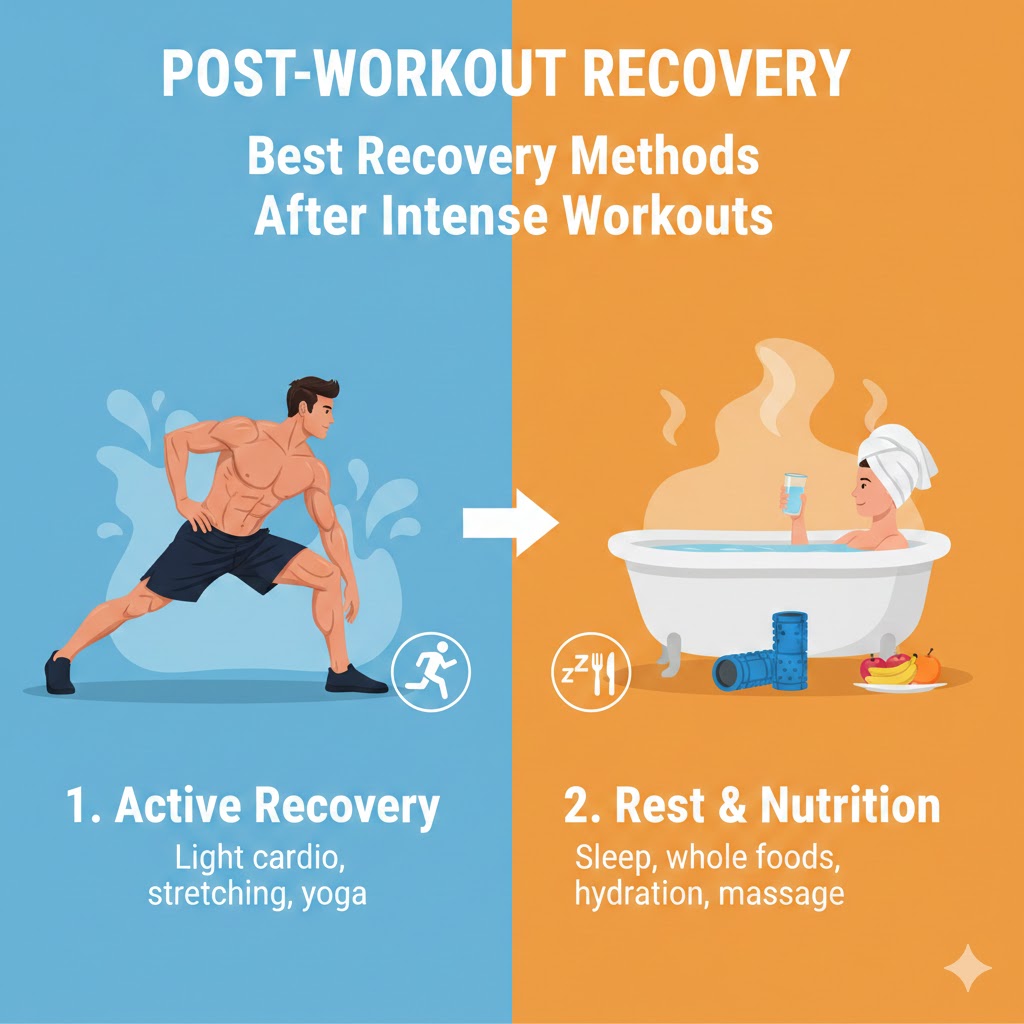
Best Recovery Methods Intense workouts build strength, endurance, and muscle — but progress doesn’t happen during training. It happens during recovery.
If you ignore recovery, you increase fatigue, soreness, injury risk, and performance plateaus. That’s why understanding the Best Recovery Methods is essential whether you’re lifting weights, doing HIIT, running long distances, or training for competition.
In this guide, we’ll break down the most effective recovery strategies supported by sports science and practical experience.


1. Prioritize Quality Sleep
Sleep is the foundation of all recovery.
Why sleep matters:
- Muscle repair increases during deep sleep
- Growth hormone release peaks at night
- Nervous system resets
- Inflammation reduces
Even the most advanced Best Recovery Methods cannot compensate for poor sleep.
Ideal target:
- 7–9 hours per night
- Consistent sleep schedule
- Dark, cool sleeping environment
2. Consume Adequate Protein
Muscles need amino acids to repair.
Post-workout protein guidelines:
- 20–40 grams within 1–2 hours
- Lean sources like eggs, chicken, Greek yogurt
- Protein shakes if convenient
Protein supports muscle repair and growth, making it one of the core Best Recovery Methods.
3. Stay Hydrated
Dehydration slows recovery.
Why hydration helps:
- Supports nutrient transport
- Regulates body temperature
- Reduces muscle cramps
- Improves circulation
Add electrolytes after heavy sweat sessions.
4. Active Recovery
Complete rest isn’t always best.
Active recovery examples:
- Light walking
- Gentle cycling
- Yoga
- Swimming
Low-intensity movement improves circulation and reduces stiffness.
5. Foam Rolling and Myofascial Release
Foam rolling helps reduce muscle tightness.
Benefits:
- Improves blood flow
- Reduces soreness
- Enhances flexibility
- Breaks up muscle tension
Incorporate 5–10 minutes post-workout or on rest days.
6. Stretching for Mobility
Stretching supports joint range of motion.
Two main types:
- Dynamic stretching (before workout)
- Static stretching (after workout)
Flexibility work complements other Best Recovery Methods by preventing stiffness.
7. Cold Therapy (Ice Baths or Cold Showers)
Cold exposure reduces inflammation.
Potential benefits:
- Reduced muscle soreness
- Lower inflammation
- Faster recovery between sessions
However, frequent cold exposure may slightly reduce muscle growth adaptation if overused.
8. Heat Therapy
Heat improves circulation.
When to use:
- Muscle tightness
- Chronic stiffness
- Recovery days
Sauna sessions can also support cardiovascular recovery.
9. Massage Therapy
Professional massage improves tissue relaxation.
Benefits:
- Decreases muscle tension
- Improves blood flow
- Reduces stress hormones
Massage can be one of the more luxurious Best Recovery Methods, but effective.
10. Compression Garments
Compression clothing may assist circulation.
Potential effects:
- Reduced muscle swelling
- Improved recovery time
- Enhanced blood flow
Common among runners and endurance athletes.
11. Balanced Carbohydrate Intake
Carbs restore glycogen stores.
After intense training:
- Rice
- Potatoes
- Fruits
- Whole grains
Glycogen replenishment supports next-day performance.
12. Monitor Training Volume
Overtraining slows recovery.
Warning signs:
- Persistent fatigue
- Reduced performance
- Irritability
- Sleep disruption
Rest days are not weakness — they’re strategy.
13. Breathwork and Nervous System Recovery
Intense training stresses the nervous system.
Recovery breathing methods:
- Slow diaphragmatic breathing
- Box breathing
- Short meditation sessions
Calming the nervous system accelerates physical repair.
14. Supplement Support (Optional)
Some supplements may aid recovery.
Common options:
- Creatine
- Omega-3 fatty acids
- Magnesium
- Tart cherry extract
Supplements enhance — but don’t replace — core Best Recovery Methods like sleep and nutrition.
15. Track Recovery Metrics
Data improves decisions.
Useful indicators:
- Resting heart rate
- Sleep quality
- HRV (Heart Rate Variability)
- Perceived soreness
Tracking prevents burnout.
16. Final Verdict: What Are the Best Recovery Methods?
The most effective Best Recovery Methods are simple and foundational:
- Quality sleep
- Proper nutrition
- Hydration
- Smart training balance
- Active recovery
Advanced tools like cold therapy, massage, and compression can help — but basics always come first.
Recovery is not optional. It’s part of performance.
Frequently Asked Questions (FAQ)
Q1. How long does muscle recovery take?
Typically 24–72 hours depending on intensity and fitness level.
Q2. Are ice baths necessary?
Helpful but not essential for most people.
Q3. Is stretching required after every workout?
Not mandatory, but beneficial for flexibility.
Q4. Can I train daily if I recover well?
Possibly, but muscle groups should rotate to avoid overuse.
Q5. What is the fastest recovery method?
Sleep combined with proper nutrition is most powerful.
Conclusion
Intense workouts challenge the body — recovery rebuilds it stronger. The real gains happen when training stress is balanced with strategic rest.
If you apply these Best Recovery Methods consistently, you’ll experience better performance, reduced soreness, and fewer injuries over time.
Train hard. Recover smarter.
More Related Topics:
Collagen Benefits for Skin and Joints (What Science Really Says)
Intermittent Fasting 16:8 Benefits Explained (Complete Beginner’s Guide)
Adaptogenic Herbs for Stress and Energy Balance (Natural Resilience Support)