
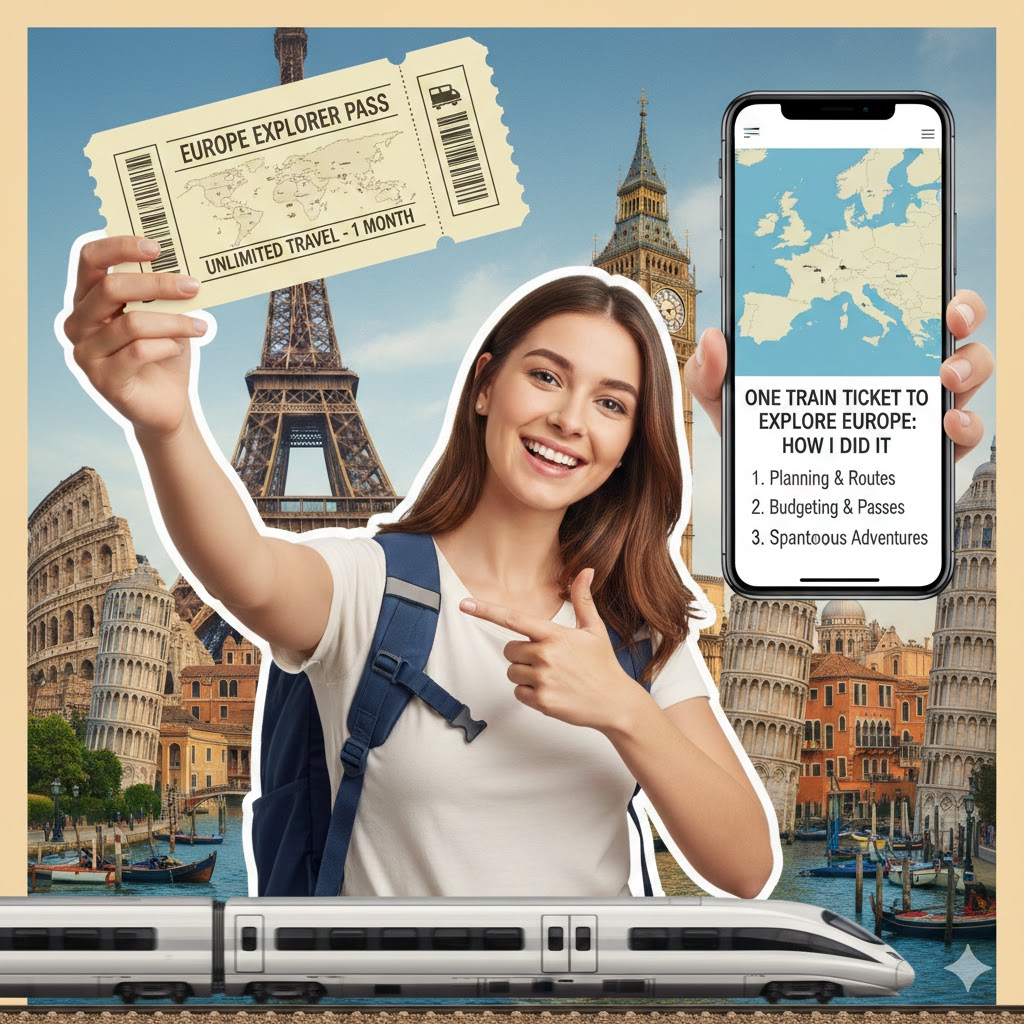
There’s something romantic about the idea of seeing Europe by train — watching landscapes change from snowy Alps to Mediterranean coastlines without airport stress or baggage fees.
What if I told you I explored multiple countries with One Train Ticket to Explore Europe?
No constant bookings.
No repeated airport security.
No expensive last-minute flights.
Just one rail pass, a backpack, and a flexible route.
This is how I did it — including the route, costs, mistakes, and practical tips.

1. What Is the “One Train Ticket” Option?
The ticket I used was the Eurail (for non-Europeans).
European residents use Interrail.
This rail pass allows travel across multiple countries using one flexible ticket.
That’s how I managed One Train Ticket to Explore Europe without booking separate train tickets in each country.
2. How the Rail Pass Works
You choose:
- Number of travel days (e.g., 7 days within 1 month)
- Type of coverage (Global Pass for multiple countries)
Each travel day lets you board multiple trains within 24 hours.
This flexibility is what makes One Train Ticket to Explore Europe such a powerful travel hack.
3. My Exact Route (14-Day Trip)
Here’s the route I followed:
- Paris
- Geneva
- Interlaken
- Milan
- Venice
- Vienna
- Budapest
- Prague
Each destination was connected by scenic rail journeys.
4. Why Train Travel Beats Flying in Europe
After this trip, I understood why locals prefer trains.
Benefits:
- City-center to city-center travel
- No long airport wait times
- Scenic countryside views
- Comfortable seating
- Eco-friendly option
With One Train Ticket to Explore Europe, transitions felt seamless.
5. Cost Breakdown
Here’s what I spent (approximate):
Rail Pass:
€300–€450 (depending on age & pass type)
Seat Reservations:
€10–€30 per high-speed train (varies by country)
Accommodation (budget style):
€20–€40 per night (hostels)
Food:
€15–€25 per day
Total 2-week budget: Around €900–€1,200 (excluding shopping).
6. Scenic Train Highlights
Some journeys were more memorable than the destinations.
Top scenic routes:
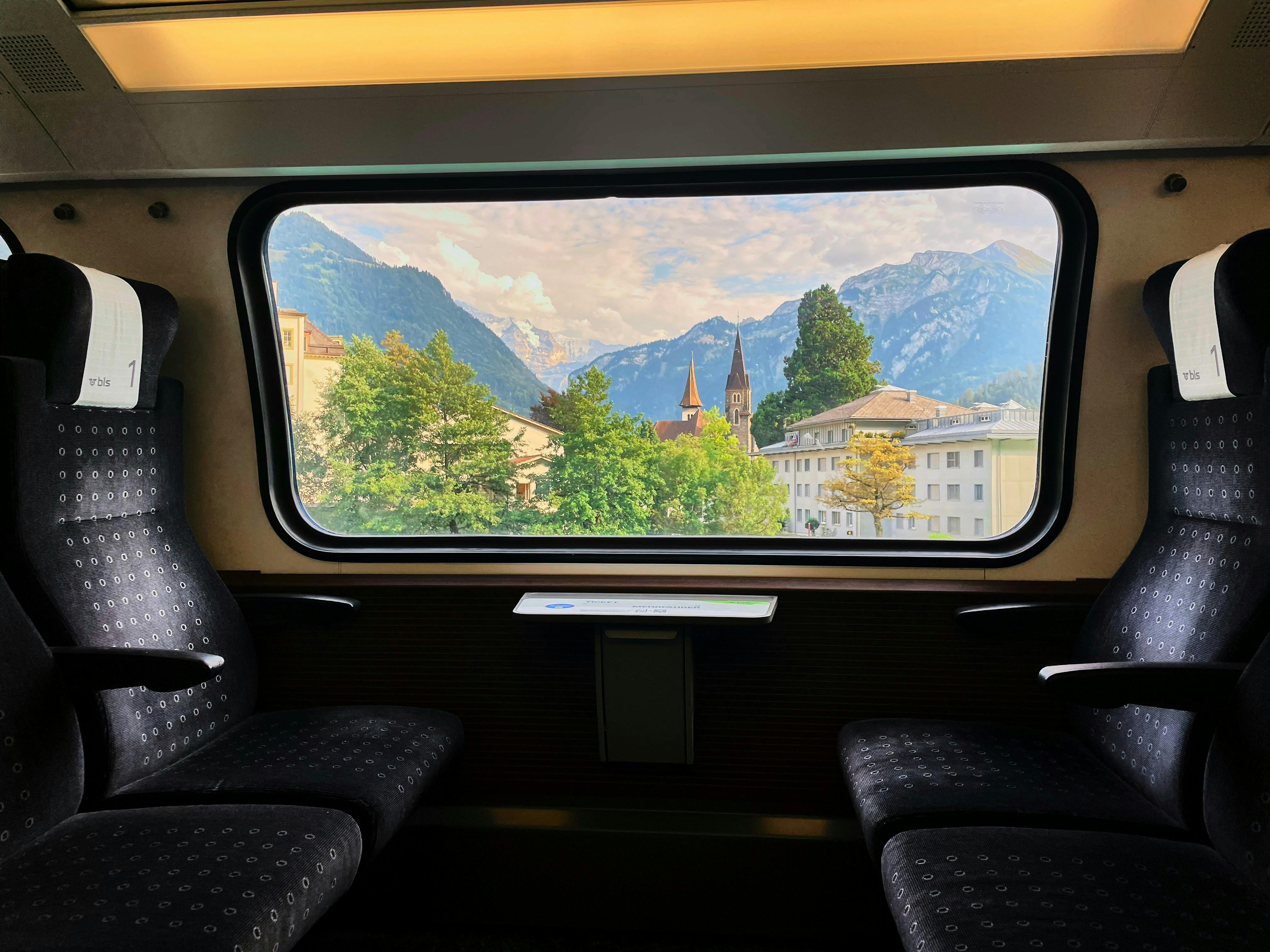
- Swiss Alps between Geneva and Interlaken
- Italian countryside from Milan to Venice
- Austrian mountain landscapes
Trains in Switzerland were especially cinematic.
7. Mistakes I Made
If you’re planning One Train Ticket to Explore Europe, avoid these:
- Not reserving seats early (high-speed trains fill fast)
- Overpacking luggage
- Not checking night train options
- Ignoring regional train alternatives
Planning matters — even with flexibility.
8. Best Countries for Rail Travel
Based on my experience:
Excellent Rail Systems:
- Switzerland
- Austria
- Germany
- France
Eastern Europe trains were affordable and comfortable.
9. Is It Worth the Price?
For flexibility and convenience, yes.
If you plan 5–7 intercity journeys, the pass often saves money compared to buying separate tickets.
But it’s most valuable when you prioritize:
- Scenic routes
- Flexible scheduling
- Multiple countries
That’s when One Train Ticket to Explore Europe truly shines.
10. Who Should Use This Travel Method?
Ideal for:
- Backpackers
- Solo travelers
- Couples
- Slow travelers
- First-time Europe explorers
Not ideal for:
- Very short 3–4 day trips
- Single-country travel only
11. How to Plan Your Route Smartly
Tips I learned:
- Avoid too many one-night stays
- Group nearby cities
- Leave buffer days
- Book accommodation near train stations
The key to enjoying One Train Ticket to Explore Europe is pacing.
12. Packing Tips for Train Travel
Train travel is luggage-friendly — but minimalism helps.
Pack:
- Carry-on size backpack
- Lightweight clothing layers
- Portable charger
- Snacks for long routes
Platforms sometimes require quick transfers.
13. Safety & Comfort
European trains are generally safe.
Tips:
- Keep valuables close
- Lock backpack if sleeping
- Arrive 15 minutes early
Trains are far less stressful than airports.
14. Travel Timing Strategy
Best months:
- May–June
- September–October
Avoid peak July–August if you want fewer crowds.
15. Would I Do It Again?
Absolutely.
Watching Europe unfold from a train window creates a slower, more immersive experience. Airports disconnect you from landscapes — trains immerse you in them.
Using One Train Ticket to Explore Europe gave me flexibility without sacrificing adventure.
16. Final Verdict
If your goal is to see multiple countries efficiently while enjoying the journey itself, this method is unbeatable.
One Train Ticket to Explore Europe is more than a cost-saving strategy — it’s a travel philosophy focused on experience over speed.
Instead of rushing between airports, you glide through borders naturally, watching mountains, villages, and coastlines change in real time.
It’s freedom on rails.
Frequently Asked Questions (FAQ)
Q1. Is the Eurail pass worth it in 2026?
Yes, especially for multi-country travel.
Q2. Do I need seat reservations?
For many high-speed trains, yes.
Q3. Is it cheaper than flights?
Sometimes similar in price, but far more flexible.
Q4. Can I use it for unlimited travel?
You’re limited to chosen travel days within your pass.
Q5. Is it good for first-time Europe travelers?
Yes, it simplifies logistics significantly.
Conclusion
Europe is designed for rail travel. Cities connect smoothly, landscapes are breathtaking, and transitions feel effortless.
If you want flexibility, comfort, and scenic adventure, One Train Ticket to Explore Europe might be the smartest way to experience the continent.
Also read this:
Sikkim Tour Guide 2026: Best Tourist Places & Travel Tips
Faroe Islands Scenic Travel Guide 2026 (Waterfalls, Cliffs & Hidden Nordic Beauty)
Patagonia Hiking Travel Guide for Beginners (Trails, Costs & Planning Tips)