
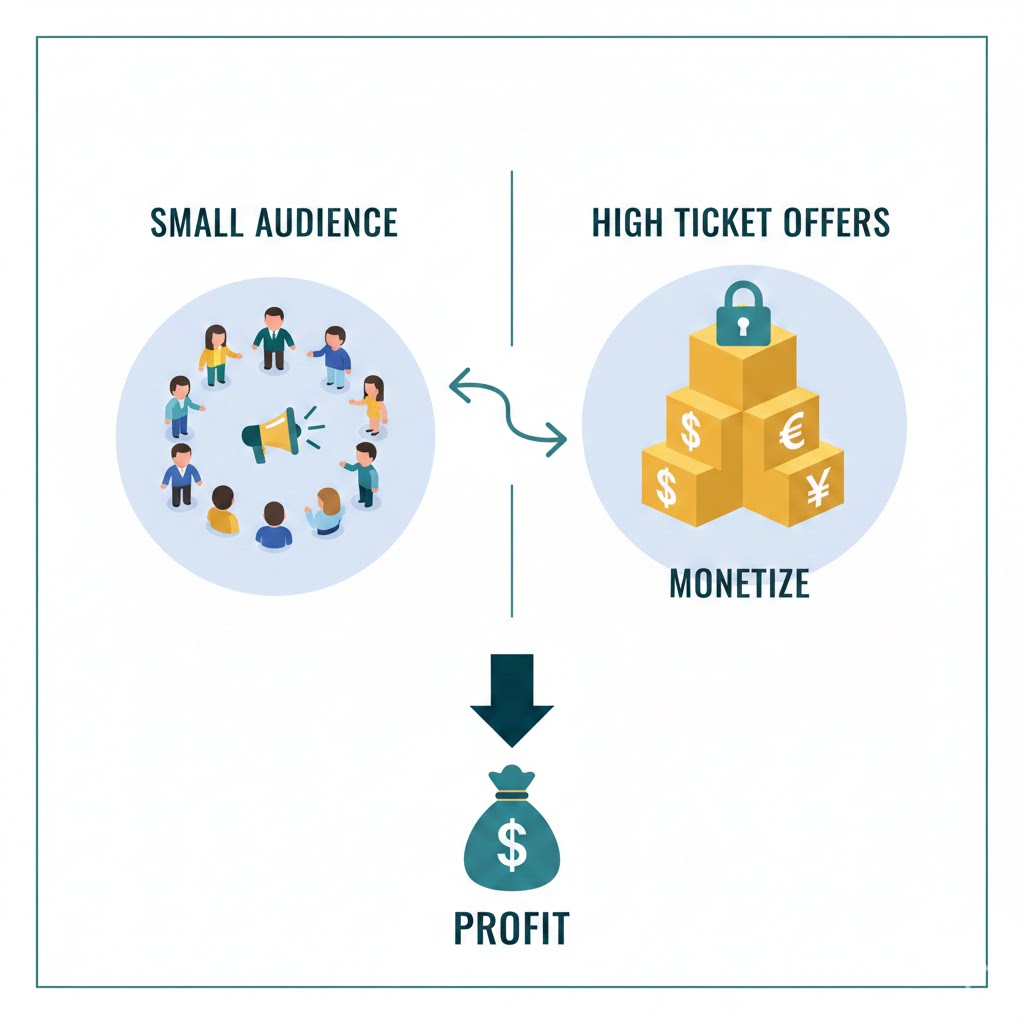
Monetize Small Audience Most creators believe they need 100,000 followers before they can make serious money. That’s outdated thinking.
In 2026, the smarter strategy is simple: Monetize Small Audience with high-ticket offers. Instead of chasing vanity metrics, you focus on depth, trust, and premium positioning.
A small but engaged audience can generate more income than a massive passive one — if structured correctly.
This guide breaks down exactly how to do it.
1. Why Small Audiences Are More Profitable Than You Think
Big audiences often mean:
- Low engagement
- Low trust
- Low buying intent
Small audiences often mean:
- Strong personal connection
- Higher authority perception
- Faster decision-making
When you Monetize Small Audience, your goal isn’t reach — it’s relevance.
2. What Is a High Ticket Offer?
High-ticket typically means:
- $500
- $1,000
- $2,000+
- Or recurring $300–$1,000/month
Examples:
- Coaching programs
- Consulting services
- Done-for-you services
- Intensive workshops
- Premium masterminds
Selling one $2,000 offer is easier than selling 200 $10 products.
3. The Math That Changes Everything
Let’s break it down:
If you have:
- 1,000 followers
- 100 engaged subscribers
- 10 serious prospects
Closing 5 clients at $2,000 = $10,000
That’s how you Monetize Small Audience without going viral.
4. Step 1: Choose a High-Value Problem
High-ticket offers solve expensive problems.
Examples:
- Increase revenue
- Save time
- Improve health
- Get clients
- Improve career positioning
The bigger the pain point, the higher the price ceiling.
5. Step 2: Position Yourself as a Specialist
Generalists struggle with high-ticket pricing.
Instead of:
“Business Coach”
Say:
“LinkedIn Lead Generation Coach for B2B Consultants”
Specific positioning increases perceived value instantly.
6. Step 3: Build Authority With Depth, Not Volume
To successfully Monetize Small Audience, focus on:
- Detailed case studies
- Educational threads
- Long-form posts
- Proof of results
- Clear frameworks
Depth builds trust faster than frequency.
7. Step 4: Create a Premium Offer Structure
High-ticket offers need structure.
Include:
- Clear transformation
- Defined timeline
- Step-by-step roadmap
- Accountability
- Personalized support
People pay for outcomes, not information.
8. Step 5: Build a Simple Sales Funnel
You don’t need complex funnels.
Simple structure:
- Content builds authority
- Call-to-action to book call
- Discovery call
- Close
When you Monetize Small Audience, relationship-based selling works best.
9. Pricing Strategy for Small Audiences
Avoid underpricing.
Pricing psychology:
- Higher price increases perceived value
- Fewer clients = more focus
- Better client results = stronger testimonials
Premium positioning attracts serious buyers.
10. Sales Without Feeling Pushy
High-ticket sales are conversations, not pressure tactics.
Focus on:
- Understanding the client’s pain
- Diagnosing the gap
- Presenting your solution
If your solution genuinely helps, selling becomes service.
11. Platforms That Work Best
You don’t need every platform.
Best for high-ticket:
- Instagram (educational niche)
- Twitter/X
- YouTube (authority building)
- Email list
Consistency on one platform is better than scattered presence.
12. Build Trust Through Micro-Wins
Before selling high-ticket:
- Offer free audits
- Provide small tips
- Share frameworks
- Publish mini-guides
Micro-value builds macro-sales.
13. Common Mistakes When You Monetize Small Audience
Avoid these:
- Selling low-ticket products only
- Trying to serve everyone
- No clear transformation promise
- Weak call-to-action
- Fear of charging premium rates
Confidence is part of premium branding.
14. Timeline Expectations
Month 1–2: Authority building
Month 3–4: First sales calls
Month 4–6: Consistent high-ticket sales
It compounds as testimonials grow.
15. Scaling After Validation
Once validated:
- Raise prices
- Create group programs
- Add recurring retainers
- Build referral systems
High-ticket scaling is about leverage, not volume.
16. Final Verdict: Is It Smart to Monetize Small Audience?
Yes — especially in 2026’s crowded digital space.
To Monetize Small Audience successfully, you need:
- Clear niche
- Expensive problem
- Structured premium offer
- Authority-driven content
- Consistent outreach
You don’t need more followers.
You need better positioning.
Small audience + high-ticket = high-profit simplicity.
Frequently Asked Questions (FAQ)
Q1. How small is “small audience”?
Even 500–1,000 engaged followers can be enough.
Q2. Do I need a website?
Helpful, but not required. Authority matters more.
Q3. What if I don’t have testimonials yet?
Offer beta pricing to first clients in exchange for results documentation.
Q4. How do I find prospects?
Engage in conversations, DMs, email replies, and discovery calls.
Q5. Is high-ticket harder to sell?
No — it’s often easier because fewer buyers are needed.
Conclusion
The internet rewards depth over size in 2026. If you focus on solving meaningful problems and building genuine authority, you can confidently Monetize Small Audience without chasing viral growth.
Stop thinking in followers.
Start thinking in transformations.
High-ticket offers turn small audiences into serious income streams.
Also read this:
3 Ways to Make Money Using Canva (Full Roadmap for 2026)
Create a Paid AI Resource Library Website (Build a Recurring Income Asset in 2026)
AI Course Generator Website Idea 2026 (Build Once, Sell Forever)