
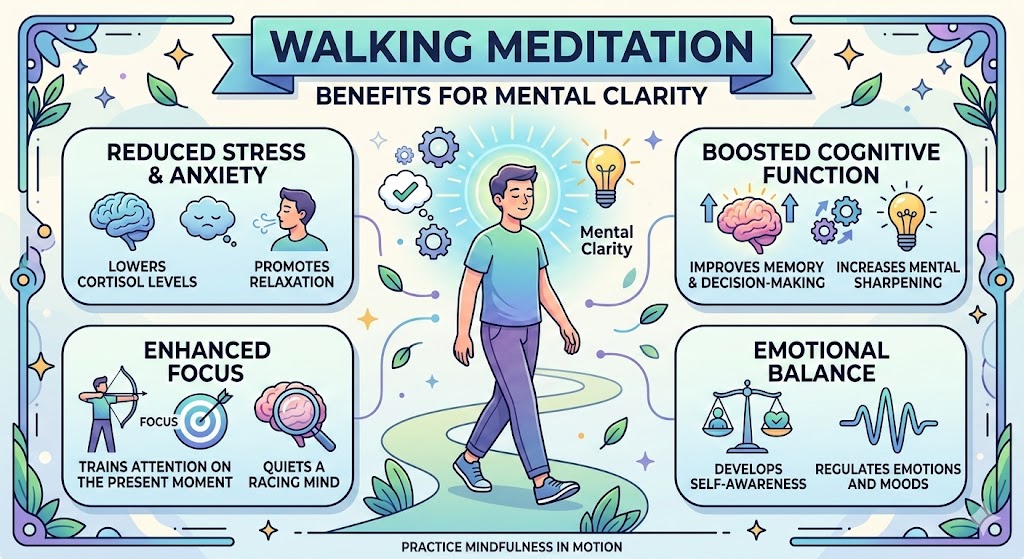
Walking Meditation Benefits Mental clarity has become one of the most sought-after states in modern life—and one of the hardest to achieve. Constant notifications, decision overload, and long hours of sitting leave many people feeling mentally foggy, restless, and disconnected.
While traditional seated meditation works for some, many people struggle to sit still or quiet the mind. This is where walking meditation offers a powerful alternative.
Walking meditation combines gentle movement with mindful awareness, making it accessible, grounding, and highly effective for everyday life. In this guide, we’ll explore Walking Meditation Benefits, how the practice works, and why it’s one of the most underrated tools for mental clarity and emotional balance.
1. What Is Walking Meditation?
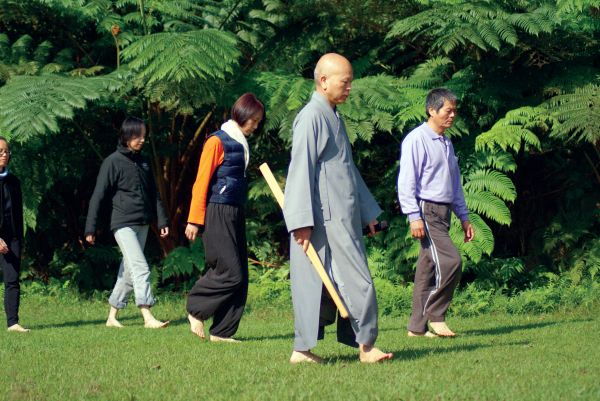
Walking meditation is a mindfulness practice where attention is focused on the act of walking rather than thoughts or distractions.
Core elements of walking meditation
- Slow, intentional steps
- Awareness of movement and breath
- Attention on bodily sensations
- Non-judgmental observation of thoughts
Unlike walking for exercise, the goal is awareness—not distance or speed.
2. Why Walking Meditation Is Ideal for Mental Clarity
Mental clarity comes from calming the nervous system.
Why walking helps the mind
- Gentle movement reduces stress hormones
- Rhythmic motion soothes the brain
- Focus on the present interrupts mental loops
These effects explain many Walking Meditation Benefits, especially for people with busy or anxious minds.
3. Walking Meditation Benefits for Mental Focus
One of the most immediate benefits is improved focus.
How focus improves
- Reduces mental clutter
- Trains attention gently
- Improves present-moment awareness
Over time, this carries into daily tasks like work, decision-making, and conversations.
4. Walking Meditation vs Seated Meditation
Walking meditation is not a replacement—it’s an alternative.
Key differences
- Seated meditation emphasizes stillness
- Walking meditation emphasizes mindful movement
- Walking is easier for restless or tense individuals
Many people experience deeper clarity while moving than while sitting.
5. How Walking Meditation Reduces Mental Overload
Mental overload often comes from constant stimulation.
Walking meditation helps by
- Lowering sensory input
- Creating mental space
- Shifting focus from thoughts to sensations
This reset effect is a core part of Walking Meditation Benefits.
6. The Role of Breath in Walking Meditation
Breath anchors attention.
Common approaches
- Matching steps to breath
- Simply observing natural breathing
- Using breath as a grounding point
Breath awareness stabilizes the mind and deepens clarity.
7. Emotional Balance and Stress Reduction
Mental clarity improves when emotions are regulated.
Emotional benefits
- Reduced anxiety
- Improved mood stability
- Greater emotional awareness
Walking meditation provides emotional processing without forcing analysis.
8. Walking Meditation Benefits for Creativity and Insight
Clarity often leads to insight.
Why ideas flow better
- Relaxed focus encourages creative thinking
- Reduced pressure allows insights to emerge
- Natural environments enhance reflection
Many people report breakthroughs during mindful walks.
9. Where to Practice Walking Meditation
The environment matters—but doesn’t need to be perfect.
Ideal locations
- Parks or gardens
- Quiet sidewalks
- Forest trails
- Even indoor hallways
The key is safety and minimal distraction.
10. How Long Should Walking Meditation Last?
Duration can be flexible.
Recommended practice times
- Short reset: 5–10 minutes
- Deeper clarity: 15–30 minutes
- Extended practice: 45 minutes or more
Even brief sessions deliver noticeable Walking Meditation Benefits.
11. How Often Should You Practice?
Consistency matters more than duration.
Practical frequency
- Daily short walks
- Stress-triggered sessions
- Transition moments (before work, after meetings)
Regular practice compounds benefits.
12. Walking Meditation for Busy Schedules
This practice fits into real life.
Easy integration ideas
- Walking to work mindfully
- Lunch break walks
- Evening decompression walks
No special equipment or time blocks required.
13. Common Mistakes Beginners Make
Avoid these issues to get better results.
Mistakes to avoid
- Walking too fast
- Overthinking technique
- Expecting instant calm
- Treating it as exercise
Walking meditation is about awareness, not performance.
14. Signs Walking Meditation Is Working
Progress shows up subtly.
Positive signs
- Quieter inner dialogue
- Improved concentration
- Reduced reactivity
- Greater sense of presence
Mental clarity often arrives gently, not dramatically.
15. Who Benefits Most from Walking Meditation?
Walking meditation is especially helpful for:
- Desk workers
- Highly stressed individuals
- People who dislike seated meditation
- Anyone seeking mental clarity
Its accessibility is one of the strongest Walking Meditation Benefits.
16. Final Verdict: Why Walking Meditation Is a Modern Essential
In a world that rarely slows down, walking meditation offers clarity without withdrawal from life. The Walking Meditation Benefits extend beyond calm—they reshape how the mind responds to stress, distraction, and constant input.
It’s not about escaping thoughts, but learning to move through life with awareness and ease.
Frequently Asked Questions (FAQ)
Q1. What are walking meditation benefits?
They include improved mental clarity, reduced stress, better focus, and emotional balance.
Q2. Is walking meditation better than sitting meditation?
Not better—just different. Many people find it more accessible.
Q3. Do I need a quiet place to practice?
Quiet helps, but mindful walking can be done almost anywhere.
Q4. How long does it take to see results?
Some benefits appear immediately; deeper clarity builds over weeks.
Q5. Can beginners practice walking meditation?
Yes. It’s one of the easiest mindfulness practices to start.
Conclusion
Mental clarity doesn’t always come from sitting still—it often comes from moving with awareness. Walking Meditation Benefits show that mindfulness can fit into everyday life without complexity or pressure.
In just a few mindful steps, the mind begins to settle, focus sharpens, and clarity returns—one walk at a time.
More Related Topics:
Posture Correction Exercises for Desk Workers (Fix Pain, Boost Energy, Work Better)
Zone 2 Cardio Benefits for Fat Loss & Longevity (The Smartest Way to Train)
Blood Flow Restriction Bands Benefits and Safety: A Practical Guide