
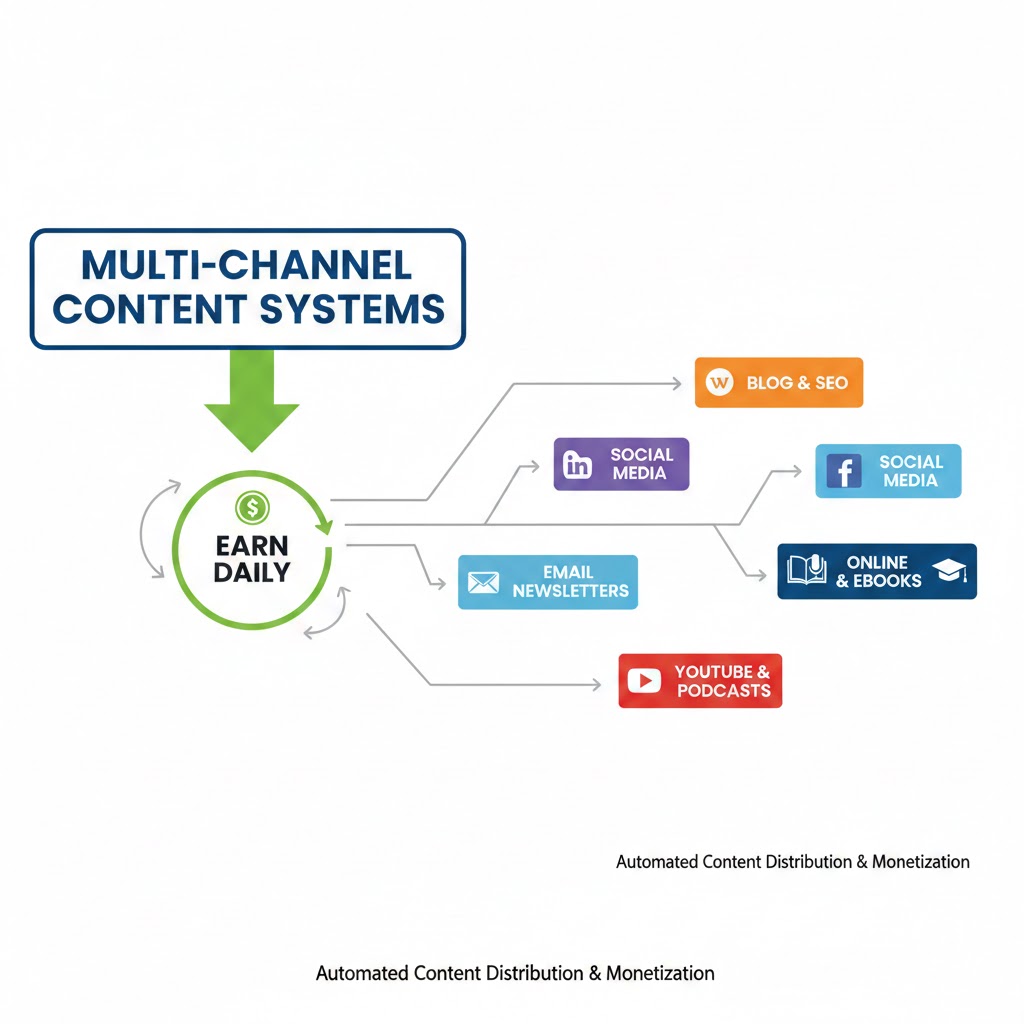
Multi-Channel Content Systems Most creators and online businesses fail not because their content is bad—but because their content works only once. A post goes viral, traffic spikes, revenue bumps briefly, and then everything drops back to zero. This cycle is exhausting and unsustainable.
The solution isn’t creating more content. It’s building systems.
Multi-Channel Content Systems are designed to distribute, repurpose, and monetize content across multiple platforms simultaneously—creating consistent daily income instead of unpredictable spikes. This guide explains how these systems work, why they outperform single-platform strategies, and how they are becoming the foundation of modern digital income.
1. What Are Multi-Channel Content Systems?
Multi-Channel Content Systems are structured frameworks where one core piece of content is strategically adapted and distributed across multiple platforms—each with its own monetization layer.
Core characteristics
- One content source, many outputs
- Platform-specific optimization
- Automated or semi-automated workflows
- Multiple income streams running in parallel
Instead of “posting everywhere,” these systems focus on intentional distribution with revenue built in.
2. Why Single-Platform Content Is Risky
Relying on one platform is one of the biggest mistakes creators make.
Risks of single-channel dependency
- Algorithm changes can destroy reach overnight
- Accounts can be suspended or demonetized
- Revenue streams are fragile
- Growth is capped by platform rules
Multi-Channel Content Systems reduce risk by spreading visibility and income across ecosystems.
3. How Multi-Channel Content Systems Earn Daily
Daily earnings come from compounding exposure and evergreen monetization.
How income becomes consistent
- Content lives longer across platforms
- Multiple monetization points per asset
- Different audience behaviors captured simultaneously
- Revenue doesn’t rely on virality
Even low daily earnings from multiple channels add up predictably.
4. The Core Pillar Content Model
Every system starts with a content pillar.
Common pillar formats
- Long-form blog posts
- YouTube videos
- Podcasts
- Research-based articles
- Tutorials or explainers
This pillar content is the “source of truth” for everything else.
5. Content Repurposing: One-to-Many Strategy
Repurposing is where systems outperform manual posting.
Example repurposing flow
- Long blog → short social posts
- Video → clips → shorts → reels
- Podcast → quotes → carousels
- Article → email newsletter → push notification
Each output feeds a different platform while reinforcing the same idea.
6. Platform Roles Inside Multi-Channel Content Systems
Each platform serves a specific function.
Typical role breakdown
- Search platforms: Long-term traffic (blogs, YouTube)
- Social platforms: Discovery and reach
- Email lists: Ownership and conversion
- Community platforms: Retention and loyalty
This division prevents random posting and focuses on outcomes.
7. Monetization Layers That Run Daily
Earnings come from stacking monetization, not choosing one method.
Common monetization layers
- Display ads
- Affiliate links
- Digital products
- Subscriptions or memberships
- Lead generation for services
A single piece of content can activate multiple income paths.
8. Evergreen Content Is the Engine
Daily income requires content that doesn’t expire.
Evergreen content traits
- Solves ongoing problems
- Not dependent on trends
- Search-friendly
- Regularly updated
Multi-Channel Content Systems prioritize assets that keep earning months or years later.
9. Automation and Workflow Design
Systems scale when manual effort decreases.
Automation examples
- Scheduled publishing tools
- Content repurposing templates
- Auto-email sequences
- Analytics dashboards
Automation doesn’t remove creativity—it protects it.
10. Audience Behavior Across Channels
Different platforms attract different user intent.
Behavioral differences
- Search users want solutions
- Social users want discovery
- Email subscribers want value and trust
- Community members want connection
Multi-channel systems capture all of these simultaneously.
11. Data Feedback Loops
Systems improve through feedback.
What to track
- Which platform converts best
- Which content formats earn more
- Where drop-offs happen
- Which topics compound fastest
Data-driven iteration increases daily earnings over time.
12. Multi-Channel Content Systems for Small Creators
You don’t need a team to build systems.
Solo-friendly approach
- Start with 2–3 platforms
- Use templates
- Focus on one niche
- Monetize early
Small systems outperform chaotic scale.
13. Why Systems Beat Hustle Long-Term
Hustle creates burnout. Systems create leverage.
System advantages
- Predictable income
- Less emotional dependency on performance
- Easier scaling
- Sellable digital assets
A system keeps earning even when you stop posting temporarily.
14. Common Mistakes to Avoid
Systems fail when strategy is missing.
Mistakes to avoid
- Posting without monetization intent
- Repurposing without platform optimization
- Tracking vanity metrics only
- Over-expanding too early
Focus beats volume every time.
15. Long-Term Value of Multi-Channel Content Systems
These systems compound like digital real estate.
Long-term benefits
- Stable daily revenue
- Growing audience ownership
- Increased brand authority
- Higher business valuation
This is why serious creators shift from content creation to system building.
16. The Future of Daily-Earning Content Models
The creator economy is maturing.
What’s changing
- Platforms favor consistent systems
- AI accelerates repurposing
- Audiences expect omnipresence
- Passive-first content models dominate
Multi-Channel Content Systems are becoming the standard—not the exception.
Frequently Asked Questions (FAQ)
Q1. What are Multi-Channel Content Systems?
They are structured frameworks that distribute and monetize content across multiple platforms simultaneously.
Q2. Can beginners build these systems?
Yes. Starting small with clear workflows is ideal for beginners.
Q3. Do I need to be on every platform?
No. Choose platforms based on your audience and goals.
Q4. How long does it take to earn daily?
With evergreen content, earnings can start small and compound over weeks or months.
Q5. Are these systems passive?
They are semi-passive—requiring setup and optimization but less daily effort over time.
Conclusion
Daily online income isn’t about working harder—it’s about building smarter. Multi-Channel Content Systems transform content from one-time posts into long-term earning assets by combining distribution, repurposing, and layered monetization.
Creators who master systems stop chasing algorithms and start building leverage. In a digital economy driven by attention, systems—not hustle—are what turn content into consistent income.
Also read this:
Website as a Product: New Monetization Models Reshaping Online Business
Monetizing Custom AI Models Without Building One
Personal AI Managers: How Individuals Are Monetizing Them in 2026