
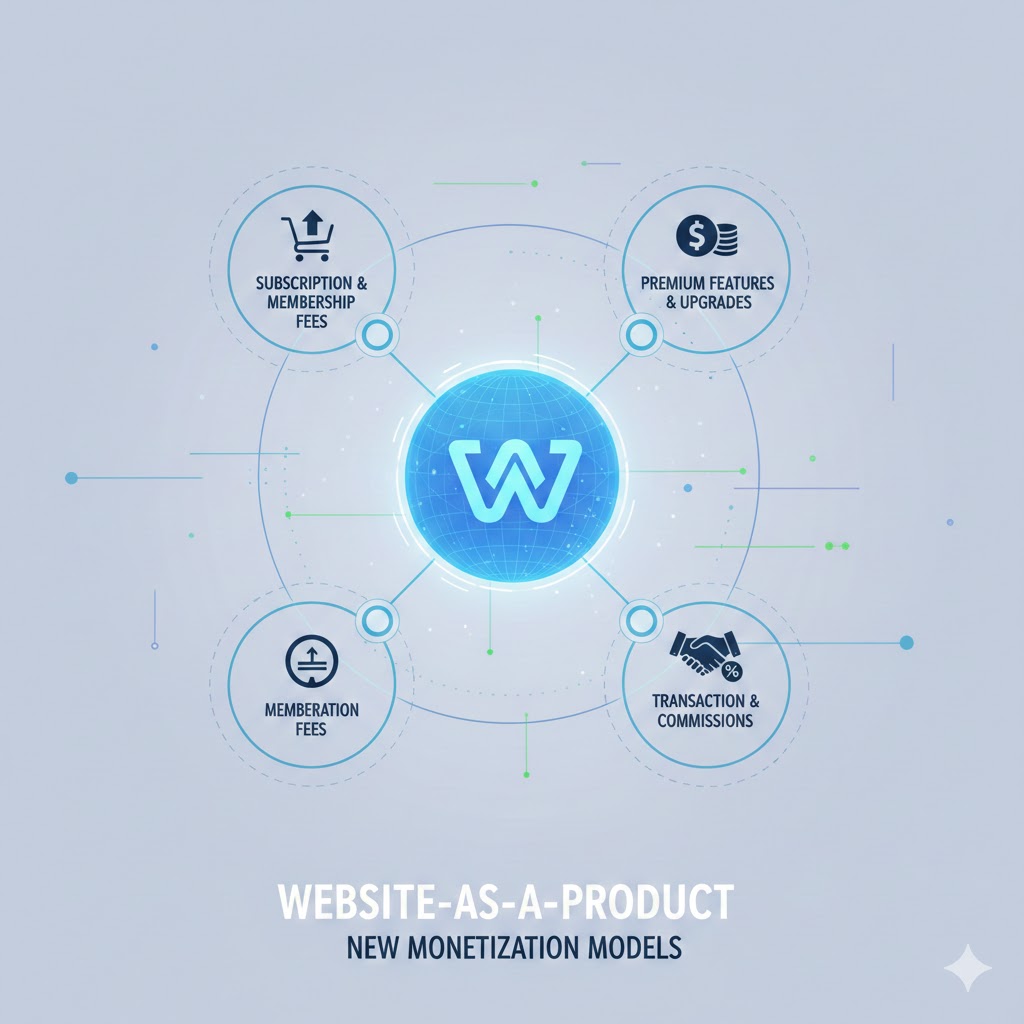
Website as a Product For years, websites were treated mainly as marketing tools—digital brochures, content hubs, or traffic funnels pointing users toward something else. That mindset is changing rapidly. Today, the website itself is becoming the product.
This shift has unlocked entirely new revenue streams, allowing creators, founders, and businesses to monetize directly without relying solely on ads, sponsorships, or external platforms. The concept of Website as a Product represents a fundamental evolution in how digital value is created and captured.
This guide breaks down what it means to treat a website as a product, explores emerging monetization models, and explains why this approach is shaping the future of online income.

1. What Does “Website as a Product” Mean?
Traditionally, websites supported products or services. In the Website as a Product model, the website is the core offering.
Key defining traits
- Users pay to access the site itself
- Value is delivered directly through the platform
- Continuous improvement like a software product
- Revenue tied to usage, access, or outcomes
The website is no longer just a channel—it’s the value engine.
2. Why the Website as a Product Model Is Growing
Several market shifts are driving this transformation.
Key growth factors
- Creator economy expansion
- Subscription fatigue with external platforms
- Rising ad costs and declining ad trust
- Demand for owned audiences
Owning the product and the audience gives creators long-term control and stability.
3. How Website as a Product Differs from Traditional Websites
Understanding the difference is critical.
Traditional website
- Free content
- Monetized indirectly (ads, leads, affiliates)
- Limited user interaction
Website as a Product
- Paid access or premium features
- Direct value delivery
- Continuous feature updates
- User-centric experience
This shift aligns websites more closely with SaaS and digital tools.
4. Core Value Drivers of a Website as a Product
For users to pay, value must be clear and consistent.
Common value drivers
- Exclusive content or tools
- Time savings or automation
- Specialized data or insights
- Community access
- Ongoing updates
Successful websites solve a specific problem repeatedly.
5. Subscription-Based Monetization Models
Subscriptions are one of the most popular models.
How subscriptions work
- Monthly or annual access fees
- Tiered pricing structures
- Feature-based access levels
This model provides predictable revenue and long-term customer relationships—key benefits of the Website as a Product approach.
6. Paywall and Premium Content Models
Content itself can become the product.
Examples
- Research portals
- Niche educational platforms
- Professional resources
- Exclusive industry insights
When information is scarce or high-value, users are willing to pay for access.
7. Tool-Based and Utility Websites
Some websites provide functional tools rather than content.
Tool-based product examples
- Calculators and estimators
- AI-powered generators
- Data analysis dashboards
- Planning and workflow tools
In these cases, the website replaces software downloads or external apps.
8. Community-Driven Monetization Models
Communities are becoming powerful products.
Community-as-product features
- Private forums or groups
- Member-only discussions
- Expert access
- Networking opportunities
The website becomes the infrastructure that hosts and protects community value.
9. Usage-Based and Credit Models
Some websites charge based on usage.
How it works
- Pay-per-action
- Credit-based systems
- Tiered usage limits
This model aligns pricing directly with user value received.
10. Data and Insight Monetization
Data-rich websites are uniquely positioned.
Data-driven product models
- Market dashboards
- Trend tracking platforms
- Competitive analysis tools
Users pay for clarity, speed, and better decision-making.
11. Audience Renting and Micro-Access Models
A newer evolution of Website as a Product involves controlled access.
Examples
- Brands pay to access a niche audience
- Temporary access passes
- Campaign-specific visibility
The website becomes a controlled marketplace rather than a content farm.
12. Why Website Ownership Matters More Than Ever
Platform dependency is risky.
Benefits of ownership
- No algorithm dependency
- Direct customer relationships
- Full pricing control
- Long-term asset value
A product website becomes a sellable digital asset, not just a traffic source.
13. Pricing Strategies for Website-Based Products
Pricing determines sustainability.
Common pricing approaches
- Freemium with paid upgrades
- Tiered memberships
- Lifetime access options
- Enterprise or bulk plans
The goal is aligning price with perceived value.
14. Challenges of Treating a Website as a Product
The model isn’t without challenges.
Common obstacles
- Higher development effort
- Need for ongoing updates
- Customer support expectations
- Retention management
However, these challenges are similar to any product business—and solvable.
15. Long-Term Advantages of Website as a Product
Despite the effort, the upside is significant.
Key advantages
- Recurring revenue
- Higher valuation potential
- Audience loyalty
- Scalable income
This is why more founders are shifting away from ad-only models.
16. The Future of Website Monetization
The line between websites, apps, and products is disappearing.
What’s coming next
- AI-powered personalized websites
- Micro-subscription ecosystems
- Outcome-based pricing
- Niche-focused digital platforms
The Website as a Product model is not a trend—it’s a structural shift.
Frequently Asked Questions (FAQ)
Q1. What does “Website as a Product” mean?
It means the website itself delivers value users are willing to pay for, rather than just promoting something else.
Q2. Is Website as a Product better than ads?
For many creators, yes. It offers more predictable income and greater control.
Q3. Can small websites use this model?
Absolutely. Niche sites often perform better due to focused value.
Q4. Do I need technical skills to build a product website?
Not necessarily. Many tools and no-code platforms support this model.
Q5. Is this model scalable?
Yes. With the right infrastructure, it scales better than ad-based models.
Conclusion
The internet is moving away from traffic-first thinking toward value-first ownership. Website as a Product represents this evolution—where creators and businesses stop renting attention and start selling value directly.
Whether through subscriptions, tools, data, or communities, treating your website as a product transforms it from a cost center into a long-term digital asset.
For anyone serious about sustainable online income, this model isn’t optional—it’s the future.
Also read this:
Monetizing Custom AI Models Without Building One
Personal AI Managers: How Individuals Are Monetizing Them in 2026
AI Workflow Consulting: A New High-Paying Side Hustle in 2026