
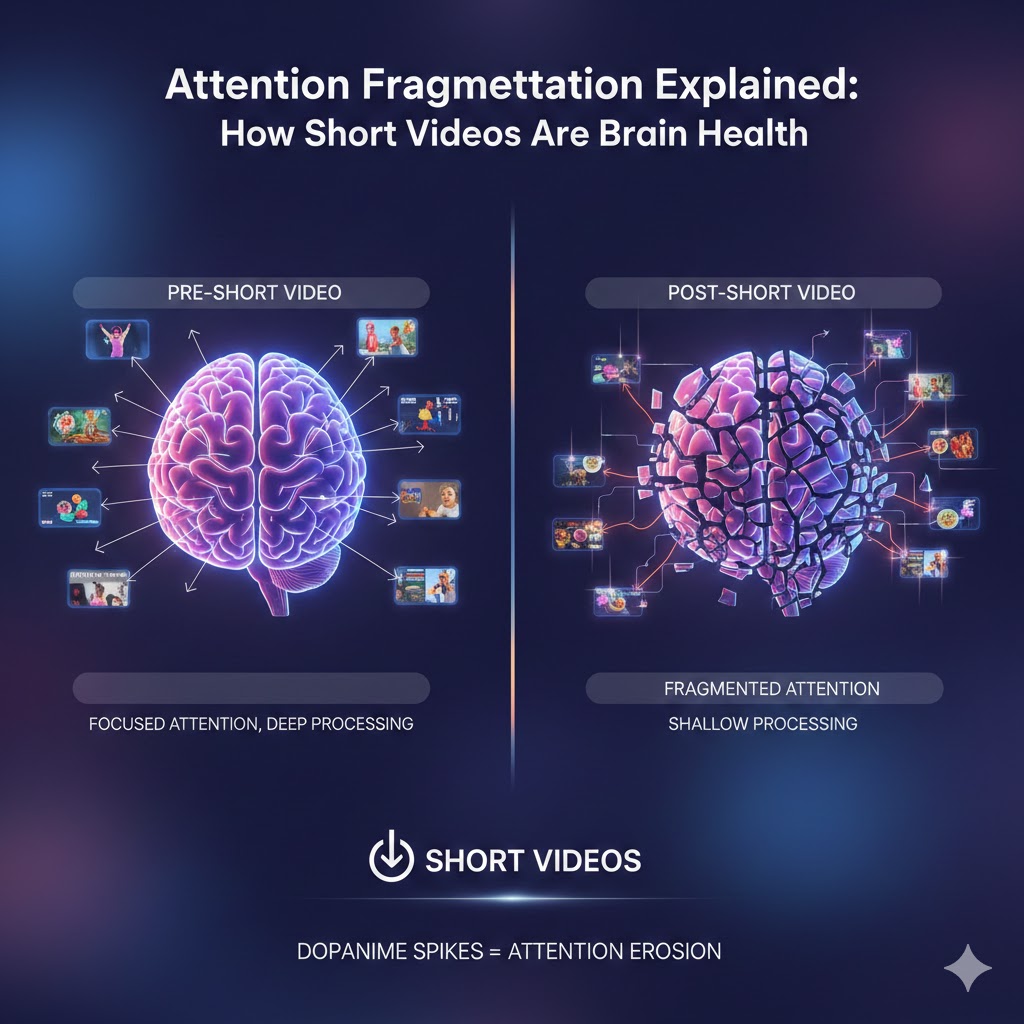
Attention Fragmentation Explained Short-form videos have reshaped how we consume information. Platforms built around 15–60 second clips now dominate daily screen time, offering constant novelty, instant stimulation, and endless scrolling. While this format feels entertaining and harmless, researchers and mental health professionals are beginning to examine its long-term cognitive effects.
This has brought growing attention to a concept known as attention fragmentation—a pattern of disrupted focus caused by frequent shifts in attention. Understanding Attention Fragmentation Explained helps clarify how modern media habits, especially short videos, may be influencing brain health, focus, and emotional regulation.
This article explores what attention fragmentation is, how short videos contribute to it, and what it means for the brain in modern lifestyles.
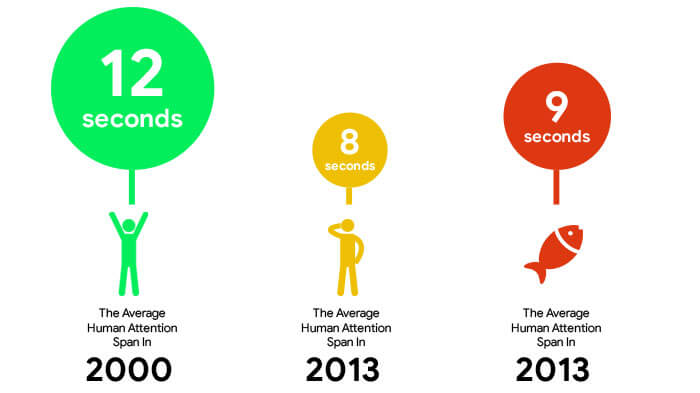

1. What Attention Fragmentation Actually Means
Before discussing impact, it’s important to define the concept clearly.
Definition
Attention fragmentation refers to the constant interruption of sustained focus, where the brain switches rapidly between stimuli without deep engagement.
How It Develops
- Frequent content switching
- Rapid dopamine-driven rewards
- Lack of cognitive rest
When the brain is trained to expect stimulation every few seconds, sustained attention becomes harder to maintain. This is the foundation of Attention Fragmentation Explained in simple terms.
2. Why Short Videos Accelerate Attention Fragmentation
Short videos are designed for maximum engagement in minimal time.
Design Features That Affect Focus
- Auto-play and infinite scrolling
- Fast scene changes
- Algorithm-driven novelty
Cognitive Effect
Each video resets attention rather than extending it. Over time, the brain adapts to this pattern, expecting constant change rather than continuity.
This makes short-form content one of the strongest contributors when Attention Fragmentation Explained in the context of digital behavior.
3. Impact on Focus and Deep Thinking
Sustained attention is essential for learning, creativity, and problem-solving.
Focus-Related Effects
- Difficulty concentrating on long tasks
- Reduced tolerance for boredom
- Increased mental restlessness
Why This Matters
Deep thinking requires uninterrupted attention. When attention is constantly fragmented, the brain struggles to enter deeper cognitive states.

4. Effects on Memory and Learning
Memory formation depends on focused attention.
Learning-Related Consequences
- Weaker memory consolidation
- Reduced comprehension
- Surface-level information processing
Short videos often prioritize speed over depth, which reinforces shallow learning patterns. This is a key concern highlighted when Attention Fragmentation Explained in educational and cognitive contexts.
5. Emotional Regulation and Dopamine Sensitivity
Short-form content heavily stimulates dopamine pathways.
Emotional Effects
- Increased craving for stimulation
- Reduced satisfaction with slower activities
- Heightened irritability when bored
Brain Health Implication
Over time, the brain may become less responsive to low-stimulation activities like reading, reflection, or conversation.
6. Increased Mental Fatigue and Cognitive Overload
Constant input doesn’t equal productivity.
Mental Load Effects
- Decision fatigue
- Reduced mental clarity
- Feeling “tired but wired”
The brain requires downtime to reset. Continuous micro-stimulation prevents proper cognitive recovery.
7. Long-Term Brain Health Considerations
While short videos are not inherently harmful, chronic overconsumption raises concerns.
Potential Long-Term Risks
- Persistent attention difficulties
- Reduced cognitive endurance
- Increased anxiety symptoms
This is why Attention Fragmentation Explained is becoming a key topic in discussions around digital wellness and brain health.
8. Can Attention Fragmentation Be Reversed?
The brain is adaptable.
Strategies That Help
- Reducing short-video consumption
- Practicing single-task focus
- Engaging in long-form reading or listening
- Scheduled screen breaks
With intentional habits, attention span and focus can gradually improve.
Frequently Asked Questions
What does attention fragmentation mean?
It refers to disrupted focus caused by frequent attention switching, especially from digital media.
Are short videos damaging the brain?
Not inherently, but excessive use can contribute to attention and focus difficulties.
Is attention fragmentation permanent?
No. The brain is plastic and can recover with mindful habits.
How long does it take to improve focus?
Improvements can be noticed within weeks of reducing fragmented media consumption.
Should short videos be avoided completely?
Not necessarily. Moderation and awareness are more effective than total avoidance.
Final Thoughts
Short videos are a powerful tool—but like any tool, their impact depends on how they’re used. Understanding Attention Fragmentation Explained helps highlight the trade-offs between constant stimulation and cognitive well-being.
In a world designed to divide attention, protecting focus is becoming a form of mental self-care. By creating space for deeper engagement and reducing fragmented consumption, it’s possible to support brain health without disconnecting completely from modern media.
More Related Topics:
Isometric Training Benefits for Strength and Joint Health