
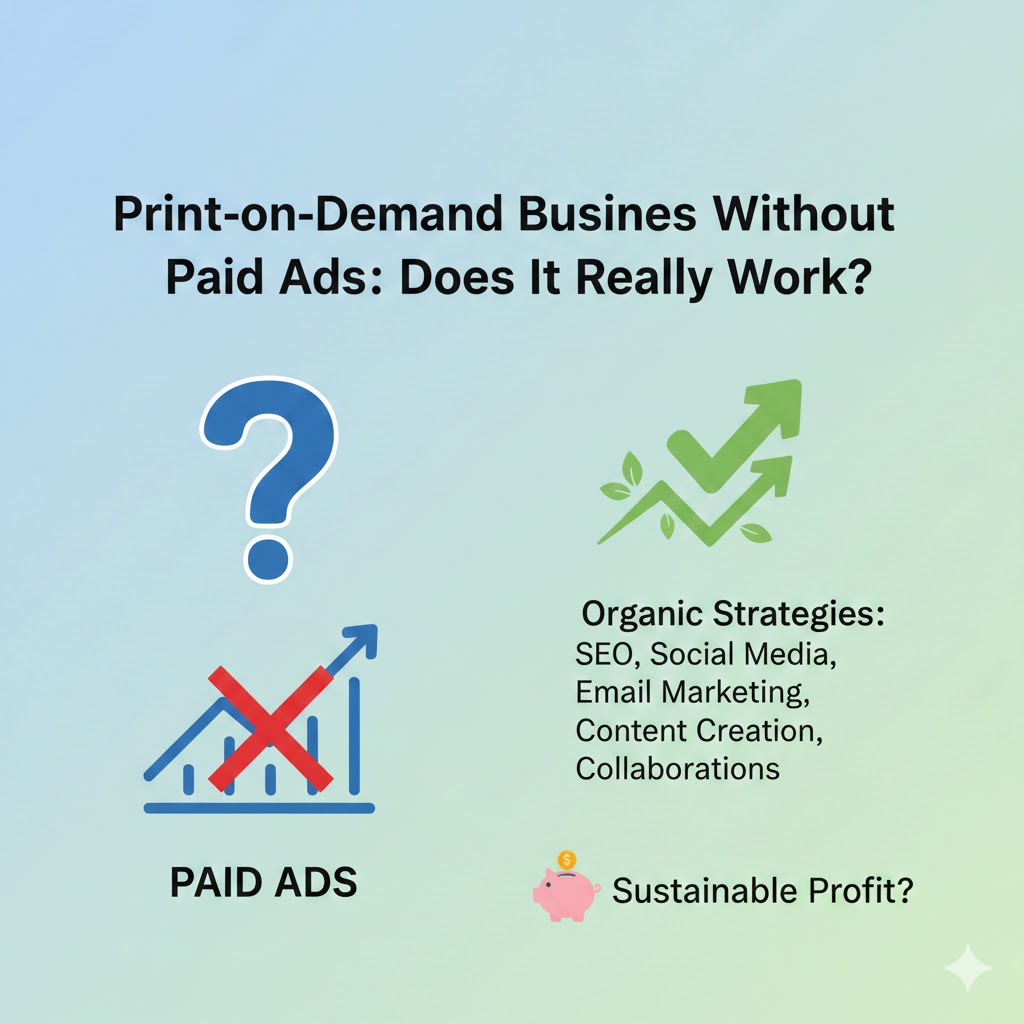
Print-on-Demand Business Without Paid Ads The idea of starting an online business without spending money on ads sounds almost too good to be true. Yet thousands of creators and entrepreneurs continue to build profitable print-on-demand stores without running Facebook, Google, or TikTok ads at all.
So the real question isn’t whether people are doing it — it’s whether a Print-on-Demand Business Without Paid Ads can realistically work for beginners today.
In this deep-dive guide, we’ll break down:
- How print-on-demand actually works
- Why many sellers avoid paid ads
- Organic traffic strategies that still work in 2026
- Realistic expectations vs hype
- Common mistakes that cause failure
- Who this model is best suited for
Let’s remove the fluff and talk honestly.
What Is a Print-on-Demand Business?
Print-on-demand (POD) is an e-commerce model where products are printed only after a customer places an order. You don’t hold inventory, you don’t handle shipping, and you don’t pre-pay for products.
Common POD products include:
- T-shirts and hoodies
- Mugs and drinkware
- Phone cases
- Tote bags
- Posters and wall art
You upload a design, connect a POD supplier, list the product on a marketplace or website, and earn the difference between your selling price and production cost.
This low-risk structure is why many people are drawn to a Print-on-Demand Business Without Paid Ads.
Why Paid Ads Dominate Most POD Advice
Most POD “gurus” push paid ads for one simple reason: speed.
Paid ads can:
- Generate traffic instantly
- Validate designs quickly
- Scale fast (if profitable)
But ads also come with serious downsides:
- High upfront costs
- Learning curve
- Inconsistent results
- Increasing competition
- Ad account bans
For beginners, ads often become a money pit. That’s why more creators are asking whether a Print-on-Demand Business Without Paid Ads is not only possible — but smarter.
Does a Print-on-Demand Business Without Paid Ads Really Work?
Short answer: Yes — but not the way most people expect.
Long answer: It works if you treat it as a content-driven, long-term business, not a quick cash machine.
Organic POD businesses rely on:
- Search traffic
- Platform algorithms
- Evergreen demand
- Niche positioning
This approach trades speed for sustainability.
The Core Difference: Ads vs Organic POD
| Paid Ads POD | Organic POD |
|---|---|
| Fast traffic | Slow but steady traffic |
| High risk | Low financial risk |
| Requires capital | Requires patience |
| Short-term focus | Long-term asset |
| Algorithm dependency | Search & discovery driven |
A Print-on-Demand Business Without Paid Ads is closer to building a digital asset than running a dropshipping sprint.
Best Platforms for POD Without Paid Ads
Not all platforms are equal when ads are removed from the equation.
Platforms that favor organic reach:
- Etsy
- Amazon Merch
- Redbubble
- Teespring
- Pinterest (as traffic source)
These platforms already have built-in buyer intent, which reduces your dependence on ads.
Organic Strategy #1: SEO-Based Print-on-Demand
Search traffic is the backbone of a Print-on-Demand Business Without Paid Ads.
How SEO works for POD
- Buyers search specific phrases
- Your product appears if optimized
- Traffic continues daily without cost
Example search intent
- “Funny gym t-shirt for men”
- “Minimalist wall art for bedroom”
- “Custom coffee mug gift”
Why this works
SEO targets people ready to buy, not just browse.
Organic Strategy #2: Evergreen Niche Selection
Random designs fail. Niche-focused stores survive.
Strong niches:
- Professions
- Hobbies
- Life events
- Identity-based communities
- Long-term interests
Instead of selling “cool designs,” successful organic POD stores sell meaningful designs.
This niche clarity is essential for a Print-on-Demand Business Without Paid Ads.
Organic Strategy #3: Pinterest for POD Traffic
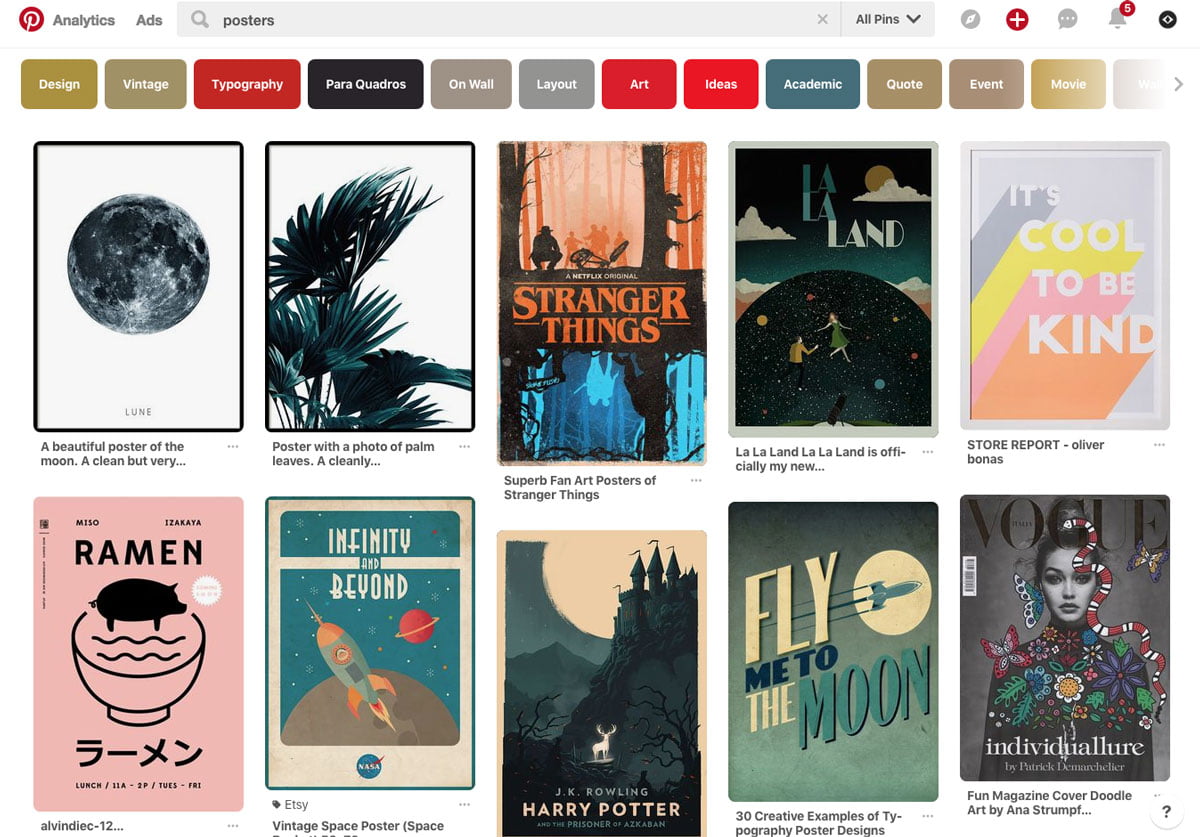
Pinterest acts more like a search engine than social media.
Why Pinterest works
- Pins rank on Google
- Content lasts for months or years
- Visual products perform well
Best POD products for Pinterest
- Wall art
- Mugs
- Apparel with lifestyle appeal
Pinterest doesn’t require showing your face — making it ideal for faceless businesses.
Organic Strategy #4: Marketplace Algorithms
Platforms like Etsy and Amazon reward:
- Consistent uploads
- Keyword relevance
- Customer satisfaction
- Click-through rates
By working with the platform algorithm instead of fighting it, your listings gain visibility naturally.
This compounding exposure is why a Print-on-Demand Business Without Paid Ads can grow quietly but steadily.
Organic Strategy #5: Content-Led POD Stores
Some sellers combine POD with:
- Blogs
- Niche websites
- Informational content
Example:
- A fitness blog selling gym shirts
- A pet blog selling dog mugs
- A travel site selling travel quotes posters
This hybrid approach turns content into traffic and products into monetization.
How Long Does It Take to Make Sales Without Ads?
This is where expectations matter.
Typical timeline:
- Month 1–2: Setup, listings, learning
- Month 3–4: First organic sales
- Month 6+: Consistent traffic and revenue
A Print-on-Demand Business Without Paid Ads is slow at first — but momentum builds.
Why Most People Fail at Organic POD
Failure usually comes from:
- Poor niche research
- No SEO optimization
- Uploading random designs
- Expecting instant results
- Giving up too early
Organic POD rewards patience, not hype.
Profit Margins Without Ads: Are They Better?
Yes — often significantly better.
Without ads:
- No daily ad spend
- Lower stress
- Predictable margins
While organic POD grows slower, net profit per sale is usually higher.
Is Organic POD Scalable?
Yes — but differently.
You scale by:
- Uploading more listings
- Expanding within the same niche
- Improving SEO
- Leveraging repeat buyers
This makes a Print-on-Demand Business Without Paid Ads scalable through systems, not spending.
Who Should Choose POD Without Paid Ads?
This model is best for:
- Beginners with low budgets
- Faceless creators
- Long-term thinkers
- SEO-oriented minds
- People avoiding ad stress
It’s not ideal for those seeking quick wins.
Paid Ads vs Organic POD: The Honest Truth
Paid ads amplify winning products.
Organic POD creates winning products.
Many successful sellers start organically, then add ads later once data proves demand.
Can You Combine Organic and Paid Later?
Yes — and that’s often the smartest path.
Organic helps you:
- Identify winners
- Understand your audience
- Reduce ad risk
Once validated, ads become fuel — not gambling.
The Real Advantage of POD Without Paid Ads
The biggest benefit isn’t money — it’s control.
You control:
- Risk
- Pace
- Stress level
- Longevity
A Print-on-Demand Business Without Paid Ads feels slower — but far more stable.
Final Thoughts
So, does a Print-on-Demand Business Without Paid Ads really work?
Yes — if you stop treating it like a shortcut and start treating it like a business.
Organic POD is:
- Slower
- More strategic
- Less risky
- More sustainable
It rewards consistency, patience, and understanding of search behavior. For creators willing to build quietly, it’s one of the most realistic low-risk online business models available today.
Build assets, not hype.
Frequently Asked Questions
Can a Print-on-Demand Business Without Paid Ads really make money?
Yes. Many sellers earn consistent income using organic traffic from marketplaces, SEO, and Pinterest.
Is POD without ads beginner-friendly?
Yes, especially for people with limited budgets and time.
How long does it take to get first sales organically?
Usually between 2–4 months, depending on niche and optimization.
Is SEO required for organic POD success?
Strongly recommended. SEO drives buyer-intent traffic without cost.
Are profits higher without paid ads?
Often yes, because there’s no ongoing ad spend reducing margins.
Should I avoid paid ads completely?
Not necessarily. Many sellers start organic and add ads later once profitable designs are proven.
Also read this:
HOOD Stock Is Popular, But Is It Profitable?