
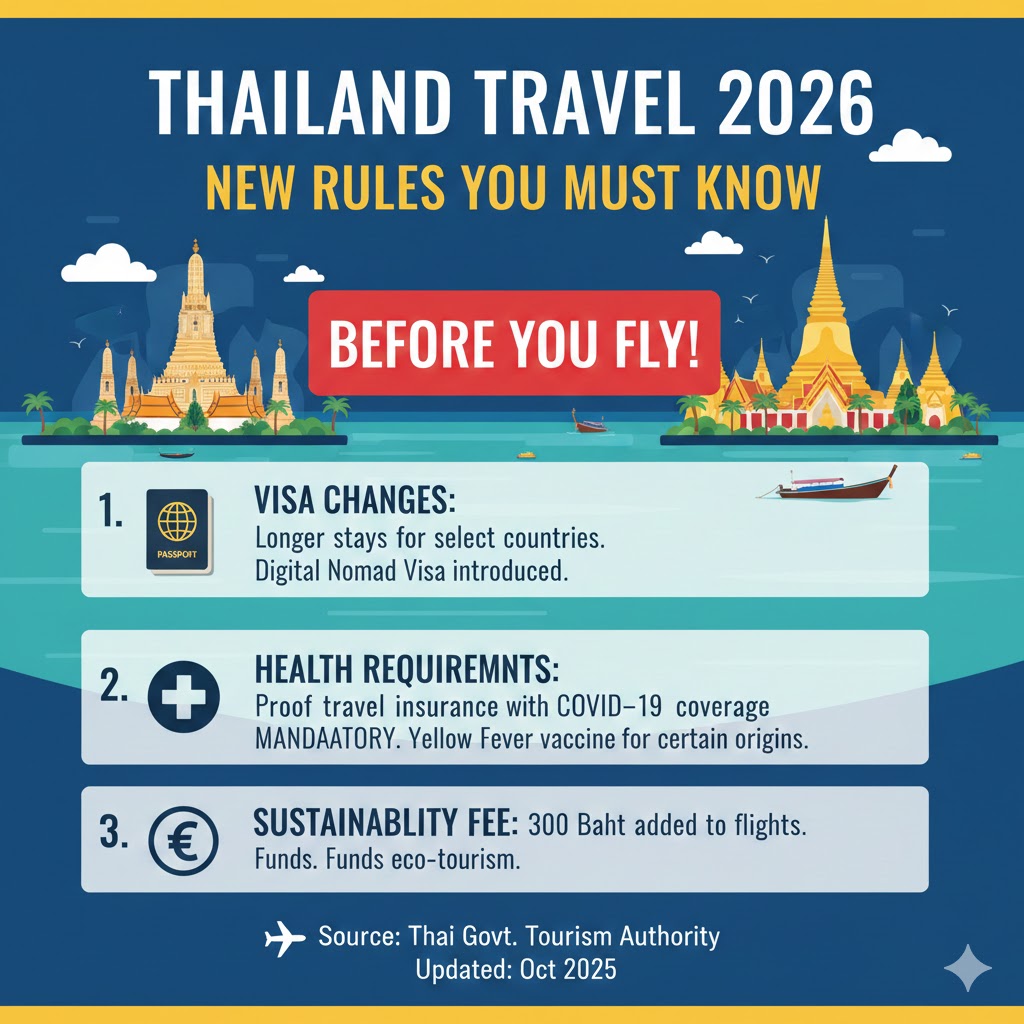
Thailand remains one of the world’s most loved travel destinations—but 2026 is bringing noticeable changes in how visitors enter, move around, and stay in the country. From updated visa structures and digital entry systems to stricter sustainability rules and airport procedures, travelers can no longer rely on old travel habits.
If you’re planning a trip, understanding Thailand Travel 2026 New Rules before you fly is essential. These updates affect tourists, digital nomads, long-stay visitors, and even short-term holidaymakers. Missing key requirements could lead to delays, extra costs, or denied entry.
This complete guide breaks down the most important Thailand travel rule changes for 2026, what they mean for travelers, and how to prepare properly.
Why Thailand Updated Its Travel Rules in 2026
Thailand’s tourism industry is evolving. The government is balancing three major goals:
- Managing overtourism
- Encouraging longer, higher-value stays
- Improving security and digital efficiency
The Thailand Travel 2026 New Rules are designed to modernize border control, protect local communities, and improve the overall travel experience.
Digital Arrival System Becomes Mandatory
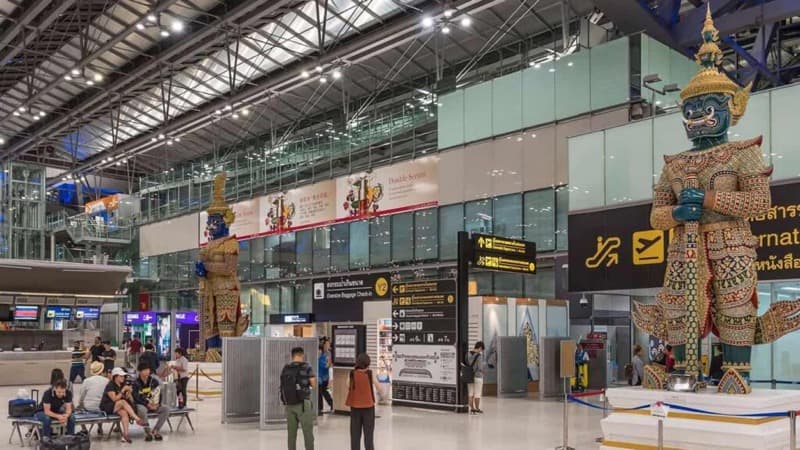
Paper arrival cards are now largely replaced by a digital arrival registration system.
What this means for travelers
- Online arrival form must be completed before landing
- Passport details, accommodation address, and return ticket required
- QR or confirmation code checked at immigration
Failing to complete this step in advance may cause long delays or entry refusal. This is one of the most important Thailand Travel 2026 New Rules for all visitors.
Visa-Free Entry Rules Are More Strictly Enforced
Thailand still offers visa-free entry for many nationalities, but enforcement is stricter.
Key updates include:
- Clear proof of onward or return travel
- Proof of accommodation for the full stay
- Evidence of sufficient funds
- No repeated back-to-back visa-free entries
Border hopping to extend stays is now heavily monitored. Travelers abusing visa-free entries risk denial of entry.
Tourist Visa Categories Have Changed
Tourist visas in 2026 are more structured.
New approach to tourist visas
- Short-stay tourist visas are more closely monitored
- Longer stays require appropriate visa categories
- Extensions are no longer guaranteed
The Thailand Travel 2026 New Rules aim to reduce misuse of tourist visas for long-term living.
Digital Nomad and Long-Stay Visa Updates
Thailand continues to welcome remote workers—but with clearer rules.
Updates include:
- Proof of remote income required
- Minimum income thresholds enforced
- Health insurance mandatory
- Defined stay periods
Working on a tourist visa is no longer tolerated. Digital nomads must use approved visa routes.
Mandatory Travel Insurance Requirements
Travel insurance rules are stricter in 2026.
Travelers must now show:
- Coverage for medical emergencies
- Hospitalization coverage
- Coverage valid for the entire stay
Even short-term visitors may be asked for insurance proof. This is a key part of Thailand Travel 2026 New Rules focused on reducing healthcare strain.
Sustainability and Tourist Conduct Rules
Thailand is taking sustainability seriously.
New rules focus on:
- Limiting access to fragile natural areas
- Fines for littering and environmental damage
- Restricted visitor numbers at popular sites
- Stricter marine and wildlife protection laws
These rules directly affect beach destinations, islands, and national parks.
Accommodation Registration Enforcement
All accommodations—hotels, hostels, and rentals—must register guests properly.
What travelers should know:
- Staying in unregistered rentals may cause issues
- Immigration checks accommodation records
- Hosts must report foreign guests
If your stay isn’t registered, you may face problems during extensions or exit.
Stricter Airport Security and Customs Checks
Airport procedures are more thorough in 2026.
Travelers should expect:
- Electronic passport scanning
- Biometric verification
- Random baggage checks
- Stricter prohibited item enforcement
Arrive earlier than before, especially during peak travel seasons.
Cash and Financial Proof Rules
Thailand continues to enforce minimum financial proof requirements.
Travelers may be asked to show:
- Cash or bank statements
- International cards
- Proof of spending ability
This rule applies even if you have prepaid hotels.
Domestic Travel Rules for Foreigners
Domestic flights and ferries also require valid documentation.
Expect:
- Passport checks for flights
- Name matching on bookings
- Registered accommodation checks
Travel without valid documentation may be denied.
Health Regulations and Vaccination Awareness
While no universal vaccine mandates exist, health awareness is higher.
Travelers should:
- Monitor entry health advisories
- Carry basic medical documents
- Declare illnesses honestly
Health screening protocols may be activated during outbreaks.
Overstaying Penalties Are More Severe
Overstaying has always been illegal, but penalties are stricter now.
Penalties include:
- Higher fines
- Blacklisting risks
- Future visa denial
The Thailand Travel 2026 New Rules leave little room for mistakes.
Transportation and Driving Rules for Tourists
Foreigners driving in Thailand face more enforcement.
Rules include:
- International Driving Permit required
- Helmet laws strictly enforced
- Insurance checks for rental vehicles
Fines are higher, and roadside checks are frequent.
Cultural Conduct Laws Are Enforced More Strictly
Tourists are expected to respect Thai culture.
Key reminders:
- Dress codes at temples
- Respect for the monarchy
- Public behavior laws enforced
Ignorance of cultural laws is not accepted as an excuse.
Technology and Cashless Payments Grow
While not mandatory, digital payments are now widely used.
Travelers benefit from:
- QR payments
- Digital transit systems
- App-based travel services
However, cash is still necessary in rural areas.
How to Prepare for Thailand Travel in 2026
To avoid issues:
- Check visa category carefully
- Complete digital forms early
- Book registered accommodations
- Carry insurance proof
- Keep copies of documents
Preparation is essential under Thailand Travel 2026 New Rules.
Common Mistakes Travelers Make in 2026
Avoid these errors:
- Assuming old visa rules still apply
- Ignoring digital entry requirements
- Working illegally on tourist visas
- Staying in unregistered rentals
- Overstaying by “just one day”
These mistakes can ruin an otherwise perfect trip.
What These New Rules Mean for Tourists
While rules are stricter, they also:
- Improve safety
- Reduce overcrowding
- Protect destinations
- Enhance travel quality
Well-prepared travelers will still enjoy Thailand fully.
Final Thoughts
Thailand remains welcoming—but travel in 2026 requires awareness and responsibility. The Thailand Travel 2026 New Rules are not meant to discourage visitors, but to create a safer, more sustainable, and better-managed travel environment.
If you plan ahead, follow regulations, and respect local laws, Thailand will continue to be one of the most rewarding destinations in the world.
Frequently Asked Questions
What are the most important Thailand Travel 2026 New Rules?
Digital arrival registration, stricter visa enforcement, mandatory insurance, and sustainability rules are among the most important changes.
Do I still get visa-free entry to Thailand in 2026?
Yes, for many nationalities—but proof requirements and enforcement are stricter.
Is travel insurance mandatory for Thailand in 2026?
In many cases, yes. Travelers are strongly advised to carry valid insurance for the entire stay.
Can digital nomads work in Thailand in 2026?
Yes, but only under approved visa categories. Working on a tourist visa is not allowed.
Are arrival cards still required in Thailand?
Physical cards are mostly replaced by digital arrival registration systems.
What happens if I overstay in Thailand?
Overstaying results in fines, possible blacklisting, and future visa issues.
Also read this:
12 Travel Crossbody Bags for Every Vacation Look in 2026