
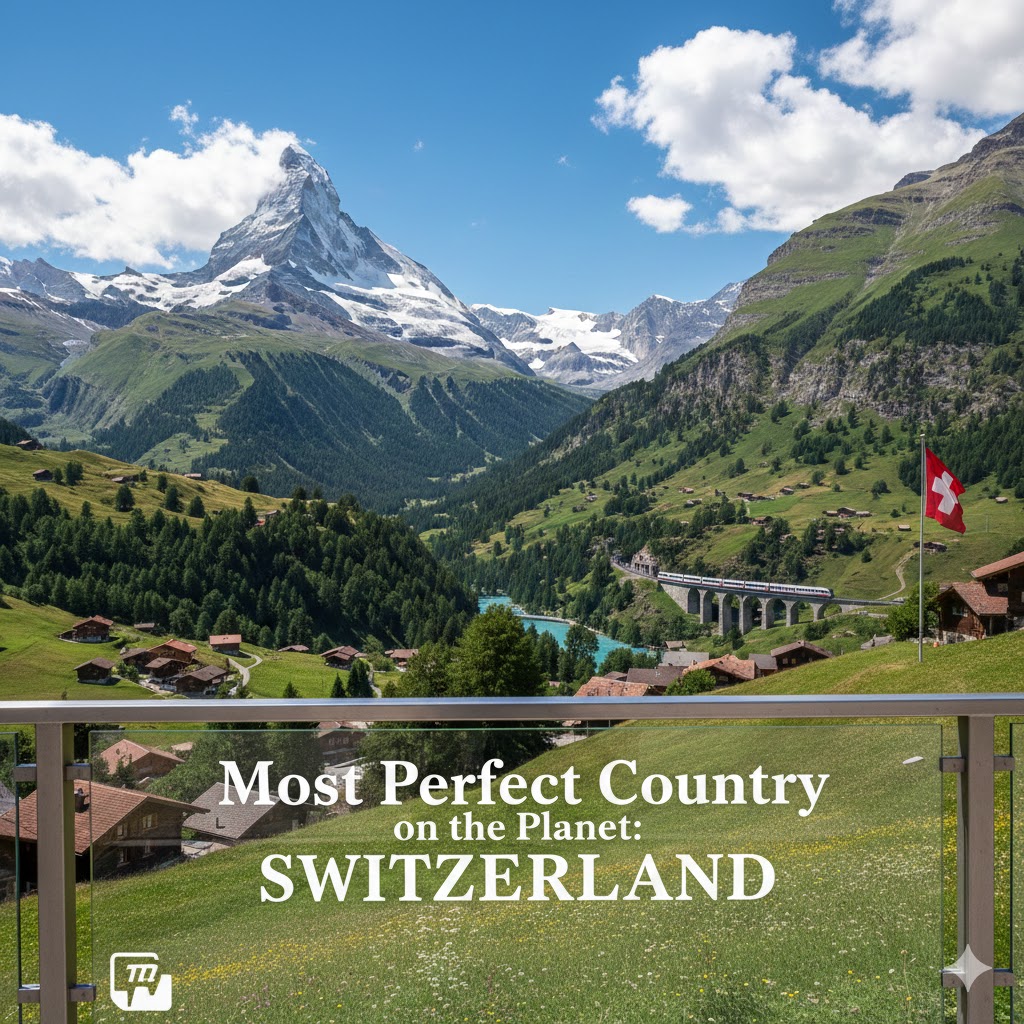
Ask travelers, expats, economists, and nature lovers the same question — which country gets the most things right? — and one name appears again and again.
Switzerland.
From pristine landscapes and clockwork-level efficiency to political stability and quality of life, Switzerland is often described as the Most Perfect Country on the Planet. Not because it’s flashy, but because it quietly excels where it matters most.
This article explores why Switzerland earns that reputation, what sets it apart from other developed nations, and whether it truly deserves the title.
1. What Does “Most Perfect Country on the Planet” Really Mean?
Perfection isn’t about being flawless — it’s about balance.
When people call Switzerland the Most Perfect Country on the Planet, they usually mean:
- High quality of life
- Strong economy
- Political stability
- Clean environment
- Safety and trust
- Efficient systems
- Respect for personal freedom
Switzerland doesn’t dominate headlines — it dominates outcomes.
2. Natural Beauty That Feels Unreal
Switzerland looks like it was designed, not formed.
Natural highlights include:
- The Swiss Alps with year-round snow
- Crystal-clear lakes like Lake Geneva and Lake Lucerne
- Green valleys and alpine villages
- Perfectly maintained hiking trails
Nature isn’t preserved as an attraction — it’s integrated into daily life.
3. One of the Highest Quality of Life Scores in the World
Switzerland consistently ranks at the top globally for quality of life.
Why?
- Clean air and water
- Reliable healthcare
- Strong social systems
- Low crime rates
- High life expectancy
Living standards here feel intentional, not accidental — a core reason many label it the Most Perfect Country on the Planet.
4. Economic Stability and Global Trust
Switzerland’s economy is famously resilient.
Key strengths:
- Strong banking and finance sector
- High wages and productivity
- Low unemployment
- Stable currency
- Innovation-driven industries
Trust in Swiss systems is global — from finance to manufacturing.
5. Infrastructure That Actually Works
Few countries function as smoothly.
Swiss infrastructure includes:
- World-class public transportation
- Trains that run on time
- Clean cities and villages
- Well-maintained roads
- Seamless rural–urban connectivity
Efficiency isn’t rushed — it’s calm and reliable.
6. Political Neutrality and Stability
Switzerland’s neutrality is not symbolic — it’s strategic.
Benefits of this approach:
- No involvement in global conflicts
- Strong diplomatic standing
- Internal political stability
- Decentralized governance
Stability creates confidence — for citizens and visitors alike.
7. Safety, Trust, and Social Order
Safety in Switzerland is subtle but powerful.
You’ll notice:
- Low violent crime
- High trust in public systems
- Respect for rules without enforcement pressure
- Children commuting independently
- Clean, orderly public spaces
These factors quietly reinforce the image of the Most Perfect Country on the Planet.
8. Multilingual, Multicultural Harmony
Switzerland balances diversity remarkably well.
Official languages include:
- German
- French
- Italian
- Romansh
Despite linguistic and cultural diversity, national identity remains strong and cohesive.
9. Swiss Culture: Reserved but Deeply Respectful
Swiss culture values:
- Privacy
- Punctuality
- Responsibility
- Precision
- Mutual respect
It’s not loud or performative — it’s dependable.
This cultural consistency supports long-term societal stability.
10. Healthcare and Education Excellence
Public services are efficient and high-quality.
Healthcare:
- Universal access
- High standards
- Strong preventative care
Education:
- Strong public education
- World-class universities
- Vocational training pathways
Human capital is treated as an investment, not an expense.
11. Cleanliness and Environmental Responsibility
Switzerland takes environmental care seriously.
You’ll notice:
- Strict recycling systems
- Clean lakes and rivers
- Preserved green spaces
- Responsible urban planning
Sustainability here is practiced daily, not marketed.
12. Is Switzerland Expensive? Yes — But There’s Context
Switzerland is not cheap.
High costs reflect:
- High wages
- Strong social systems
- Premium infrastructure
- Exceptional service quality
People don’t pay for luxury — they pay for reliability.
13. Is Switzerland Perfect for Everyone?
No country is universal.
Switzerland may not suit those who:
- Prefer fast-paced nightlife
- Dislike rules and structure
- Want low living costs
- Seek constant excitement
Perfection depends on values — not preferences.
14. Why Switzerland Consistently Tops Global Rankings
Across metrics like:
- Happiness
- Safety
- Innovation
- Health
- Governance
Switzerland doesn’t spike dramatically — it performs consistently well everywhere. That consistency is rare.
15. Final Thoughts: Why Many Call It the Most Perfect Country on the Planet
Switzerland doesn’t try to impress — it simply works.
The reason so many people consider it the Most Perfect Country on the Planet is not because it’s dramatic or loud, but because:
- Systems function
- Nature is respected
- People feel secure
- Life feels balanced
Perfection, in this case, is quiet excellence.
FAQ: Most Perfect Country on the Planet
Why is Switzerland called the most perfect country on the planet?
Because of its balance of safety, quality of life, stability, and natural beauty.
Is Switzerland a good place to live permanently?
Yes, especially for those who value structure, security, and long-term stability.
Is Switzerland expensive for tourists?
Yes, but the quality of services and infrastructure often justifies the cost.
Is Switzerland safe for solo travelers?
Extremely safe, with low crime and reliable public transport.
What makes Switzerland different from other European countries?
Its neutrality, efficiency, strong economy, and environmental care.
Do people speak English in Switzerland?
Yes, especially in cities and tourist areas, though local languages dominate daily life.
Is Switzerland worth visiting at least once?
For many travelers, it’s a once-in-a-lifetime destination due to its landscapes and lifestyle.
Also read this:
Inside the Largest Fake Market in Shanghai China | What They Don’t Tell Tourists
Greenland Travel Guide: Exploring the Most Remote Place on Earth in 2026 (Ultimate Arctic Adventure)