
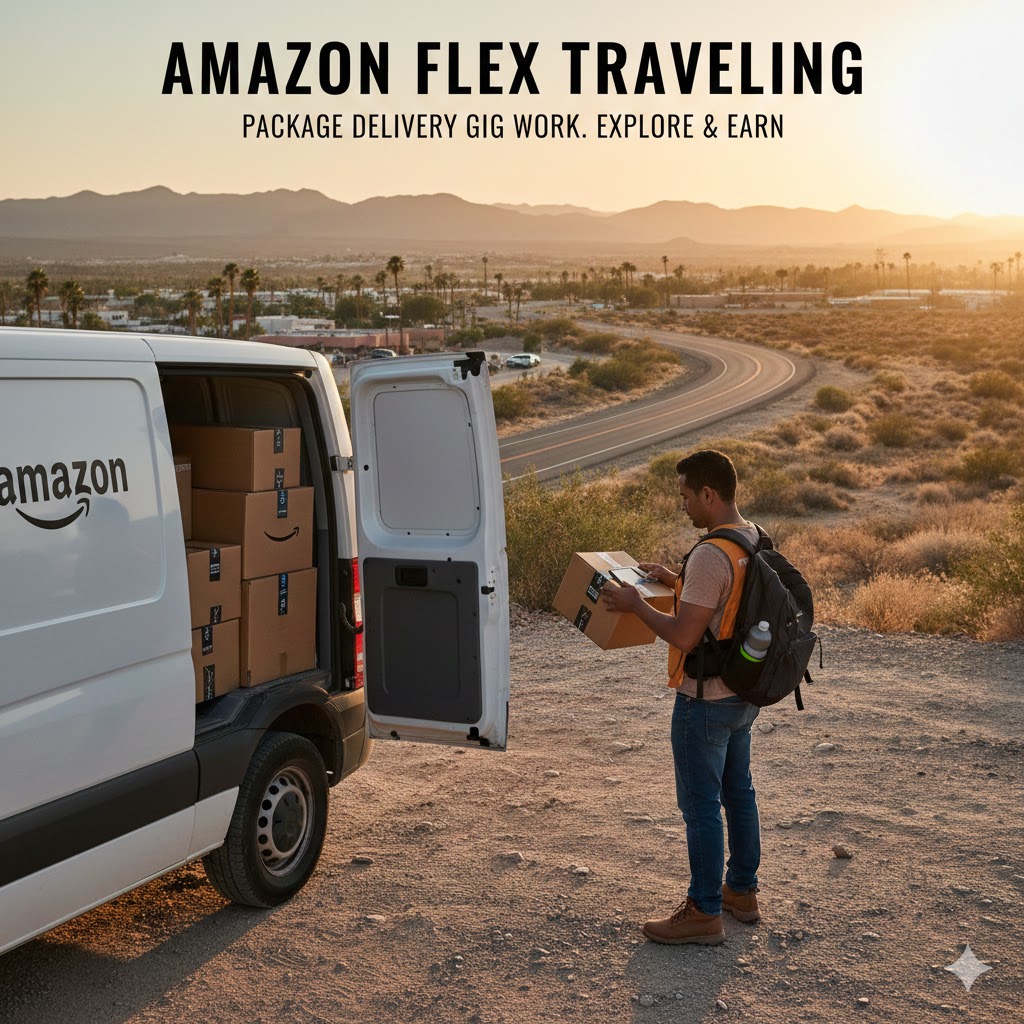
The gig economy has changed how people think about work—and travel. One emerging trend blending both is Amazon Flex Traveling, where drivers use Amazon Flex as a flexible income source while moving between cities, states, or regions. For digital nomads, road trippers, and seasonal workers, this model offers a way to earn money without committing to a fixed location or schedule.
But is Amazon Flex really suited for traveling workers? And what should you know before relying on it as a mobile income stream?
This guide breaks down how Amazon Flex Traveling works, its benefits, limitations, and realistic expectations.
1. What Is Amazon Flex Traveling?
Amazon Flex is a gig work program where independent contractors deliver Amazon packages using their own vehicles. Amazon Flex Traveling refers to using this platform while traveling—signing up for delivery blocks in different cities instead of staying in one location.
Drivers:
- Choose delivery blocks through the app
- Pick up packages from local Amazon stations
- Deliver within assigned routes
- Get paid per block
The appeal lies in flexibility—work when you want, where you want.
2. Why Travelers Are Attracted to Amazon Flex
For mobile workers, Amazon Flex offers:
- No long-term commitment
- Fast onboarding
- Weekly payouts
- Familiar work structure across locations
Unlike traditional jobs, Amazon Flex Traveling doesn’t require transferring employers or renegotiating contracts when you change cities.
3. How Location Changes Work in Amazon Flex
Amazon Flex availability depends on region.
When traveling:
- You must change your delivery region in the app
- Approval depends on local demand
- Some cities have waitlists
- Rural areas may have limited blocks
This means Amazon Flex Traveling works best in metro or high-demand areas.
4. Income Reality While Traveling
Earnings vary widely by location, season, and demand.
Typical factors affecting pay:
- Urban vs suburban routes
- Fuel costs
- Traffic and parking
- Tip availability (for certain delivery types)
Travelers should view Amazon Flex as supplemental income, not guaranteed full-time pay.
5. Vehicle Requirements and Costs
Your vehicle is your workplace.
Important considerations:
- Fuel efficiency matters
- Wear and tear increase
- Maintenance costs add up
- Insurance requirements may vary
For long-term Amazon Flex Traveling, vehicle expenses must be factored carefully.
6. Scheduling Challenges on the Road
Flexibility doesn’t mean predictability.
Common issues include:
- Blocks filling quickly in new cities
- Inconsistent work availability
- Competition with local drivers
- Learning unfamiliar routes
Travelers often need backup income streams.
7. Best Cities for Amazon Flex Traveling
High-demand regions tend to offer:
- More delivery stations
- Frequent block availability
- Better earning potential
Large metro areas usually outperform small towns for Amazon Flex Traveling viability.
8. Legal, Tax, and Residency Considerations
Because Amazon Flex drivers are independent contractors:
- You handle your own taxes
- Income must be tracked across locations
- Mileage tracking is essential
- Local regulations may differ
Traveling workers must stay organized to avoid tax complications.
9. Is Amazon Flex Traveling Sustainable Long-Term?
For most people, sustainability depends on:
- Vehicle reliability
- Fuel prices
- Physical endurance
- Consistent demand
Amazon Flex can support travel—but rarely replaces a stable career on its own.
10. Who Amazon Flex Traveling Works Best For
This model fits:
- Van lifers and road trippers
- Digital nomads needing side income
- Seasonal travelers
- People between jobs
It’s less ideal for those seeking predictable income or minimal physical labor.
Pros and Cons at a Glance
Pros
- Flexible scheduling
- Quick payout
- No interviews
- Work in multiple locations
Cons
- No guaranteed hours
- Vehicle costs
- Regional availability limits
- Physical demands
Frequently Asked Questions (FAQ)
Can I do Amazon Flex while traveling?
Yes, but you must change your delivery region and rely on local availability.
Is Amazon Flex Traveling profitable?
It can be profitable short-term, but expenses and variability reduce margins.
Do I need special insurance?
Some drivers choose commercial coverage, but requirements vary by region.
How often does Amazon Flex pay?
Payments are typically made weekly.
Is Amazon Flex available everywhere?
No. Availability depends on local Amazon infrastructure and demand.
Can Amazon Flex replace a full-time job?
For most travelers, it works better as supplemental income.
Final Thoughts
Amazon Flex Traveling offers a unique blend of mobility and gig work freedom—but it’s not a magic solution. It works best as a flexible income layer, not a financial foundation.
For travelers who value autonomy and don’t mind variable income, it can be a practical way to support life on the move. Just remember: flexibility comes with trade-offs, and preparation makes all the difference.
Also read this:
Spatial Computing for Designers: 3D Workflows
AI Skills and Tools You Need for Future-Proof Careers in 2026