
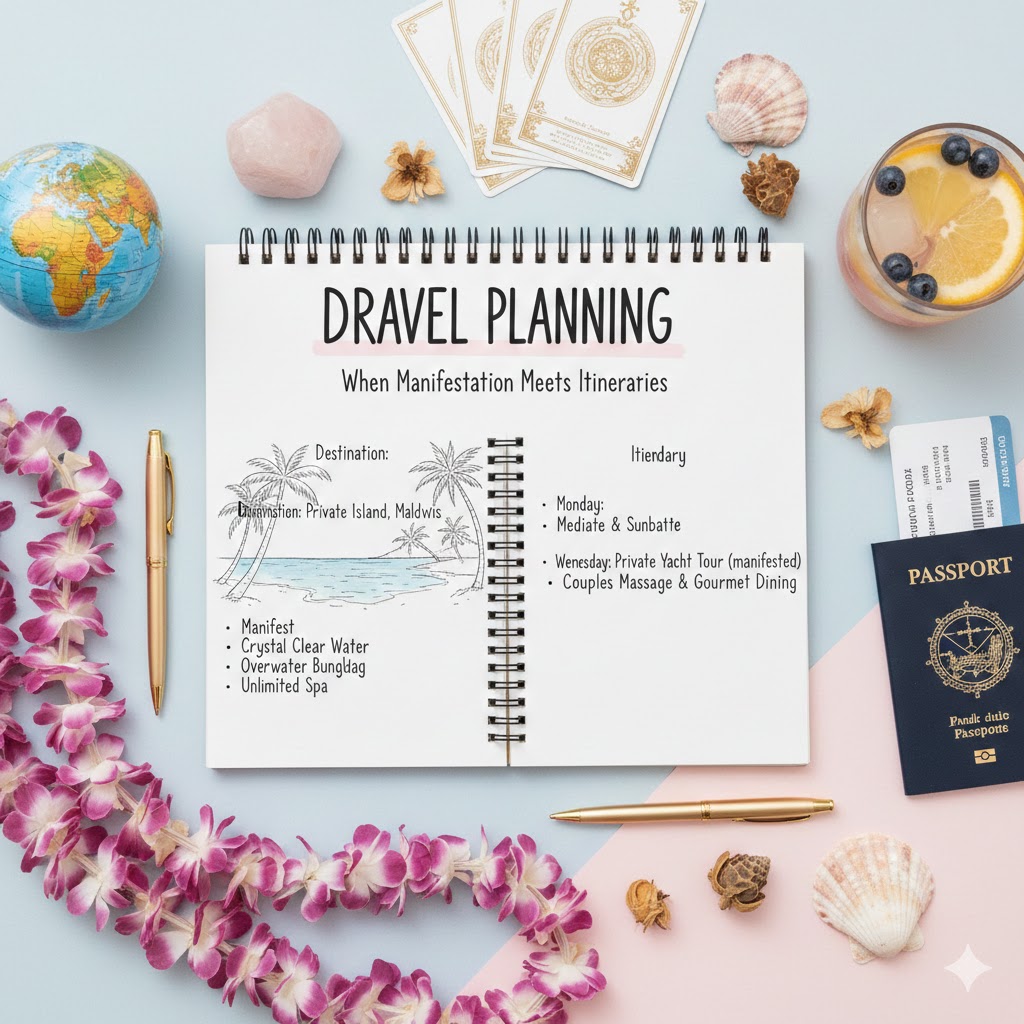
Travel planning has entered its soft-era phase. Gone are the days when trips were built only around budgets, spreadsheets, and rigid schedules. In 2026, a new mindset has taken over social media feeds and group chats: Delulu Travel Planning.
It’s part manifestation, part logistics, and part unapologetic optimism. You plan the trip as if it’s already happening—luxury hotel saved, café bookmarked, outfits planned—sometimes before the money, leave approval, or even the flight exists.
But is Delulu Travel Planning harmless fun, powerful mindset work, or just denial with Pinterest boards?
Let’s break down how manifestation culture collided with modern itineraries—and why this trend refuses to disappear.
1. What Exactly Is Delulu Travel Planning?
Delulu Travel Planning is the practice of planning a trip based on belief and intention before all practical elements are secured.
This can include:
- Creating full itineraries for trips not yet booked
- Saving hotels “for when I go”
- Planning outfits for imaginary dinners abroad
- Pinning cafes, museums, and neighborhoods months or years ahead
- Saying “when I go” instead of “if I go”
The logic is simple: act like it’s inevitable, and it will become real.
2. Why Delulu Travel Planning Is Everywhere Right Now
This trend didn’t appear randomly. Several cultural shifts collided at once.
First, manifestation culture normalized the idea that mindset shapes outcomes. Second, travel became emotionally symbolic after years of restrictions and uncertainty. Third, social media aesthetics turned planning itself into content.
Delulu Travel Planning gives people:
- Hope during routine-heavy lives
- A sense of escape without leaving home
- Control over future joy
- A creative outlet
In uncertain times, imagining future freedom feels grounding.
3. Manifestation Meets Practical Planning
What makes Delulu Travel Planning unique is that it doesn’t reject logic—it just postpones it.
Instead of:
“I’ll plan once everything is confirmed”
It becomes:
“I’ll plan because I want it to be confirmed”
Surprisingly, many people report that this approach:
- Motivates saving money
- Encourages better financial planning
- Clarifies priorities
- Turns vague dreams into concrete goals
Once the itinerary exists, the trip feels real—and people work backward to make it happen.
4. The Psychology Behind Why It Works (Sometimes)
From a behavioral science perspective, Delulu Travel Planning taps into:
- Visualization (used in performance psychology)
- Identity-based motivation
- Goal priming
When you repeatedly visualize yourself in a future scenario, your brain starts treating it as a probable outcome rather than a fantasy. This subtly influences decisions—what you save, what you decline, what you prioritize.
In that sense, Delulu Travel Planning isn’t irrational—it’s pre-commitment disguised as fantasy.
5. When Delulu Travel Planning Becomes a Problem
Not all delusion is harmless.
Delulu Travel Planning turns unhealthy when:
- It replaces action instead of motivating it
- It ignores financial reality entirely
- It causes disappointment rather than inspiration
- It becomes escapism without progress
Planning five luxury trips with no intention to save, request leave, or adjust lifestyle can lead to frustration—not manifestation.
The key difference is movement. Delusion without direction stays imaginary.
6. The “Soft Delulu” vs “Hard Delulu” Spectrum
Not all Delulu Travel Planning is equal.
Soft delulu looks like:
- Dream itineraries
- Mood boards
- Long-term travel goals
- Gentle optimism
Hard delulu looks like:
- Booking non-refundable fantasies
- Overspending based on vibes
- Ignoring real-life constraints
The trend works best when imagination leads, but reality still participates.
7. Why People Love Planning Trips They Haven’t Booked
Interestingly, research shows anticipation often creates as much happiness as the experience itself.
Delulu Travel Planning provides:
- Dopamine from anticipation
- Emotional escape
- Creative satisfaction
- A sense of future certainty
Even if the trip doesn’t happen exactly as planned, the joy wasn’t wasted—it was experienced in advance.
8. Social Media’s Role in Delulu Travel Planning
Platforms like Instagram, TikTok, and Pinterest turned travel planning into a visual language.
Saved collections, aesthetic itineraries, café hopping maps, and outfit planning videos made dreaming socially acceptable—and encouraged.
Delulu Travel Planning thrives because it’s:
- Visually expressive
- Emotionally relatable
- Low commitment
- High inspiration
It’s not lying—it’s storytelling.
9. How to Use Delulu Travel Planning Productively
If you want the benefits without burnout:
- Plan trips on realistic timelines
- Attach savings goals to dream itineraries
- Treat plans as flexible, not promises
- Use delusion as motivation, not denial
The most successful delulu planners quietly turn dreams into logistics.
10. Is Delulu Travel Planning Actually New?
Not really.
People have always imagined trips before taking them—journals, postcards, guidebooks, daydreams. What’s new is the language, aesthetics, and public sharing.
Delulu Travel Planning just gave the behavior a name—and permission.
Frequently Asked Questions (FAQ)
Is Delulu Travel Planning the same as manifestation?
It overlaps with manifestation but includes concrete planning elements like itineraries and research.
Does Delulu Travel Planning actually help trips happen?
For many people, yes—by increasing motivation and clarity around goals.
Is it unhealthy to plan trips you can’t afford yet?
Not if it motivates saving and planning. It becomes unhealthy only when it replaces action.
Why do people say “delulu is the solulu” for travel?
It’s a humorous way of saying belief and optimism can unlock action.
Can Delulu Travel Planning reduce stress?
Yes. Anticipating positive experiences can improve mood and mental well-being.
What if the trip never happens?
The planning still provided enjoyment, clarity, and emotional escape—which has value on its own.
Final Thoughts
Delulu Travel Planning isn’t about pretending reality doesn’t exist. It’s about refusing to let it limit imagination. When manifestation meets itineraries, dreams stop floating—they start taking shape.
Sometimes, the trip happens exactly as planned.
Sometimes, it changes.
And sometimes, the joy was in believing it could happen at all.
A little delusion, when paired with intention, might be the most practical travel tool we have.
Also read this:
Perth vs Adelaide: Which Australian City Is More Remote?