
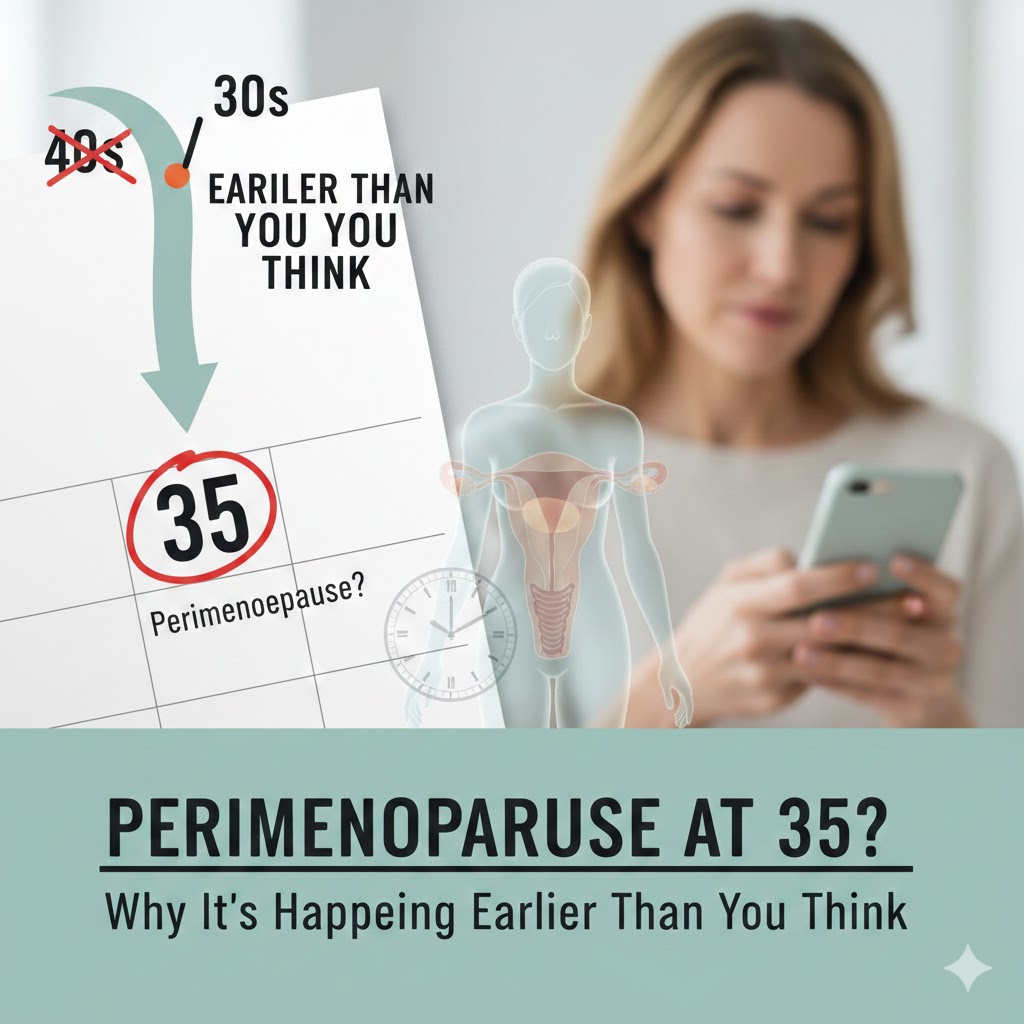
For decades, perimenopause was framed as something that begins in the early-to-mid 40s—well after most women feel “done” with major hormonal shifts. So when symptoms like irregular periods, anxiety, brain fog, sleep problems, or sudden fatigue appear in the mid-30s, many women are told it’s just stress.
But for a growing number of women, the reality is different. Perimenopause at 35 is not rare, imaginary, or exaggerated. It’s happening—and science, lifestyle changes, and modern health patterns help explain why.
This article breaks down what early perimenopause really is, why it’s showing up sooner, how it feels, and what you can do about it without panic or dismissal.
1. What Perimenopause Actually Is (and What It Isn’t)
Perimenopause is the transition phase before menopause, not menopause itself. During this time, the ovaries gradually change how they produce hormones—especially estrogen and progesterone.
Key things to understand:
- You can still have periods
- You can still ovulate (sometimes unpredictably)
- Hormones fluctuate wildly rather than decline smoothly
- Symptoms can come and go
This is why Perimenopause at 35 is often missed—it doesn’t look like the textbook version taught decades ago.
2. Why Perimenopause Is Starting Earlier
There isn’t one single cause. Instead, early perimenopause is driven by multiple modern factors acting together.
Chronic Stress
Long-term stress increases cortisol, which directly interferes with progesterone production. When progesterone drops first (which it often does), estrogen dominance symptoms begin—even if estrogen levels look “normal” on labs.
Metabolic and Lifestyle Load
Sleep deprivation, overtraining, under-eating, and constant stimulation keep the nervous system in survival mode. The ovaries are highly sensitive to this state.
Environmental Hormone Disruptors
Plastics, pesticides, cosmetics, and household chemicals mimic estrogen and disrupt natural hormone signaling, accelerating imbalance.
Delayed Childbearing
Biologically, ovaries don’t adjust well to long-term suppression and delayed reproductive timelines. This doesn’t cause perimenopause—but it can influence how early symptoms appear.
Genetics
If your mother or close female relatives experienced early hormonal shifts, Perimenopause at 35 may simply be your inherited timeline.
3. The Early Symptoms Women Often Miss
Early perimenopause doesn’t always start with missed periods. In fact, cycles can look normal for years.
Common early signs include:
- Anxiety or mood swings with no clear trigger
- Sleep disturbances (especially waking at 2–4 a.m.)
- Brain fog or poor focus
- PMS that feels suddenly worse
- Weight gain despite unchanged habits
- Lower stress tolerance
- Irregular energy levels
- Shorter or heavier cycles
Because these symptoms overlap with burnout or depression, many women are misdiagnosed—or dismissed.
4. Why Doctors Often Say “You’re Too Young”
Medical training traditionally places perimenopause in the 40s. Blood tests are often used incorrectly as definitive proof—even though hormones fluctuate daily during perimenopause.
Important truth:
- Hormone labs can appear “normal” while symptoms are very real
- Perimenopause is diagnosed clinically, not just by numbers
This gap in understanding is why Perimenopause at 35 often goes unrecognized.
5. Progesterone Drops First—And That Changes Everything
One of the earliest shifts in perimenopause is declining progesterone, not estrogen.
This leads to:
- Anxiety and irritability
- Sleep problems
- Estrogen dominance symptoms
- Heavier or more painful periods
Estrogen may still be high or erratic, which is why women feel “wired but tired” rather than simply low-energy.
6. Fertility vs Hormonal Stability
A key misconception is that perimenopause equals infertility.
Reality:
- You can be fertile and in perimenopause
- Ovulation becomes unpredictable, not absent
- Pregnancy is still possible
This hormonal unpredictability is exactly why Perimenopause at 35 can feel so confusing—your body sends mixed signals.
7. How Lifestyle Makes Symptoms Better—or Worse
Perimenopause is a stress-sensitive phase. What worked in your 20s often backfires in your mid-30s.
Things that can worsen symptoms:
- Over-exercising
- Skipping meals or extreme dieting
- Excess caffeine
- Poor sleep routines
- High emotional stress without recovery
Things that support hormonal stability:
- Consistent meals with protein and healthy fats
- Strength training over excessive cardio
- Nervous system regulation (walking, breathwork, rest)
- Better sleep hygiene
Managing Perimenopause at 35 often starts with lifestyle shifts—not medication.
8. Is This Permanent or Just a Phase?
Perimenopause can last several years, but symptoms are not static.
With proper support:
- Hormones can stabilize
- Symptoms can reduce dramatically
- Quality of life can improve
Early awareness often prevents years of unnecessary suffering.
9. When to Seek Professional Support
You should seek help if:
- Symptoms are worsening
- Anxiety or sleep issues feel unmanageable
- Cycles change significantly
- You feel dismissed or unheard
Look for practitioners experienced in women’s hormonal health, not just general labs.
Frequently Asked Questions (FAQ)
Is Perimenopause at 35 normal?
Yes. While not universal, it is increasingly common and biologically plausible.
Can stress alone cause perimenopause?
Stress doesn’t cause it—but it can trigger earlier and more intense symptoms.
Will blood tests confirm perimenopause?
Not reliably. Hormone levels fluctuate daily during perimenopause.
Can I still get pregnant during perimenopause?
Yes. Fertility becomes unpredictable but does not disappear.
Does early perimenopause mean early menopause?
Not always. Some women experience long transitions before menopause.
Is hormone therapy the only solution?
No. Many women improve significantly with lifestyle and targeted support alone.
Final Thoughts
Perimenopause at 35 isn’t a failure of your body—it’s a signal that your hormonal system is shifting and needs different care than it did before. The biggest problem isn’t early perimenopause itself, but how often it’s misunderstood, minimized, or ignored.
With awareness, proper support, and compassionate self-care, this phase doesn’t have to feel like losing control. It can become a turning point toward better health, balance, and long-term well-being.
More Related Topics:
Recovery Nutrition 2.0: Why Protein Timing Isn’t What We Thought
Keto for Endurance Is Dead—Here’s the New Fat-Adaptation Protocol
Diastasis Recti Exercises That Actually Work—Approved by Pelvic Floor PTs