
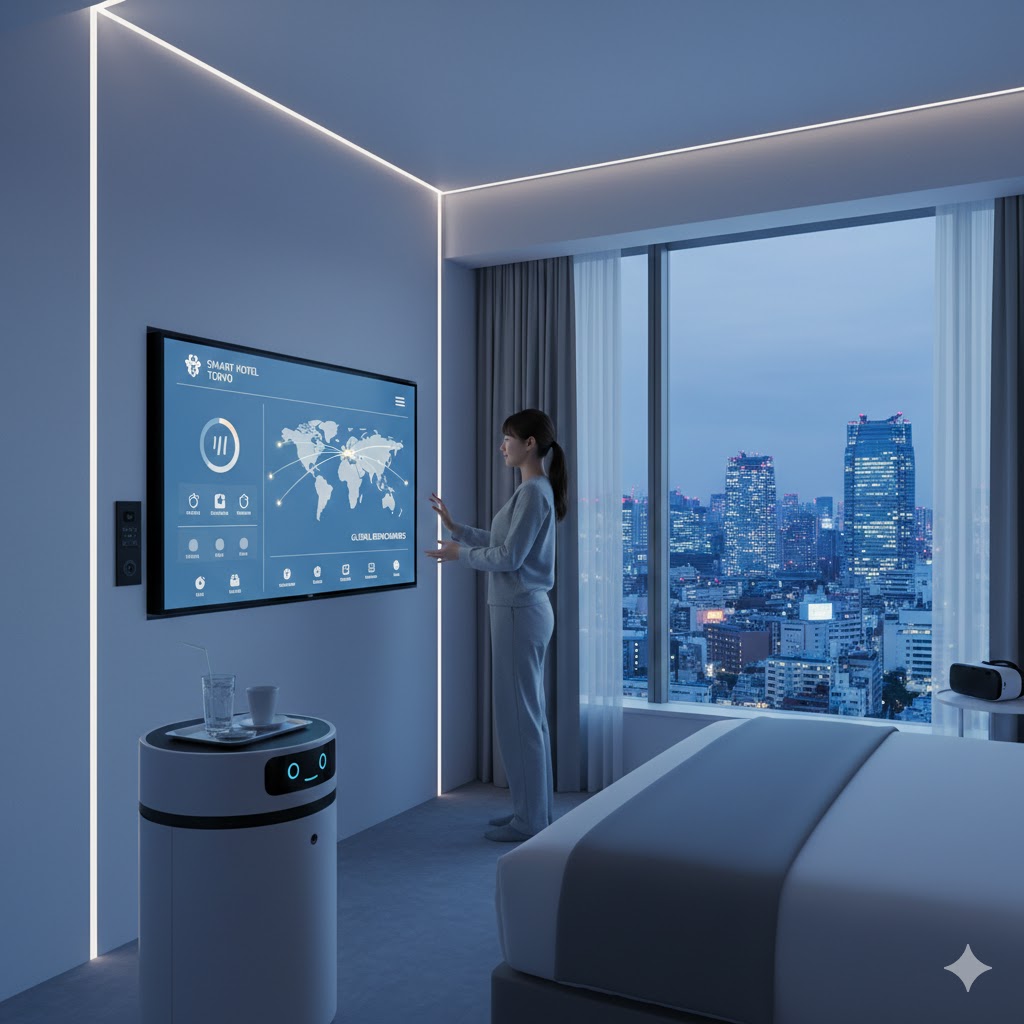
Tokyo has always been ahead of the curve—whether in transport, robotics, or urban living. Now, the city is redefining hospitality. Across luxury towers, business hotels, and even capsule stays, Smart Hotel Experiences in Tokyo are quietly setting new global standards for how technology can enhance comfort, efficiency, and personalization.
This isn’t about gimmicks or futuristic aesthetics alone. Tokyo’s hotels use technology with a clear purpose: to reduce friction, respect privacy, and improve the guest experience without losing the human touch.
This blog explores why smart hotel experiences in Tokyo are setting global benchmarks, how they work, and what the rest of the world is learning from Japan’s hospitality model.
1. What Are Smart Hotel Experiences in Tokyo?
Smart Hotel Experiences in Tokyo refer to the seamless integration of technology into hotel operations and guest stays—designed to make travel smoother, faster, and more intuitive.
1.1 Core Elements of Tokyo’s Smart Hotels
- Contactless check-in and check-out
- AI-powered room controls
- Robotics for basic services
- Smart energy and climate systems
- Multilingual digital assistance
The key difference: technology here is practical, not intrusive.
2. Why Tokyo Became the Global Leader in Smart Hospitality
Tokyo didn’t adopt smart hotels as a trend—it adopted them as a necessity.
2.1 Urban Density and Efficiency
Tokyo is one of the world’s busiest cities. Hotels must:
- Operate efficiently
- Serve international guests
- Maximize limited space
Smart systems solve all three challenges.
2.2 Cultural Focus on Precision and Service
Japanese hospitality values:
- Accuracy
- Quiet efficiency
- Respect for personal space
Smart hotel technology aligns perfectly with these values.
3. Contactless Check-In and Check-Out as the Norm
In Tokyo, long front-desk lines are becoming rare.
3.1 How It Works
Guests often:
- Scan passports at kiosks
- Use mobile apps for room access
- Complete check-out digitally
3.2 Why Travelers Love It
- Faster arrival experience
- Reduced language barriers
- More privacy
This frictionless arrival sets the tone for Smart Hotel Experiences in Tokyo.
4. AI-Powered Rooms and Personalized Comfort
Smart rooms are not futuristic experiments—they’re functional upgrades.
4.1 Smart Room Features
- Tablet-controlled lighting and climate
- Automated curtains
- Voice-assisted controls
- Personalized temperature settings
4.2 Why It Matters
Instead of adjusting to the room, the room adapts to the guest—one of the reasons Smart Hotel Experiences in Tokyo feel so refined.
5. Robotics in Tokyo Hotels: Useful, Not Gimmicky
Tokyo is famous for robotics—but hotels use them selectively.
5.1 Where Robots Are Used
- Front-desk assistance
- Luggage delivery
- Basic room service
- Cleaning support
Henn na Hotel is one of the most well-known examples.
5.2 Why Robots Work Here
Robots handle repetitive tasks, allowing human staff to focus on personalized service.
6. Capsule Hotels: Small Spaces, Smart Design
Capsule hotels showcase Tokyo’s smart thinking at its best.
6.1 Technology in Capsule Stays
- App-controlled lockers
- Smart lighting and ventilation
- Noise-controlled environments
- Touchscreen entertainment
6.2 Global Influence
Capsule concepts are now being exported worldwide—proof that Smart Hotel Experiences in Tokyo influence global hospitality design.
7. Multilingual AI and Digital Concierge Systems
Language barriers are minimized through smart systems.
7.1 Digital Assistance Features
- Multilingual chatbots
- AI-powered concierge tablets
- Smart city guides
7.2 Why This Matters for Global Travelers
Guests can navigate:
- Transportation
- Dining
- Local attractions
Without needing constant staff assistance.
8. Smart Energy and Sustainability Systems
Efficiency isn’t just about convenience—it’s about responsibility.
8.1 How Tokyo Hotels Reduce Waste
- Motion-sensor lighting
- Automated climate control
- Smart water usage monitoring
8.2 Sustainability as a Standard
These systems reduce costs and environmental impact, strengthening the long-term value of Smart Hotel Experiences in Tokyo.
9. Privacy and Trust in Smart Hotels
Advanced technology doesn’t mean less privacy.
9.1 How Privacy Is Protected
- Minimal data collection
- Clear consent systems
- Secure room controls
This balance builds trust—especially for international travelers.
10. What Global Hotels Are Learning from Tokyo
Hotels worldwide are studying Tokyo’s approach.
10.1 Key Lessons
- Technology should be invisible
- Convenience beats novelty
- Automation should support, not replace, hospitality
Tokyo proves that smart hotels succeed when guests feel relaxed, not overwhelmed.
11. The Future of Smart Hotel Experiences in Tokyo
Innovation isn’t slowing down.
11.1 What’s Coming Next
- AI-driven personalization
- Predictive room settings
- Deeper integration with smart cities
Tokyo remains a living laboratory for global hospitality.
Frequently Asked Questions (FAQ)
What makes smart hotel experiences in Tokyo different from other cities?
Tokyo focuses on subtle, efficient technology that enhances comfort without feeling intrusive.
Are smart hotels in Tokyo expensive?
Not always. Smart features are found across budget, business, and luxury hotels.
Do smart hotels replace human staff?
No. Technology handles repetitive tasks, allowing staff to focus on guest care.
Are smart hotel systems difficult to use?
No. Most systems are intuitive and designed for international travelers.
Is privacy a concern in smart hotels?
Tokyo hotels prioritize data security and guest privacy, making systems trustworthy.
Will smart hotel experiences become global standards?
Yes. Many features pioneered in Tokyo are already being adopted worldwide.
Final Thoughts
Tokyo doesn’t chase hospitality trends—it quietly sets them.
By combining efficiency, respect, and thoughtful technology, Smart Hotel Experiences in Tokyo are redefining what modern travel should feel like. Not louder. Not flashier. Just smoother, calmer, and better.
As the world looks for smarter ways to host travelers, Tokyo’s message is clear:
The future of hospitality isn’t about more technology—it’s about better technology.
Also read this:
Eco-Marine Tourism in Philippines: Beyond Crowded Beaches
Eat Like a Local in Naples: The Birthplace of Authentic Pizza Tourism
Soft Adventure Travel in Iceland Is Dominating 2026 Bookings