
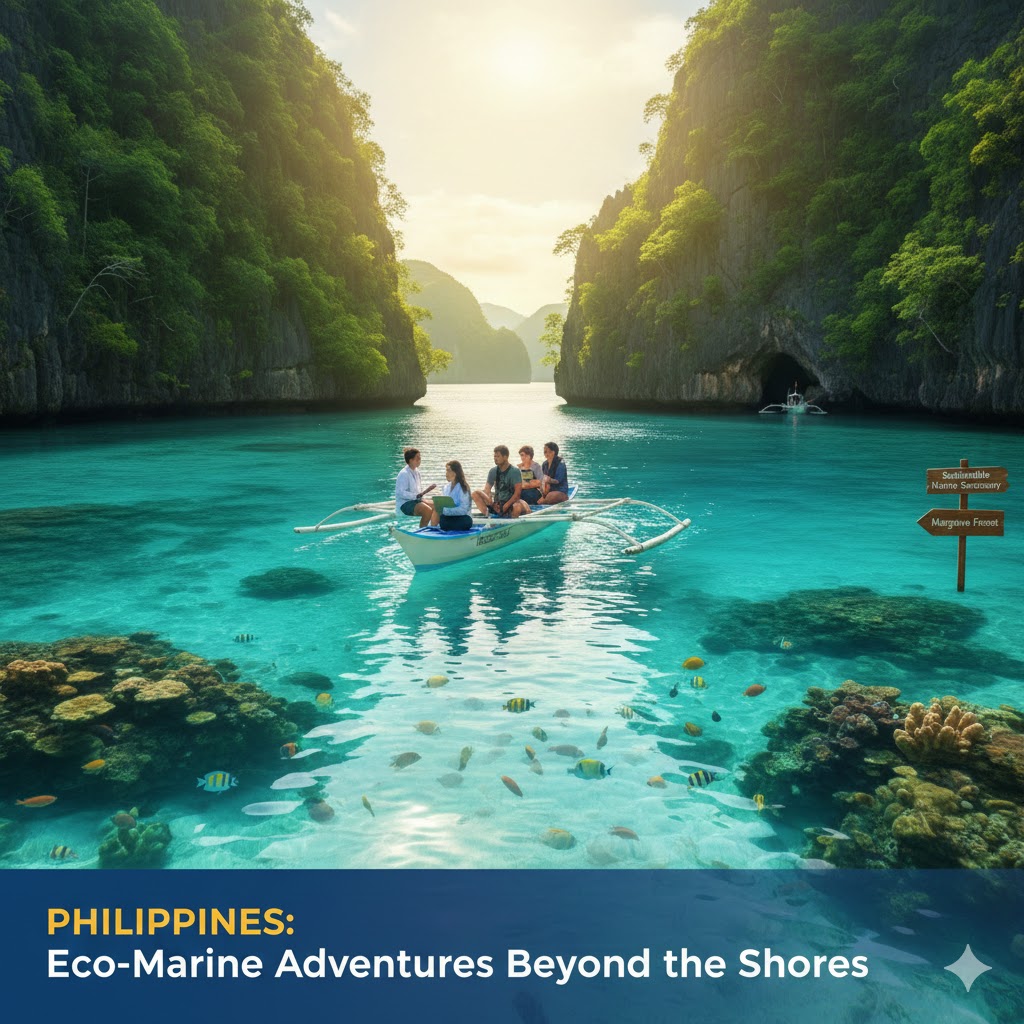
When people think of the Philippines, they imagine white-sand beaches packed with tourists and postcard-perfect shorelines. But far from the crowds lies a quieter, more meaningful travel movement—Eco-Marine Tourism in Philippines—focused on conservation, community, and immersive ocean experiences.
With over 7,000 islands, the Philippines is one of the world’s richest marine biodiversity zones. As travelers become more conscious of their impact, eco-marine tourism is reshaping how visitors explore the country—moving beyond busy beaches toward protected reefs, island communities, and sustainable ocean experiences.
This blog explores how eco-marine tourism in the Philippines goes beyond crowded beaches, where it’s thriving, and why it’s becoming one of Asia’s most important sustainable travel trends.
1. What Is Eco-Marine Tourism in Philippines?
Eco-Marine Tourism in Philippines focuses on responsible ocean-based travel that protects marine ecosystems while supporting local communities.
1.1 Core Principles
- Marine conservation first
- Low-impact tourism activities
- Community-led experiences
- Education over exploitation
It’s not about avoiding tourism—it’s about doing it responsibly.
2. Why the Philippines Is a Global Marine Biodiversity Hotspot
The Philippines sits within the Coral Triangle, often called the “Amazon of the seas.”
2.1 What Makes Its Waters Special
- Over 500 coral species
- Thousands of fish species
- Sea turtles, whale sharks, and reef sharks
- Extensive mangrove forests
This biodiversity is the foundation of Eco-Marine Tourism in Philippines.
3. Moving Beyond Crowded Beach Destinations
Popular beach towns attract visitors—but also strain ecosystems.
3.1 The Problem with Mass Beach Tourism
- Coral damage from uncontrolled snorkeling
- Waste and pollution
- Overfishing
- Habitat destruction
Eco-marine tourism shifts focus away from overcrowded shorelines toward protected and lesser-known areas.
4. Community-Led Marine Sanctuaries
Local communities are at the heart of sustainable marine tourism.
4.1 Apo Island: A Conservation Success Story
Apo Island is one of the Philippines’ earliest marine reserves.
Local residents:
- Manage reef protection
- Guide snorkeling and diving
- Enforce no-fishing zones
Tourism revenue directly funds conservation and livelihoods.
5. Palawan: Eco-Marine Tourism Beyond Resorts
Palawan is often called the country’s last ecological frontier.
5.1 Sustainable Marine Experiences
- Kayaking through limestone lagoons
- Snorkeling in protected reefs
- Island-hopping with eco-guides
Here, Eco-Marine Tourism in Philippines prioritizes preservation over profit.
6. Bohol and Responsible Marine Encounters
Bohol blends marine conservation with cultural tourism.
6.1 What Makes Bohol Different
- Regulated dolphin watching
- Community-run snorkeling sites
- Mangrove eco-tours
Strict rules ensure wildlife encounters remain ethical.
7. Coral Reef Protection Through Tourism
Tourism can harm reefs—but it can also save them.
7.1 How Eco-Marine Tourism Helps
- Entrance fees fund reef monitoring
- Visitor education reduces damage
- Marine sanctuaries restore fish populations
In many regions, healthy reefs now exist because of eco-tourism.
8. Mangroves: The Unsung Heroes of Marine Ecosystems
Mangroves are critical yet often overlooked.
8.1 Why Mangroves Matter
- Protect coastlines from storms
- Serve as fish nurseries
- Store large amounts of carbon
Eco-marine tours increasingly include mangrove kayaking and restoration activities.
9. Whale Sharks and Ethical Marine Wildlife Tourism
Donsol is famous for whale shark encounters done responsibly.
9.1 What Ethical Tourism Looks Like
- No feeding
- Limited visitor numbers
- Strict distance rules
This approach has made Donsol a model for ethical Eco-Marine Tourism in Philippines.
10. How Travelers Can Support Eco-Marine Tourism
Sustainable tourism depends on informed travelers.
10.1 Responsible Travel Tips
- Choose eco-certified operators
- Avoid touching coral or marine life
- Use reef-safe sunscreen
- Respect local rules
Small actions collectively protect marine ecosystems.
11. Why Eco-Marine Tourism Is the Future of Philippine Travel
Travel trends are shifting toward meaning and responsibility.
11.1 What Modern Travelers Want
- Authentic experiences
- Environmental responsibility
- Positive local impact
The Philippines’ vast marine resources make it ideal for this transition.
12. Challenges Facing Eco-Marine Tourism in Philippines
Despite progress, challenges remain.
12.1 Ongoing Issues
- Climate change and coral bleaching
- Illegal fishing
- Inconsistent enforcement
However, community involvement and education continue to strengthen conservation efforts.
Frequently Asked Questions (FAQ)
What is eco-marine tourism in the Philippines?
It is responsible ocean-based tourism that focuses on conservation, education, and community involvement.
Is eco-marine tourism only for divers?
No. Activities include snorkeling, kayaking, mangrove tours, and marine wildlife observation.
Are eco-marine destinations less crowded?
Yes. Many focus on controlled visitor numbers to protect ecosystems.
Does eco-marine tourism help local communities?
Yes. Revenue supports conservation projects and provides sustainable livelihoods.
Is eco-marine tourism more expensive?
Not necessarily. Fees often support protection efforts and offer better long-term value.
Why is the Philippines ideal for eco-marine tourism?
Its biodiversity, extensive coastlines, and strong community-led conservation make it uniquely suited.
Final Thoughts
The Philippines is more than its famous beaches. Beneath the surface lies a world of thriving reefs, resilient communities, and conservation success stories.
Eco-Marine Tourism in Philippines offers travelers a chance to experience the ocean responsibly—supporting marine life, empowering locals, and preserving beauty for generations to come.
The future of Philippine tourism isn’t just on the sand.
It’s in the sea—and how we choose to protect it.
Also read this:
Eat Like a Local in Naples: The Birthplace of Authentic Pizza Tourism
Soft Adventure Travel in Iceland Is Dominating 2026 Bookings
Singapore Became the World Smartest Travel Hub: How Technology Redefined Global Tourism