
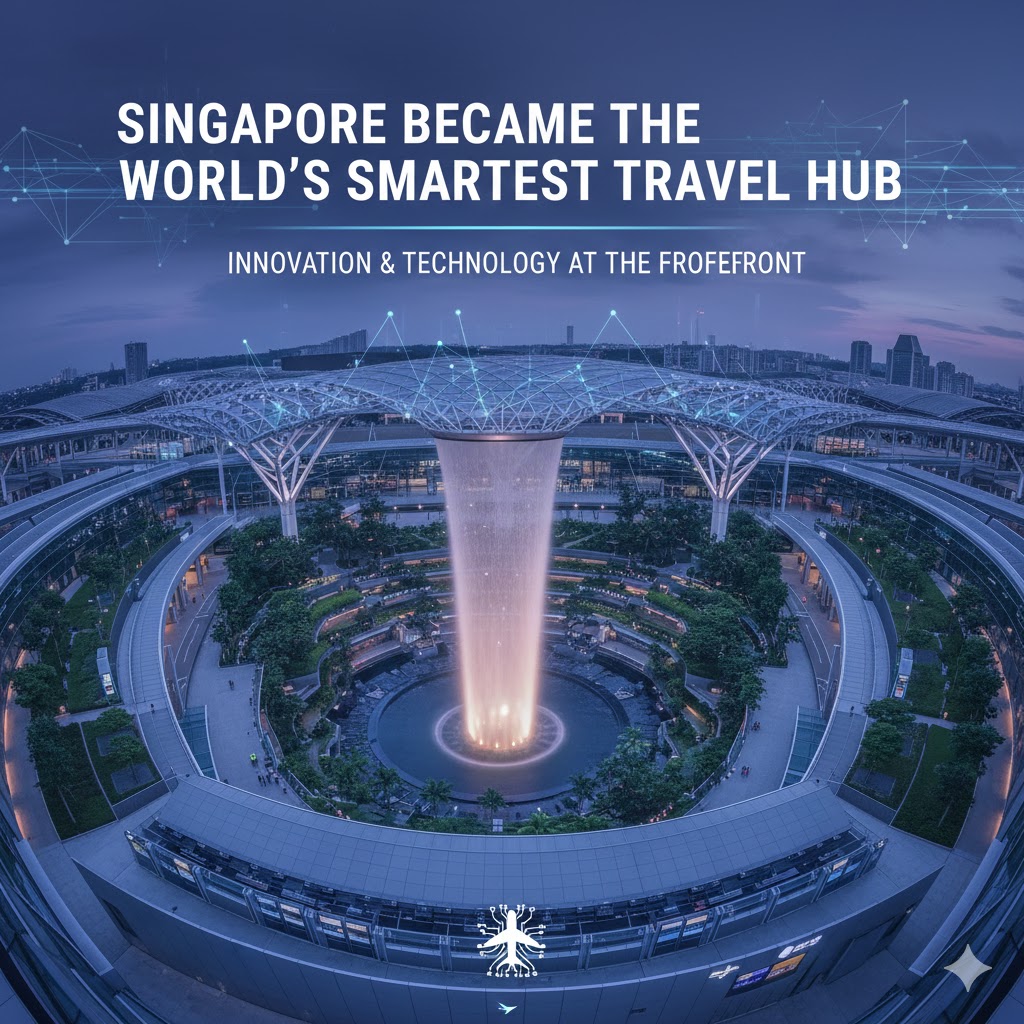
Singapore Became the World Smartest Travel Hub Few cities are admired for efficiency. Even fewer are admired for experience. Singapore is one of the rare places that mastered both. Over the last decade, Singapore Became the World Smartest Travel Hub not through flashy marketing, but through deliberate planning, technology-driven infrastructure, and traveler-first thinking.
This is not a story about luxury alone. It’s about how a city-state engineered seamless travel—where airports feel like destinations, transport feels intuitive, and technology quietly removes friction at every step.
Let’s break down how Singapore became the world’s smartest travel hub, what makes it different, and why other global destinations are trying (and struggling) to replicate its model.
1. What Does “Smart Travel Hub” Really Mean?
A smart travel hub is not defined by skyscrapers or apps alone. It’s defined by how effortlessly a traveler can move, explore, and experience a destination.
When we say Singapore Became the World Smartest Travel Hub, we mean:
- Minimal waiting
- Predictable systems
- Data-driven decisions
- Technology that serves people, not overwhelms them
1.1 Smart Travel Is Invisible
The smartest systems are often the least noticeable:
- Immigration that moves quickly
- Transport that requires no explanation
- Payments that work everywhere
- Clear, multilingual navigation
Singapore focused on removing problems, not adding features.
2. Singapore’s Strategic Vision for Travel and Connectivity
Unlike many destinations that react to tourism growth, Singapore planned for it decades in advance.
2.1 Travel as National Infrastructure
Tourism in Singapore is treated as:
- An economic pillar
- A reputation engine
- A global connector
Every travel decision supports long-term efficiency.
2.2 Centralized, Long-Term Planning
Because of strong governance, Singapore could:
- Align transport, tourism, and technology
- Invest early in digital infrastructure
- Avoid fragmented systems
This coordination is one reason Singapore Became the World Smartest Travel Hub while others lagged behind.
3. Changi Airport: More Than an Airport
No discussion of smart travel is complete without Singapore’s airport.
3.1 Why Changi Redefined Air Travel
Changi Airport is designed to reduce stress, not just process passengers.
Key innovations include:
- Automated immigration gates
- Smart baggage handling
- Predictive crowd management
- Integrated transport connections
Travelers don’t just pass through—they enjoy the experience.
3.2 Airport as a Destination
With gardens, retail, dining, and attractions, the airport itself became part of the journey. This philosophy helped Singapore stand apart globally and reinforced why Singapore Became the World Smartest Travel Hub.
4. Seamless Urban Mobility for Travelers
Once visitors leave the airport, the smart experience continues.
4.1 Public Transport Designed for Visitors
Singapore’s MRT and bus systems offer:
- Clear signage
- Accurate real-time updates
- Contactless payments
- Predictable schedules
No local knowledge is required.
4.2 Smart Traffic and Mobility Systems
AI-driven traffic control:
- Reduces congestion
- Improves travel time
- Enhances safety
For tourists, this means less time commuting and more time exploring.
5. Digital-First Travel Experience
Singapore embraced digital travel long before it became a global trend.
5.1 Cashless and Contactless Ecosystem
From transport to street food:
- Contactless cards
- Mobile wallets
- QR-based payments
Travelers don’t worry about currency friction.
5.2 Smart Tourism Platforms
Digital systems help with:
- Attraction bookings
- Crowd control
- Personalized recommendations
This digital maturity is a key reason Singapore Became the World Smartest Travel Hub.
6. Smart Attractions and Experience Design
Singapore doesn’t rely on history alone. It engineers experiences.
6.1 Technology-Enhanced Attractions
- Smart ticketing
- Timed entry systems
- Data-driven visitor flow
These systems prevent overcrowding while improving enjoyment.
6.2 Integrated Destinations
Places like Sentosa are designed as complete ecosystems—transport, attractions, dining, and accommodation all connected intelligently.
7. Sustainability Through Smart Planning
Smart travel is not just about speed—it’s about responsibility.
7.1 Environmental Intelligence
Singapore uses technology to:
- Optimize energy use
- Manage water resources
- Reduce waste
Tourism growth is balanced with sustainability goals.
7.2 Green Urban Tourism
Urban greenery, walkable zones, and eco-friendly design make travel pleasant and environmentally conscious.
This balance strengthens the idea that Singapore Became the World Smartest Travel Hub, not just the most advanced one.
8. Safety, Cleanliness, and Trust
Trust is a travel luxury—and Singapore invested heavily in it.
8.1 Predictable Rules and Enforcement
Travelers value:
- Clean streets
- Clear regulations
- Reliable services
Consistency builds confidence.
8.2 Smart Surveillance and Safety Systems
Technology enhances safety without feeling intrusive, making Singapore especially attractive for solo travelers and families.
9. How Singapore Uses Data to Improve Travel
Behind the scenes, data drives decisions.
9.1 Real-Time Monitoring
- Visitor flows
- Transport demand
- Event congestion
9.2 Continuous Optimization
Policies and systems are refined constantly, ensuring travel infrastructure evolves with demand.
This adaptability keeps Singapore ahead, reinforcing why Singapore Became the World Smartest Travel Hub
10. Lessons Other Destinations Can Learn from Singapore
Many cities try to copy Singapore’s tech—but miss the philosophy.
10.1 What Others Get Wrong
- Adding apps without integration
- Ignoring user experience
- Fragmented planning
10.2 What Actually Works
- Centralized vision
- Traveler-first design
- Invisible technology
Singapore proves smart travel is about systems, not gadgets.
Frequently Asked Questions (FAQ)
Why is Singapore considered the world’s smartest travel hub?
Because it combines technology, infrastructure, planning, and traveler experience into a seamless system with minimal friction.
Is Singapore a good destination for first-time international travelers?
Yes. Clear signage, efficient transport, safety, and digital payments make it extremely beginner-friendly.
What role does Changi Airport play in Singapore’s travel success?
Changi acts as both a global connector and a destination, setting the tone for the entire travel experience.
Is Singapore expensive for travelers?
While accommodation can be costly, transport, food, and attractions offer a wide range of affordable options.
How does Singapore manage crowds and overtourism?
Through data-driven planning, timed entry systems, and efficient transport distribution.
Can other countries replicate Singapore’s smart travel model?
Parts of it, yes—but full replication requires long-term planning, governance coordination, and cultural discipline.
Final Thoughts
Singapore didn’t become a smart travel hub by accident. It was engineered—patiently, strategically, and relentlessly.
By focusing on efficiency, trust, and traveler experience, Singapore Became the World Smartest Travel Hub and set a global benchmark for what modern tourism can look like.
In a world where travel often feels chaotic, Singapore proves that the future of tourism doesn’t have to be stressful—it can be seamless.
Also read this:
Set-Jetting Boom: How Dubrovnik Became a Global Travel Hotspot
Virtual Travel Planning: From AI Itineraries to Digital Twins