
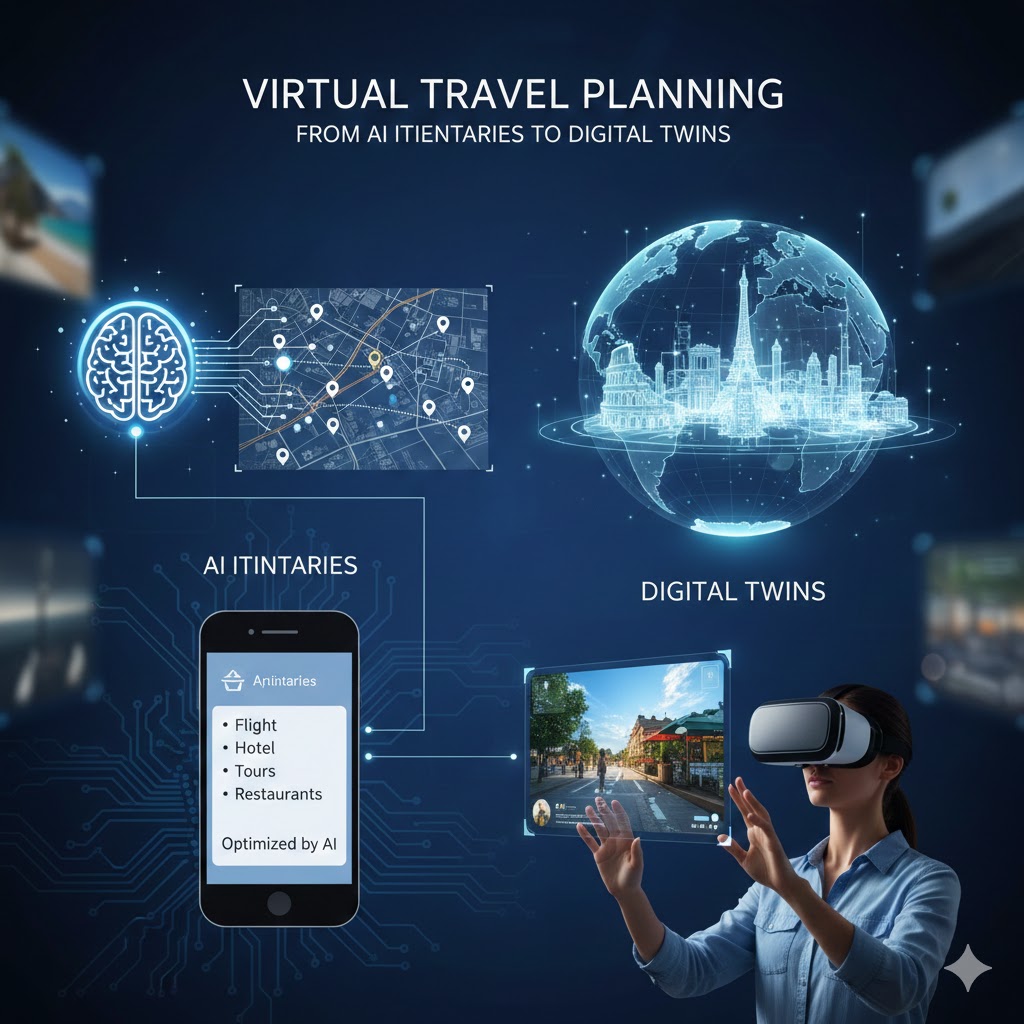
Virtual Travel Planning Travel planning has changed dramatically in just a few years. Instead of guidebooks and spreadsheets, travelers now rely on intelligent systems that simulate trips before they happen. Virtual Travel Planning combines artificial intelligence, real-time data, and immersive digital tools to help travelers design smarter, more personalized journeys.
From AI-generated itineraries to full digital replicas of cities, this approach is reshaping how people decide where to go, what to see, and how to move.
What Is Virtual Travel Planning?
Virtual Travel Planning refers to the use of digital technologies to plan, preview, and optimize trips before booking or traveling. It goes beyond simple search tools by offering dynamic, interactive, and personalized planning experiences.
Core elements include:
- AI-powered itinerary creation
- Virtual tours and previews
- Real-time pricing and crowd data
- Digital twins of destinations
The goal is to reduce uncertainty and improve decision-making.
Why Virtual Travel Planning Is Growing So Fast
Several trends have accelerated adoption.
Key drivers include:
- Travelers wanting more control and predictability
- Rising travel costs increasing planning importance
- AI becoming better at personalization
- Travelers preferring fewer planning mistakes
As a result, Virtual Travel Planning has become mainstream rather than experimental.
AI-Powered Itineraries: Smarter Trip Design
One of the most visible aspects of Virtual Travel Planning is AI-generated itineraries.
These systems can:
- Analyze travel preferences and budgets
- Optimize routes and daily schedules
- Adjust plans based on weather or crowd levels
- Suggest alternatives in real time
Instead of static plans, AI itineraries evolve as conditions change.
Virtual Tours and Destination Previews
Virtual tours allow travelers to explore destinations digitally before committing.
They help with:
- Previewing hotels and accommodations
- Exploring neighborhoods and attractions
- Understanding distances and layouts
- Avoiding disappointing choices
This preview layer makes Virtual Travel Planning more confident and informed.
What Are Digital Twins in Travel?
Digital twins are virtual replicas of real-world locations created using data, mapping, and simulation technologies.
In travel, digital twins can:
- Simulate cities, airports, and attractions
- Show crowd flow and peak times
- Model transport routes and delays
- Help travelers test itineraries virtually
This is the most advanced form of Virtual Travel Planning, offering near-real experiences before arrival.
How Digital Twins Improve Travel Decisions
Digital twins reduce surprises during trips.
They help travelers:
- Avoid congested areas
- Choose better travel times
- Plan realistic daily schedules
- Optimize transport connections
For complex destinations, digital twins can significantly improve trip quality.
Virtual Travel Planning for Different Travelers
Solo Travelers
- Personalized safety-aware itineraries
- Budget optimization
- Flexible, adaptive planning
Families
- Child-friendly route planning
- Reduced travel fatigue
- Better accommodation selection
Business Travelers
- Time-efficient scheduling
- Predictive delay modeling
- Location-based meeting planning
This versatility explains why Virtual Travel Planning appeals to so many segments.
Limitations of Virtual Travel Planning
Despite its advantages, virtual planning is not perfect.
Limitations include:
- Over-reliance on algorithms
- Incomplete or outdated local data
- Less spontaneity
- Dependence on connectivity
Human judgment still plays an important role.
How Virtual Planning Changes Booking Behavior
Travelers now book with greater confidence.
Effects include:
- Fewer last-minute changes
- Better expectation alignment
- Higher satisfaction rates
- Reduced planning stress
Virtual Travel Planning shifts travel decisions from guesswork to informed choice.
The Future of Virtual Travel Planning
Looking ahead, virtual travel tools are expected to become more immersive and predictive.
Likely developments include:
- Real-time itinerary adjustments during travel
- Deeper personalization through behavioral data
- Augmented reality navigation
- Seamless integration with bookings and payments
Planning and traveling will increasingly blend into one continuous digital experience.
Frequently Asked Questions (FAQ)
What is virtual travel planning in simple terms?
It is the use of AI and digital tools to design, preview, and optimize trips before traveling.
Are AI itineraries better than manual planning?
They are often more efficient and data-driven, but personal judgment and flexibility still matter.
What is a digital twin in travel?
A digital twin is a virtual replica of a real destination that allows travelers to simulate routes, crowds, and experiences before visiting.
Is virtual travel planning only for tech-savvy users?
No. Most platforms are designed for everyday travelers with simple interfaces and guided suggestions.
Can virtual travel planning reduce travel costs?
Yes. By optimizing routes, timing, and bookings, it can help avoid unnecessary expenses.
Does virtual planning remove spontaneity from travel?
Not necessarily. It provides structure while still allowing travelers to adjust plans on the go.
Is virtual travel planning replacing travel agents?
It complements rather than replaces them. Travel professionals increasingly use these tools themselves.
Will digital twins become common for all destinations?
Major cities and tourist hubs are adopting them first, with wider expansion expected over time.
Conclusion
Virtual Travel Planning represents a major shift in how trips are designed and experienced. By combining AI itineraries, virtual previews, and digital twins, travelers can plan with greater confidence, efficiency, and clarity. While it doesn’t replace the joy of discovery, it reduces friction and uncertainty—making travel smoother from the very first click.
As technology continues to evolve, virtual planning will become a standard part of how the world travels.
Also read this:
Soft Adventure Travel Is Dominating Bookings in 2026