
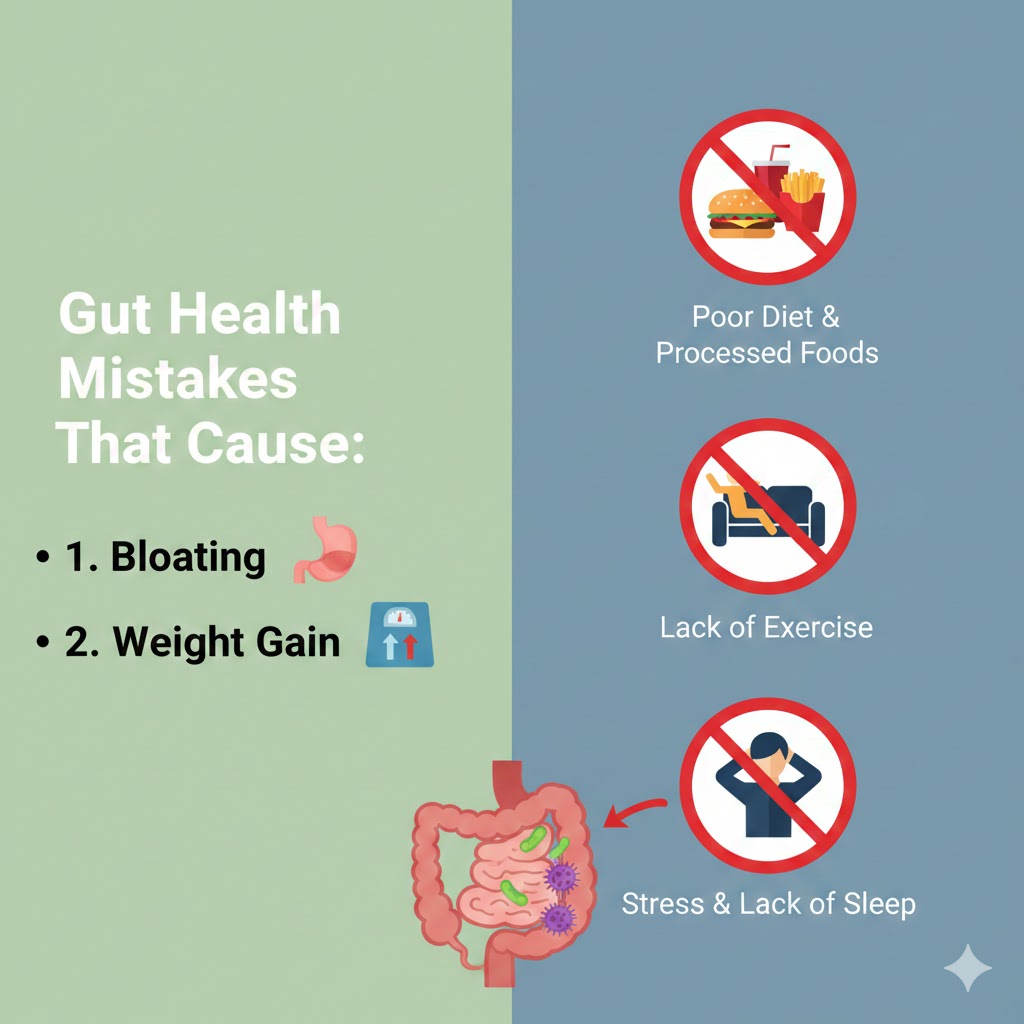
Gut Health Mistakes That Cause Bloating Digestive discomfort and unexplained weight gain are often linked to daily habits that disrupt the balance of the gut. Many people focus on calories and exercise while overlooking the digestive system’s role in metabolism, nutrient absorption, and inflammation. Understanding Gut Health Mistakes That Cause Bloating can help reduce discomfort and support healthier weight management.
The gut microbiome plays a central role in digestion and overall health. When this delicate balance is disturbed, symptoms such as bloating, water retention, fatigue, and weight gain can follow.
Why Gut Health Matters for Weight and Digestion
The gut is home to trillions of microorganisms that help break down food, regulate appetite hormones, and influence how calories are stored. A healthy gut supports efficient digestion and metabolic balance, while an imbalanced gut can trigger inflammation, slow digestion, and increase fat storage.
Persistent bloating is often one of the earliest signs that gut function is being disrupted. Many Gut Health Mistakes That Cause Bloating occur gradually and are often overlooked until symptoms become chronic.
Common Gut Health Mistakes That Cause Bloating
Eating Too Quickly
Eating too fast can introduce excess air into the digestive tract and reduce proper chewing. This places added strain on the stomach and intestines, leading to bloating and discomfort.
Poor digestion from rushed meals may also interfere with nutrient absorption, which can contribute to cravings and weight gain over time.
Overconsumption of Processed Foods
Highly processed foods are often low in fiber and high in additives that disrupt gut bacteria. Artificial sweeteners, emulsifiers, and refined carbohydrates can promote gas production and inflammation.
Regular intake of these foods is one of the most common Gut Health Mistakes That Cause Bloating, as they alter the microbial balance needed for smooth digestion.
Inadequate Fiber Intake
Fiber supports healthy digestion by feeding beneficial gut bacteria and regulating bowel movements. Diets low in fiber can slow digestion, increase gas buildup, and lead to irregularity.
Both too little fiber and sudden large increases without gradual adjustment can cause bloating, highlighting the importance of balance.
Ignoring Food Sensitivities
Many people experience bloating due to unrecognized sensitivities to foods such as lactose, gluten, or certain fermentable carbohydrates. These foods may not cause immediate reactions but can trigger chronic digestive discomfort.
Repeated exposure to trigger foods is another example of Gut Health Mistakes That Cause Bloating and can contribute to inflammation and water retention.
Lifestyle Habits That Affect Gut Balance
Chronic Stress
Stress affects gut motility and alters the gut–brain connection. Elevated stress hormones can slow digestion, increase intestinal sensitivity, and worsen bloating.
Long-term stress also affects appetite regulation, making weight gain more likely even without changes in calorie intake.
Poor Sleep Patterns
Inadequate sleep disrupts gut bacteria and hormone balance. Poor sleep quality has been linked to increased hunger, slower digestion, and greater bloating.
Sleep-related gut disruption is often overlooked when evaluating Gut Health Mistakes That Cause Bloating.
Overuse of Antibiotics
While antibiotics are essential when medically necessary, repeated or unnecessary use can significantly disrupt gut bacteria. This imbalance may lead to digestive discomfort, bloating, and difficulty managing weight.
Restoring gut balance after antibiotic use often requires dietary adjustments and time.
Hydration and Gut Health
Inadequate water intake can slow digestion and worsen bloating. Water helps fiber move smoothly through the digestive tract and supports overall gut function.
Dehydration may also cause the body to retain water, increasing abdominal bloating and temporary weight gain.
How Gut Health Mistakes Contribute to Weight Gain
When digestion is impaired, the body may struggle to regulate appetite hormones such as ghrelin and leptin. This imbalance can lead to increased hunger, cravings, and reduced feelings of fullness.
Chronic inflammation caused by poor gut health can also interfere with insulin sensitivity, making it easier to store fat. Over time, repeated Gut Health Mistakes That Cause Bloating may contribute to gradual, unexplained weight gain.
Improving Gut Health and Reducing Bloating
Addressing gut health does not require extreme measures. Small, consistent changes can make a noticeable difference.
Helpful strategies
- Eat slowly and chew food thoroughly
- Increase fiber intake gradually
- Limit ultra-processed foods
- Identify and reduce trigger foods
- Prioritize sleep and stress management
- Stay adequately hydrated
These steps support a healthier gut environment and reduce digestive discomfort.
When to Seek Medical Advice
Occasional bloating is common, but persistent or severe symptoms should not be ignored. Ongoing bloating, unexplained weight gain, or digestive pain may indicate underlying conditions such as food intolerances, irritable bowel syndrome, or hormonal imbalances.
A healthcare professional can help identify causes and recommend appropriate testing or treatment.
Conclusion
Digestive health plays a crucial role in both comfort and weight regulation. Many Gut Health Mistakes That Cause Bloating stem from everyday habits that disrupt digestion and microbial balance. By addressing these patterns and supporting gut health through diet and lifestyle changes, it is possible to reduce bloating, improve digestion, and support healthier weight management.
More Related Topics:
Desk Exercises: 30+Exercises Every Work-From-Home Professional Needs to Stay Healthy and Energized
Viral Health Myths Doctors Want You to Stop Believing in 2026
Healthy Eating Plan for Weight Loss Without Dieting — Easy, Sustainable & Beginner-Friendly