
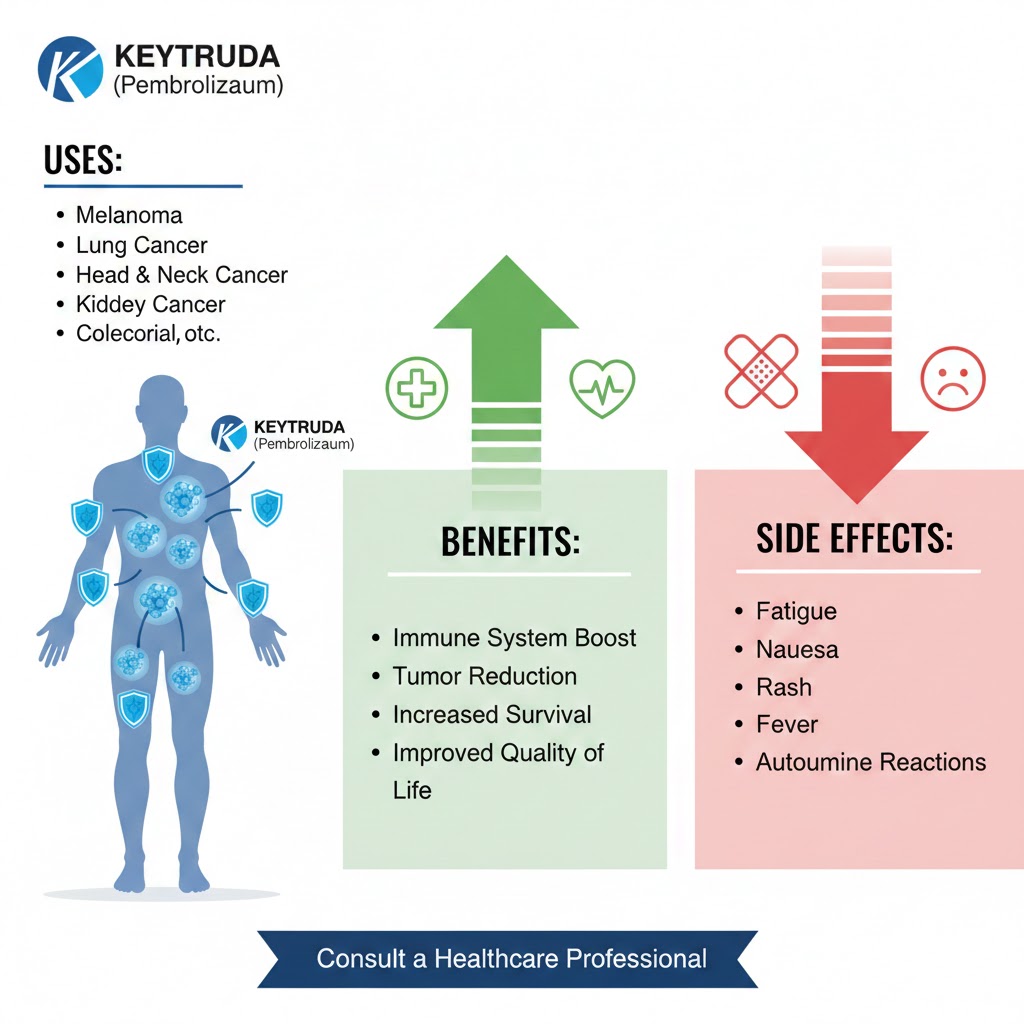
Keytruda (Pembrolizumab) is an immunotherapy drug used to treat a wide range of cancers by helping the body’s immune system recognize and destroy cancer cells. Unlike chemotherapy, which directly targets rapidly dividing cells, Keytruda enhances immune activity against tumors. This approach has led to improved survival outcomes and reduced recurrence in many patients, although it also carries the risk of immune-mediated side effects.
How Keytruda Works
Keytruda (Pembrolizumab) Keytruda is a programmed death-1 (PD-1) inhibitor that targets immune checkpoint pathways used by cancer cells to avoid detection.
Mechanism of action
- Cancer cells activate the PD-1 pathway to suppress T-cell activity
- Keytruda blocks the PD-1 receptor on T-cells
- This restores the immune system’s ability to detect and attack cancer cells
By reactivating immune surveillance, Keytruda improves overall survival (OS), progression-free survival, and event-free survival (EFS) in multiple cancer types.
Uses and Benefits of Keytruda
Keytruda (Pembrolizumab) Keytruda is approved for the treatment of more than 18 cancer types. It may be used alone (monotherapy) or combined with chemotherapy, radiation, or targeted therapies, depending on the clinical situation.
Common cancer indications
- Melanoma (skin cancer)
- Non-small cell lung cancer (NSCLC)
- Head and neck squamous cell carcinoma (HNSCC)
- Urothelial carcinoma (bladder and urinary tract cancer)
- Classical Hodgkin lymphoma
- Colorectal cancer
- Gastric (stomach) cancer
- Esophageal cancer
- Cervical cancer
- Kidney (renal cell) cancer
- Liver and biliary tract cancers
- Endometrial cancer
- Triple-negative breast cancer (TNBC)
Key treatment benefits
- Improves long-term survival in advanced cancers
- Produces durable immune responses in some patients
- Can be effective even when chemotherapy has failed
- Often better tolerated than traditional chemotherapy
The exact use of Keytruda depends on tumor stage, location, previous treatments, and the presence of biomarkers such as PD-L1 expression or MSI-H/dMMR status, which help identify patients most likely to benefit.
Side Effects of Keytruda
Keytruda (Pembrolizumab) Because Keytruda stimulates the immune system, side effects are primarily related to excessive immune activation. These reactions can affect nearly any organ system and require close monitoring.
Common Side Effects
Most common side effects are usually mild to moderate and manageable with supportive care.
- Fatigue or weakness
- Muscle, bone, or joint pain
- Nausea, diarrhea, or constipation
- Decreased appetite
- Skin rash or itching
- Cough or shortness of breath
Serious Side Effects (Immune-Mediated Reactions)
More serious side effects occur when the immune system attacks healthy tissues. Patients should seek medical attention immediately if symptoms develop.
Lung inflammation (pneumonitis)
- Persistent cough
- Chest pain
- Shortness of breath
Intestinal inflammation (colitis)
- Severe or persistent diarrhea
- Abdominal pain
- Blood or mucus in stools
Liver inflammation (hepatitis)
- Yellowing of skin or eyes (jaundice)
- Dark urine
- Severe nausea or vomiting
- Pain on the right side of the abdomen
Hormone gland disorders
- Persistent headaches
- Extreme fatigue
- Rapid or irregular heartbeat
- Excessive sweating
- Changes in appetite, thirst, or urination
Kidney inflammation
- Decreased urine output
- Blood in urine
- Swelling of ankles or feet
Skin reactions
- Severe rash or itching
- Blistering or peeling skin
- Painful sores in the mouth, nose, throat, or genital area
Other serious reactions
- Infusion-related reactions
- Neurological symptoms such as muscle weakness or confusion
- Increased risk of organ transplant rejection
Keytruda (Pembrolizumab) Early detection and treatment are critical. Most immune-mediated side effects can be controlled with corticosteroids or temporary interruption of therapy if identified promptly.
Conclusion
Keytruda (pembrolizumab) represents a major advancement in cancer treatment by harnessing the immune system to fight cancer more effectively. Its ability to improve survival and produce long-lasting responses has made it a cornerstone therapy for many cancers. However, due to the risk of serious immune-related side effects, careful patient selection and close monitoring are essential throughout treatment.
More Related Topics:
Eliquis Uses as a Blood Thinner: Benefits and Risks
Ozempic vs Wegovy: Which Semaglutide Is Better for Weight Loss?
Mounjaro vs Zepbound: Key Differences for Diabetes and Weight Loss