
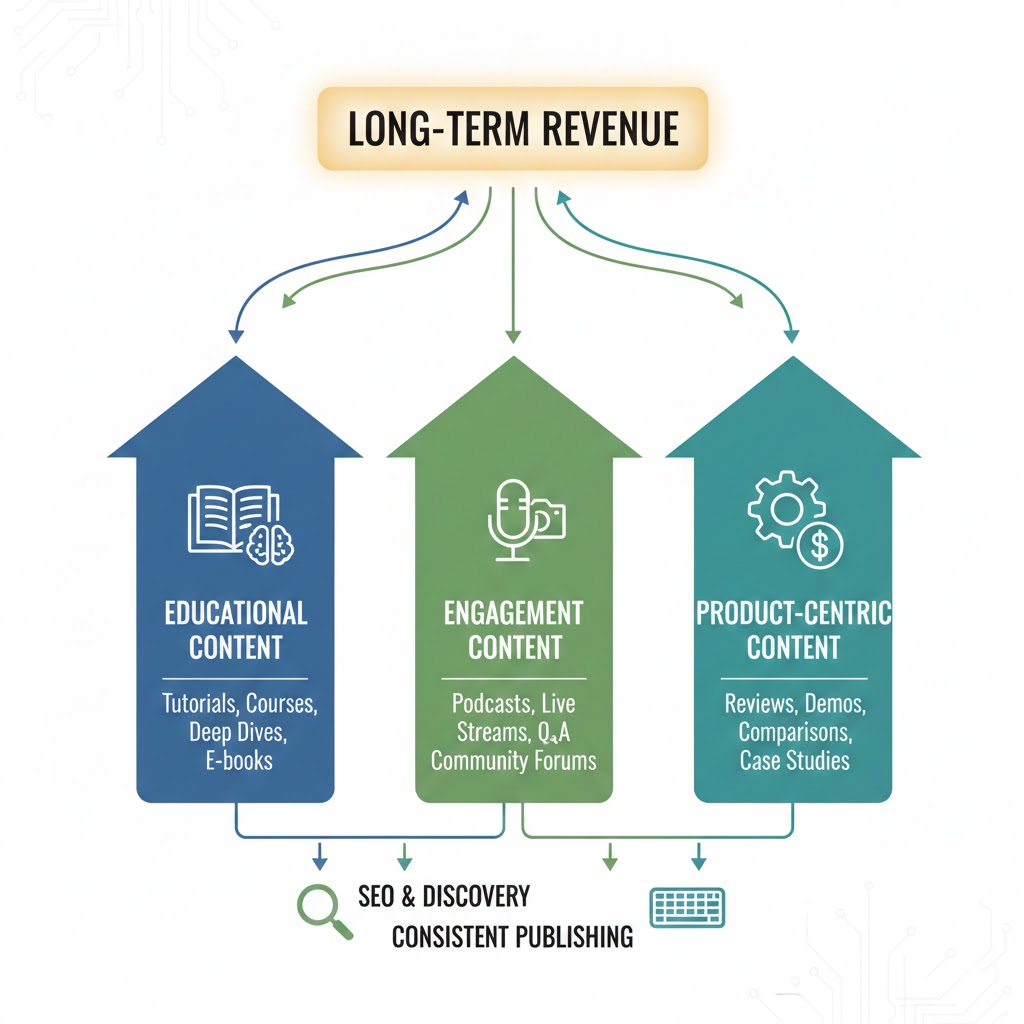
The technology content landscape has evolved dramatically over the past decade, with countless creators launching blogs, YouTube channels, and newsletters only to abandon them when quick monetization fails to materialize. However, a select group of technology publishers has cracked the code on building sustainable, profitable content businesses that generate consistent revenue for years. This comprehensive guide reveals the best tech content model for achieving long-term financial success, examining content strategies, business structures, and monetization approaches that create lasting value rather than temporary traffic spikes.
1. Foundation: Choosing Your Tech Content Position
The foundation of any successful content business begins with strategic positioning that differentiates you from countless competitors while aligning with sustainable monetization opportunities.
Vertical Specialization Over Horizontal Coverage
The best tech content model focuses intensely on specific technology verticals rather than attempting comprehensive coverage across all technology topics. Specializing in cloud infrastructure, developer tools, marketing technology, or cybersecurity creates defensible competitive advantages through deep expertise that generalist publications cannot match.
Vertical specialization allows you to become the definitive resource within your chosen domain, commanding authority that attracts both audiences and commercial opportunities. Software vendors in your vertical seek your coverage, readers trust your recommendations, and search engines recognize your topical authority, creating compounding advantages that broaden over time.
Practitioner-First Editorial Approach
Content created by active practitioners rather than professional writers demonstrates authenticity and depth that resonates powerfully with technical audiences. Writing about technologies you actually use, challenges you genuinely face, and solutions you’ve personally implemented creates credibility impossible to fake through research alone.
This practitioner perspective transforms content from theoretical explanation into practical guidance, addressing real-world complications, edge cases, and implementation details that only experience reveals. Audiences recognize and value this authenticity, building trust that converts to revenue through recommendations, product purchases, and service engagements.
Problem-Solution Content Architecture
Organizing content around specific problems your audience faces rather than abstract topics or product features creates immediate relevance and utility. Readers searching for solutions to particular challenges find content directly addressing their situations, making your guidance immediately actionable and memorable.
Problem-centered content naturally incorporates product recommendations, implementation guidance, and contextual education without feeling promotional or forced. Solutions often involve specific tools, platforms, or services that can be monetized through affiliates, sponsorships, or your own products, aligning content value with revenue generation.
Future-Proofing Through Foundational Focus
While covering emerging technologies and trends attracts attention, the best tech content model balances timely coverage with foundational content that remains relevant across technology cycles. Core concepts, architectural patterns, problem-solving frameworks, and implementation methodologies retain value regardless of specific tool evolution.
This evergreen foundation generates sustained search traffic and ongoing value for years after publication, creating content assets that appreciate rather than depreciate over time. New readers continuously discover foundational content through search, building audiences and revenue without requiring constant content production.
2. Content Format Strategy and Distribution
Strategic format selection and distribution across complementary platforms maximize reach while building owned audiences that reduce platform dependency.
Written Content as the Core Asset
Blog posts and articles serve as the foundational content layer that feeds all other formats while providing the most SEO-friendly, searchable, and referenceable content type. Written content can be scanned, searched, quoted, and consumed at reader pace, making it ideal for technical material requiring careful study and reference.
Comprehensive written guides become permanent resources that rank for relevant keywords indefinitely, generating passive traffic and monetization opportunities long after publication. Investment in thorough written content creates compounding assets that form the backbone of sustainable content businesses.
Video for Demonstration and Personality
YouTube tutorials and demonstrations bring technical concepts to life through visual explanation, screen recordings, and personal presentation that builds stronger creator-audience connections than text alone. Video particularly suits implementation tutorials, tool comparisons, and complex explanations benefiting from visual demonstration.
Video content also creates secondary revenue streams through YouTube advertising, sponsorships specific to video content, and audience building that diversifies traffic sources beyond search engine dependency. Successful tech content creators typically repurpose written content into video formats, maximizing return on research and content development effort.
Podcasts for Depth and Convenience
Audio content allows audiences to consume technical discussions during commutes, workouts, or household tasks when reading or watching isn’t practical. Long-form podcast conversations explore topics more deeply than typical written content while building intimate relationships through regular voice presence in listener lives.
Podcasts generate revenue through sponsorships that often command premium rates relative to display advertising, while building loyal audiences who feel personally connected to hosts and more readily convert to products, services, or premium offerings.
Email Newsletters for Owned Audiences
Email lists represent the most valuable audience asset because they provide direct communication independent of platform algorithms, policy changes, or ranking volatility. Newsletter subscribers have explicitly indicated interest in your content, making them far more valuable than social followers or casual website visitors.
The best tech content model aggressively builds email lists through lead magnets, content upgrades, and regular publishing that makes subscription obviously valuable. Email becomes the primary channel for product launches, affiliate promotions, sponsorship fulfillment, and relationship building that drives all other revenue streams.
3. Monetization Architecture for Sustainability
Sustainable revenue requires diversified income streams that complement rather than compete with each other, creating resilience against market changes and platform dependencies.
Tiered Product Ladder Strategy
Successful tech content businesses offer products at multiple price points serving different audience segments and commitment levels. Free content attracts audiences and demonstrates value, low-priced products convert curious readers into customers, mid-tier offerings serve committed learners, and premium products capture high-value customers seeking maximum support.
This ladder allows monetization across the full spectrum of audience willingness and ability to pay rather than forcing all-or-nothing choices that leave money on the table from both ends. Each tier creates upsell opportunities to the next while generating revenue from customers who might not purchase at different price points.
Recurring Revenue Prioritization
The best tech content model emphasizes recurring revenue through subscriptions, memberships, and recurring affiliate commissions over one-time transactions. Monthly recurring revenue creates business predictability, sustainable growth through accumulation, and valuations multiples higher than businesses dependent on continuous new customer acquisition.
Membership communities, premium newsletter subscriptions, ongoing course access with regular updates, and software affiliate programs with recurring commissions all build monthly recurring revenue that compounds over time as you add new customers while retaining existing subscribers.
Strategic Affiliate Integration
Rather than scattering affiliate links throughout all content, strategic programs focus on high-value products genuinely serving audience needs with favorable commission structures. Deep integration through comprehensive reviews, implementation guides, comparison content, and use case demonstrations drives conversions while providing genuine value.
Affiliate relationships extend beyond simple link placement to include exclusive discounts for your audience, co-marketing initiatives with partner companies, early access to new features, and revenue share arrangements that treat you as a strategic partner rather than transactional referral source.
Sponsorship and Partnership Revenue
Direct relationships with relevant technology companies create predictable monthly income through ongoing content sponsorships, newsletter placements, dedicated content series, or retainer arrangements for regular coverage and promotion.
These partnerships work best when aligned with editorial coverage you’d create regardless of sponsorship, maintaining authenticity while generating revenue. Position sponsor relationships as underwriting valuable content rather than purchasing influence, preserving trust while building sustainable revenue.
4. Content Production Systems and Efficiency
Long-term sustainability requires production systems that maintain quality without causing creator burnout or requiring unsustainable time investment.
Research and Ideation Workflows
Systematic approaches to content ideation and research prevent the blank page paralysis that derails many content creators. Maintaining idea banks populated through keyword research, audience questions, industry news monitoring, and personal experience documentation ensures continuous content pipeline flow.
Batch research sessions where you deeply explore topics, evaluate tools, and document findings create foundations for multiple content pieces, maximizing return on exploration time. This systematic approach transforms content creation from constant scrambling into predictable execution of well-researched plans.
Content Templates and Frameworks
Developing reusable templates for common content types accelerates production while ensuring comprehensive coverage. Tutorial templates include necessary sections like prerequisites, step-by-step instructions, troubleshooting, and next steps. Review templates systematically cover features, pricing, use cases, pros, cons, and recommendations.
These frameworks prevent overlooking important elements while reducing cognitive load during creation, allowing focus on unique insights and quality rather than structural decisions. The best tech content model balances template efficiency with creative flexibility, using frameworks as starting points rather than rigid constraints.
Repurposing and Multi-Format Publishing
Maximizing value from each content investment requires systematic repurposing across formats and platforms. A comprehensive written guide becomes a video tutorial, podcast episode, email series, social media thread, and slide deck presentation, multiplying reach and impact from single core development efforts.
This approach requires planning content with repurposing in mind, creating comprehensive source material that naturally divides into segments, examples, and formats suitable for various platforms. Investment in initial thorough creation pays dividends through extensive multi-channel distribution.
Outsourcing and Team Building
Sustainable growth eventually requires delegating tasks that don’t require your unique expertise or perspective. Editing, graphic design, video editing, transcription, and administrative tasks can be outsourced to freelancers or contractors, freeing creator time for high-value activities like content creation, relationship building, and strategy.
Building teams begins with identifying tasks consuming substantial time without requiring irreplaceable skills, then systematically documenting processes and delegating work to qualified help. This progression from solo creator to team-supported operation enables scaling without proportional time increases.
5. Audience Development and Community Building
Building engaged audiences who actively participate rather than passively consume creates network effects that amplify content value and generate monetization opportunities beyond traditional models.
Comment Section and Discussion Cultivation
Actively fostering discussion in blog comments creates community atmosphere while generating user-created content that adds value for future visitors. Responding thoughtfully to comments demonstrates accessibility and expertise while encouraging ongoing participation that increases time on site and return visit frequency.
Thriving comment sections signal content quality to search engines while making blogs feel alive and interactive rather than static. These discussions often reveal content gaps, clarify confusing explanations, and provide social proof that influences new visitors encountering material for the first time.
Private Community Platforms
Dedicated community spaces like Slack groups, Discord servers, or custom forum platforms create owned networks where members interact with each other and you beyond individual content consumption. These communities become valuable in themselves, often justifying membership fees while providing continuous engagement touchpoints.
Technical communities particularly thrive when facilitating peer problem-solving, knowledge sharing, and professional networking that members value independent of creator-provided content. The best tech content model leverages community to reduce content production burden while increasing overall value delivery.
Live Interaction and Office Hours
Regular live sessions where audiences can interact directly, ask questions, and receive personalized guidance build stronger relationships than purely one-way content distribution. Office hours, live tutorials, Q&A sessions, or cohort-based programs create accountability and personal connection that passive content cannot match.
Live interaction also generates content ideas from direct audience feedback, provides testimonials and success stories showcasing value, and creates urgency around attendance that drives consistent engagement with your content ecosystem.
User-Generated Content Integration
Encouraging audiences to contribute tutorials, case studies, tool recommendations, or implementation examples extends content production while building investment and ownership among community members. Featured community contributions provide recognition that motivates participation while diversifying perspectives beyond sole creator viewpoints.
Guest contributions from community experts, interviews with accomplished practitioners, and collaboration with complementary creators all expand content variety and reach while building relationships that support broader business objectives.
6. Technical Infrastructure and Platform Choices
The best tech content model requires thoughtful platform and tool selection that supports long-term growth without creating technical debt or platform dependency vulnerabilities.
Self-Hosted Content Foundation
Maintaining primary content on owned and controlled platforms like self-hosted blogs provides independence from platform policy changes, algorithmic unpredictability, and potential shutdowns that threaten creator businesses on third-party platforms. WordPress, Ghost, or static site generators offer flexibility and control while supporting all necessary monetization methods.
Self-hosting requires more technical sophistication than platform-dependent options but provides freedom to implement any business model, integrate any tools, and control user experience without platform limitations or restrictions. This independence proves increasingly valuable as platforms mature and inevitably prioritize their interests over creator success.
Email Service Provider Selection
Email marketing infrastructure represents critical business infrastructure deserving careful selection based on deliverability, automation capabilities, list management features, and integration ecosystem. Providers like ConvertKit, ActiveCampaign, or MailerLite offer creator-focused features supporting sophisticated segmentation, automation, and monetization workflows.
Migration between email providers proves technically challenging and risky, making initial selection important for long-term success. Prioritize platforms growing with your business rather than requiring eventual migration as audience size or sophistication increases.
Analytics and Business Intelligence
Comprehensive analytics covering traffic sources, user behavior, conversion funnels, revenue attribution, and content performance guide data-informed optimization decisions that improve results over time. Google Analytics, combined with platform-specific analytics and optional enhanced solutions like Fathom or Plausible, provides necessary visibility into what works and what needs improvement.
The best tech content model systematically tracks key metrics including traffic sources, conversion rates, customer acquisition costs, lifetime value, and revenue per visitor, using this data to guide strategic decisions about content priorities, monetization focus, and resource allocation.
Payment and Transaction Infrastructure
Reliable payment processing through services like Stripe or PayPal combined with platforms like Gumroad, Teachable, or custom solutions enables frictionless transactions across various product types. Infrastructure should support one-time purchases, subscriptions, upsells, and international customers while providing necessary tax handling and reporting.
Investing in proper payment infrastructure prevents revenue loss from technical issues, abandoned purchases due to friction, or international customers unable to complete transactions due to limited payment method support.
7. SEO Strategy for Sustainable Organic Traffic
Search engine optimization remains the most powerful channel for generating qualified traffic that converts to revenue, making it central to sustainable tech content models.
Keyword Research and Content Planning
Systematic keyword research identifying search terms with commercial intent, reasonable competition levels, and alignment with monetization opportunities guides content creation toward topics driving business results. Tools like Ahrefs, SEMrush, or free alternatives like Google Keyword Planner reveal opportunities worth pursuing.
Prioritizing keywords indicating purchase consideration, implementation intent, or problem-solving needs over purely informational queries ensures content attracts visitors ready to take action rather than casual browsers. The best tech content model deliberately targets bottom-funnel keywords that convert well despite potentially lower search volumes.
Comprehensive Content Depth
Thorough coverage of topics signals expertise to both readers and search algorithms, improving rankings while providing superior user value. Comprehensive guides answering multiple related questions, addressing common confusions, and providing actionable implementation guidance tend to outrank shorter alternatives over time.
Content depth doesn’t mean unnecessary length but rather thoroughness that leaves readers fully informed and ready to act. Each piece should completely address its topic rather than requiring readers to consult multiple sources for full understanding.
Technical SEO Excellence
Proper technical foundations including fast page loads, mobile optimization, structured data markup, clean URL structures, and secure connections support content rankings by removing technical barriers to search engine indexing and user experience. Technical excellence matters increasingly as search algorithms prioritize user experience signals.
Regular technical audits identifying and fixing issues like broken links, slow-loading resources, mobile usability problems, or crawl errors maintain site health that supports all content marketing efforts. Technical problems can dramatically undermine excellent content, making infrastructure maintenance essential.
Strategic Internal Linking
Thoughtful internal link structures connecting related content help search engines understand site architecture while distributing ranking authority across pages and guiding visitors to relevant additional resources. Topic clusters linking comprehensive pillar content with detailed subtopic articles demonstrate topical authority that improves rankings across entire content areas.
Internal linking also increases pageviews per session and time on site while reducing bounce rates, positive engagement signals that reinforce search rankings. The best tech content model systematically plans internal link strategies rather than adding links arbitrarily or inconsistently.
8. Long-Term Business Evolution and Scaling
Sustainable tech content businesses evolve beyond solo creator operations into proper companies with systems, teams, and strategic vision extending beyond individual capabilities.
From Creator to CEO Mindset
Transitioning from content creator to business operator requires embracing responsibilities like strategy, team management, financial planning, and systems development that may feel uncomfortable but prove essential for scaling beyond personal capacity limits. This evolution often determines whether content ventures remain side projects or become substantial businesses.
The CEO mindset prioritizes working on the business rather than merely in it, investing time in leverage-creating activities like product development, partnership cultivation, team building, and systems creation rather than exclusively executing tactical content production.
Product Suite Expansion
Successful content businesses progressively expand product offerings serving different audience segments and price points. Initial information products might be followed by software tools, service offerings, live programs, corporate training licenses, or consulting engagements that monetize expertise through various formats.
This expansion creates resilience through diversification while capturing greater percentages of total audience lifetime value. Different customers prefer different product types and price points, making varied offerings essential for maximizing revenue from existing audiences.
Strategic Exit Planning
Even creators planning to operate businesses indefinitely benefit from building assets with potential acquirers would value, including owned audiences, recurring revenue, documented systems, and independence from founder personality. These characteristics increase business value while creating options for eventual sale, merger, or succession.
The best tech content model deliberately builds transferable value rather than purely personality-dependent assets, creating businesses that could theoretically operate without founder involvement even if that transition never occurs. This discipline forces proper systems creation and team development that support sustainable scaling.
Legacy and Impact Beyond Revenue
Long-term successful content creators often discover that impact beyond pure revenue becomes increasingly motivating. Contributing meaningfully to industries, helping individuals advance careers, or pushing technologies forward provides satisfaction that financial success alone cannot match.
Building businesses intentionally structured around impact alongside profitability creates sustainable motivation through inevitable challenging periods while attracting talented team members, strategic partners, and loyal audiences who share values beyond transactional relationships.
Conclusion
The best tech content model for achieving long-term revenue combines strategic positioning in specific technology verticals with multi-format content distribution, diversified monetization, efficient production systems, engaged community building, technical excellence, and sustainable business practices. This model requires patience and persistence as assets compound over years rather than generating overnight success.
Success in technology content publishing increasingly belongs not to those seeking quick wins through viral content or algorithm gaming but to those building genuine value through expertise, consistency, and strategic business development. The creators and companies dominating technology content markets years from now will be those who began today building proper foundations rather than chasing temporary opportunities.
The comprehensive approach outlined throughout this guide represents proven patterns from successful technology publishers who have built sustainable, valuable businesses around their content. While specific tactics and technologies will evolve, the fundamental principles of providing genuine value, building owned audiences, diversifying revenue, and operating with strategic long-term thinking will remain relevant regardless of platform or algorithm changes.
Whether you’re beginning your technology content journey or optimizing existing efforts, implementing these principles positions you for sustainable success. The opportunity to build meaningful, profitable content businesses in technology remains vast, with room for countless creators who commit to excellence, embrace strategic thinking, and persist through the years required to build truly valuable assets. The question isn’t whether technology content offers viable business opportunities but whether you’ll build your content business on sustainable foundations that support long-term success.
Also read this:
Tech Bloggers Are Monetizing Without Massive Traffic: Smart Strategies for Sustainable Income
Top Tech & AI Affiliate Programs That Pay Recurring Income: Build Sustainable Revenue Streams
AI Education as a Digital Product: Why Demand Is Exploding and How Creators Can Capitalize