
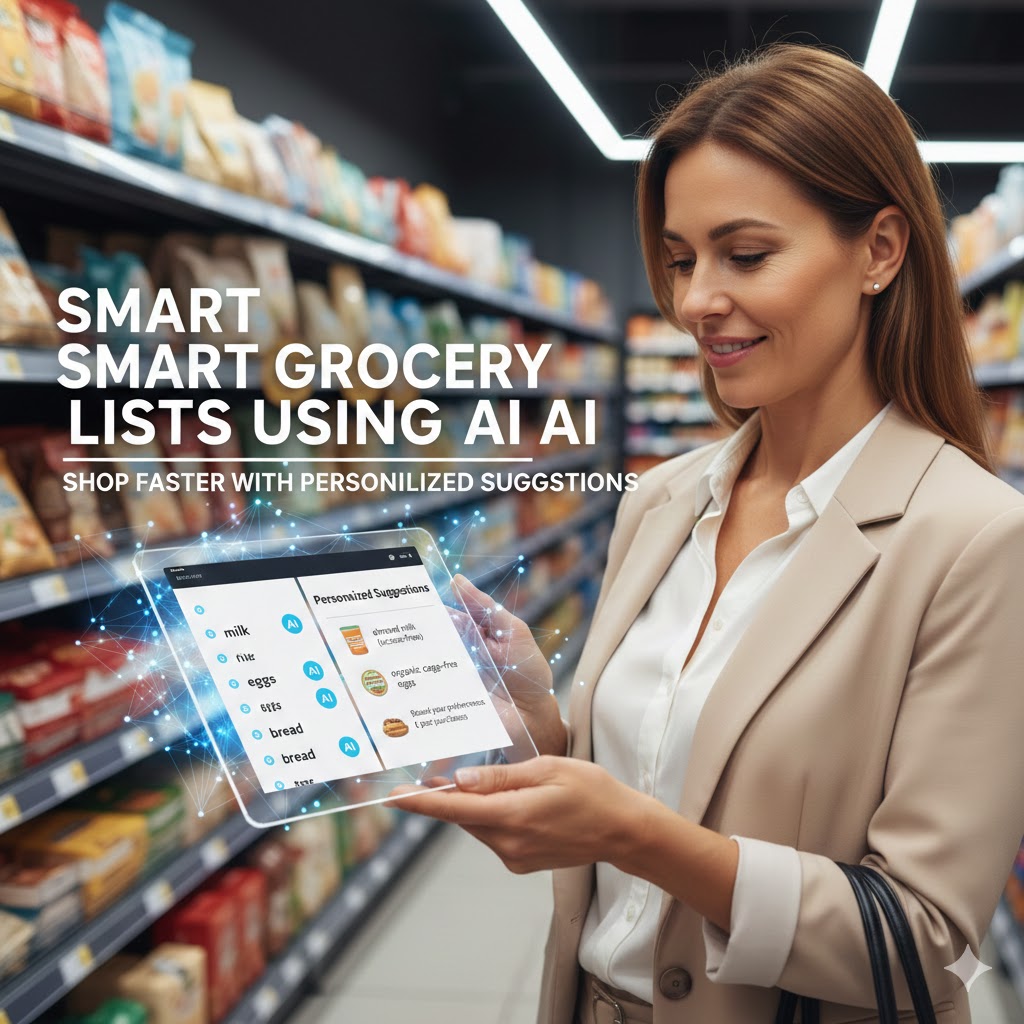
Gone are the days of forgotten items, impulse purchases, and wandering aimlessly through supermarket aisles. The future of grocery shopping is here, and it’s powered by artificial intelligence. Smart grocery lists using AI are revolutionizing how we plan meals, manage household inventory, and optimize our shopping experiences. This technology isn’t just about convenience—it’s about transforming one of our most routine tasks into an efficient, personalized, and cost-effective experience.
1. Understanding Smart Grocery Lists Using AI
What Makes a Grocery List “Smart”?
Traditional grocery lists are static documents—pen and paper or basic notes apps that require manual updates and offer no intelligent assistance. Smart grocery lists using AI, however, are dynamic systems that learn from your behavior, anticipate your needs, and adapt to your lifestyle.
These intelligent systems analyze your purchasing patterns, dietary preferences, seasonal trends, and even local store inventory to create optimized shopping experiences. They go beyond simple reminders by offering contextual suggestions, nutritional insights, and budget management tools that evolve with your changing needs.
The Technology Behind AI-Powered Lists
The foundation of smart grocery lists using AI rests on several sophisticated technologies working in harmony. Machine learning algorithms process your shopping history to identify patterns and preferences. Natural language processing enables voice commands and understands context when you add items. Computer vision can scan receipts or recognize products from photos. Predictive analytics forecast when you’ll run out of regularly purchased items.
These systems connect to vast databases containing nutritional information, recipe collections, and real-time pricing data from multiple retailers. Cloud synchronization ensures your list is accessible across all devices, while location-based services can alert you to nearby stores with the best prices on your needed items.
2. Key Features That Make AI Grocery Lists Revolutionary
Predictive Item Suggestions
One of the most powerful capabilities of smart grocery lists using AI is their ability to predict what you need before you realize it yourself. By analyzing your purchase frequency, consumption patterns, and household size, these systems can automatically suggest items you’re likely running low on.
The AI considers multiple variables including seasonality, past purchase intervals, and even weather patterns that might affect consumption. For instance, it might suggest buying more hot chocolate and soup ingredients during winter months, or recommend sunscreen and grilling supplies as summer approaches.
Personalized Recipe Integration
Modern AI grocery systems seamlessly integrate with recipe databases and meal planning features. When you select recipes for the week, the system automatically extracts ingredients, checks what you already have, and adds only the necessary items to your list. This eliminates the tedious process of manual ingredient compilation and reduces the chance of forgetting crucial components.
The personalization extends to understanding your dietary restrictions, allergies, and taste preferences. If you’re vegetarian, lactose intolerant, or following a specific diet plan, smart grocery lists using AI will suggest appropriate alternatives and filter out incompatible items automatically.
Budget Optimization and Price Tracking
Financial management is a critical component of intelligent grocery shopping. AI-powered lists monitor price fluctuations across different stores and alert you to the best deals. They can track your spending patterns, warn you when you’re approaching budget limits, and suggest more economical alternatives to expensive items.
The system learns which brands you prefer and which generic alternatives you find acceptable, helping balance quality preferences with budget constraints. It can even recommend buying certain items in bulk when prices are favorable, based on your storage capacity and consumption rate.
Smart Categorization and Store Layout Optimization
Efficiency in the store matters as much as efficiency in planning. Smart grocery lists using AI automatically categorize items and can even organize them according to your preferred store’s layout. This feature minimizes backtracking and ensures you follow an optimal path through the aisles.
Advanced systems can integrate with store maps and real-time inventory data, directing you to the exact aisle and shelf location of each item. Some can even alert you when items on your list are out of stock, suggesting alternatives or notifying you when they’re restocked.
3. The Benefits of Adopting Smart Grocery Lists Using AI
Time Savings and Efficiency
The average person spends approximately four hours per month grocery shopping. Smart grocery lists using AI can reduce this time significantly by streamlining every aspect of the process. Pre-organized lists mean less time wandering aisles, predictive suggestions reduce return trips for forgotten items, and integrated meal planning eliminates the daily “what’s for dinner” dilemma.
The time saved extends beyond the shopping trip itself. Meal planning that once took an hour on Sunday afternoons now happens automatically based on your preferences and schedule. Inventory management that required periodic pantry checks now occurs continuously through smart tracking.
Reduced Food Waste
Food waste is a significant problem in modern households, with the average family discarding hundreds of dollars worth of groceries annually. AI-powered shopping lists combat this by tracking expiration dates, suggesting recipes that use items nearing expiration, and preventing over-purchasing through intelligent quantity recommendations.
The system learns your actual consumption patterns rather than relying on aspirational shopping. If you consistently buy spinach but never finish the bag, it will adjust quantities or suggest different vegetables you actually consume. This data-driven approach to purchasing dramatically reduces waste while saving money.
Healthier Eating Habits
Smart grocery lists using AI can serve as a personal nutritionist, analyzing the nutritional content of your purchases and offering healthier alternatives. When you add chips to your list, it might suggest baked versions or healthier snack options based on your health goals.
The AI can track macronutrients, vitamins, and minerals across your planned meals, alerting you to nutritional gaps or imbalances. For individuals managing conditions like diabetes or high blood pressure, these systems can filter products by sodium content, sugar levels, or glycemic index, making dietary management more manageable.
Cost Reduction Through Smart Shopping
The financial benefits of AI-assisted grocery shopping extend beyond simple price comparisons. These systems identify patterns in your spending, highlight opportunities for bulk buying, and suggest generic alternatives that match your quality standards. They can calculate unit prices across different package sizes, revealing the most economical options.
Seasonal awareness helps you buy produce when it’s abundant and affordable, while price history tracking ensures you purchase items when they’re on sale. Over time, users typically report savings of fifteen to twenty-five percent on their grocery bills without sacrificing quality or variety.
4. How Smart Grocery Lists Using AI Learn Your Preferences
Initial Setup and Profile Creation
Getting started with smart grocery lists using AI involves creating a detailed profile that helps the system understand your unique needs. This includes basic information like household size, dietary restrictions, and budget parameters, but also extends to preferred brands, frequently purchased items, and cooking skill level.
Many systems offer guided onboarding that asks strategic questions about your shopping habits and food preferences. Some can scan your existing pantry to build an initial inventory, while others learn through observation as you add items to your first few lists.
Continuous Learning Through User Behavior
The real intelligence of these systems emerges through continuous learning. Every interaction provides data points that refine the AI’s understanding of your preferences. When you accept a suggestion, reject an alternative, or modify quantities, the system adjusts its future recommendations accordingly.
This adaptive learning means smart grocery lists using AI become more accurate and personalized over time. The system recognizes seasonal preferences, special occasion patterns, and even correlates purchases with external factors like weather or local events that might influence your shopping needs.
Feedback Mechanisms and Customization
Effective AI systems provide multiple ways to give feedback and customize behavior. You might rate suggestions, mark items as favorites or avoid-at-all-costs, or adjust the aggressiveness of budget recommendations. Some systems allow you to set priorities, indicating whether health, budget, or convenience is your primary concern.
Advanced platforms incorporate explicit feedback mechanisms where you can explain why you rejected a suggestion, helping the AI distinguish between “I don’t like this product” and “I already have this item” or “this is too expensive right now.” This nuanced feedback accelerates the learning process.
5. Integration With Smart Home and IoT Devices
Connected Refrigerators and Pantry Systems
The next frontier for smart grocery lists using AI involves integration with internet-connected appliances. Smart refrigerators equipped with internal cameras can track inventory automatically, noting when items are running low or approaching expiration. These devices communicate directly with your shopping list, adding items without manual intervention.
Pantry management systems using weight sensors or barcode scanners can maintain real-time inventory of your cupboard staples. When your flour container reaches a certain threshold, it automatically appears on your grocery list with the appropriate quantity based on your typical usage.
Voice Assistant Integration
Voice assistants have become central hubs for smart home management, and grocery list integration is a natural fit. Simply saying “add milk to my grocery list” while you’re finishing breakfast saves time and ensures you capture needs the moment they arise, rather than trying to remember everything when planning your shopping trip.
Advanced voice integration with smart grocery lists using AI goes beyond simple addition. You can ask for recipe suggestions based on current inventory, inquire about nutritional information, or get price comparisons, all through conversational interaction. The AI can even remind you of items you typically buy but haven’t added to your current list.
Wearable Devices and Health Data
The integration of health tracking wearables with shopping systems represents an emerging trend. When your fitness tracker indicates you’re consistently short on protein or iron, your smart grocery list can suggest foods rich in these nutrients. Exercise patterns might trigger suggestions for energy-boosting snacks or hydration options.
For individuals managing chronic conditions, this integration becomes particularly valuable. Blood glucose monitors could influence carbohydrate suggestions, while blood pressure trackers might prompt the system to recommend low-sodium alternatives, making smart grocery lists using AI an active participant in health management.
6. Privacy and Data Security Considerations
Understanding What Data is Collected
Smart grocery lists using AI require substantial data to function effectively, raising legitimate privacy concerns. These systems typically collect purchase history, dietary preferences, location data when accessing store information, and potentially even financial data when managing budgets or processing payments.
Understanding exactly what information is collected and how it’s used is crucial. Reputable platforms provide transparent privacy policies detailing data collection, storage duration, and sharing practices. Users should be particularly attentive to whether data is anonymized, aggregated, or sold to third parties like advertisers or food manufacturers.
Best Practices for Protecting Your Information
Protecting your privacy while using AI-powered grocery services requires proactive measures. Use strong, unique passwords and enable two-factor authentication when available. Regularly review connected accounts and revoke access for unused services. Be cautious about granting permissions, especially for location tracking or camera access, unless genuinely necessary for functionality you use.
Consider what information you’re comfortable sharing. You might choose to manually enter purchases rather than linking bank accounts, or use approximate rather than exact location data. Many smart grocery lists using AI offer privacy modes that limit data collection while still providing basic functionality.
Choosing Trustworthy Platforms
Not all AI grocery platforms treat user data with equal care. Research companies before committing to their services, looking for established privacy credentials, clear data policies, and responsive customer support. Platforms that are transparent about their AI training processes and data usage tend to be more trustworthy.
Look for services that allow data export and account deletion, giving you control over your information. Consider whether the platform encrypts data in transit and at rest, and whether they’ve experienced any security breaches. Reading user reviews often reveals how companies handle data concerns in practice versus policy.
7. Popular Platforms Offering Smart Grocery Lists Using AI
Dedicated Grocery Apps
Several applications specialize specifically in AI-powered grocery management. These platforms typically offer the most sophisticated features since grocery shopping is their sole focus. They invest heavily in partnerships with retailers, extensive product databases, and advanced recommendation algorithms.
Leading apps in this category provide comprehensive solutions including meal planning, recipe integration, nutritional tracking, and multi-store price comparisons. Many offer household sharing features allowing family members to collaboratively manage lists, with the AI learning from the collective household behavior to improve suggestions.
Retailer-Specific Solutions
Major grocery chains have developed proprietary smart grocery lists using AI integrated with their shopping apps. These platform-specific solutions offer advantages like real-time inventory checking, store-specific pricing, and digital coupon integration. The AI can guide you through the physical store or optimize online delivery orders.
While these solutions lack cross-retailer price comparison, they often provide deeper integration with the retailer’s ecosystem, including loyalty programs, exclusive deals, and personalized promotions based on your shopping history. For customers loyal to particular chains, these dedicated apps can offer exceptional value.
General Purpose AI Assistants
Mainstream AI assistants from major technology companies increasingly incorporate grocery management features. While not as specialized as dedicated apps, these solutions benefit from integration with broader ecosystems including calendars, reminders, smart home devices, and communication platforms.
The convenience of using smart grocery lists using AI through an assistant you already use for multiple purposes can outweigh the lack of specialized features. Voice integration tends to be particularly seamless with these platforms, and the AI benefits from understanding broader context about your life and schedule.
8. The Future of Smart Grocery Lists Using AI
Augmented Reality Shopping Experiences
The next evolution of smart grocery lists using AI will likely incorporate augmented reality interfaces. Imagine pointing your phone at store shelves and seeing virtual tags highlighting items on your list, nutritional comparisons overlaid on packages, or personalized ratings based on your preferences and dietary needs.
AR could provide real-time recipe suggestions based on products you’re physically viewing, virtual shopping assistants that guide you through stores, or instant access to detailed product information and reviews. This technology bridges the digital intelligence of AI with the physical shopping experience.
Predictive Ordering and Automated Replenishment
Future systems may move beyond suggesting items to automatically maintaining household inventory. Based on consumption patterns and predicted usage, smart grocery lists using AI could autonomously order staples before you run out, scheduling deliveries for convenient times or bundling items to minimize delivery fees.
This shift from reactive to proactive grocery management could virtually eliminate running out of essentials. Advanced predictive algorithms will account for upcoming events on your calendar, seasonal changes, house guests, and other factors that influence consumption, adjusting orders automatically.
Integration With Autonomous Delivery
As autonomous delivery vehicles become commonplace, they’ll integrate seamlessly with AI grocery systems. Your smart list could coordinate directly with delivery services, optimizing routes and timing based on when you’re home, what items are time-sensitive, and which retailers offer the best combination of price and availability for your current needs.
The system might split orders across multiple stores if that yields better prices or fresher products, coordinating multiple autonomous deliveries to arrive simultaneously. This level of optimization, impossible for humans to manage manually, represents the ultimate realization of smart grocery lists using AI.
Sustainability and Environmental Impact Features
Growing environmental consciousness will drive AI grocery systems to incorporate sustainability metrics. Future platforms will track the carbon footprint of your purchases, suggest local and seasonal alternatives with lower environmental impact, and help you minimize packaging waste through bulk buying recommendations or package-free options.
Smart grocery lists using AI could calculate the cumulative environmental impact of your shopping choices, offering gamification elements that reward sustainable decisions. The AI might suggest recipes that use ingredients with lower water consumption or recommend retailers with strong sustainability practices.
9. Overcoming Common Challenges and Limitations
Handling Fresh Produce and Perishables
One ongoing challenge for smart grocery lists using AI involves managing fresh produce and perishables with variable quality and shelf life. While the AI can predict when you’ll need more lettuce, it cannot guarantee the quality available at the store when you shop, potentially leading to waste or dissatisfaction.
Addressing this requires adaptive algorithms that learn which produce you’re willing to accept with shorter shelf life for meal prep versus longer storage needs. Some systems incorporate user feedback about product quality, building databases that identify which stores consistently offer better produce and adjusting recommendations accordingly.
Dealing With Dietary Changes and Special Occasions
Life isn’t static, and effective AI systems must adapt to changing circumstances. Starting a new diet, hosting a party, or having house guests significantly disrupts normal patterns. Smart grocery lists using AI need mechanisms to temporarily override normal patterns or incorporate special event shopping without permanently skewing your profile.
Better systems include modes for special occasions, temporary dietary adjustments, or guest accommodations that allow the AI to handle exceptions while maintaining its understanding of your baseline preferences. Clear communication between user and AI about whether changes are temporary or permanent helps maintain accuracy.
Managing Multiple Household Members
Households with multiple members often have conflicting preferences, dietary restrictions, and shopping opinions. Creating smart grocery lists using AI that satisfy everyone while learning distinct individual preferences within a shared household remains technically challenging.
Advanced platforms address this through individual profiles within household accounts, allowing the AI to distinguish between purchases for different family members and learn multiple sets of preferences simultaneously. Collaborative features let household members vote on suggestions or flag items as personal preferences versus shared staples.
Overcoming Technology Barriers
Not everyone embraces technology equally, and smart grocery lists using AI can feel overwhelming to those less comfortable with digital tools. Successful adoption requires intuitive interfaces that progressively reveal complexity, allowing basic functionality without overwhelming initial users while offering advanced features as comfort grows.
Accessibility features including voice control, large text options, and simplified interfaces help bridge the technology gap. Some platforms offer human assistance for setup and troubleshooting, recognizing that the benefits of AI-assisted shopping should be available regardless of technical expertise.
10. Making the Transition to Smart Grocery Lists Using AI
Getting Started: First Steps
Beginning your journey with smart grocery lists using AI starts with selecting an appropriate platform that matches your priorities, whether that’s budget optimization, health management, or simple convenience. Download the app and invest time in thorough profile setup, as the accuracy of initial information directly impacts the quality of early recommendations.
Start by manually entering your typical weekly purchases to give the AI a baseline understanding of your habits. Scan receipts from recent shopping trips if the platform offers this feature. Connect any smart home devices or loyalty program accounts that can enrich the system’s understanding of your preferences and purchasing patterns.
Building Effective Habits
Success with AI grocery systems requires developing new habits around list management and shopping. Make it routine to check your list before shopping, provide feedback on suggestions, and update inventory when you consume items. The more consistently you interact with the system, the more accurate it becomes.
Set aside time weekly for meal planning within the app, allowing smart grocery lists using AI to suggest recipes based on sales, seasonal availability, and your preferences. Review the AI’s automatic suggestions before finalizing your list, using this as an opportunity to teach the system through acceptance or rejection of its ideas.
Measuring Success and Adjusting Approach
Track metrics that matter to you, whether that’s total grocery spending, food waste reduction, time saved shopping, or nutritional improvements. Most platforms provide analytics showing these trends over time, demonstrating the value delivered by smart grocery lists using AI.
Be patient with the learning process, recognizing that AI systems improve with use. Early suggestions might feel off-target, but consistent feedback trains the algorithm to your specific preferences. Periodically review your settings and profile information, updating as your life circumstances, dietary needs, or priorities evolve.
Conclusion
Smart grocery lists using AI represent more than technological novelty—they’re practical tools that address real pain points in our daily lives. By combining predictive analytics, personalization algorithms, and seamless integration with our digital ecosystems, these systems transform grocery shopping from a chore into an optimized, efficient process.
The benefits extend beyond convenience to encompass financial savings, reduced food waste, healthier eating patterns, and more time for activities we actually enjoy. As the technology continues evolving with augmented reality, automated ordering, and deeper smart home integration, the gap between current grocery shopping and AI-assisted shopping will only widen.
Whether you’re a busy professional struggling to find time for meal planning, a budget-conscious family seeking to reduce grocery expenses, or someone managing dietary restrictions who needs intelligent assistance, smart grocery lists using AI offer compelling solutions. The key is selecting a platform aligned with your priorities, investing time in proper setup, and consistently engaging with the system to unlock its full potential.
Also read this:
AI App Integration: Automate Workflows Without Writing a Single Line of Code
AI Video Editing Workflows: Transform Raw Footage Automatically
Creating Viral Video Atmosphere Using Prompt-Based AI Sound Effects: A Complete Guide