
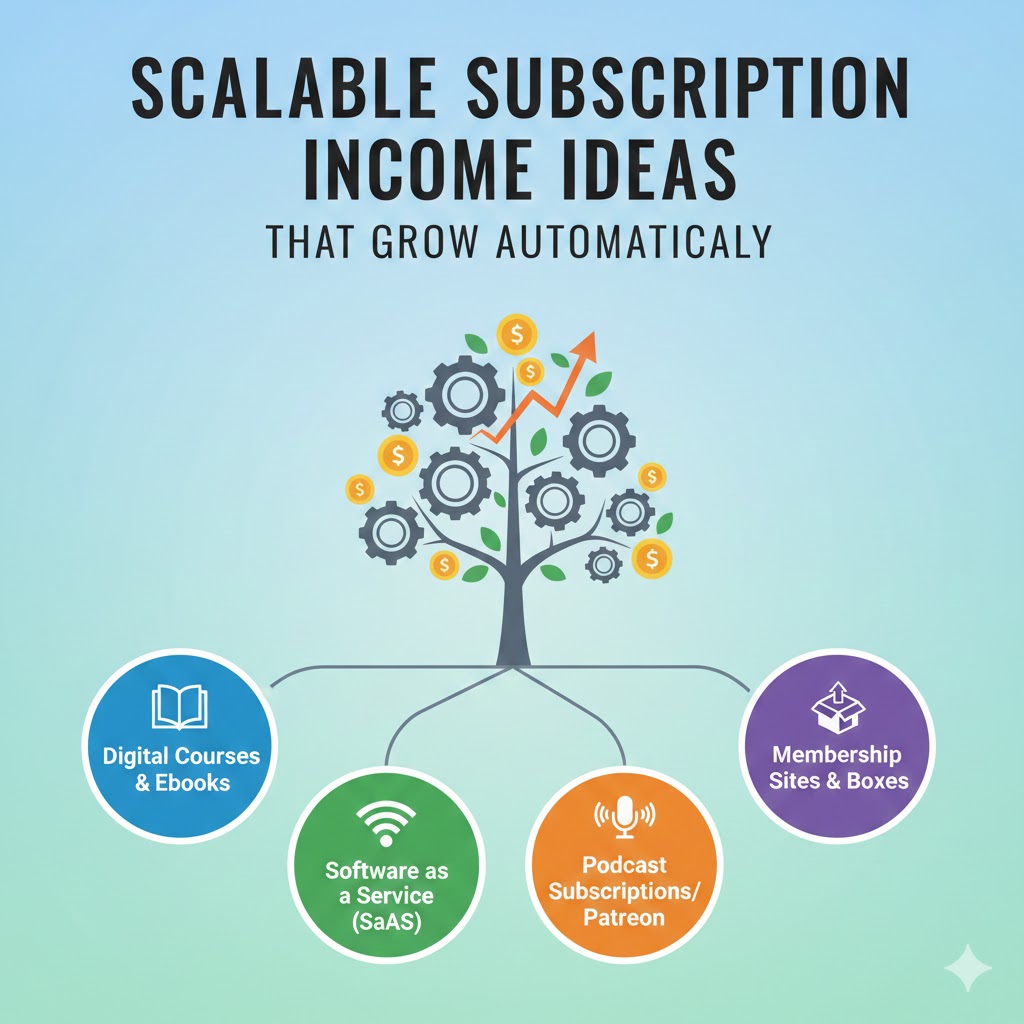
subscription income ideas The subscription economy has fundamentally transformed how entrepreneurs build wealth. Unlike traditional one-time sales that require constant customer acquisition, subscription income ideas create predictable, recurring revenue streams that compound over time. The beauty of subscription-based businesses lies in their scalability—once you’ve built the infrastructure, adding new subscribers doesn’t proportionally increase your workload.
This comprehensive guide explores proven subscription income ideas that can grow automatically, requiring minimal ongoing intervention once properly established. Whether you’re looking to supplement your current income or build a full-time business, understanding which subscription models offer the best scalability potential is essential to your success.
Understanding the Power of Subscription-Based Revenue
Before exploring specific subscription income ideas, it’s important to grasp why this business model has become the gold standard for scalable income generation.
Subscription businesses benefit from predictable monthly recurring revenue, allowing for accurate financial forecasting and strategic planning. Customer lifetime value in subscription models far exceeds one-time purchases, as a single customer generates revenue month after month. The compounding effect means that retaining existing subscribers while adding new ones creates exponential growth rather than linear progress.
From a cash flow perspective, subscription businesses provide steady income that covers operational costs reliably. This stability enables reinvestment in growth initiatives, product improvements, and marketing expansion. Additionally, subscription businesses typically command higher valuations when sold, as recurring revenue is more valuable to buyers than sporadic sales.
1. Digital Membership Communities and Exclusive Content Platforms
Creating a membership community represents one of the most scalable subscription income ideas available to modern entrepreneurs.
Why Membership Models Scale Effectively
Digital communities require significant upfront effort to establish but minimal incremental cost per additional member. Once you’ve created the platform and initial content, adding your hundredth member costs virtually the same as adding your tenth. The community itself often becomes self-sustaining, with members providing value to each other through discussions, networking, and shared experiences.
Types of Membership Communities That Work
Professional development communities bring together individuals in specific industries or career stages, offering networking, resources, and skill development. Hobby and interest-based memberships unite enthusiasts around shared passions, from photography to woodworking to investing. Mastermind groups provide accountability and strategic guidance for entrepreneurs and business owners. Exclusive content libraries offer premium educational materials, templates, and resources unavailable elsewhere.
Content Delivery Strategies for Scalability
Create a comprehensive onboarding sequence that introduces new members to your community and core content automatically. Develop evergreen content libraries organized by topic and skill level that members can access on-demand. Schedule live sessions monthly or quarterly rather than weekly to maintain engagement without overwhelming your calendar. Implement member spotlights and user-generated content to reduce your content creation burden. Utilize discussion forums and member directories to facilitate peer-to-peer connections.
Pricing Structures That Maximize Revenue
Tiered membership levels allow members to self-select based on their needs and budget. A basic tier might offer content access only, while premium tiers include live sessions, personal feedback, or one-on-one time. Annual payment options with discounts improve cash flow and reduce churn. Consider founding member pricing for early adopters who help establish community culture.
Automation Tools for Growth
Membership platforms like MemberPress, Kajabi, or Circle automate billing, content access, and member management. Email automation sequences welcome new members, deliver content, and re-engage inactive subscribers. Community management tools facilitate discussions and moderate content with minimal manual oversight. Analytics dashboards track member engagement, helping you identify at-risk subscribers before they cancel.
2. Software-as-a-Service (SaaS) Products and Tools
Developing a SaaS product stands among the most lucrative subscription income ideas, though it requires more technical investment upfront.
The SaaS Advantage for Passive Income
Software products scale infinitely—serving one thousand users costs marginally more than serving one hundred. Cloud infrastructure allows automatic scaling as your user base grows. Once built and stabilized, quality software requires primarily maintenance and customer support rather than continuous creation.
Viable SaaS Product Categories for Solo Entrepreneurs
Productivity tools solve specific workflow problems for target audiences, such as social media scheduling, invoice generation, or project tracking. Content creation assistants help users produce blog posts, social media content, or marketing materials more efficiently. Data analysis and reporting tools aggregate information from various sources into actionable dashboards. Automation solutions connect different applications and automate repetitive tasks.
Development Approaches for Non-Programmers
No-code platforms like Bubble, Webflow, or Glide enable building functional applications without traditional programming. Hiring developers through platforms like Upwork or Toptal allows you to manage product vision while outsourcing technical implementation. Partnering with technical co-founders who handle development while you manage business operations and marketing. Acquiring existing small SaaS products that need better marketing or feature development.
Subscription Pricing Models
Usage-based pricing charges customers based on consumption, automatically scaling revenue with customer growth. Tiered feature access offers basic, professional, and enterprise plans with progressively more capabilities. Per-seat pricing charges based on team size, growing revenue as companies expand. Freemium models offer basic features free while charging for advanced capabilities, reducing acquisition friction.
Customer Retention Strategies
Implement comprehensive onboarding that ensures users experience your product’s core value quickly. Provide excellent documentation, video tutorials, and knowledge bases that reduce support burden. Monitor usage metrics to identify at-risk customers and proactively offer assistance. Continuously ship improvements and new features to maintain value perception.
3. Educational Course Subscriptions and Learning Platforms
Transforming knowledge into subscription-based educational content represents one of the most accessible subscription income ideas for experts in any field.
Why Course Subscriptions Outperform One-Time Sales
Subscription learning platforms generate continuous revenue from students rather than single course purchases. The model encourages creating ongoing value through new courses and updated content. Students remain engaged longer when they have access to an entire library rather than a single course. Monthly payments reduce the psychological barrier compared to large upfront course fees.
Effective Course Subscription Models
All-access libraries provide unlimited access to your entire course catalog for a monthly fee. Drip-fed curriculum releases content progressively, maintaining engagement and reducing overwhelm. Certification programs combine courses with assessment and credentials that subscribers work toward. Specialized training tracks guide subscribers through curated learning paths for specific goals or roles.
Content Creation for Scalability
Record comprehensive flagship courses covering your core expertise thoroughly. Supplement with shorter, focused mini-courses addressing specific challenges or techniques. Update existing content annually rather than creating everything new continuously. Leverage student questions to identify new course topics with proven demand. Incorporate templates, worksheets, and tools that enhance learning without requiring video production.
Platform Selection and Setup
Dedicated course platforms like Teachable, Thinkific, or Podia handle hosting, billing, and student management. Membership platforms such as MemberVault or Kajabi combine course delivery with community features. Self-hosted solutions using WordPress and learning management system plugins offer maximum control. Consider ease of use for both you and students when selecting technology.
Marketing Strategies for Continuous Growth
Offer free mini-courses or challenges that demonstrate your teaching quality and convert to paid subscriptions. Create YouTube content or podcasts that establish authority and drive traffic to your subscription offering. Leverage affiliate partnerships with complementary educators who promote your platform. Implement referral programs rewarding existing subscribers for bringing new students.
4. Curated Newsletter and Research Subscriptions
Premium newsletters have emerged as surprisingly profitable subscription income ideas, requiring primarily writing skills and subject matter expertise.
The Newsletter Subscription Opportunity
Platforms like Substack, Ghost, and ConvertKit have made newsletter monetization straightforward. Readers increasingly pay for curated, insightful content that saves them time and provides unique perspectives. Newsletter businesses require minimal overhead—primarily your time and knowledge. Successful newsletter operators often earn six or seven figures annually with relatively small subscriber bases.
Newsletter Types That Attract Paying Subscribers
Industry analysis newsletters provide expert commentary on trends, news, and developments in specific sectors. Investment research subscriptions offer stock analysis, portfolio recommendations, and market insights. Curated resource digests filter vast information into actionable recommendations and key takeaways. Deep-dive investigations explore complex topics with original research and unique angles.
Content Cadence and Format
Daily newsletters require significant commitment but build strong habits and engagement with readers. Weekly formats allow deeper research and analysis while remaining manageable long-term. Multiple newsletters per week balance frequency with sustainability. Consider mixing free and premium content, with subscribers receiving additional depth, frequency, or exclusive insights.
Building Your Subscriber Base
Start with free content establishing your expertise and perspective before introducing paid tiers. Grow your email list through lead magnets, guest appearances, and strategic partnerships. Offer founding subscriber discounts to early adopters who provide testimonials and feedback. Maintain some free content to attract new readers who can later convert to paid subscribers.
Monetization Beyond Subscriptions
Sponsored content from relevant companies provides additional revenue without increasing workload. Affiliate partnerships for tools and services you genuinely recommend create passive income. Consulting or advisory services emerge naturally from demonstrated expertise. Repurpose newsletter content into books, courses, or other products.
5. Template, Asset, and Resource Libraries
Subscription-based resource libraries represent highly scalable subscription income ideas that leverage work you’ve already completed.
Why Asset Libraries Scale Beautifully
Creating templates, graphics, photos, or other assets requires work once but generates revenue indefinitely. Adding subscribers doesn’t increase costs or workload after initial creation. Libraries naturally grow over time, increasing value without proportional effort increases. Customers appreciate continuous access to expanding resources rather than individual purchases.
High-Demand Resource Types
Design template libraries offer social media graphics, presentation templates, website mockups, or branding materials. Document templates provide contracts, proposals, spreadsheets, or planning frameworks for business use. Stock photo and video subscriptions give creators access to visual content for their projects. Code snippets and development resources help programmers implement common functionality quickly.
Niche Targeting for Success
Focus on specific industries or professions rather than generic templates that face intense competition. Real estate agents, fitness coaches, consultants, and other professions need specialized resources. Create templates for specific platforms like Instagram, Canva, PowerPoint, or Google Sheets. Address particular use cases such as client onboarding, project proposals, or financial planning.
Building and Growing Your Library
Start with a foundational collection of twenty to fifty high-quality assets before launching. Add new resources monthly to give subscribers reasons to remain subscribed. Survey your audience to identify their most pressing needs and prioritize accordingly. Accept user requests and create resources that multiple subscribers would find valuable.
Platform and Delivery Considerations
Self-hosted membership sites using WordPress provide maximum control and customization. Gumroad or Patreon offers simpler setup with built-in payment processing and subscriber management. Cloud storage with controlled access through platforms like Dropbox or Google Drive works for simple implementations. Consider download limits or access restrictions to prevent abuse while maintaining convenience.
6. Premium Podcast and Video Content Subscriptions
Audio and video subscriptions have become viable subscription income ideas as platforms make monetization increasingly accessible.
The Growth of Premium Audio Content
Podcast listening continues expanding, with audiences willing to pay for ad-free, exclusive, or extended content. Video platforms increasingly support subscription models separate from advertising revenue. Production quality for successful subscriptions has become achievable with modest equipment investments. Intimate audio and video formats build strong connections that translate to subscriber loyalty.
Subscription Podcast Models
Ad-free versions of popular free podcasts remove interruptions for paying subscribers. Bonus episodes provide additional content exclusively for subscribers beyond the free feed. Early access gives subscribers episodes days or weeks before public release. Extended interviews and behind-the-scenes content offer deeper dives than free episodes.
Video Subscription Approaches
Tutorial and educational series teach skills progressively with new content released regularly. Documentary-style investigations explore topics in depth over multiple episodes. Entertainment content including shows, series, or storytelling designed for subscriber audiences. Live streaming with replay access provides exclusive interaction and content libraries.
Platform Selection for Distribution
Patreon enables audio and video subscriptions with straightforward implementation and community features. YouTube Memberships integrate subscriptions directly into the platform where audiences already exist. Supercast and similar services add subscription layers to existing podcast feeds seamlessly. Self-hosted solutions using membership plugins offer maximum control but require more technical setup.
Growing Your Subscriber Base
Produce excellent free content that showcases your style and builds audience trust. Tease premium content in free episodes to demonstrate the additional value subscribers receive. Offer trial periods allowing potential subscribers to experience premium content risk-free. Collaborate with other creators to cross-promote subscription offerings to aligned audiences.
7. Subscription Box Curation Services
Physical subscription boxes might seem less scalable, but digital curation services represent modern subscription income ideas that eliminate inventory challenges.
Digital Curation Business Models
Book and reading recommendations provide personalized selections delivered digitally each month. Product discovery services curate deals, launches, and recommendations in specific categories. Experience and activity suggestions offer curated local or travel ideas for subscribers. Tool and resource recommendations in professional niches guide purchasing decisions.
Creating Value Without Physical Products
Develop detailed research and reviews of products or services in your niche. Negotiate exclusive discounts or access for your subscribers with relevant brands. Provide implementation guides and tutorials for recommended products or services. Build community among subscribers who share interests in your curation focus.
Monetization Strategies
Subscription fees from members accessing your curated recommendations and research. Affiliate commissions from products and services you recommend to subscribers. Sponsored inclusions from brands wanting exposure to your audience, disclosed transparently. Consulting services for individuals wanting personalized recommendations beyond general curation.
Scaling Through Systematization
Develop evaluation frameworks that standardize how you assess products or services. Create templates for reviews, comparisons, and recommendation content. Build relationships with brands for ongoing access to new products and insider information. Automate content delivery through email sequences and member platforms.
8. Licensing and Royalty-Based Subscriptions
Licensing intellectual property through subscription models represents sophisticated subscription income ideas for creators with unique assets.
Intellectual Property Licensing Opportunities
Music and audio licensing provides tracks for creators, businesses, and media producers. Photography and illustration licensing offers visual assets for commercial and editorial use. Written content licensing allows republication of articles, quotes, or research. Software and technology licensing grants usage rights to proprietary code or systems.
Subscription Licensing Models
Unlimited usage subscriptions provide access to entire libraries for unrestricted use during membership. Download credit systems allocate specific numbers of assets per month at different subscription tiers. Commercial license subscriptions specifically target business use with appropriate legal permissions. Attribution-free options command premium pricing for users wanting clean licensing.
Building Licensable Asset Libraries
Focus on evergreen content that remains relevant and useful over years. Create assets filling specific gaps in existing licensing platforms. Develop distinctive styles or approaches that differentiate your work from competitors. Organize and tag assets comprehensively for easy discovery and usage.
Legal and Administrative Considerations
Implement clear licensing terms specifying usage rights, restrictions, and attribution requirements. Use industry-standard contracts protecting both you and licensees appropriately. Consider legal review of licensing agreements before launching subscription services. Monitor usage to ensure compliance with licensing terms and address violations promptly.
9. Subscription-Based Coaching and Accountability Services
Group coaching subscriptions combine expertise with scalability, creating valuable subscription income ideas for consultants and advisors.
Why Subscription Coaching Works
Monthly coaching fees create predictable income while serving multiple clients simultaneously. Group formats allow you to help many people without proportional time increases. Asynchronous communication reduces scheduling constraints and increases flexibility. Members benefit from peer learning and support beyond your direct input.
Scalable Coaching Structures
Group coaching calls monthly or bi-weekly serve multiple subscribers simultaneously. Private community forums provide ongoing support and interaction between calls. Office hours allow drop-in access for questions without individual appointments. Resource libraries supplement live coaching with on-demand training materials.
Niche Coaching Opportunities
Business coaching for specific industries or business stages addresses focused challenges. Health and wellness coaching guides subscribers toward fitness, nutrition, or lifestyle goals. Financial coaching helps individuals manage money, invest, or achieve financial objectives. Creative coaching supports artists, writers, or other creators in their development.
Pricing and Packaging
Entry-level tiers provide community access and basic resources at accessible price points. Mid-tier subscriptions add group coaching calls and more interactive support. Premium tiers include limited one-on-one access or smaller group intensive sessions. Annual commitments offer discounts while improving retention and cash flow.
Maintaining Quality While Scaling
Set clear expectations about response times and availability from the beginning. Hire assistant coaches or moderators as your community grows beyond manageable size. Develop comprehensive resource libraries reducing repetitive questions. Foster peer coaching culture where members support each other actively.
10. Automated Investment and Financial Products
Financial subscription services represent advanced subscription income ideas leveraging expertise in investing, planning, or wealth management.
Digital Financial Service Models
Investment research subscriptions provide analysis, recommendations, and portfolio strategies. Financial planning tools offer automated guidance and tracking for subscriber finances. Educational platforms teach investing, trading, or financial management skills progressively. Robo-advisory services automate investment management based on subscriber profiles and goals.
Compliance and Regulatory Considerations
Financial advice often requires licensing depending on your jurisdiction and service specifics. Clearly distinguish between education and personalized financial advice in your offerings. Consider partnerships with licensed professionals if your services require regulatory compliance. Implement appropriate disclaimers and disclosures protecting both you and subscribers.
Building Credible Financial Subscriptions
Demonstrate track record and expertise through transparent performance reporting. Provide educational content establishing your methodology and philosophy. Start with educational or research services before moving into advisory roles. Build case studies and testimonials from subscribers achieving results.
Technology and Automation
Portfolio tracking systems monitor recommended investments and calculate performance. Automated screening tools identify opportunities based on predefined criteria. Email automation delivers timely alerts, reports, and recommendations. Integration with financial platforms enables seamless implementation of strategies.
Building Systems for Automatic Growth
Success with subscription income ideas requires building systems that function without constant personal involvement.
Automation Infrastructure
Payment processing through platforms like Stripe automatically handles billing, retries, and dunning. Email sequences onboard new subscribers, deliver content, and re-engage inactive members. Content management systems schedule and publish material without manual intervention. Analytics platforms track key metrics and alert you to important changes.
Customer Acquisition Systems
Content marketing funnels attract potential subscribers through valuable free content. Paid advertising campaigns run continuously with performance monitoring and optimization. Affiliate programs recruit partners who promote your subscription to their audiences. SEO optimization ensures consistent organic traffic to your subscription offerings.
Retention Mechanisms
Engagement tracking identifies at-risk subscribers before they cancel. Automated win-back campaigns attempt to retain canceling subscribers or reactivate former members. Regular content delivery maintains value perception and keeps subscribers engaged. Community building creates social connections that increase switching costs.
Scaling Operations
Standard operating procedures document key processes for delegation or automation. Virtual assistants handle customer service, community moderation, and administrative tasks. Technology solutions automate repetitive tasks like content distribution and billing management. Strategic outsourcing allows you to focus on high-value activities while others handle operations.
Conclusion
The landscape of subscription income ideas offers extraordinary opportunities for entrepreneurs seeking scalable, recurring revenue. From digital memberships and SaaS products to educational platforms and curated content, each model presents unique advantages for building automatic income streams.
The most successful subscription businesses share common characteristics: they provide ongoing value that justifies recurring payments, they build systems for scalability rather than trading time for money, and they focus relentlessly on retention alongside acquisition. Whether you choose one of these subscription income ideas or combine multiple approaches, the key to success lies in creating genuine value that subscribers appreciate month after month.
Starting with subscription business models requires patience and upfront investment, but the long-term rewards far exceed traditional income approaches. A subscription business with just one hundred members paying fifty dollars monthly generates sixty thousand dollars annually—revenue that continues as long as you maintain value and service quality.
Select subscription income ideas aligned with your skills, interests, and target market. Build robust systems for delivery, billing, and customer management. Focus intensely on providing exceptional value that makes canceling unthinkable. With dedication and strategic execution, subscription income can transform your financial future, providing the freedom, stability, and scalability that traditional income sources rarely achieve.
Also read this:
Best SaaS Affiliate Niches for Beginners and Experienced Marketers: Profitable Software Partnerships
Best Low Competition Blogging Niches With High Monetization Potential
Resume Building Guide: How to Create a Job-Winning Resume in 2025