
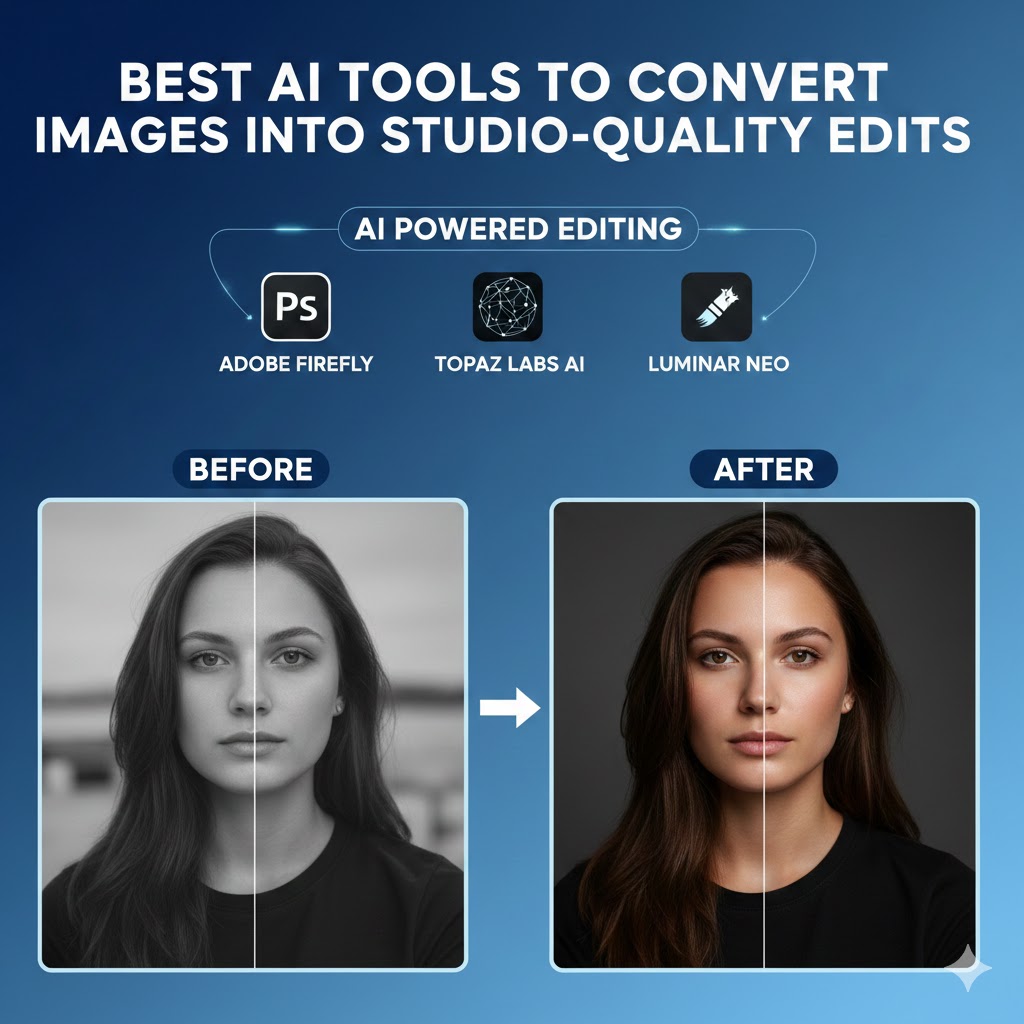
AI Tools to Convert Images Into Studio The photography and image editing landscape has undergone a revolutionary transformation with the advent of artificial intelligence. What once required years of expertise in complex software and expensive equipment can now be achieved in seconds. The AI tools to convert images into studio masterpieces are reshaping professional photography, graphic design, and content creation across industries.
These intelligent systems leverage deep learning algorithms trained on millions of professional photographs to understand composition, lighting, color theory, and aesthetic principles. The result is democratized access to studio-quality image editing that produces results rivaling work from professional photographers and retouchers. Whether you’re a social media influencer, e-commerce business owner, marketing professional, or photography enthusiast, these tools deliver exceptional results without the traditional barriers of cost and complexity.
The power of modern AI tools to convert images into studio quality extends far beyond simple filters. These sophisticated platforms analyze every pixel, understand spatial relationships, recognize objects and faces, and apply targeted enhancements that transform ordinary photographs into extraordinary visual content.
1. AI-Powered Background Removal and Replacement
Intelligent Subject Isolation
The foundation of professional image editing often begins with precise background removal. Modern AI tools to convert images into studio quality excel at distinguishing subjects from backgrounds with remarkable accuracy. These systems recognize complex edges like hair strands, transparent objects, and intricate details that would take human editors hours to mask manually.
Contextual Background Generation
Beyond simple removal, advanced AI platforms can generate entirely new backgrounds that match the lighting, perspective, and mood of the original subject. Need to place a product on a marble countertop or a person on a tropical beach? The AI creates photorealistic backgrounds that maintain proper shadows, reflections, and spatial coherence, making the composite image indistinguishable from a single photograph.
Automated Shadow and Reflection Creation
Professional composites require realistic shadows and reflections to appear believable. AI tools to convert images into studio standard automatically generate appropriate shadows based on the new background’s lighting conditions. The systems analyze light direction, intensity, and color temperature to create shadows that perfectly match the scene’s visual logic.
Batch Processing for E-Commerce
Online retailers managing thousands of product images benefit enormously from AI background tools. These platforms process entire catalogs automatically, removing backgrounds, standardizing white backgrounds, or placing products in lifestyle settings. What would take weeks of manual editing completes in hours with consistent, professional results across all images.
2. Portrait Enhancement and Retouching Tools
Skin Smoothing and Texture Optimization
Professional portrait retouching traditionally required meticulous work to smooth skin while preserving natural texture. AI tools to convert images into studio portraits analyze facial features and apply selective smoothing that removes blemishes and uneven tones without creating the artificial plastic appearance of over-edited images. These systems maintain pore structure and skin texture for results that look professionally retouched yet authentically human.
Facial Feature Enhancement
Modern AI understands facial anatomy and can make subtle enhancements that improve portraits without distorting natural appearance. Eyes can be brightened and sharpened, teeth whitened naturally, and facial symmetry gently adjusted. The AI applies changes proportionally, ensuring enhanced features still look organic and consistent with the subject’s natural appearance.
Lighting and Shadow Correction
Portrait lighting makes or breaks image quality. AI tools to convert images into studio standard can relight faces entirely, adding fill light to eliminate harsh shadows, creating catchlights in eyes, and adjusting lighting ratios between highlights and shadows. These tools essentially recreate studio lighting conditions in post-production, salvaging images shot in less-than-ideal lighting situations.
Body and Pose Adjustment
Advanced portrait AI extends beyond faces to full-body images. These systems can adjust posture, slim or enhance body proportions, and even modify clothing appearance. The technology maintains natural joint positions and body mechanics, preventing the distorted proportions that plague manual body editing attempts.
3. Color Grading and Tone Adjustment Platforms
One-Click Professional Color Grades
Color grading separates amateur photographs from professional images, and AI tools to convert images into studio quality make this sophisticated skill accessible to everyone. These platforms analyze image content and apply cinematic color grades matching specific moods, genres, or aesthetic styles. Film-inspired looks, vintage tones, or modern commercial styles can be applied instantly with adjustments tailored to each specific image.
Intelligent White Balance Correction
Mixed lighting conditions create color casts that ruin otherwise excellent photographs. AI color tools identify multiple light sources, separate their effects, and correct color balance selectively throughout the image. The result is natural-looking color that appears as if the photograph was shot under ideal lighting conditions.
Selective Color Enhancement
Rather than applying blanket adjustments across entire images, AI tools to convert images into studio edits enhance specific colors intelligently. Blue skies become richer without affecting skin tones. Food photographs gain appetizing vibrancy without oversaturating everything else. The AI understands which colors should be enhanced and which should remain neutral for balanced, professional results.
HDR and Dynamic Range Optimization
High dynamic range processing traditionally produced artificial-looking results. Modern AI HDR tools analyze scene content and apply dynamic range adjustments that look natural while revealing detail in both highlights and shadows. These systems prevent the telltale halos and unnatural contrast that plagued earlier HDR techniques.
4. Image Upscaling and Resolution Enhancement
AI Super-Resolution Technology
Enlarging images traditionally resulted in blurry, pixelated disasters. AI tools to convert images into studio resolution analyze low-resolution images and intelligently generate additional pixels based on understanding of what details should exist. A small social media image can be enlarged to print quality while maintaining sharpness and detail that appears impossible from the original file size.
Texture and Detail Reconstruction
Beyond simple upscaling, AI enhancement tools reconstruct fine details like fabric textures, hair strands, and surface patterns that were lost in compression or small file sizes. These systems don’t just interpolate existing pixels but actually generate plausible detail based on context and training from millions of high-resolution reference images.
Noise Reduction and Sharpening
High ISO photography produces grainy, noisy images that look unprofessional. AI tools to convert images into studio clean quality remove noise while preserving legitimate detail and texture. The systems distinguish between unwanted noise and intentional fine detail, applying selective smoothing that produces clean images without the mushy appearance of aggressive traditional noise reduction.
Format Optimization for Different Uses
Different output destinations require different image qualities. AI tools optimize images appropriately for web display, social media platforms, print production, or large-format displays. Each optimization maintains maximum perceived quality while meeting technical requirements and file size limitations specific to each use case.
5. Object Removal and Content-Aware Fill
Intelligent Object Detection and Removal
Unwanted elements frequently ruin otherwise perfect photographs. AI tools to convert images into studio compositions automatically detect and remove distractions like power lines, tourists, trash, or any specified objects. The systems analyze surrounding content and reconstruct what should exist in the removed area with remarkable accuracy.
Seamless Content Reconstruction
Simple cloning leaves obvious repetitive patterns. Advanced AI content-aware tools understand scene geometry, lighting, and texture patterns to generate entirely new content that fits seamlessly. Removing a person from a crowded scene doesn’t leave obvious gaps but rather plausible reconstructions of what existed behind them.
Watermark and Overlay Removal
While respecting copyright is paramount, legitimate needs exist for removing watermarks from purchased images or cleaning up overlays from archival photographs. AI tools to convert images into studio clean versions analyze the underlying image structure and reconstruct obscured areas, though these capabilities should only be used on images you have rights to modify.
Extension and Outpainting
Sometimes compositions would be perfect with slightly different framing. AI outpainting tools extend images beyond their original borders, generating new content that matches the existing scene. Vertical photos can be extended to horizontal formats, or additional space can be added to accommodate text overlays or design elements.
6. Lighting Enhancement and Manipulation
Studio Lighting Simulation
Professional studio photography relies on carefully controlled lighting setups. AI tools to convert images into studio lighting conditions can add virtual light sources to existing photographs, creating the appearance of multiple-light studio setups. These systems understand how light interacts with different surfaces and generate realistic highlights, shadows, and reflections.
Golden Hour and Time-of-Day Adjustments
Photographers prize golden hour light, but scheduling constraints don’t always allow shooting at optimal times. AI tools can transform harsh midday light into warm golden hour glow or convert daytime images to moody twilight scenes. The systems adjust not just color temperature but also shadow direction, intensity, and ambient light quality.
Selective Lighting Adjustments
Rather than adjusting entire images uniformly, AI tools to convert images into studio edits apply targeted lighting changes. Faces can be brightened while backgrounds remain unchanged. Specific products can be highlighted while maintaining natural-looking overall exposure. This selective control produces results matching professional studio photography where lighting is precisely controlled for each element.
Reflection and Specular Highlight Control
Controlling reflections and specular highlights traditionally required precise physical setup during shooting. AI tools can add, remove, or modify reflections and highlights in post-production. Product photography benefits enormously from this capability, allowing perfect highlight placement that emphasizes form and texture without distracting hotspots.
7. Style Transfer and Artistic Effects
AI-Powered Artistic Transformations
AI tools to convert images into studio artwork apply styles from famous paintings, artistic movements, or custom aesthetic guidelines while maintaining recognizable content. A portrait can be rendered in the style of Renaissance masters or contemporary pop art, creating unique visual content that stands out in crowded digital spaces.
Photorealistic Style Consistency
Brands and content creators need consistent visual styles across image libraries. AI style tools can analyze reference images defining a desired aesthetic and apply that exact style to new photographs. Every image maintains brand-consistent color palettes, contrast levels, and overall mood regardless of original shooting conditions.
Film Emulation and Vintage Effects
The characteristics of classic film stocks have distinct aesthetic appeal. AI tools to convert images into studio quality recreate specific film emulations with accuracy surpassing simple filter presets. Grain structure, color response, contrast curves, and other subtle characteristics match specific film stocks, providing authentic analog aesthetics from digital captures.
Custom Style Creation
Advanced users can train AI models on their own image collections to create unique signature styles. Wedding photographers, product photographers, and visual artists can codify their distinctive looks into AI models that automatically apply their style to new images, ensuring consistency and speeding workflow dramatically.
8. Composition and Cropping Optimization
Rule-of-Thirds and Composition Analysis
AI tools to convert images into studio compositions analyze photographs against established compositional principles. These systems identify optimal crop ratios, suggest reframing that improves visual balance, and detect compositional weaknesses like unfortunate background elements or unbalanced negative space.
Intelligent Auto-Cropping for Multiple Formats
Social media platforms require different aspect ratios, and manually cropping for each platform is tedious. AI cropping tools analyze image content, identify key subjects, and generate optimal crops for every required format automatically. Faces remain properly positioned, important elements stay within frame, and each version maintains strong composition.
Perspective Correction and Distortion Removal
Architectural photography and product shots suffer when perspective distortion makes buildings lean or products appear skewed. AI tools to convert images into studio perspectives automatically detect and correct these distortions, straightening vertical lines and adjusting for lens distortion without manual keystone correction or perspective tools.
Guided Composition Improvements
Beyond automatic corrections, some AI platforms provide specific recommendations for improving compositions. These systems explain why certain crops would strengthen images, where additional negative space would improve balance, or how slight reframing would create more dynamic results.
9. Specialized Product Photography Enhancement
Reflective Surface Optimization
Photographing reflective products like jewelry, electronics, or glassware presents unique challenges. AI tools to convert images into studio product shots can enhance reflections for visual appeal, remove unwanted reflections of photographers or equipment, and ensure reflective surfaces display ideal highlights and color accuracy.
Consistent Product Visualization
E-commerce requires thousands of product images maintaining visual consistency. AI tools standardize lighting, color balance, backgrounds, and framing across entire catalogs. Products shot at different times under varying conditions appear as if photographed in identical conditions, creating professional, cohesive product galleries.
Material and Texture Enhancement
Product appeal depends heavily on conveying material quality through photography. AI tools to convert images into studio standard enhance fabric textures, metal finishes, wood grains, and other material characteristics. These enhancements make materials appear more premium and tactile, increasing perceived product value and purchase intent.
Multi-Angle Consistency
Products displayed from multiple angles should maintain consistent lighting and color. AI tools analyze product sets and ensure every angle matches in exposure, color temperature, and visual quality. This consistency creates professional presentations that build customer confidence.
10. Batch Processing and Workflow Automation
High-Volume Image Processing
Professional photographers and content creators dealing with hundreds or thousands of images need efficient workflows. AI tools to convert images into studio quality enable batch processing where consistent enhancements apply automatically across entire image sets. Wedding photographers can process entire events, product photographers can handle catalog shoots, and content agencies can standardize client deliverables at scale.
Automated Editing Profiles
Rather than manually editing each image, users create editing profiles defining desired enhancements. The AI applies these profiles intelligently, adapting adjustments based on each image’s specific characteristics. Portraits receive appropriate skin retouching, landscapes get sky enhancement, and products receive clarity boosts, all from a single automated workflow.
AI-Powered Image Selection
Culling through thousands of shots to select the best images consumes enormous time. AI tools to convert images into studio selections analyze technical quality, composition strength, facial expressions, and other factors to rank images automatically. Photographers review only the AI’s top selections, dramatically accelerating the culling process.
Integration with Existing Workflows
Professional-grade AI tools integrate seamlessly with established photography workflows. Plugins for Adobe Lightroom, Photoshop, Capture One, and other professional applications bring AI capabilities directly into familiar interfaces. This integration eliminates workflow disruption while adding powerful enhancement capabilities.
11. Video Frame Enhancement and Stabilization
Frame-by-Frame Enhancement
Video content consists of sequential still images, and AI tools to convert images into studio frames can enhance video quality dramatically. These systems process every frame for improved resolution, color grading, noise reduction, and sharpness. Low-quality video footage can be upgraded to near-HD or even 4K quality through AI upscaling.
Stabilization and Shake Reduction
AI tools to convert images into studio Handheld video footage often suffers from camera shake and instability. AI stabilization analyzes frame-to-frame motion and generates smooth, stabilized output without the warped edges and cropping typical of traditional stabilization methods. The result appears as if shot with professional stabilization equipment.
Temporal Consistency
When enhancing video frames individually, flickering and inconsistency between frames can occur. Advanced AI tools to convert images into studio video maintain temporal consistency, ensuring enhancements remain stable across frames. Colors don’t shift, noise patterns don’t flicker, and enhanced details remain consistent throughout sequences.
Automated Color Grading Across Footage
Cinematic color grading makes video content more engaging and professional. AI video tools apply sophisticated color grades across entire footage while maintaining consistency. Scene changes, lighting variations, and camera movements don’t create jarring color shifts, resulting in polished, professional-looking video content.
12. Accessibility and Mobile AI Editing Solutions
Professional Results on Mobile Devices
Not everyone works on desktop computers with powerful hardware. AI tools to convert images into studio quality now run efficiently on smartphones and tablets, bringing professional editing capabilities to mobile-first creators. These applications leverage cloud processing for complex enhancements while providing intuitive touch-based interfaces.
One-Tap Enhancement Presets
Casual users want great results without learning complex editing techniques. Mobile AI tools provide intelligent one-tap enhancements that analyze images and apply appropriate adjustments automatically. These aren’t generic filters but contextual enhancements adapted specifically to each photograph’s characteristics.
Social Media Optimization
Content creators producing material for Instagram, TikTok, YouTube, and other platforms benefit from AI tools designed specifically for social media. AI tools to convert images into studio social content optimize images for each platform’s specifications, apply platform-appropriate styles, and even suggest optimal posting times based on content analysis.
Collaborative Cloud Editing
Modern workflows often involve multiple team members across different locations. Cloud-based AI editing platforms enable collaborative image enhancement where team members can review, approve, and request changes without transferring large files or maintaining version control manually. All work occurs in centralized cloud storage with full revision history.
Conclusion: The Democratic Revolution in Image Editing
The emergence of AI tools to convert images into studio quality represents a fundamental democratization of professional photography and image editing. Capabilities once exclusive to skilled professionals with expensive software and years of training are now accessible to anyone with a smartphone or computer.
This accessibility doesn’t diminish the value of professional expertise but rather raises the baseline quality of all visual content. Professional photographers and editors can work faster and focus on creative vision rather than technical execution. Amateur photographers can produce results that would have been impossible just years ago. Businesses can create professional marketing materials without expensive production budgets.
The technology continues advancing at remarkable pace. What seems cutting-edge today will be surpassed by even more sophisticated capabilities tomorrow. AI tools to convert images into studio masterpieces are becoming more intelligent, more accessible, and more powerful with each iteration.
However, these tools are instruments amplifying human creativity, not replacing it. The most compelling images still require creative vision, compositional understanding, and emotional intelligence that only humans provide. The AI handles technical execution, freeing creators to focus on storytelling, emotional impact, and artistic expression.
For content creators, businesses, and photography enthusiasts, the message is clear: embrace these technologies to remain competitive in an increasingly visual digital landscape. The AI tools to convert images into studio standard are no longer optional luxury features but essential components of modern visual content creation.
The future of image editing is intelligent, accessible, and extraordinarily powerful. Those who leverage these capabilities effectively will create visual content that captivates audiences, conveys messages powerfully, and stands out in the crowded digital ecosystem. The revolution is here, the tools are available, and the only question is how quickly you’ll integrate them into your creative process.
Also read this:
Latest AI Tools Transforming Content Creation and Software Development
AI Tools for Marketing Automation That Increase Leads and Sales
Top AI Tools for Coding That Speed Up Development and Debugging