
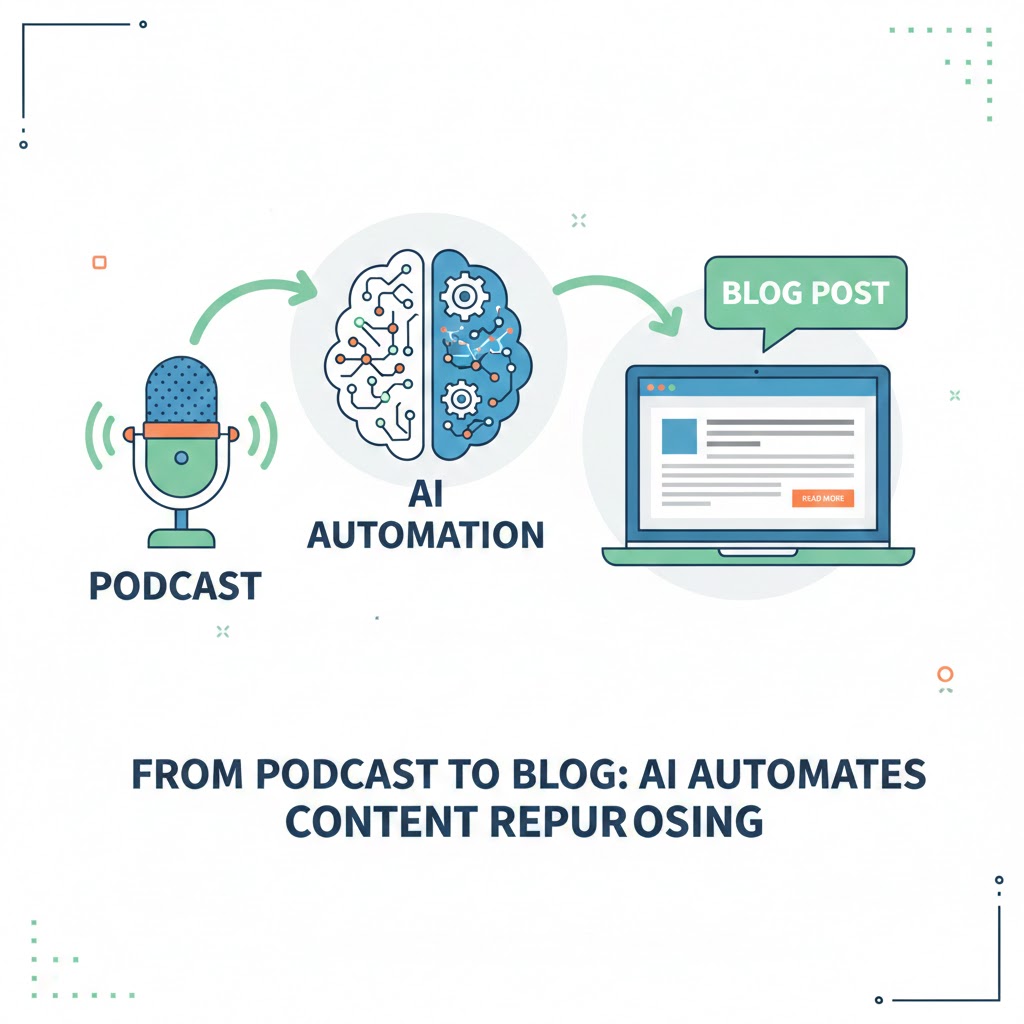
From Podcast to Blog The podcasting landscape has exploded with over four million active shows competing for listener attention, yet most creators leave enormous value untapped by failing to repurpose their audio content. The transformation From Podcast to Blog using artificial intelligence represents one of the most powerful content strategies available today, allowing creators to multiply their reach without multiplying their workload. This comprehensive guide reveals how AI automation can transform your podcast episodes into search-engine-optimized written content that attracts new audiences and establishes lasting authority in your niche.
1. The Strategic Value of Converting Podcasts Into Blog Content
Understanding why transforming content From Podcast to Blog matters helps creators prioritize this strategy within their broader content marketing efforts. The benefits extend far beyond simple content multiplication.
Capturing Non-Podcast Audiences
Despite podcasting’s popularity, significant audiences prefer written content for various reasons:
- Workplace restrictions preventing audio consumption during business hours
- Commuters in quiet zones like libraries or shared offices
- Quick information seekers who prefer scanning to listening
- Hearing-impaired individuals requiring accessible content
- International audiences with language comprehension challenges
- Researchers needing quotable and citable written sources
- Note-takers who learn better through reading and highlighting
- Mobile users with limited data plans avoiding audio streaming
By maintaining both podcast and blog versions, you ensure comprehensive audience coverage regardless of consumption preferences or circumstances.
Dominating Search Engine Results
Search engines primarily index text, making written content essential for discoverability:
- Podcast episodes alone rarely appear in traditional search results
- Blog posts rank for hundreds of long-tail keyword variations
- Written content earns backlinks more readily than audio files
- Search engines reward comprehensive written coverage of topics
- Featured snippets and knowledge panels require text content
- Local search optimization benefits from written location references
- Voice search results often pull from written article content
- Image search connects to blog posts containing relevant visuals
Building Sustainable Traffic Sources
Podcast discovery relies heavily on platform algorithms and social sharing, while blogs create evergreen traffic channels:
- Search engine traffic grows consistently over time
- Older blog posts continue attracting new visitors indefinitely
- Internal linking distributes authority across content library
- Email subscribers discover archived content through search
- Social media posts can link to specific article sections
- Paid advertising can target blog content cost-effectively
- Affiliate marketing opportunities expand with written content
- Lead magnets and resources integrate naturally into articles
Establishing Thought Leadership and Authority
Written content provides unique credibility advantages:
- Published articles create shareable professional credentials
- Guest posting opportunities require written content
- Media outlets cite written sources more than podcasts
- Academic and professional communities prefer text citations
- Complex ideas explain more thoroughly in written format
- Visual aids like charts and graphs enhance written content
- Comprehensive guides position creators as industry experts
- Searchable content demonstrates depth of knowledge
2. How AI Technology Enables Automated Podcast Repurposing
The artificial intelligence powering efficient transformation From Podcast to Blog involves sophisticated systems that handle transcription, editing, optimization, and enhancement with minimal human intervention.
Advanced Speech Recognition Systems
Modern AI transcription technology has reached impressive accuracy levels:
- Neural networks trained on millions of hours of diverse audio
- Speaker diarization identifying and labeling different voices
- Accent and dialect recognition across global English variations
- Background noise filtering isolating primary speech
- Technical vocabulary learning from domain-specific content
- Punctuation prediction based on speech patterns and pauses
- Confidence scoring flagging potentially inaccurate sections
- Real-time processing delivering transcripts in minutes
Natural Language Processing for Content Transformation
AI writing systems restructure conversational audio into polished articles:
- Identifying main topics and organizing them hierarchically
- Removing verbal fillers and conversational redundancies
- Reformulating spoken phrases into written prose
- Creating logical paragraph breaks and section divisions
- Generating compelling headlines from episode content
- Extracting quotable insights and key takeaways
- Summarizing lengthy discussions into concise explanations
- Maintaining the host’s authentic voice and perspective
Intelligent Content Enhancement
AI tools augment basic transcription with value-added elements:
- Keyword research identifying search optimization opportunities
- FAQ generation from common listener questions
- Internal linking suggestions to related content
- Meta description creation optimized for clicks
- Header hierarchy structuring for readability
- Key point extraction for executive summaries
- Related topic identification for content expansion
- Fact-checking and source verification assistance
Workflow Automation Capabilities
Modern AI platforms connect multiple processes seamlessly:
- Automatic transcription upon podcast publication
- Scheduled content transformation and editing
- SEO optimization according to predefined parameters
- Image generation for featured graphics
- Social media post creation for promotion
- Email newsletter formatting and distribution
- Content management system publishing
- Performance tracking and analytics integration
3. Essential Tools and Platforms for Podcast-to-Blog Conversion
Successfully implementing AI-powered transformation From Podcast to Blog requires selecting appropriate tools that match your production volume, quality standards, and budget constraints.
Professional Transcription Services
Accurate transcription forms the foundation of quality blog conversion:
- Dedicated AI transcription platforms with industry-leading accuracy
- Podcast hosting services with built-in transcription features
- Multi-language support for international podcast content
- Custom vocabulary training for specialized terminology
- Speaker identification with customizable labels
- Time-stamped transcripts for reference and verification
- API access for automated workflow integration
- Bulk processing capabilities for back catalog conversion
AI Writing and Content Optimization Tools
Transform raw transcripts into publication-ready articles:
- Large language models capable of sophisticated rewriting
- SEO optimization platforms analyzing top-ranking content
- Grammar and style checking systems ensuring quality
- Readability analyzers optimizing for target audiences
- Plagiarism detection preventing duplicate content issues
- Tone adjustment maintaining brand voice consistency
- Content expansion adding depth to brief discussions
- Format conversion from interview to article style
Research and Planning Platforms
Ensure converted content targets valuable search opportunities:
- Keyword research tools identifying high-value targets
- Competitor analysis revealing content gaps and opportunities
- Search intent analysis matching content to user needs
- Topic clustering tools organizing related content
- Trend monitoring platforms catching emerging topics
- Question research tools finding what audiences ask
- Content brief generators outlining ideal article structure
- SERP analysis showing what currently ranks
Publishing and Distribution Systems
Streamline the path from completed article to live content:
- Content management systems with scheduling capabilities
- Workflow automation connecting multiple platforms
- Image creation and editing tools for visual elements
- Schema markup generators for rich search results
- Social media management platforms for promotion
- Email marketing systems for subscriber distribution
- Analytics integration tracking performance metrics
- Backup and version control maintaining content security
4. Step-by-Step Process for Converting Podcasts to Blogs
The systematic approach to transforming content From Podcast to Blog ensures consistent quality and search engine performance across all converted episodes.
Phase One: Episode Selection and Strategy
Choose which episodes to convert and plan your approach:
- Review podcast analytics identifying top-performing episodes
- Analyze episode topics for evergreen search potential
- Research keyword opportunities related to episode content
- Assess competition for target search terms
- Identify episodes answering common audience questions
- Consider seasonal or trending topics requiring timely conversion
- Evaluate episode length and content complexity
- Determine primary conversion goals for each episode
Phase Two: Transcription and Initial Processing
Extract accurate text from your audio content:
- Upload podcast audio to transcription service
- Review automated transcript for accuracy
- Correct speaker names and technical terminology
- Remove or mark sponsored content sections
- Eliminate repetitive phrases and false starts
- Verify proper nouns, company names, and references
- Note sections requiring additional context for readers
- Preserve important quotes and memorable phrases exactly
Phase Three: Content Restructuring and Writing
Transform conversational audio into engaging written content:
- Craft compelling headline incorporating target keywords
- Write strong introduction establishing article value
- Organize conversation into logical sections with subheadings
- Expand brief spoken points into complete written explanations
- Add context that podcast listeners heard but readers need
- Include relevant examples, data, and supporting evidence
- Create smooth transitions between discussion topics
- Develop satisfying conclusion with clear next steps
Phase Four: Content Enhancement and Expansion
Add elements that increase value beyond the original podcast:
- Research and include updated statistics and information
- Add expert quotes from additional sources
- Create visual elements like charts or infographics
- Include resource links and reference materials
- Develop practical templates or worksheets
- Add case studies or real-world examples
- Include frequently asked questions section
- Embed relevant podcast audio clips at key points
Phase Five: SEO Optimization Implementation
Ensure maximum search visibility for converted content:
- Incorporate primary keywords naturally in strategic locations
- Add semantic keywords and related terms throughout
- Optimize title tag and meta description for clicks
- Structure content with proper heading hierarchy
- Write descriptive alt text for all images
- Create internal links to related blog posts
- Add external links to authoritative sources
- Implement appropriate schema markup
Phase Six: Quality Control and Publication
Final preparation before making content public:
- Proofread entire article thoroughly
- Verify all links function correctly
- Test mobile display and readability
- Confirm images display properly
- Check page loading speed
- Preview social sharing appearance
- Schedule publication at optimal time
- Prepare promotional content announcing new post
5. Advanced Strategies for Maximum Content Impact
Elevating your approach to transforming content From Podcast to Blog involves implementing sophisticated techniques that multiply the value of each episode conversion.
Creating Comprehensive Content Hubs
Build topical authority through strategic content organization:
- Develop cornerstone articles covering broad topics
- Convert related podcast episodes into supporting posts
- Implement strategic internal linking between related pieces
- Create topic clusters strengthening search authority
- Design logical content pathways for reader exploration
- Update hub pages with links to new converted episodes
- Monitor performance identifying content gaps
- Expand successful topics with additional conversions
Multi-Format Content Derivatives
Extract maximum value from each podcast episode:
- Create short social media posts highlighting key quotes
- Develop infographics visualizing main concepts
- Design slide presentations from episode outlines
- Build email newsletter series from long episodes
- Generate short video clips for social platforms
- Create audiograms for social media sharing
- Develop downloadable guides expanding episode topics
- Build quiz or assessment tools related to content
Audience Segmentation and Personalization
Tailor converted content for different audience segments:
- Create beginner, intermediate, and advanced versions
- Develop industry-specific variations of episodes
- Build geographic or demographic targeted content
- Design role-based content for different job functions
- Create problem-specific articles addressing particular needs
- Develop urgency-based content for different buying stages
- Build preference-based variations for different styles
- Generate device-optimized versions for different contexts
Strategic Content Updating and Refresh
Maintain relevance and performance over time:
- Schedule regular audits of converted content
- Update statistics and examples with current information
- Add new insights from subsequent episodes
- Refresh keywords based on search trend changes
- Expand thin content with additional depth
- Consolidate multiple posts on similar topics
- Add new visual elements and media
- Strengthen internal linking to newer content
6. Common Challenges and Solutions in Podcast Conversion
Even with AI assistance, transforming content From Podcast to Blog presents obstacles that require awareness and strategic solutions.
Handling Conversational Speech Patterns
Podcast conversations don’t translate directly to written content:
- Remove verbal fillers that clutter written text
- Reformulate incomplete sentences into full thoughts
- Eliminate repetitive points made during discussion
- Clarify pronouns and vague references for readers
- Add context that audio tone and emphasis provided
- Structure rambling discussions into organized sections
- Preserve authenticity while improving clarity
- Balance conversational tone with professional writing
Managing Multiple Speakers and Interviews
Multi-person episodes require special handling:
- Clearly identify speakers throughout the article
- Decide whether to maintain interview format or narrative style
- Balance contributions from different participants
- Attribute quotes and ideas to correct speakers
- Handle overlapping dialogue and crosstalk
- Maintain individual voices when converting to prose
- Credit guest experts appropriately
- Create compelling narrative from back-and-forth discussion
Addressing Technical and Audio Quality Issues
Poor audio affects transcription accuracy:
- Use audio enhancement tools before transcription
- Manually correct sections with heavy background noise
- Verify accuracy in low-quality audio segments
- Consider re-recording extremely poor sections
- Invest in better recording equipment going forward
- Use transcript confidence scores to flag problems
- Cross-reference unclear sections with show notes
- Note when content is omitted due to poor quality
Maintaining Authenticity and Voice
Preserve your unique personality in written format:
- Keep characteristic phrases and expressions
- Maintain your level of formality or casualness
- Preserve humor and personality in appropriate doses
- Use first-person perspective matching podcast style
- Include personal anecdotes and stories
- Balance polish with authenticity
- Let your expertise show naturally
- Avoid over-editing into generic corporate voice
7. Measuring Success and Optimizing Performance
Evaluating your efforts transforming content From Podcast to Blog requires tracking metrics that indicate strategy effectiveness and guide continuous improvement.
Traffic and Discovery Metrics
Monitor how blog content drives new audience discovery:
- Organic search impressions and traffic volume
- Search ranking positions for target keywords
- Direct traffic indicating bookmarks and returns
- Referral traffic from backlinks and shares
- Geographic distribution showing market reach
- New versus returning visitor ratios
- Traffic comparison between podcast and blog
- Growth trends over time indicating momentum
Engagement and Content Quality Indicators
Assess how readers interact with converted episodes:
- Average time on page compared to episode length
- Scroll depth showing content consumption
- Bounce rate indicating relevance and quality
- Pages per session measuring site exploration
- Social shares across platforms
- Comments and discussion participation
- Podcast episode plays from blog posts
- Newsletter signups from articles
Business Impact and Conversion Metrics
Connect content to tangible business outcomes:
- Lead generation through content offers
- Email list growth from blog subscriptions
- Product or service inquiries generated
- Affiliate revenue from blog recommendations
- Course or product sales attributed to content
- Consulting inquiries from expertise demonstration
- Speaking engagement requests from articles
- Media coverage resulting from blog content
Cross-Platform Synergy Effects
Evaluate how podcast and blog work together:
- Blog-to-podcast traffic and vice versa
- Keyword rankings improvement over time
- Overall audience growth rate
- Cross-platform subscriber overlap
- Content production efficiency gains
- Total reach expansion from both formats
- Brand authority indicators and mentions
- Competitive positioning improvements
8. Scaling Your Podcast-to-Blog Content System
As your podcast grows, systematizing efficient transformation From Podcast to Blog becomes essential for maintaining quality while increasing output.
Building Repeatable Workflows
Create standardized processes ensuring consistency:
- Document every step from recording to publication
- Develop templates for different episode types
- Create checklists preventing overlooked tasks
- Establish quality standards for converted content
- Set realistic timelines for each workflow stage
- Assign responsibilities clearly to team members
- Implement review and approval processes
- Build feedback mechanisms for improvement
Strategic Automation Implementation
Use technology to eliminate repetitive manual work:
- Automate transcription immediately after episode release
- Set up keyword research for new episode topics
- Configure automatic internal linking suggestions
- Implement scheduled publishing workflows
- Automate social media promotion posting
- Set up performance tracking dashboards
- Configure backup and archiving systems
- Implement quality monitoring alerts
Managing Growing Content Libraries
Maintain organization as converted content accumulates:
- Implement comprehensive content inventory systems
- Tag content by topic, keyword, and performance
- Schedule regular content audits and updates
- Track conversion rates and efficiency metrics
- Monitor keyword cannibalization between posts
- Prioritize high-value content for updates
- Archive or consolidate underperforming pieces
- Plan content calendar balancing new and updated
Team Training and Development
Ensure quality scales with volume:
- Develop comprehensive style guides
- Create training materials for new team members
- Establish clear editorial standards
- Conduct regular quality calibration sessions
- Share successful conversion examples
- Provide constructive feedback systematically
- Recognize and reward excellent work
- Foster knowledge sharing and collaboration
9. Future Trends in AI-Powered Podcast Repurposing
The technology enabling transformation From Podcast to Blog continues advancing rapidly, with emerging capabilities that will further streamline and enhance the conversion process.
Next-Generation AI Capabilities
Forthcoming developments will offer:
- Real-time transcription and conversion during recording
- Emotional intelligence detecting tone for written emphasis
- Automatic fact-checking and source verification
- Multi-lingual translation and localization
- Visual content generation from audio descriptions
- Personalized content variations for different audiences
- Predictive performance scoring before publication
- Advanced context understanding improving accuracy
Enhanced Content Intelligence
AI will provide deeper insights and automation:
- Automatic topic and keyword opportunity identification
- Content gap analysis suggesting new episode topics
- Audience intent prediction guiding content creation
- Optimal length and format recommendations
- Strategic timing suggestions for publication
- Cross-platform performance prediction
- Automated A/B testing of different versions
- Competitive analysis and positioning insights
Integrated Multi-Platform Publishing
Technology ecosystems will connect seamlessly:
- Direct podcast-to-blog conversion within hosting platforms
- Unified content management across all formats
- Automatic distribution to multiple channels
- Centralized performance tracking and analytics
- Cross-platform audience insights and segmentation
- Integrated monetization across content types
- Simplified rights and permissions management
- Coordinated content scheduling across platforms
Emerging Content Formats
New possibilities for repurposed podcast content:
- Interactive transcripts with embedded media
- Conversational AI chatbots trained on episodes
- Virtual reality and spatial audio experiences
- Augmented reality content overlays
- Dynamic content updating with new information
- Blockchain-based content authentication
- Decentralized content distribution networks
- Web3 and NFT content opportunities
10. Implementing Your Podcast-to-Blog Strategy
Launching your initiative to systematically transform content From Podcast to Blog requires methodical planning and phased execution for sustainable success.
Conducting Initial Assessment
Evaluate your current situation and opportunities:
- Inventory existing podcast episodes by topic and performance
- Review current blog traffic and search visibility
- Identify valuable episodes for conversion priority
- Assess available budget for tools and services
- Determine team skills and training requirements
- Analyze competitor podcast and blog strategies
- Set realistic goals for conversion volume
- Establish success metrics and tracking systems
Selecting Your Technology Stack
Choose tools matching your needs and resources:
- Compare transcription services for accuracy and cost
- Test AI writing assistants with sample episodes
- Evaluate SEO tools for your specific requirements
- Consider workflow automation platform options
- Assess content management system capabilities
- Review image creation and editing tools
- Determine analytics and tracking needs
- Plan for scalability as production grows
Running a Pilot Program
Test your approach before full-scale commitment:
- Select three to five episodes for initial conversion
- Document time required for each process step
- Track all costs for tools and services
- Monitor quality of converted content
- Measure traffic and engagement on published posts
- Calculate return on investment
- Gather feedback from team and readers
- Refine process based on learnings
Scaling to Full Production
Expand systematically after pilot success:
- Develop comprehensive standard operating procedures
- Train all team members thoroughly
- Establish content calendar and production schedule
- Implement multi-stage quality control processes
- Monitor performance metrics consistently
- Optimize processes based on performance data
- Expand tool usage as volume justifies investment
- Build institutional knowledge and best practices
Ensuring Long-Term Success
Maintain momentum and continuous improvement:
- Schedule regular content audits and refreshes
- Stay current with AI tool advancements
- Adapt to search algorithm changes
- Refresh older converted content periodically
- Expand into complementary content formats
- Build community around your content
- Develop recognized expertise in your niche
- Measure and communicate ROI to stakeholders
Conclusion: Maximizing Podcast Value Through Strategic Repurposing
The ability to efficiently transform content From Podcast to Blog using artificial intelligence represents a fundamental competitive advantage in today’s content-driven digital economy. This strategy enables creators to extract maximum value from their podcast production efforts while serving audiences across different platforms and consumption preferences.
Modern AI technology has evolved to handle the complex task of converting conversational audio into polished, search-optimized written content with minimal human intervention. The tools exist to automate transcription, restructuring, optimization, and even promotion, freeing creators to focus on producing great podcast content and adding unique value to converted articles.
Success requires more than simply running episodes through AI transcription services. It demands strategic thinking about which episodes to convert, how to optimize for search engines, what additional value to add in written form, and how to build sustainable systems that scale with your podcast growth.
The podcasting space grows more competitive daily, making content repurposing not just advantageous but essential for creators serious about building sustainable audiences and businesses. Those who master the art and science of transforming podcast episodes into valuable blog content position themselves to dominate both audio and text-based search results, building comprehensive topical authority that compounds over time.
The question facing podcast creators is not whether to convert episodes into blog content, but how quickly they can implement effective systems for doing so. The technology is mature, the process is proven, and the benefits are substantial. Start with your best episodes, develop your conversion workflow, and scale systematically. Your audience, your search rankings, and your business will all benefit from this powerful content multiplication strategy.
Also read this:
How to Turn YouTube Videos Into SEO-Optimized Blog Posts Using AI
AI Subtitle Generation: Add Multiple Languages Automatically
AI Video Dubbing: Translate & Voice Videos Without Hiring Artists