
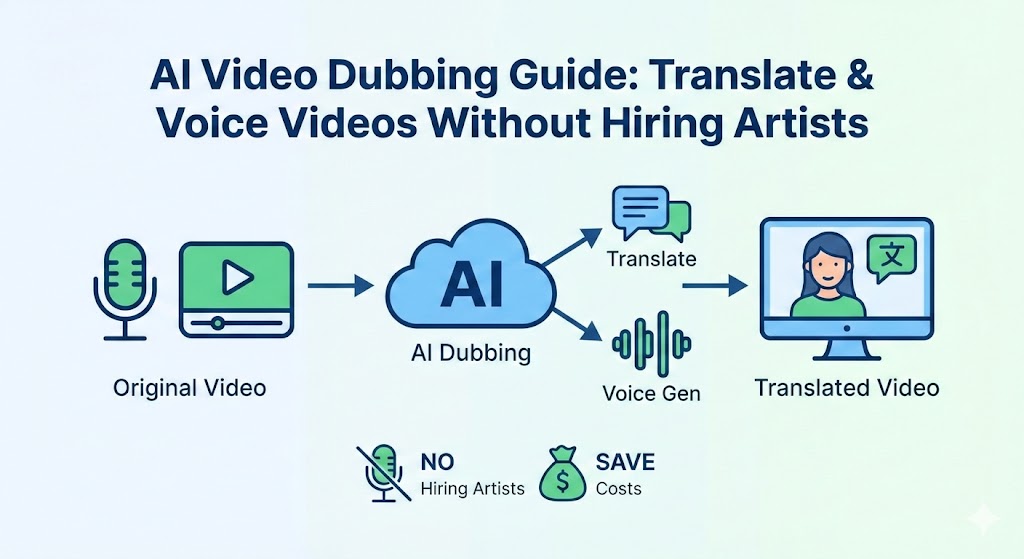
AI Video Dubbing The digital content landscape has undergone a revolutionary transformation with the emergence of New AI Video Dubbing technology. Content creators, businesses, and educators who once spent thousands of dollars hiring voice actors and translation teams can now leverage artificial intelligence to dub their videos into multiple languages within minutes. This breakthrough technology is democratizing global content distribution and breaking down language barriers like never before.
1. Understanding the Revolution of New AI Video Dubbing
New AI Video Dubbing represents a fundamental shift in how we approach multilingual content creation. Traditional dubbing required extensive resources, including professional voice actors, sound engineers, translation experts, and editing teams. The process could take weeks or even months to complete a single project, with costs reaching tens of thousands of dollars for quality productions.
Modern AI dubbing technology eliminates these constraints by using sophisticated machine learning algorithms that can:
- Analyze the original speaker’s voice patterns and emotional tone
- Translate spoken content with contextual accuracy
- Generate synthetic voices that match the original speaker’s characteristics
- Synchronize lip movements for more natural-looking dubbed content
- Maintain proper timing and pacing throughout the video
The technology has matured rapidly over the past few years, with neural networks now capable of producing voices that are virtually indistinguishable from human speakers. This advancement has opened doors for content creators of all sizes to reach global audiences without the prohibitive costs traditionally associated with professional dubbing services.
2. How AI Video Dubbing Technology Actually Works
The mechanics behind AI Video Dubbing involve multiple sophisticated processes working in harmony. Understanding these processes helps users appreciate the technology’s capabilities and limitations.
Speech Recognition and Analysis
The first stage involves advanced speech recognition algorithms that transcribe the original audio with remarkable accuracy. These systems don’t just convert speech to text; they analyze:
- Vocal tone and emotional inflection
- Speaking speed and rhythm patterns
- Pauses and emphasis points
- Background audio elements
- Speaker identification in multi-person videos
Translation and Localization
Once the speech is transcribed, AI translation engines process the content. Modern systems go beyond word-for-word translation by considering:
- Cultural context and idioms
- Industry-specific terminology
- Regional language variations
- Sentence structure optimization for target languages
- Maintaining the original message’s intent and nuance
Voice Synthesis and Cloning
The voice generation component of New AI Video Dubbing uses deep learning models trained on vast datasets of human speech. These models can:
- Create entirely new synthetic voices with specific characteristics
- Clone existing voices from audio samples
- Adjust pitch, speed, and emotional tone
- Generate age-appropriate voices
- Produce gender-specific vocal qualities
Synchronization and Timing
Advanced algorithms ensure that the dubbed audio aligns perfectly with the video’s visual elements through:
- Lip-sync adjustment where facial features are visible
- Timing compression or expansion to match scene lengths
- Background audio preservation and mixing
- Natural pause insertion between phrases
- Audio quality normalization
3. Key Advantages of Using AI Video Dubbing Solutions
The benefits of adopting AI Video Dubbing technology extend far beyond cost savings. These advantages are transforming how businesses and creators approach global content strategies.
Dramatic Cost Reduction
Traditional dubbing projects could cost anywhere from five thousand to fifty thousand dollars depending on video length and the number of languages required. AI solutions reduce these costs by up to ninety-five percent, making multilingual content accessible to:
- Small businesses with limited marketing budgets
- Independent content creators and YouTubers
- Educational institutions producing learning materials
- Startups expanding into international markets
- Non-profit organizations with global missions
Unprecedented Speed and Efficiency
Where traditional dubbing might take weeks, AI systems can complete the same work in hours or even minutes. This speed enables:
- Rapid response to trending topics
- Quick turnaround for time-sensitive content
- Simultaneous multi-language releases
- Faster iteration and content testing
- Real-time dubbing for live events
Consistent Quality Across Languages
AI Video Dubbing maintains uniform quality standards across all language versions. Traditional dubbing quality often varied depending on the availability and skill of voice actors in different regions. AI ensures:
- Consistent brand voice across all markets
- Uniform emotional delivery
- Standardized pronunciation and clarity
- Predictable output quality
- Reduced need for quality control reviews
Scalability and Flexibility
AI dubbing solutions scale effortlessly to meet growing content demands through:
- Unlimited language combinations
- Batch processing of multiple videos
- Easy updates and corrections
- Instant re-dubbing when content changes
- No scheduling conflicts or availability issues
4. Top Platforms and Tools for AI Video Dubbing
The market for New AI Video Dubbing solutions has exploded with numerous platforms offering varying features and capabilities. Understanding the landscape helps users select the right tool for their needs.
Enterprise-Level Solutions
Professional platforms cater to businesses requiring high-volume dubbing with advanced features such as:
- Custom voice model training
- API integration for automated workflows
- Team collaboration tools
- Advanced editing and fine-tuning options
- Priority processing and dedicated support
- White-label solutions for agencies
Mid-Tier Platforms
These solutions balance functionality and affordability, offering:
- Pre-built voice libraries
- Standard language packages
- User-friendly interfaces
- Reasonable processing speeds
- Subscription-based pricing models
- Basic customization options
Entry-Level and Free Tools
Accessible options for individual creators and small projects include:
- Limited free tiers with basic features
- Single-user licenses
- Simplified workflows
- Community support
- Standard voice options
- Per-minute or per-video pricing
5. Best Practices for Implementing AI Video Dubbing
Maximizing the effectiveness of New AI Video Dubbing requires strategic planning and execution. Following established best practices ensures optimal results.
Preparing Your Source Content
Quality input produces quality output. Before dubbing, ensure your source material meets these standards:
- Clear audio recording free from excessive background noise
- Proper microphone placement and recording techniques
- Consistent volume levels throughout
- Minimal audio compression artifacts
- Well-paced speech without excessive speed
- Clear articulation and pronunciation
Choosing the Right Voice
Voice selection significantly impacts audience reception and engagement:
- Match voice characteristics to your brand identity
- Consider age demographics of your target audience
- Select appropriate gender representation
- Test multiple voice options before finalizing
- Ensure voice consistency across your content library
- Adapt voice tone to content type (formal, casual, energetic)
Optimizing Translation Quality
While AI translation has improved dramatically, human oversight enhances accuracy:
- Review automated translations for context appropriateness
- Adjust idiomatic expressions for target cultures
- Verify technical terminology accuracy
- Consider regional language variations
- Test content with native speakers
- Refine based on audience feedback
Post-Production Enhancement
Finishing touches elevate New AI Video Dubbing results from good to exceptional:
- Balance dubbed audio with background music and sound effects
- Apply light audio mastering for professional sound quality
- Check synchronization accuracy throughout the video
- Remove any artificial-sounding artifacts
- Test playback on multiple devices
- Gather feedback before wide distribution
6. Industries Transforming with AI Video Dubbing
New AI Video Dubbing technology is revolutionizing content strategies across diverse sectors, each leveraging the technology in unique ways.
E-Learning and Education
Educational institutions and online course creators utilize AI dubbing to:
- Expand course accessibility to non-English speakers
- Reduce production costs for multilingual content
- Maintain instructor presence across language versions
- Update course materials quickly and affordably
- Reach underserved global markets
- Comply with accessibility requirements
Marketing and Advertising
Brands leverage dubbing technology for:
- Localized advertising campaigns across multiple markets
- Product demonstration videos in customer languages
- Social media content adapted for regional audiences
- Testimonial and review video localization
- Brand storytelling that transcends language barriers
- Rapid A/B testing of messaging across cultures
Entertainment and Media
Content creators and production companies employ AI dubbing to:
- Make independent films accessible globally
- Produce multilingual YouTube content efficiently
- Dub podcasts into additional languages
- Create localized versions of streaming content
- Reduce post-production timelines
- Test market reception before investing in professional dubbing
Corporate Communications
Businesses use New AI Video Dubbing for:
- Internal training materials for global workforces
- Executive communications to international teams
- Product launch videos across regions
- Customer support and tutorial content
- Investor relations presentations
- Compliance and safety training in local languages
7. Overcoming Common Challenges and Limitations
While New AI Video Dubbing offers tremendous advantages, understanding its limitations helps users set realistic expectations and develop effective workarounds.
Handling Complex Audio Environments
AI systems sometimes struggle with:
- Multiple overlapping speakers
- Heavy background music or sound effects
- Echo and reverb-heavy recordings
- Rapid speech or heavy accents
- Low-quality source audio
Solutions include cleaning source audio, providing reference transcripts, and using specialized audio preprocessing tools before dubbing.
Maintaining Emotional Authenticity
Artificial voices may not always capture subtle emotional nuances. Address this by:
- Selecting voice models specifically trained for emotional range
- Manually adjusting tone parameters in advanced platforms
- Using voice cloning for particularly important content
- Combining AI dubbing with human review for critical projects
- Testing multiple voice options to find best emotional matches
Cultural Localization Beyond Language
Translation accuracy doesn’t guarantee cultural appropriateness. Enhance localization through:
- Consulting with native speakers from target regions
- Adapting visual elements alongside audio
- Researching cultural sensitivities and taboos
- Modifying examples and references for local relevance
- Testing content with focus groups before full release
Technical Integration Challenges
Incorporating New AI Video Dubbing into existing workflows requires:
- Understanding API capabilities and limitations
- Developing proper file format conversions
- Establishing quality control checkpoints
- Training team members on new tools
- Creating documentation for consistent processes
- Building feedback loops for continuous improvement
8. The Future Landscape of AI Video Dubbing Technology
The trajectory of New AI Video Dubbing points toward even more sophisticated capabilities that will further transform content creation and distribution.
Emerging Technological Advances
Near-future developments include:
- Real-time dubbing for live streams and broadcasts
- Emotion-adaptive voices that respond to content context
- Advanced lip-sync that modifies facial animations
- Multi-speaker voice differentiation in complex audio
- Dialect-specific voice generation for hyper-local content
- Integration with virtual reality and augmented reality platforms
Market Evolution and Accessibility
The industry is moving toward:
- Decreased costs making technology universally accessible
- Simplified interfaces requiring no technical expertise
- Mobile applications for on-the-go dubbing
- Collaborative platforms for team-based workflows
- Blockchain-based voice authentication and rights management
- Open-source alternatives to commercial solutions
Regulatory and Ethical Considerations
As technology advances, important questions arise regarding:
- Consent requirements for voice cloning
- Disclosure obligations for AI-generated content
- Copyright implications of synthetic voices
- Accuracy standards for translated content
- Data privacy in voice model training
- Employment impact on professional voice actors
Integration with Broader AI Ecosystems
New AI Video Dubbing will increasingly connect with:
- Content management systems for automated workflows
- Video hosting platforms with built-in dubbing
- Social media networks supporting multilingual posts
- Marketing automation tools for campaign localization
- Analytics platforms tracking multilingual engagement
- Translation memory systems for consistency
9. Measuring Success and Return on Investment
Implementing New AI Video Dubbing requires evaluating its impact through concrete metrics and clear business objectives.
Quantitative Performance Indicators
Track measurable outcomes including:
- Cost per dubbed minute compared to traditional methods
- Time saved in production workflows
- Geographic reach expansion metrics
- View counts across different language versions
- Engagement rates by language and region
- Conversion rates from multilingual content
- Customer acquisition costs in new markets
Qualitative Assessment Factors
Beyond numbers, evaluate:
- Audience feedback on dubbed content quality
- Brand perception in international markets
- Employee satisfaction with internal communications
- Partner and stakeholder responses
- Competitive positioning in global markets
- Cultural appropriateness and sensitivity
- Overall content accessibility improvements
Optimization and Continuous Improvement
Maximize ROI through:
- Regular analysis of performance data
- A/B testing different voice and translation options
- Gathering systematic audience feedback
- Iterating on dubbing parameters
- Expanding language offerings based on demand
- Refining workflows for greater efficiency
- Staying current with platform updates and new features
10. Getting Started with Your AI Video Dubbing Journey
Embarking on your New AI Video Dubbing implementation requires a structured approach to ensure success and minimize friction.
Initial Planning and Assessment
Begin by evaluating:
- Your current content library and volume
- Target languages and regions for expansion
- Budget constraints and ROI expectations
- Technical capabilities within your team
- Timeline for implementation
- Quality requirements for your brand
Selecting the Right Platform
Choose a solution based on:
- Feature alignment with your specific needs
- Pricing models that fit your budget structure
- Scalability to accommodate growth
- Integration capabilities with existing tools
- Customer support and documentation quality
- User reviews and case studies from similar organizations
Pilot Program Implementation
Start small to test and refine:
- Select a representative sample of content for initial dubbing
- Choose one or two priority languages first
- Establish clear success criteria
- Document learnings and challenges
- Gather feedback from target audiences
- Calculate actual costs and time savings
- Adjust approach based on results
Full-Scale Rollout and Beyond
After successful pilots, expand through:
- Developing standardized workflows and guidelines
- Training relevant team members thoroughly
- Creating quality control processes
- Building a content calendar for dubbed releases
- Monitoring performance continuously
- Staying informed about new features and best practices
- Connecting with user communities for shared learning
Conclusion: Embracing the Global Content Revolution
New AI Video Dubbing technology represents more than just a cost-effective alternative to traditional dubbing services. It embodies a fundamental democratization of global communication, enabling creators and businesses of all sizes to share their messages across linguistic and cultural boundaries.
The technology has matured to a point where quality, speed, and affordability converge to create unprecedented opportunities. Organizations that embrace AI dubbing position themselves advantageously in an increasingly interconnected world where multilingual content is not just beneficial but essential for competitive success.
As the technology continues evolving with improvements in voice quality, translation accuracy, and ease of use, the gap between AI-generated and human-performed dubbing will narrow further. Early adopters who integrate New AI Video Dubbing into their content strategies today will build valuable expertise and market presence that compounds over time.
The question is no longer whether to adopt AI video dubbing technology, but rather how quickly you can implement it effectively to expand your reach, engage diverse audiences, and compete in the global digital marketplace. The barriers to multilingual content have fallen, and the world is waiting to hear your message in their language.
Also read this:
Google Confirms AI Content Can Rank — If It Meets Quality Standards
Instagram Ad-Free Premium Subscription: Early Access & Benefits
WhatsApp’s Monetization Update: Paid Channels, Subscriptions & Ads Inside the App