
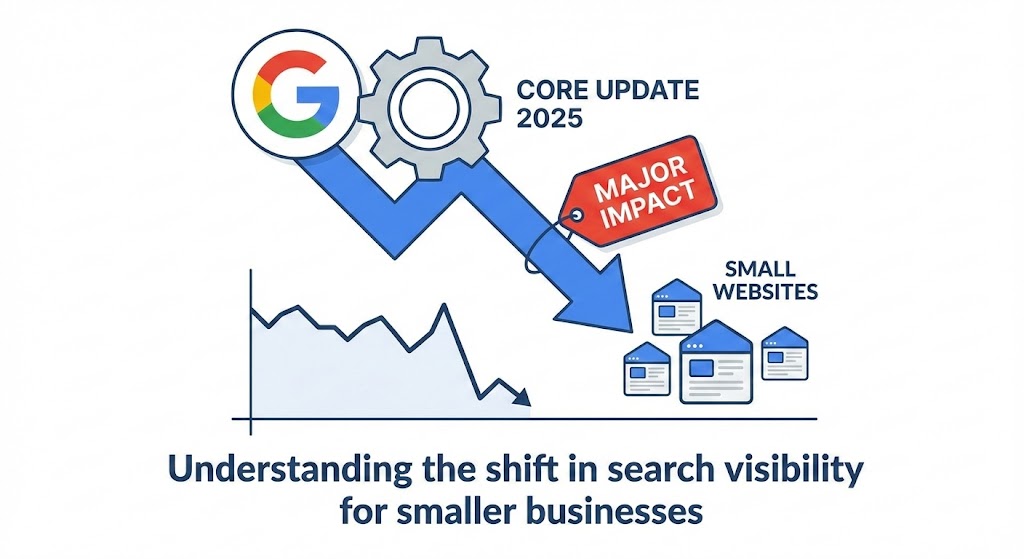
The digital landscape is experiencing another seismic shift as Google rolls out its latest algorithmic changes. The New Google Core Update has sent ripples through the SEO community, particularly affecting small and medium-sized websites that form the backbone of online content. This comprehensive guide explores everything you need to know about this update and how to protect your website’s visibility.
Understanding the New Google Core Update
The New Google Core Update represents Google’s ongoing commitment to delivering the most relevant, helpful, and authoritative content to users. Unlike previous updates that focused on specific elements like page speed or mobile-friendliness, this update takes a holistic approach to evaluating website quality. Google’s algorithm now scrutinizes multiple factors simultaneously, creating a more nuanced ranking system that rewards genuine value and penalizes manipulative tactics.
This update is particularly significant because it fundamentally changes how Google assesses content quality. The search giant has become increasingly sophisticated in understanding user intent, content depth, and the overall user experience. For small websites operating with limited resources, understanding these changes is crucial for survival in an increasingly competitive digital ecosystem.
1. Why Small Websites Are Being Hit Harder
The Resource Gap
Small websites face unique challenges when adapting to the New Google Core Update. Unlike large corporations with dedicated SEO teams and substantial budgets, small site owners often wear multiple hats, managing content creation, technical optimization, and marketing simultaneously. This resource constraint makes it difficult to implement the comprehensive changes Google now expects.
The update has exposed vulnerabilities in websites that relied on outdated SEO tactics. Many small sites built their traffic on keyword stuffing, thin content, or excessive backlinking without focusing on genuine user value. The New Google Core Update has effectively neutralized these shortcuts, forcing site owners to invest in quality over quantity.
Algorithm Sophistication
Google’s machine learning capabilities have reached a point where the algorithm can distinguish between content created for search engines and content created for humans. Small websites that haven’t evolved their content strategy are finding themselves deprioritized in search results. The update particularly targets sites with high bounce rates, short dwell times, and low engagement metrics, all indicators that users aren’t finding what they need.
Competition from Established Brands
The New Google Core Update appears to favor brand authority and trustworthiness more heavily than before. Established websites with strong domain authority, consistent publishing histories, and robust backlink profiles are maintaining or improving their rankings, while newer or smaller sites struggle to compete. This creates a challenging environment for startups and niche websites trying to gain traction.
2. Key Changes in the New Google Core Update
Enhanced E-E-A-T Signals
Experience, Expertise, Authoritativeness, and Trustworthiness have become paramount. The New Google Core Update places unprecedented emphasis on demonstrating these qualities throughout your website. Google now evaluates author credentials more thoroughly, cross-references information with authoritative sources, and assesses whether content creators have genuine experience in their subject matter.
- Author Credentials: Detailed author bios with verifiable credentials and expertise
- Content Accuracy: Fact-checking and citation of reputable sources
- Transparency: Clear information about website ownership and purpose
- User Trust Signals: Reviews, testimonials, and social proof
Content Quality Assessment
The update introduces more sophisticated natural language processing that evaluates content comprehensiveness. Google can now determine whether an article thoroughly covers a topic or merely scratches the surface. The New Google Core Update rewards content that answers related questions, provides actionable insights, and offers unique perspectives rather than rehashing existing information.
- Depth of Coverage: Comprehensive treatment of topics with supporting details
- Original Research: Unique data, case studies, or firsthand experiences
- Content Structure: Logical organization with clear hierarchies and navigation
- Visual Elements: Relevant images, videos, infographics, and multimedia content
User Experience Metrics
Core Web Vitals remain important, but the New Google Core Update expands user experience evaluation beyond loading speeds. Google now considers the entire user journey, from initial page load to content consumption and site navigation. Factors like intrusive interstitials, aggressive advertising, and confusing layouts can significantly impact rankings.
- Page Experience: Smooth interactions without unexpected layout shifts
- Mobile Optimization: Seamless functionality across all device types
- Accessibility: Compliance with web accessibility standards
- Content Readability: Appropriate formatting, font sizes, and spacing
3. Technical SEO Requirements in 2025
Site Architecture and Crawlability
The New Google Core Update places greater importance on how easily Google’s crawlers can navigate and understand your site structure. Small websites must ensure their technical foundation is solid, with clear hierarchies, logical URL structures, and proper internal linking. Websites with orphaned pages, broken links, or confusing navigation face ranking penalties.
- XML Sitemaps: Updated and submitted sitemaps for efficient crawling
- Robots.txt Optimization: Proper directives without blocking important resources
- Internal Linking Strategy: Logical connections between related content
- URL Structure: Clean, descriptive URLs that reflect content hierarchy
Structured Data Implementation
Schema markup has evolved from an optional enhancement to a ranking factor. The New Google Core Update rewards websites that help Google understand their content through structured data. This includes article schemas, FAQ schemas, breadcrumb navigation, and entity markup that clarifies relationships between content elements.
- Article Schema: Proper markup for blog posts and news articles
- Local Business Schema: Essential for location-based businesses
- Product Schema: Critical for e-commerce sites
- Review Schema: Validation of user reviews and ratings
Security and Privacy
HTTPS is no longer sufficient. The New Google Core Update evaluates comprehensive security measures, including SSL certificate quality, privacy policy transparency, and data handling practices. Websites that collect user information must demonstrate clear compliance with privacy regulations and provide users with control over their data.
- SSL Certification: Valid, up-to-date security certificates
- Privacy Compliance: GDPR, CCPA, and regional privacy law adherence
- Secure Forms: Protected data submission processes
- Third-Party Scripts: Careful vetting of external resources
4. Content Strategy for Recovery and Growth
Topic Authority Development
Small websites can compete with larger competitors by establishing themselves as authorities in specific niches. The New Google Core Update recognizes and rewards deep expertise in focused areas. Rather than creating broad content across multiple topics, successful sites concentrate on becoming the definitive resource for their chosen subject matter.
- Pillar Content: Comprehensive guides that cover topics exhaustively
- Topic Clusters: Related articles that link to and support pillar content
- Regular Updates: Refreshing existing content to maintain relevance
- Unique Angles: Perspectives or insights not available elsewhere
Content Freshness and Relevance
The New Google Core Update emphasizes content currency, particularly for topics where information changes rapidly. Small websites must establish regular publishing schedules and update existing content to reflect current information. Google now tracks content modification dates and assesses whether updates add genuine value or represent superficial changes.
- Publishing Consistency: Regular content additions on a sustainable schedule
- Content Audits: Quarterly reviews of existing content for accuracy
- Historical Optimization: Updating older posts with new information and insights
- Trend Integration: Incorporating current developments in established content
User Intent Matching
Understanding and satisfying user intent has become critical. The New Google Core Update evaluates whether content actually answers the questions users are asking. Small websites must move beyond targeting keywords to addressing the underlying needs and motivations driving searches.
- Search Intent Analysis: Determining whether users seek information, transactions, or navigation
- Question-Based Content: Directly addressing common queries in your niche
- Comprehensive Answers: Providing complete solutions rather than partial information
- Next-Step Guidance: Helping users understand what to do with the information
5. Link Building in the Post-Update Environment
Quality Over Quantity
The New Google Core Update has further devalued manipulative link-building tactics. Small websites must focus on earning links through genuine value creation rather than purchasing or exchanging links. Google’s algorithm can now detect unnatural link patterns with greater accuracy, making risky link-building strategies more dangerous than ever.
- Natural Link Acquisition: Creating content worthy of spontaneous linking
- Relationship Building: Networking with industry peers and influencers
- Guest Posting Strategy: Contributing valuable content to reputable sites
- Link Audit: Disavowing toxic or spammy backlinks
Brand Mentions and Entity Recognition
The update considers brand mentions even without direct links. The New Google Core Update incorporates entity-based search, where Google understands your brand as a distinct entity with characteristics, relationships, and reputation. Building brand awareness through social media, forums, and industry communities contributes to overall authority.
- Brand Consistency: Uniform presentation across all platforms
- Social Engagement: Active participation in relevant communities
- Press Coverage: Earning mentions in industry publications
- Influencer Relationships: Connections with recognized authorities
Local SEO for Small Businesses
For location-based businesses, the New Google Core Update has refined local ranking factors. Google Business Profile optimization, local citations, and community engagement have become more influential. Small businesses can leverage their local presence as a competitive advantage against larger national competitors.
- Google Business Optimization: Complete, accurate business profiles
- Local Citations: Consistent NAP information across directories
- Community Involvement: Participation in local events and partnerships
- Location-Specific Content: Articles addressing local concerns and interests
6. Measuring Impact and Adjusting Strategy
Analytics and Performance Tracking
Understanding the New Google Core Update’s impact on your site requires comprehensive analytics. Small website owners must monitor multiple metrics beyond simple traffic numbers, including engagement rates, conversion patterns, and user behavior changes. This data reveals which pages succeeded or failed under the new algorithm.
- Traffic Analysis: Identifying which pages gained or lost visibility
- Engagement Metrics: Tracking time on page, bounce rates, and scroll depth
- Conversion Tracking: Monitoring how changes affect business outcomes
- Search Console Data: Analyzing impression and click-through rate changes
Competitor Analysis
The New Google Core Update created winners and losers in every niche. Studying competitors who improved their rankings provides valuable insights into successful strategies. Small websites should analyze what these competitors are doing differently in terms of content depth, technical implementation, and user experience.
- Ranking Comparisons: Tracking position changes for key competitors
- Content Gap Analysis: Identifying topics competitors cover that you don’t
- Backlink Evaluation: Understanding competitor link profiles
- Technical Benchmarking: Comparing site speed and Core Web Vitals
Iterative Improvement Process
Recovery from the New Google Core Update rarely happens overnight. Small websites must adopt an iterative approach, making incremental improvements and measuring results. This methodical process helps identify which changes positively impact rankings and which strategies prove ineffective.
- Prioritization Framework: Addressing highest-impact issues first
- Testing Methodology: Isolating variables to understand cause and effect
- Documentation: Recording changes and their effects
- Patience: Allowing sufficient time for Google to reassess your site
7. Future-Proofing Your Small Website
Adapting to Continuous Updates
The New Google Core Update is not an endpoint but part of Google’s ongoing evolution. Small websites must build flexibility into their SEO strategies, creating systems that can adapt to future changes without complete overhauls. This means focusing on fundamentals that align with Google’s core mission of serving users rather than chasing temporary ranking factors.
- Sustainable Practices: Building strategies that withstand algorithm changes
- User-First Mentality: Making decisions based on user benefit
- Diversification: Reducing dependence on any single traffic source
- Continuous Learning: Staying informed about industry developments
Building Resilient Traffic Sources
Relying exclusively on organic search leaves small websites vulnerable to algorithm changes. The New Google Core Update has reinforced the importance of diversified traffic acquisition. Email lists, social media followings, and direct traffic provide stability when search rankings fluctuate.
- Email Marketing: Building and nurturing subscriber lists
- Social Media Presence: Cultivating engaged communities
- Referral Partnerships: Establishing relationships with complementary sites
- Content Syndication: Republishing content on relevant platforms
Investing in Long-Term Authority
The New Google Core Update rewards websites that demonstrate sustained commitment to their topics. Small website owners should think in terms of years rather than months, building comprehensive content libraries and establishing genuine expertise. This long-term perspective aligns with Google’s increasing preference for established, trustworthy sources.
- Content Depth: Creating comprehensive resources that stand the test of time
- Consistent Publishing: Maintaining regular content production schedules
- Community Building: Fostering engagement and repeat visitors
- Brand Development: Creating memorable, recognizable online identities
Conclusion: Thriving After the New Google Core Update
The New Google Core Update has fundamentally altered the SEO landscape for small websites, creating both challenges and opportunities. While the immediate impact may seem daunting, websites that embrace quality, transparency, and genuine user value will ultimately benefit from these changes. Google’s evolution toward rewarding authentic expertise and comprehensive content creates space for small sites with genuine knowledge and dedication.
Success in this new environment requires abandoning shortcuts and committing to sustainable, user-focused strategies. Small websites must view the New Google Core Update not as an obstacle but as an opportunity to differentiate themselves through quality and expertise. Those who invest in creating genuinely helpful content, optimizing user experience, and building real authority in their niches will emerge stronger.
The key to navigating the New Google Core Update lies in understanding that Google’s ultimate goal aligns with what users want: accurate, helpful, accessible information. By focusing relentlessly on serving your audience, maintaining technical excellence, and demonstrating genuine expertise, your small website can not only recover from this update but position itself for long-term success in an increasingly competitive digital landscape.
Remember that SEO is a marathon, not a sprint. The websites that will thrive in 2025 and beyond are those built on solid foundations of quality content, technical excellence, and genuine user value. The New Google Core Update may have disrupted the status quo, but it has also created opportunities for small websites willing to invest in doing things right.
Also read this:
Designing AI Adoption Plans for Companies: A Profitable AI Service Model
AI Workflow Specialist: How to Earn Recurring Income by Automating Businesses
AI Earning Opportunities That Don’t Require Constant Client Outreach