
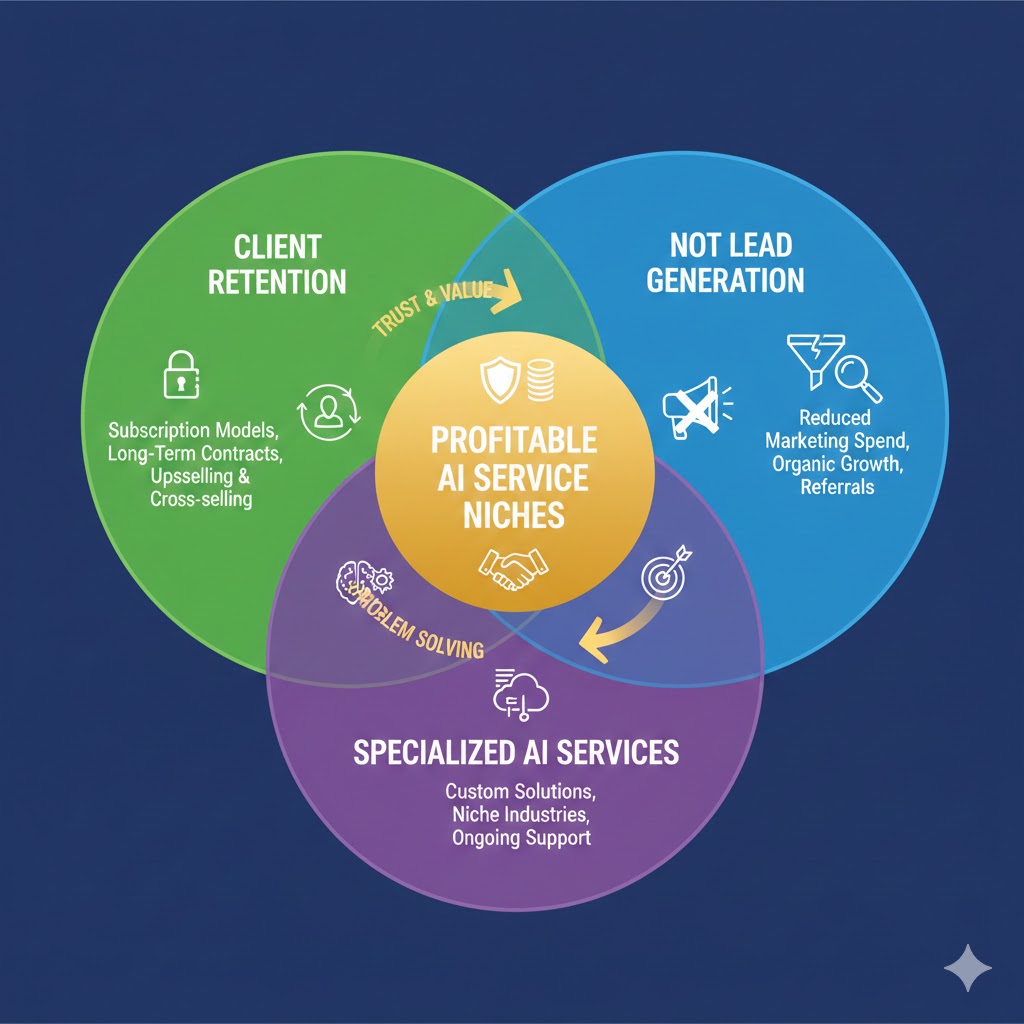
The AI services landscape is experiencing explosive growth, but most providers are playing the wrong game. While competitors exhaust resources chasing new leads, the smartest entrepreneurs are building sustainable businesses around AI Service Niches that prioritize client retention over constant acquisition. This fundamental shift transforms volatile project work into predictable, recurring revenue streams that compound over time.
The difference between struggling and thriving in AI services often comes down to business model selection. When you focus on AI Service Niches designed for long-term client relationships, you create compounding advantages: deeper expertise in client operations, reduced sales costs, higher lifetime value, and referral networks that grow organically.
1. AI-Powered Customer Support Optimization
The Retention Advantage
Customer support represents one of the most compelling AI Service Niches for retention-focused businesses. Companies that invest in AI-powered support systems require ongoing optimization, monitoring, and improvement. Unlike one-time implementations, support systems generate continuous data that demands iterative refinement.
Core Service Components
Chatbot Development and Maintenance
Building conversational AI for customer support creates natural retention. These systems require regular updates as products evolve, new questions emerge, and customer expectations shift. Your role extends beyond initial deployment to continuous improvement based on interaction data, customer satisfaction scores, and resolution rates.
Response Quality Monitoring
AI-generated responses need human oversight and refinement. By establishing quality assurance protocols, you create an essential ongoing service. This includes reviewing conversation logs, identifying misunderstandings, updating training data, and ensuring brand voice consistency across all automated interactions.
Integration Management
Customer support AI systems connect with CRM platforms, ticketing systems, knowledge bases, and analytics tools. These integrations require maintenance as platforms update, new tools are adopted, and business processes evolve. Managing this ecosystem creates sticky, long-term client relationships.
Revenue Model Structure
Monthly retainers should cover system monitoring, performance reporting, continuous training data updates, and priority support. Additional revenue streams include seasonal optimization sprints, expansion to new communication channels, and advanced analytics packages. Clients remain engaged because their support quality directly impacts customer retention and revenue.
2. Automated Content Personalization Systems
Why Clients Stay
Content personalization represents one of the highest-ROI AI Service Niches available. Companies implementing personalization see immediate impact on engagement metrics, making them unlikely to abandon systems that drive measurable results. The complexity of maintaining these systems ensures ongoing professional support remains essential.
Service Delivery Framework
Dynamic Content Engine Setup
Creating systems that automatically personalize website content, email campaigns, and product recommendations requires sophisticated architecture. You build frameworks that analyze user behavior, segment audiences dynamically, and serve tailored content in real-time. The initial setup creates dependency, while the ongoing optimization creates retention.
Performance Optimization
Personalization systems generate massive amounts of performance data. Your ongoing service analyzes which personalization strategies work best for different segments, identifies opportunities for improved targeting, and continuously refines algorithms. This data-driven optimization becomes more valuable over time as you develop deeper insights into client audiences.
Seasonal and Campaign Adaptations
Marketing calendars, product launches, and seasonal promotions require personalization strategy adjustments. By managing these adaptations, you become an integral part of the marketing team. Clients depend on your expertise to maximize campaign effectiveness through intelligent personalization.
Building Long-Term Value
Charge retainer fees based on traffic volume and complexity, with performance bonuses tied to engagement improvements. As personalization systems prove their value, clients naturally expand to additional channels and more sophisticated strategies. Your deep understanding of their audience becomes increasingly difficult to replace.
3. Predictive Inventory and Demand Forecasting
The Stickiness Factor
For e-commerce and retail businesses, inventory management directly impacts profitability. AI Service Niches focused on predictive forecasting create exceptional retention because switching costs are high and the financial impact is immediate and measurable. Poor forecasting leads to stockouts or excess inventory, making reliable prediction systems business-critical.
Implementation Strategy
Forecasting Model Development
Build custom prediction models that account for seasonality, trends, promotional impacts, and external factors. These models require continuous refinement as market conditions change, new products are introduced, and historical data accumulates. Your models become more accurate over time, increasing their value and your client’s dependency.
Real-Time Adjustment Systems
Create dashboards and alert systems that notify clients when forecasts deviate from actual performance. This early warning system allows for proactive inventory decisions. Managing and refining these alert thresholds based on client risk tolerance and cash flow considerations keeps you deeply involved in strategic operations.
Multi-Channel Coordination
For businesses selling across multiple platforms, coordinating inventory predictions becomes complex. Your service ensures optimal stock allocation across channels, preventing overselling while maximizing availability. This coordination role makes you indispensable to daily operations.
Pricing and Expansion
Structure pricing around inventory value managed or as a percentage of waste reduction. As clients see decreased stockouts and reduced excess inventory, they naturally expand forecasting to additional product categories and locations. Document cost savings meticulously to justify rate increases and service expansions.
4. Automated Financial Reporting and Analysis
Retention Through Integration
Financial reporting represents one of the most stable AI Service Niches possible. Once your systems are integrated into a company’s financial workflows, replacement becomes extremely disruptive. The combination of technical integration and business process dependency creates powerful retention mechanics.
Service Architecture
Custom Report Generation
Develop AI systems that automatically generate financial reports, executive summaries, and variance analyses. These reports should go beyond simple data aggregation to provide intelligent insights, trend identification, and anomaly detection. As stakeholders rely on these reports for decision-making, your system becomes embedded in governance processes.
Predictive Cash Flow Modeling
Build models that forecast cash positions based on historical patterns, upcoming obligations, and seasonal factors. For small to mid-sized businesses, cash flow prediction is critical for avoiding crises. Your ongoing refinement of these models based on actual outcomes builds accuracy and trust over time.
Regulatory Compliance Monitoring
Create systems that monitor transactions and activities for compliance issues, flagging potential problems before they become serious. As regulations evolve, you update monitoring criteria, keeping clients compliant without requiring their constant attention to regulatory changes.
Revenue Sustainability
Charge monthly fees based on company size and report complexity. Additional revenue comes from custom analysis requests, integration of new data sources, and expansion to additional departments. The critical nature of financial data and the trust required to access it creates significant switching barriers.
5. AI-Enhanced Recruitment and Talent Matching
Long-Term Partnership Dynamics
Recruitment services traditionally operate on placement fees, creating feast-or-famine revenue. However, AI Service Niches focused on ongoing talent management create consistent revenue through retention. Companies with successful hiring systems continue using and expanding them rather than switching providers.
Comprehensive Service Offering
Candidate Sourcing Automation
Build AI systems that continuously scan job boards, social networks, and professional platforms for candidates matching evolving criteria. These systems learn from hiring manager feedback, improving match quality over time. The continuous nature of talent acquisition makes this an ongoing service rather than a one-time project.
Application Screening and Ranking
Develop intelligent screening systems that evaluate resumes, cover letters, and application responses against job requirements and company culture indicators. These systems reduce time-to-hire while improving candidate quality. Regular calibration against actual hiring outcomes keeps you involved long-term.
Interview Process Optimization
Create systems that schedule interviews, send automated communications, gather feedback, and identify bottlenecks in the hiring process. This operational support becomes integral to HR workflows. Your insights into process improvements based on data analysis add strategic value beyond the technology.
Retention Revenue Model
Charge monthly retainers for system access and optimization, with bonuses tied to improved metrics like time-to-hire reduction or candidate quality scores. As clients see hiring improvements, they expand usage to additional departments and seniority levels. Your historical data on what works for their specific culture becomes irreplaceable.
6. Automated Social Media Content Strategy and Scheduling
The Ongoing Nature of Social Media
Social media management represents ideal AI Service Niches for retention because it never stops. The continuous need for fresh content, platform algorithm changes, and evolving audience expectations create natural opportunities for ongoing service relationships rather than one-time projects.
Service Components
Content Generation and Curation
Develop AI systems that generate post ideas, write draft copy, and curate relevant third-party content for sharing. These systems should learn brand voice, audience preferences, and performance patterns. Your role includes reviewing AI outputs, refining generation parameters, and ensuring quality standards are maintained.
Optimal Timing and Frequency Management
Create intelligent scheduling systems that post content at optimal times for each platform and audience segment. These systems should continuously analyze engagement data to refine timing strategies. Platform algorithm changes require regular adjustment, keeping you actively involved in strategy.
Performance Analysis and Strategy Adjustment
Provide ongoing analysis of what content types, topics, and formats drive the best engagement and conversions. This insight generation goes beyond basic analytics to strategic recommendations. Monthly strategy sessions based on performance data keep clients engaged and expanding their investment.
Building Recurring Revenue
Price services based on posting volume, platform count, and strategic support level. As clients see consistent engagement growth and time savings, they naturally expand to additional platforms and more sophisticated content strategies. Your understanding of their brand voice and audience makes switching to a new provider risky and expensive.
7. Email Marketing Optimization and Personalization
Why Email AI Services Retain Clients
Email marketing generates direct revenue for most businesses, making performance optimization a priority. AI Service Niches centered on email marketing create retention through measurable ROI and the complexity of maintaining high-performing systems across growing subscriber lists and expanding campaign types.
Strategic Service Elements
Subject Line and Content Optimization
Build AI systems that test and optimize email subject lines, preview text, and email body content. These systems should learn from open rates, click-through rates, and conversion data. Continuous testing and optimization create ongoing engagement as you help clients squeeze more revenue from their lists.
Send Time Optimization
Develop intelligent systems that determine optimal send times for individual subscribers based on their engagement history. As subscriber behavior evolves and lists grow, these systems require continuous refinement. Your management of send time optimization becomes a significant driver of email performance.
List Segmentation and Targeting
Create dynamic segmentation systems that automatically group subscribers based on behavior, preferences, and engagement patterns. These segments should trigger targeted campaigns automatically. Managing and refining segmentation logic as business goals evolve keeps you central to email strategy.
Revenue Structure
Charge retainers based on list size and email volume, with performance bonuses tied to revenue generated from email campaigns. As clients see improved open rates and conversion rates, they invest in more sophisticated automation and personalization. Your historical performance data and campaign learnings become increasingly valuable.
8. Automated Customer Churn Prediction and Prevention
The Ultimate Retention Service
Helping clients retain their customers creates natural retention for your services. AI Service Niches focused on churn prevention are compelling because they directly impact client revenue. Success in reducing churn makes your service indispensable and easily justifies significant ongoing investment.
Implementation Framework
Churn Risk Scoring Models
Develop models that analyze customer behavior, usage patterns, support interactions, and payment history to identify at-risk customers before they churn. These models become more accurate over time as they learn from actual churn events. Regular model retraining and refinement creates ongoing engagement.
Intervention Campaign Automation
Build systems that automatically trigger retention campaigns when churn risk scores exceed thresholds. These campaigns might include special offers, proactive support outreach, or educational content. Managing and optimizing these intervention strategies based on success rates keeps you actively involved.
Customer Health Dashboards
Create real-time dashboards showing customer health metrics, churn risk trends, and intervention effectiveness. These dashboards become essential tools for customer success teams. Regular review meetings to discuss insights and strategy adjustments maintain strong client relationships.
Long-Term Engagement Strategy
Price services as a percentage of churn reduction value or monthly retainers based on customer base size. As clients see measurable improvement in retention rates, they expand churn prevention efforts to additional customer segments. Your deep understanding of their customer patterns becomes a competitive advantage they cannot easily replace.
9. AI-Powered Competitive Intelligence Monitoring
Continuous Value Creation
Market conditions and competitive landscapes constantly evolve, making intelligence gathering an ongoing need. AI Service Niches in competitive intelligence create retention through the continuous nature of monitoring and the strategic value of timely insights that accumulate over time.
Service Delivery Model
Automated Competitor Tracking
Build systems that monitor competitor websites, pricing changes, product launches, marketing campaigns, and social media activity. These systems should identify significant changes and trends automatically. The comprehensive nature of monitoring across multiple competitors creates high value that would be difficult and time-consuming for clients to replicate internally.
Market Trend Analysis
Develop AI that analyzes industry news, regulatory changes, consumer sentiment, and emerging technologies relevant to client industries. Synthesizing this information into actionable insights requires both technology and expertise. Regular strategic briefings based on this analysis keep you positioned as a trusted advisor.
Pricing and Positioning Intelligence
Create systems that track competitor pricing strategies, promotional patterns, and positioning changes. This intelligence directly informs client strategy decisions. The historical data you accumulate becomes increasingly valuable for identifying patterns and predicting competitor moves.
Revenue and Retention
Charge monthly fees based on the number of competitors monitored and the complexity of analysis required. As clients realize the strategic value of timely competitive intelligence, they expand monitoring scope and request deeper analysis. Your historical knowledge of the competitive landscape becomes irreplaceable context for interpreting new developments.
10. Automated Quality Assurance and Testing
The Technical Retention Lock
For software companies and digital product businesses, quality assurance is non-negotiable. AI Service Niches focused on automated testing create powerful retention because they integrate deeply into development workflows and product quality directly impacts revenue and reputation.
Comprehensive QA Services
Automated Test Case Generation
Build AI systems that generate test cases based on application functionality, user flows, and historical bug patterns. These systems should expand test coverage automatically as products evolve. Managing test suites and ensuring comprehensive coverage keeps you involved throughout the development lifecycle.
Regression Testing Automation
Develop systems that automatically run regression tests with each code change, identifying issues before they reach production. Integration with CI/CD pipelines makes your service essential to the development process. Maintaining and expanding test automation as products grow creates natural retention.
Bug Pattern Analysis and Prevention
Create AI that analyzes historical bugs to identify patterns and predict where future issues are likely to occur. This proactive approach helps development teams focus attention on high-risk areas. Regular reporting on bug trends and prevention effectiveness demonstrates ongoing value.
Building Sticky Relationships
Price services based on application complexity and test execution volume. As clients see reduced bug rates and faster release cycles, they expand automated testing to additional products and more comprehensive test scenarios. The integration of your systems into their development workflow creates significant switching costs.
Conclusion: Building Sustainable AI Service Businesses
The most profitable AI Service Niches share common characteristics: they solve ongoing problems rather than one-time challenges, they integrate deeply into client operations, they generate measurable results that justify continued investment, and they become more valuable over time as data and expertise accumulate.
Success in retention-focused AI Service Niches requires shifting mindset from project completion to continuous improvement. Your goal is not to finish the work but to become an indispensable partner in achieving evolving business objectives. This approach builds equity in client relationships that compounds over years rather than constantly rebuilding from zero with new clients.
The financial implications of this strategy are profound. A client paying five thousand dollars monthly for three years generates one hundred eighty thousand dollars in revenue with a single sale. That same effort spent on lead generation might produce ten one-time projects at twenty thousand dollars each, generating two hundred thousand dollars but requiring ten times the sales effort and leaving you starting over afterward.
Choose your niche based on genuine interest and existing expertise, but structure services for retention from the beginning. Build systems that become more valuable over time, deliver consistent results that justify ongoing investment, and position yourself as a strategic partner rather than a vendor. The businesses that master this approach will dominate their chosen AI Service Niches while competitors exhaust themselves on the lead generation treadmill.
Also read this:
AI Agency Services That Automate Manual Operations for Businesses
How to Build a Reliable AI Service Business From Scratch (Beginner to Pro)
High-Value AI Agency Services That Depend on Thinking, Not Programming