
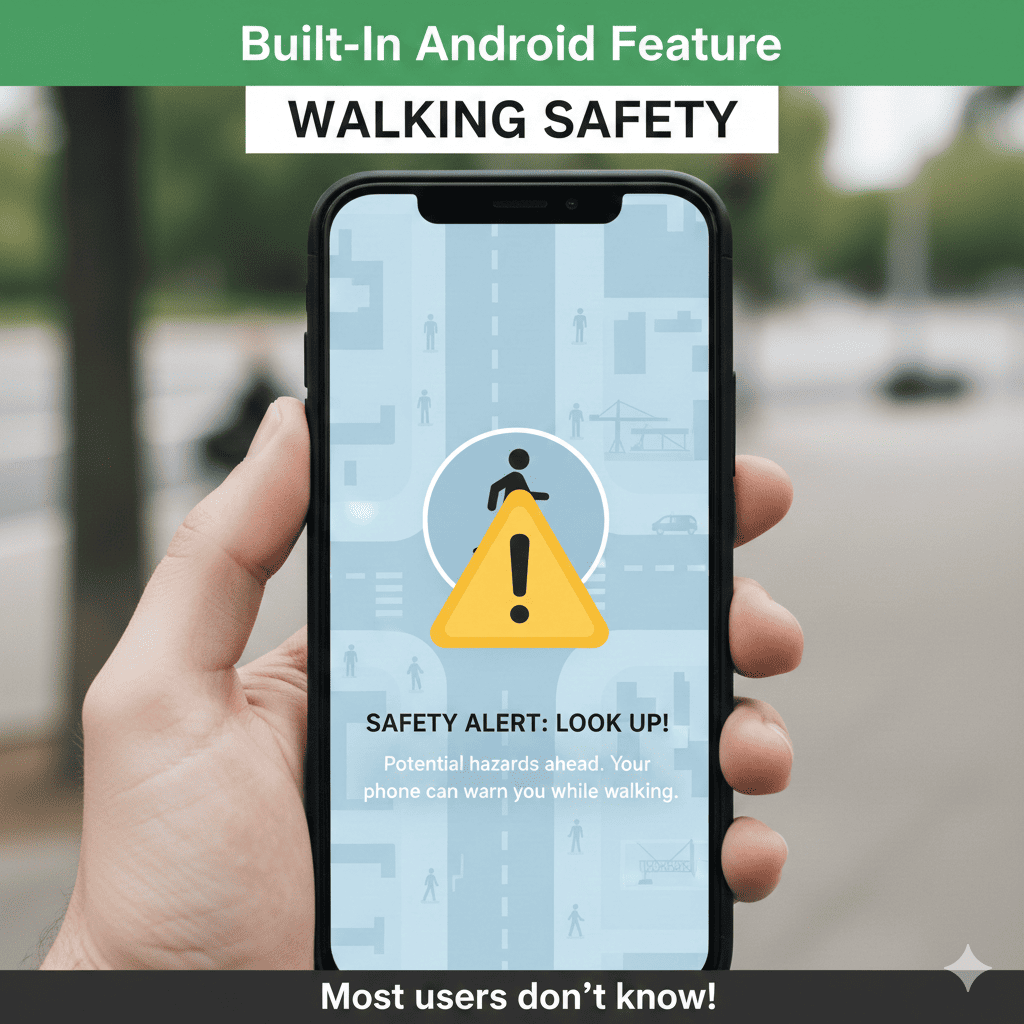
Smartphones have become an inseparable part of our daily lives, but they also pose significant risks when we’re distracted by them while walking. Every year, thousands of pedestrian accidents occur because people are too engrossed in their screens to notice their surroundings. However, Android has a powerful built-in Android feature that addresses this exact problem, and surprisingly, most users have no idea it exists.
This safety tool is designed to keep you aware of your environment while you’re walking and using your phone. Whether you’re texting, browsing social media, or checking emails on the go, this built-in Android feature can literally save your life. In this comprehensive guide, we’ll explore everything you need to know about this hidden gem, how to activate it, and why every Android user should be using it.
1. Understanding the Hidden Safety Feature
What Is This Built-In Android Feature?
The safety tool we’re discussing is called “Heads Up” or “Screen Attention” depending on your Android version. This built-in Android feature uses your phone’s sensors and camera to detect when you’re walking while looking at your screen. Once activated, it displays a warning reminder to pay attention to your surroundings, helping prevent accidents and collisions.
This feature was first introduced in Digital Wellbeing settings and has evolved significantly over various Android versions. It represents Google’s commitment to user safety and responsible smartphone usage in an increasingly distracted world.
How Does It Work?
The technology behind this built-in Android feature is surprisingly sophisticated:
- Motion Detection: Your phone’s accelerometer and gyroscope detect when you’re in motion
- Camera Analysis: The front-facing camera analyzes your environment (without recording)
- Pattern Recognition: AI algorithms determine if you’re walking based on movement patterns
- Screen Monitoring: The system tracks your screen activity and focus level
- Alert Triggering: When walking is detected while you’re using your phone, warnings appear
The entire process happens locally on your device, meaning your privacy is protected. No data is sent to Google or any third party, and no videos or images are stored.
Why Most Users Don’t Know About It
Despite being incredibly useful, this built-in Android feature remains largely unknown because:
- It’s buried deep within settings menus
- Google doesn’t heavily advertise it during phone setup
- Many users skip Digital Wellbeing features entirely
- The feature isn’t enabled by default on most devices
- Tech reviewers rarely highlight safety features over flashy specs
- Users often don’t explore settings beyond basic customization
2. The Growing Problem of Distracted Walking
Alarming Statistics You Should Know
The rise of smartphone usage has created a new public safety concern:
- Pedestrian injuries related to phone use have increased by over 35% in the past decade
- Studies show that distracted walkers are four times more likely to ignore traffic signals
- Emergency room visits for pedestrian phone-related injuries have tripled since 2010
- People walking while texting are 60% more likely to veer off their intended path
- Reaction time decreases by up to 50% when attention is divided between walking and screen use
Common Accidents and Scenarios
Distracted walking leads to various types of accidents:
Urban Hazards
- Walking into traffic or oncoming vehicles
- Colliding with street furniture, poles, or signs
- Tripping over curbs, steps, or uneven pavement
- Missing traffic signals and pedestrian crossings
- Bumping into other pedestrians
Public Transit Risks
- Falling on subway or train platforms
- Missing station stops while absorbed in content
- Stepping onto tracks or buses without looking
- Colliding with closing doors
General Environment Dangers
- Walking into glass doors or walls
- Falling down stairs or escalators
- Tripping over obstacles in pathways
- Getting injured in parking lots or garages
Why We Can’t Stop Checking Our Phones
The compulsion to check our phones while walking isn’t simply a lack of willpower:
- FOMO (Fear of Missing Out): Anxiety about missing important messages or updates
- Dopamine Hits: Notifications trigger pleasure responses in our brains
- Social Pressure: Expectation of immediate responses to messages
- Habit Formation: Years of conditioned behavior make it automatic
- Multitasking Culture: Society rewards constant productivity and availability
This built-in Android feature acknowledges these psychological factors and works with them rather than against them.
3. Complete Setup Guide for the Heads Up Feature
Step-by-Step Activation Process
Setting up this built-in Android feature is straightforward once you know where to look:
For Android 12 and Later:
- Open your device Settings
- Scroll down and tap on “Digital Wellbeing & parental controls”
- Look for “Heads Up” or “Reduce Interruptions” section
- Tap on “Heads Up”
- Toggle the switch to enable the feature
- Adjust sensitivity settings if available
- Grant necessary permissions when prompted
For Android 10 and 11:
- Navigate to Settings
- Select “Digital Wellbeing & parental controls”
- Tap the three-dot menu in the top right corner
- Choose “Manage notifications”
- Find and enable “Heads Up” notifications
- Configure your preferences
For Samsung Devices:
Samsung has its own implementation through One UI:
- Open Settings
- Go to “Advanced features”
- Select “Motions and gestures”
- Look for “Alert when walking” or similar option
- Enable the feature
- Customize notification style
Granting Necessary Permissions
For this built-in Android feature to function properly, you’ll need to grant specific permissions:
- Camera Access: Allows the phone to detect when you’re walking (no recording occurs)
- Motion Sensors: Enables detection of walking patterns
- Notification Access: Permits the system to display warnings
- Battery Optimization Exemption: Ensures the feature runs consistently
Don’t worry about privacy concerns. These permissions are used exclusively for the safety feature and operate entirely on-device with no data transmission.
Customization Options Available
Depending on your Android version and device manufacturer, you can customize:
Sensitivity Levels
- Low: Alerts only during fast walking or running
- Medium: Balanced detection for normal walking speeds
- High: Maximum sensitivity for any movement
Notification Styles
- Full-screen warnings that pause content
- Banner notifications at the top of screen
- Gentle reminders that don’t interrupt content
- Sound alerts combined with visual warnings
Activation Conditions
- Enable only in specific locations (urban areas, busy streets)
- Activate based on time of day
- Trigger only when certain apps are open
- Work with Do Not Disturb mode
4. How to Use the Feature Effectively
Best Practices for Maximum Safety
To get the most out of this built-in Android feature, follow these guidelines:
Initial Setup Period
- Use the feature consistently for at least two weeks to form new habits
- Start with high sensitivity and adjust based on your experience
- Pay attention to when warnings appear and evaluate their accuracy
- Don’t dismiss the feature too quickly if it seems overly sensitive
Daily Usage Tips
- Keep the feature enabled at all times, not just when you remember
- Respond immediately to warnings by stopping or finding a safe spot
- Use the warnings as cues to take phone-free walking breaks
- Combine with other Digital Wellbeing features for comprehensive safety
Environmental Awareness
- Even with the feature enabled, maintain basic situational awareness
- Use crosswalks and follow traffic signals regardless of warnings
- In high-risk areas, consider putting your phone away entirely
- Teach children and teens about proper phone usage while walking
Understanding Warning Triggers
The built-in Android feature uses multiple criteria to determine when to warn you:
Movement Analysis
- Walking speed and rhythm patterns
- Directional changes and navigation patterns
- Acceleration and deceleration rates
- Body position and phone orientation
Screen Activity Assessment
- How long you’ve been looking at your screen
- The type of content you’re viewing
- Whether you’re typing or just scrolling
- App category (messaging, social media, games)
Environmental Context
- Location data if GPS is enabled
- Time of day (rush hours vs. quiet times)
- Frequency of recent warnings
- Previous accident-prone locations
Adjusting Settings Based on Your Habits
Everyone’s phone usage patterns are different. Optimize this built-in Android feature for your lifestyle:
For Heavy Phone Users
- Enable maximum sensitivity to ensure frequent reminders
- Set up scheduled breaks from phone usage
- Use app timers to limit walking-while-scrolling time
- Consider combining with screen time limits
For Commuters
- Activate location-based triggers near busy intersections
- Enable stronger warnings during rush hours
- Use with public transit safety features
- Set reminders for specific routes you frequently walk
For Occasional Users
- Medium sensitivity may be sufficient
- Focus on high-risk situations (crossing streets, stairs)
- Enable only during specific activities or apps
- Use as a learning tool to build better habits
5. Additional Digital Wellbeing Features to Explore
Focus Mode and App Timers
Beyond the walking safety feature, Android’s Digital Wellbeing suite includes other valuable tools:
Focus Mode
- Temporarily pause distracting apps during walks
- Create custom schedules for phone-free activities
- Reduce notification interruptions
- Improve presence and mindfulness
App Timers
- Set daily limits for specific apps
- Receive warnings when approaching limits
- Automatically pause apps after time expires
- Track usage patterns over time
Wind Down and Bedtime Mode
While not directly related to walking safety, these features promote overall digital health:
- Grayscale screen to reduce appeal before bed
- Do Not Disturb scheduling
- Notification management
- Sleep tracking integration
Dashboard and Usage Insights
Understanding your phone habits helps you make better decisions:
- Daily and weekly screen time reports
- App usage breakdowns
- Unlock frequency statistics
- Notification volume tracking
- Comparison with previous periods
Parental Controls Integration
Parents can use these features to protect children:
- Enable walking safety features on kids’ devices
- Monitor screen time during commutes
- Set app restrictions for walking hours
- Review usage patterns together
- Teach responsible digital citizenship
6. The Science Behind Distracted Walking
Cognitive Load and Attention Division
Research reveals why using phones while walking is so dangerous:
Dual-Task Interference
- Human brains struggle to process multiple complex tasks simultaneously
- Visual attention narrows to screen content, creating “inattentional blindness”
- Motor skills and balance require conscious attention when distracted
- Decision-making speed decreases significantly under divided attention
Peripheral Vision Reduction
- Phone screens create a focal point that narrows peripheral awareness
- Motion detection in side vision becomes less effective
- Depth perception and spatial awareness diminish
- Environmental cues (sounds, movement) go unnoticed
Physical Impact on Gait and Posture
Using phones while walking affects your body mechanics:
Postural Changes
- Forward head position reduces balance and stability
- Altered weight distribution increases fall risk
- Muscle tension in neck and shoulders
- Reduced arm swing affects natural walking rhythm
Gait Modifications
- Shorter stride length and slower walking speed
- Increased step variability and wobbling
- Reduced ground clearance (toe dragging)
- Delayed obstacle avoidance reactions
Psychological Factors at Play
Understanding the mental aspects helps appreciate why this built-in Android feature is necessary:
Attention Capture
- Engaging content creates “cognitive tunneling”
- Social media algorithms maximize engagement time
- Continuous partial attention becomes habitual
- Task completion urge makes it hard to stop mid-activity
Risk Perception Failure
- Familiarity with routes creates false security
- Multitasking confidence exceeds actual ability
- Optimism bias (“accidents happen to others”)
- Gradual habituation to dangerous behavior
7. Comparing Android’s Feature with iOS and Other Solutions
How iOS Handles Walking Safety
Apple has taken a different approach to pedestrian safety:
Screen Distance Monitoring
- Primarily focused on eye health rather than walking safety
- Warns when holding phone too close during use
- Less emphasis on environmental awareness
- Works across all activities, not just walking
Shortcuts and Automation
- Users can create custom walking-detection automations
- Requires manual setup and technical knowledge
- More flexible but less accessible than Android’s built-in solution
- Can trigger Do Not Disturb or other modes
Third-Party Apps and Alternatives
Several apps attempt to address distracted walking:
Type & Walk
- Shows camera feed behind keyboard while texting
- Doesn’t prevent distraction, just provides visual background
- Limited to text input situations
- Privacy concerns about constant camera usage
CrashAlert
- Monitors movement and screen usage
- Provides warnings similar to Android’s feature
- Requires separate app installation
- May drain battery more than native solutions
Walk Safe
- Transparent screen shows camera view while using apps
- Works with various applications
- Subscription-based model
- Not as seamless as integrated system features
Why Android’s Built-In Solution Wins
This built-in Android feature has distinct advantages:
System Integration
- Works across all apps without compatibility issues
- Optimized for battery efficiency
- Receives regular updates with OS improvements
- No additional downloads or payments required
Privacy Protection
- All processing happens on-device
- No data sent to third-party servers
- Camera input used only for detection, not recording
- Transparent operation and user control
Accessibility
- Available on most modern Android devices
- Free for all users
- Simple toggle to enable
- Minimal setup requirements
8. Real-World Success Stories and Impact
Accident Prevention Cases
While specific user stories are anecdotal, the impact is measurable:
Urban Environment Benefits
- Cities with higher Android adoption show correlation with reduced pedestrian-vehicle incidents
- Users report increased awareness of surroundings after enabling the feature
- Near-miss experiences decreased among feature users in studies
- College campuses promoting the feature saw improved safety statistics
User Testimonials and Feedback
Common themes from users who activate this built-in Android feature:
Behavior Change Reports
- “I didn’t realize how often I walked while looking at my phone”
- “The warnings made me conscious of my dangerous habits”
- “I now automatically stop walking when checking messages”
- “My kids are safer after I enabled this on their phones”
Practical Benefits Experienced
- Avoided stepping into traffic multiple times
- Prevented collisions with other pedestrians
- Reduced tripping and stumbling incidents
- Improved overall mindfulness and presence
Impact on Digital Wellbeing
Beyond physical safety, users report broader benefits:
Mental Health Improvements
- Reduced anxiety from constant connectivity
- Better appreciation of surroundings
- Improved focus and concentration
- Enhanced social interactions in person
Habit Formation
- Creates natural break points in phone usage
- Encourages intentional rather than mindless scrolling
- Promotes healthier relationship with technology
- Builds self-awareness of digital behaviors
9. Troubleshooting Common Issues
Feature Not Appearing in Settings
If you can’t find this built-in Android feature, try these solutions:
Software Updates
- Ensure you’re running Android 10 or later
- Check for system updates in Settings
- Update Google Play Services
- Restart your device after updates
Device Compatibility
- Verify your phone manufacturer includes Digital Wellbeing
- Some budget devices may have limited features
- Check manufacturer’s website for feature availability
- Consider custom ROM options for unsupported devices
Regional Variations
- Some features vary by country or region
- Check if Digital Wellbeing is available in your location
- VPN usage might affect feature availability
- Contact device manufacturer for region-specific information
False Positives and Sensitivity Problems
When the built-in Android feature triggers too frequently or not enough:
Over-Sensitive Warnings
- Reduce sensitivity level in settings
- Calibrate by walking without phone use first
- Check for case or accessories interfering with sensors
- Clean camera lens and sensor areas
Under-Sensitive Detection
- Increase sensitivity settings
- Grant all requested permissions
- Disable battery optimization for Digital Wellbeing
- Reset app preferences and reconfigure
Inconsistent Performance
- Clear cache for Digital Wellbeing app
- Check available storage space
- Disable conflicting third-party safety apps
- Factory reset as last resort (backup data first)
Battery and Performance Concerns
Addressing efficiency issues with this built-in Android feature:
Battery Optimization
- Feature is designed for minimal battery impact
- Camera analysis uses efficient processing
- Sensor polling is optimized for power saving
- Typical battery impact is less than 2% daily
Performance Management
- Modern processors handle detection efficiently
- Background processing is prioritized appropriately
- No noticeable lag or slowdown
- Works seamlessly with other system functions
When to Disable Temporarily
- During extended periods of stationary phone use
- When battery is critically low
- During intensive gaming or video sessions
- In private, safe environments like home
10. Future of Safety Features in Mobile Technology
Emerging Technologies on the Horizon
The future promises even more sophisticated safety tools:
Enhanced AI Detection
- Machine learning will improve accuracy of walking detection
- Context-aware systems will understand specific environments
- Predictive alerts before dangerous situations arise
- Personalized learning based on individual behavior patterns
Augmented Reality Integration
- AR overlays could highlight hazards in real-time
- Navigation arrows visible through phone screen
- Obstacle detection and avoidance assistance
- Virtual safe zones and path recommendations
Cross-Device Coordination
- Smartwatches vibrating when phone usage while walking is detected
- Smart glasses providing alerts without looking down
- Coordinated warnings with other nearby devices
- Integration with vehicle detection systems
Industry Trends and Standards
Technology companies are increasingly prioritizing digital wellbeing:
Regulatory Pressure
- Governments considering mandatory safety features
- Industry standards for distraction prevention
- Liability concerns driving innovation
- Public health initiatives promoting safer phone use
Competitive Advantages
- Safety features becoming product differentiators
- Marketing emphasis on responsible technology
- User demand for wellbeing tools increasing
- Corporate responsibility initiatives
What Android Users Can Expect
Google continues developing this built-in Android feature and related tools:
Short-Term Improvements
- More granular customization options
- Better integration with Google Maps
- Location-based automatic activation
- Enhanced notification management
Long-Term Vision
- Proactive safety systems that learn and adapt
- Seamless integration with smart city infrastructure
- Collaborative safety networks between devices
- Comprehensive digital wellbeing ecosystems
Conclusion: Taking Control of Your Digital Safety
The built-in Android feature for walking safety represents a crucial step toward more responsible technology use. In a world where smartphones are essential tools but also potential hazards, having built-in safeguards makes perfect sense. This feature acknowledges that we’re going to use our phones while walking—it’s inevitable given modern life’s demands—but it helps us do so more safely.
By enabling this built-in Android feature, you’re not just protecting yourself from potential accidents; you’re also developing healthier digital habits. The warnings serve as mindfulness reminders, encouraging you to be present in your environment and more intentional about when and how you use your device. Over time, users report becoming more aware of their surroundings and less dependent on constant phone checking.
The setup takes less than five minutes, requires no ongoing maintenance, and operates invisibly in the background until you need it. Given the statistics on distracted walking accidents and the ease of enabling this protection, there’s simply no reason not to activate it today. Your future self—and potentially others around you—will thank you for taking this simple yet effective safety precaution.
Don’t be part of the majority who remain unaware of this valuable tool. Share this information with friends, family, and colleagues. Enable the feature on your children’s devices. Make it a standard recommendation when helping others with their Android phones. Small changes in how we use technology can have profound impacts on our safety and wellbeing.
Take a moment right now to navigate to your Digital Wellbeing settings and activate this potentially life-saving built-in Android feature. Your walks will be safer, your awareness will improve, and you’ll be taking an important step toward a healthier relationship with your smartphone. In our hyper-connected world, sometimes the smartest thing we can do is let technology help us disconnect—even if just for the duration of a walk down the street.
Also read this:
AI SaaS Automation Business Ideas You Can Launch Today (High-Demand Niches 2025)
11 AI SaaS Automation Tools Every Business Needs in 2026
AI CRM Consulting for Beginners: Step-by-Step Guide to Attract High-Ticket Clients