
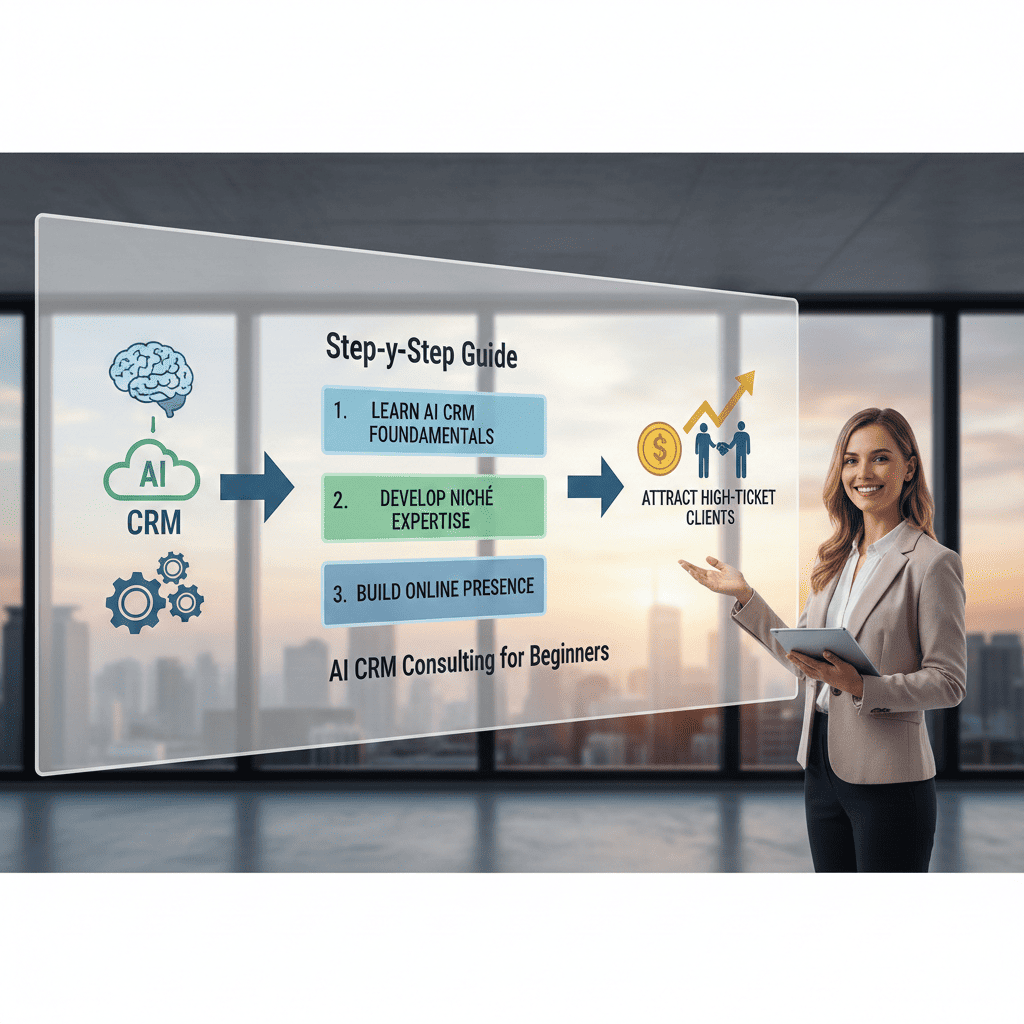
AI CRM Consulting for Beginners The digital transformation wave has created an unprecedented demand for specialized consultants who can bridge the gap between cutting-edge AI technology and customer relationship management systems. AI CRM Consulting for Beginners represents one of the most lucrative opportunities in the modern business landscape, with companies desperately seeking experts who can help them leverage artificial intelligence to transform their customer relationships and drive exponential growth.
If you’re considering entering this high-demand field, you’re positioning yourself at the intersection of two powerful forces: the explosive growth of AI technology and the perpetual need for businesses to better understand and serve their customers. This comprehensive guide will walk you through every step of building a profitable AI CRM consulting practice from scratch, even if you’re just starting out.
1. Understanding the AI CRM Consulting Landscape
Before diving into the tactical aspects of building your consulting business, it’s essential to grasp what AI CRM Consulting for Beginners truly encompasses and why businesses are willing to pay premium rates for these services.
What AI CRM Consulting Actually Means
AI CRM consulting involves helping businesses implement, optimize, and leverage artificial intelligence within their customer relationship management systems. This goes far beyond simple software installation. You’re helping companies fundamentally transform how they interact with customers, predict behavior, automate processes, and extract actionable insights from their data.
Modern CRM platforms like Salesforce, HubSpot, Zoho, and Microsoft Dynamics have integrated sophisticated AI capabilities including predictive analytics, natural language processing, automated lead scoring, and intelligent recommendations. Your role as a consultant is to help businesses unlock these capabilities and align them with strategic objectives.
Why Companies Pay Premium Rates
The demand for AI CRM expertise stems from a critical gap in the market. Most businesses understand that AI-powered CRM systems can revolutionize their operations, but they lack the in-house expertise to make it happen. They’re facing challenges like fragmented customer data, inefficient sales processes, poor customer retention, and inability to scale personalized experiences.
When you can demonstrate the ability to solve these problems, clients readily invest significant budgets because the return on investment is measurable and substantial. Companies have seen AI-powered CRM implementations reduce customer acquisition costs by up to forty percent, increase sales team productivity by thirty percent, and improve customer retention rates by twenty-five percent or more.
The Current Market Opportunity
AI CRM Consulting for Beginners The global AI in CRM market is experiencing explosive growth, projected to reach over thirty-five billion dollars by 2028. This expansion is driven by increasing adoption across industries from healthcare and finance to retail and manufacturing. Small and medium-sized businesses are particularly hungry for guidance as they recognize that AI CRM capabilities are no longer exclusive to enterprise-level organizations.
2. Building Your Foundation Knowledge
Success in AI CRM Consulting for Beginners requires developing a solid foundation across multiple disciplines. You don’t need to become a data scientist or software engineer, but you do need strategic knowledge in specific areas.
Master Core CRM Concepts
Begin by thoroughly understanding traditional CRM fundamentals. Study the customer lifecycle from awareness through advocacy. Learn about sales pipeline management, marketing automation, customer service workflows, and data management principles. Understand key metrics like customer lifetime value, churn rate, conversion rates, and net promoter scores.
Familiarize yourself with leading CRM platforms. While you don’t need to master every system, develop working knowledge of at least two or three major platforms. HubSpot offers excellent free certifications and hands-on experience. Salesforce provides Trailhead, a comprehensive learning platform with practical exercises. These certifications not only build your skills but also add credibility when approaching potential clients.
Develop AI Literacy
AI CRM Consulting for Beginners You don’t need a computer science degree, but you must understand how AI technologies work at a conceptual level. Focus on understanding machine learning fundamentals, the difference between supervised and unsupervised learning, and how neural networks process information. Learn about natural language processing and how it enables chatbots and sentiment analysis.
Study specific AI applications in CRM contexts. This includes predictive lead scoring that identifies which prospects are most likely to convert, churn prediction models that flag customers at risk of leaving, recommendation engines that suggest relevant products or content, and conversational AI that handles customer inquiries through intelligent chatbots.
Understand Data Strategy
AI systems are only as good as the data they’re trained on. Develop knowledge around data quality principles, including accuracy, completeness, consistency, and timeliness. Learn about data integration challenges when connecting multiple systems and data sources. Understand privacy regulations like GDPR and CCPA that govern how customer data can be collected and used.
Study data architecture basics including the difference between data warehouses and data lakes, how APIs enable system integration, and the importance of establishing single sources of truth for customer information.
Study Business Strategy
Remember that technology is merely a tool for achieving business objectives. Develop strong business acumen by understanding common challenges across different industries. Study how various business models work, from subscription-based SaaS companies to traditional retail operations. Learn to speak the language of business leaders by becoming comfortable with financial metrics, strategic planning concepts, and organizational change management.
3. Identifying Your Niche and Positioning
One of the biggest mistakes beginners make is trying to serve everyone. The path to attracting high-ticket clients through AI CRM Consulting for Beginners requires sharp positioning and niche focus.
Choose Your Industry Focus
Select one or two industries where you’ll concentrate your efforts. This specialization allows you to develop deep expertise in industry-specific challenges, regulations, and best practices. You’ll understand the unique sales cycles, customer behaviors, and competitive dynamics that shape how CRM systems should be configured and optimized.
Consider industries experiencing rapid digital transformation such as healthcare providers modernizing patient engagement, financial services firms enhancing client relationships while maintaining compliance, real estate companies managing complex multi-touch sales processes, or professional services firms tracking intricate client projects and relationships.
Your industry choice might be influenced by your previous work experience, existing relationships, or simply genuine interest in learning about that sector. Whatever you choose, commit to becoming the go-to expert for AI CRM solutions in that space.
Define Your Service Offering
Clarify exactly what transformation you help clients achieve. Are you specializing in sales acceleration by implementing predictive lead scoring and intelligent pipeline management? Do you focus on customer retention by building churn prediction models and automated engagement campaigns? Perhaps you concentrate on service excellence through AI-powered chatbots and intelligent case routing.
Developing a signature methodology or framework strengthens your positioning. Create a named process that describes your approach to assessing, implementing, and optimizing AI CRM solutions. This proprietary system becomes part of your brand and makes your offering more tangible and memorable.
Craft Your Value Proposition
Your value proposition should clearly articulate the specific, measurable outcomes clients can expect. Instead of vague promises about “improving customer relationships,” speak in concrete terms about increasing qualified leads by a specific percentage, reducing customer acquisition costs, accelerating sales cycles, or improving customer retention rates.
Frame your positioning around business results rather than technical capabilities. Decision-makers care less about the sophisticated algorithms you’ll implement and more about hitting revenue targets, reducing costs, and gaining competitive advantages.
4. Developing Your Service Packages
High-ticket clients expect structured, professional service offerings. Creating well-defined packages makes it easier for prospects to understand your value and commit to working with you.
Create Tiered Service Levels
AI CRM Consulting for Beginners Develop three distinct service packages at different price points and scope levels. This tiered approach gives prospects choices while guiding them toward the option that best fits their needs and budget.
Your foundational package might include a comprehensive AI CRM assessment and strategic roadmap. You audit their current CRM usage, identify AI opportunities, evaluate data quality, and deliver a detailed implementation plan with prioritized recommendations. This engagement typically spans three to four weeks and provides immense value while requiring a relatively modest time investment from you.
The mid-tier package builds on the assessment by including hands-on implementation support. You work alongside their team to configure AI features, integrate data sources, build automation workflows, and train users. This might span two to three months and include ongoing optimization and adjustment.
Your premium package offers comprehensive transformation including everything in lower tiers plus ongoing strategic advisory, continuous optimization, advanced custom integrations, and possibly fractional CRM leadership where you serve as an outsourced head of CRM operations.
Define Deliverables and Timelines
Be extremely specific about what clients receive at each service level. Create detailed deliverable lists that might include written assessment reports with findings and recommendations, configuration documentation showing exactly how systems were set up, training materials and recorded sessions for ongoing reference, and dashboard templates for monitoring key metrics.
Establish clear timelines with specific milestones. Clients appreciate knowing exactly what to expect and when. Build in checkpoints for review and approval to ensure alignment throughout the engagement.
Price for Value, Not Hours
One of the defining characteristics of high-ticket consulting is value-based pricing rather than hourly rates. When you price based on hours, you commoditize your expertise and cap your earning potential. When you price based on the value you create, your compensation aligns with the results you deliver.
Consider that implementing AI-powered lead scoring might save a client hundreds of hours in sales productivity annually while simultaneously increasing conversion rates. If that translates to an additional million dollars in revenue, a fifty-thousand-dollar consulting fee represents exceptional ROI. Price your services with this value creation in mind.
For AI CRM Consulting for Beginners just starting out, you might begin with more modest pricing to build your portfolio and testimonials, but plan to increase rates significantly as you gain experience and proven results.
5. Building Your Authority and Credibility
High-ticket clients work with recognized experts. Even as a beginner, you can establish authority through strategic content creation and thought leadership.
Create Educational Content
Develop a content strategy that demonstrates your expertise and provides genuine value to your target audience. Write detailed blog posts addressing specific challenges your ideal clients face. Topics might include evaluating AI readiness in CRM systems, preparing data for AI implementation, or measuring ROI from AI CRM investments.
Create case studies that walk through real-world scenarios, even if you need to anonymize client details or use hypothetical examples that reflect common situations. Break down complex concepts into understandable frameworks that business leaders can apply.
Consider developing longer-form content like comprehensive guides, white papers, or even a book positioning you as the definitive expert in your niche. These substantial content pieces serve as powerful credibility markers and lead generation tools.
Leverage LinkedIn Strategically
LinkedIn is the primary professional network where your target clients spend time. Optimize your profile to clearly communicate your specialization and the results you deliver. Your headline should immediately convey what you do and for whom, rather than just listing your job title.
Post consistently with a mix of educational content, industry insights, and perspectives on emerging trends. Share your point of view on how AI is transforming CRM in your target industry. Engage meaningfully with content from prospects and industry leaders by leaving thoughtful comments that demonstrate your expertise.
Use LinkedIn’s publishing platform to share longer articles that establish thought leadership. The algorithm favors content that generates engagement, so focus on providing genuine value that prompts discussion.
Speak and Present
Position yourself as a speaker at industry events, conferences, and webinars. Start with smaller local events or online gatherings, then work your way up to larger venues. Speaking establishes you as an authority while putting you in front of concentrated groups of ideal prospects.
Offer to present webinars for complementary service providers who serve your target market. For example, if you specialize in AI CRM for real estate, partner with real estate marketing agencies to co-host educational sessions for their client base.
Earn Relevant Certifications
Pursue certifications from major CRM platforms and AI technology providers. These credentials signal expertise and commitment to prospects who are evaluating consultants. Many certifications also grant you access to vendor partner programs that can provide leads, resources, and additional credibility.
Consider certifications in change management, business analysis, or project management that complement your technical CRM skills and position you as a complete solution provider rather than just a technical implementer.
6. Generating High-Quality Leads
Success in AI CRM Consulting for Beginners depends on consistently attracting qualified prospects who have both the need for your services and the budget to invest appropriately.
Identify Your Ideal Client Profile
Get crystal clear on who you’re trying to reach. Define characteristics including company size measured by revenue and employee count, industry and sub-sector, current technology stack and CRM maturity level, and specific pain points your services address.
Understanding your ideal client profile allows you to focus your marketing efforts and craft messaging that resonates with the right audience. You’ll waste less time with unqualified prospects and have more productive conversations with companies that are genuinely ready for your services.
Implement Outbound Strategies
Develop a systematic approach to proactive outreach. Build targeted lists of companies matching your ideal client profile using tools like LinkedIn Sales Navigator, industry directories, and business databases. Research each prospect to understand their current situation, recent news, and specific challenges before reaching out.
Craft personalized outreach messages that reference something specific about their business and articulate a relevant insight or observation. Rather than immediately pitching your services, lead with value by sharing a relevant resource or offering a specific observation about an opportunity you’ve identified.
Follow up persistently but respectfully. Most successful conversations happen after multiple touchpoints, yet most people give up after one or two attempts. Develop a multi-touch sequence that provides value at each interaction.
Create Inbound Marketing Systems
While outbound efforts generate immediate conversations, inbound marketing builds long-term sustainable lead flow. Develop valuable lead magnets like comprehensive guides, assessment tools, or templates that prospects willingly exchange their contact information to access.
Implement marketing automation to nurture leads over time. Many prospects aren’t ready to engage immediately, but consistent valuable communication keeps you top of mind when their situation changes or their readiness increases.
Optimize your website for conversion with clear calls-to-action, compelling case studies, and easy ways for prospects to take the next step whether that’s scheduling a consultation, downloading a resource, or requesting a proposal.
Leverage Strategic Partnerships
Identify complementary service providers who serve your target market but don’t compete with your offerings. These might include software implementation partners, digital marketing agencies, business consultants, or accounting firms. Develop referral relationships where you exchange leads and potentially collaborate on client engagements.
Many established consulting firms have strong client relationships but lack specialized expertise in AI CRM implementation. Position yourself as a strategic partner who can deliver specialized services to their clients while they maintain the primary relationship.
7. Conducting High-Value Discovery Calls
The discovery call is where prospects become clients. Mastering this conversation is essential for AI CRM Consulting for Beginners looking to close high-ticket engagements.
Prepare Thoroughly
Before every call, research the prospect’s company, industry position, recent news, and potential challenges. Review their website, LinkedIn profiles of key executives, and any content they’ve published. Enter the conversation with informed hypotheses about their situation.
Prepare thoughtful questions that uncover not just surface-level challenges but underlying business drivers and strategic objectives. You’re seeking to understand what success looks like from their perspective and what obstacles stand in the way.
Lead with Strategic Questions
Begin by understanding their current state. Ask about their existing CRM system, how they’re currently using it, what’s working well, and where they’re experiencing friction. Explore their data situation including what sources they have, how clean and organized it is, and what integration challenges exist.
Dig into their business objectives and how CRM supports those goals. What are their growth targets? What customer experience improvements are they trying to achieve? How do they measure success in customer relationships?
Uncover past attempts and challenges. Have they tried to implement AI capabilities before? What worked and what didn’t? Understanding their history helps you position your approach more effectively.
Demonstrate Expertise Through Insights
Rather than simply collecting information, provide valuable insights during the discovery conversation. When they describe a challenge, offer observations about why that problem commonly occurs and what typically needs to happen to resolve it. Share relevant examples from similar situations you’ve encountered.
This consultative approach transforms the discovery call from an interrogation into a valuable conversation where the prospect begins experiencing your expertise firsthand. They should leave the call feeling like they’ve already gained valuable perspectives regardless of whether they ultimately hire you.
Qualify Budget and Decision Process
High-ticket consultants must be comfortable discussing money and decision-making authority. Without being pushy, you need to understand whether the prospect has realistic budget expectations for the transformation they’re seeking and whether you’re speaking with someone who can make or heavily influence the buying decision.
Ask about their investment framework for this type of project. Have they allocated budget? What’s the approval process? Who else needs to be involved in the decision? Understanding these factors helps you navigate the sales process efficiently.
Present Next Steps Clearly
Conclude the discovery call with crystal-clear next steps. If the opportunity seems like a strong fit, outline what happens next whether that’s a formal proposal, a follow-up conversation with additional stakeholders, or a more detailed assessment phase. Be specific about timing and what you’ll need from them.
If the opportunity isn’t a good fit, be honest about that. Recommending an alternative approach or referring them to someone better suited to their needs builds long-term credibility even if you don’t win this particular engagement.
8. Delivering Exceptional Results
Once you’ve landed a high-ticket client, exceptional delivery is what generates referrals, testimonials, and repeat business that make your AI CRM Consulting for Beginners practice sustainable and profitable.
Start with Comprehensive Discovery
Even if you’ve done preliminary discovery during the sales process, begin every engagement with a thorough assessment phase. Document current state processes, interview key stakeholders across sales, marketing, and customer service functions, and audit data quality and integration points.
Create a detailed findings report that clearly articulates current capabilities, gaps and opportunities, and recommended priorities. This document becomes your roadmap for the entire engagement and ensures complete alignment with client expectations.
Communicate Proactively
Establish regular communication cadences with weekly status updates on progress, challenges, and upcoming milestones. Don’t wait for clients to ask for updates or wonder what’s happening. Proactive communication builds trust and confidence.
When challenges arise, as they inevitably do in any complex project, communicate them quickly along with proposed solutions. Clients appreciate consultants who surface and solve problems rather than letting issues fester.
Focus on Adoption and Change Management
Technical implementation is only part of successful AI CRM consulting. The more significant challenge often involves driving user adoption and managing organizational change. People naturally resist new ways of working, especially when technology changes their established routines.
Develop comprehensive training programs that go beyond simple software tutorials to address why changes are happening and how they benefit individual users. Create role-specific training that shows each user group exactly how AI capabilities will make their jobs easier and more effective.
Identify champions within the client organization who can advocate for the new approach and help drive adoption among their peers. Work closely with these champions to ensure they feel supported and empowered.
Measure and Report Results
Establish clear success metrics at the engagement outset, then track and report on these metrics throughout the project and after go-live. Demonstrate the tangible business impact of your work through increased conversion rates, reduced customer acquisition costs, improved retention rates, or enhanced sales productivity.
Create executive dashboards that visualize key performance indicators and make it easy for stakeholders to see the value being created. Regular reporting on results reinforces your value and justifies the investment the client has made.
Plan for Ongoing Optimization
AI CRM systems require continuous refinement. Machine learning models need retraining as new data becomes available, automation workflows need adjustment based on performance, and new capabilities should be layered in over time as users become more sophisticated.
Position yourself for ongoing advisory relationships rather than one-and-done projects. Clients who experience strong results from your initial engagement will gladly invest in continued optimization and strategic guidance.
Conclusion: Your Path Forward in AI CRM Consulting
AI CRM Consulting for Beginners represents an extraordinary opportunity to build a highly profitable, intellectually stimulating consulting practice serving clients who desperately need your expertise. The businesses that successfully harness AI within their customer relationship management systems will gain significant competitive advantages, and they’re willing to invest substantial resources to make that happen.
Your journey begins with building foundational knowledge across CRM platforms, AI technologies, and business strategy. From there, sharp positioning in a specific niche allows you to stand out in a crowded market and command premium rates. Consistent authority-building through content, speaking, and thought leadership establishes the credibility that high-ticket clients demand.
Systematic lead generation combining both outbound and inbound strategies fills your pipeline with qualified opportunities. Mastering the discovery conversation converts prospects into clients, and exceptional delivery generates the referrals and testimonials that make your business sustainable long-term.
The market opportunity is significant and growing. Businesses across every industry are racing to leverage AI capabilities before their competitors do. Those who get it right will thrive, while those who lag behind will struggle. As someone who can guide companies through this transformation, you’re providing immense value that warrants premium compensation.
Start by taking action on the fundamentals outlined in this guide. Choose your niche, build your knowledge in that area, and begin creating content that demonstrates your expertise. Reach out to potential clients with valuable insights rather than generic pitches. Each conversation, each piece of content, and each small engagement builds toward the thriving consulting practice you’re creating.
The path of AI CRM Consulting for Beginners may seem daunting at first, but remember that every successful consultant started exactly where you are now. The difference between those who succeed and those who don’t isn’t talent or luck, but rather consistent action, commitment to continuous learning, and persistence in the face of inevitable challenges. Your first high-ticket client is out there right now, searching for someone with exactly the expertise you’re building. Get started today, and that client could be yours sooner than you think.
Also read this:
Top AI CRM Tools for Lead Generation & Sales Automation in 2025
12 AI Automation Workflows Every Small Business Should Use
Start a Profitable AI-Automated Dropshipping Business in 2025