
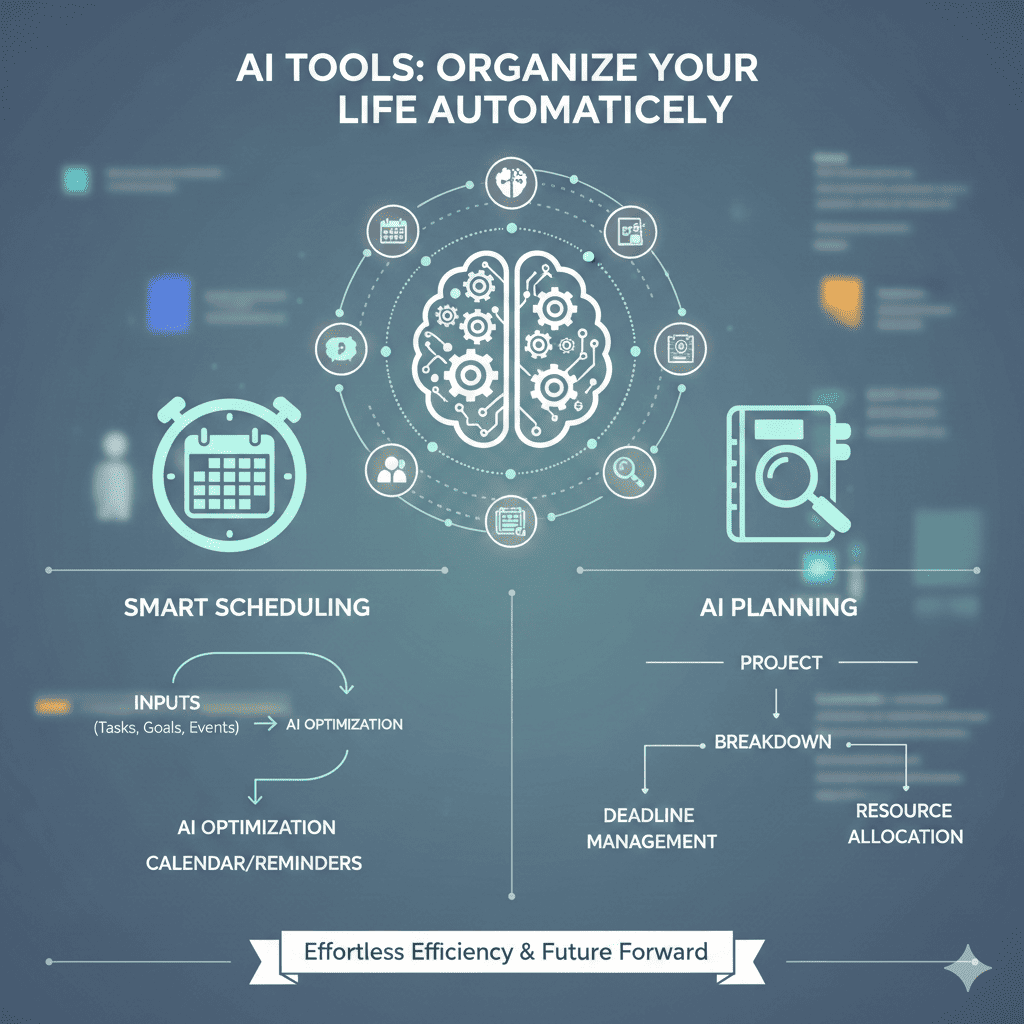
Life moves fast, and keeping everything organized feels like a full-time job. Between work commitments, personal appointments, household tasks, fitness goals, and social obligations, the mental load of managing it all can be exhausting. But what if technology could lift that burden? When you discover AI Tools That Organize Your Life Automatically, you unlock a new level of freedom where intelligent systems handle the complexity while you focus on living.
This comprehensive guide explores the revolutionary world of AI-powered organization, revealing how smart scheduling and planning tools can transform chaos into clarity. Whether you’re drowning in calendar conflicts, forgetting important tasks, or simply feeling overwhelmed by life’s demands, these AI solutions adapt to your unique patterns and preferences to create seamless daily routines.
The Revolution in Personal Organization: Why AI Changes Everything
Traditional organization methods demand constant attention and manual updates. You write things down, set reminders, check multiple calendars, and still things slip through the cracks. The problem isn’t your effort—it’s that human-managed systems can’t adapt in real-time to life’s constant changes.
AI Tools That Organize Your Life Automatically represent a fundamental shift in how we approach personal management. These systems don’t just store information—they understand context, predict needs, and make intelligent decisions on your behalf. When a meeting runs late, AI automatically adjusts your entire afternoon. When you consistently skip morning workouts, it learns to schedule them at times you actually follow through.
The difference is profound. Traditional planners are static containers for your intentions. AI organization systems are dynamic partners that learn, adapt, and proactively solve problems before you even notice them. They reduce cognitive load, eliminate decision fatigue, and ensure nothing important falls through the cracks.
1. Understanding the Core Components of AI-Powered Life Organization
Before diving into specific tools, it’s essential to understand what makes AI organization fundamentally different and more powerful than conventional approaches.
Intelligent pattern recognition transforms your data into insights. These systems analyze months of your behavior to identify patterns you might not consciously recognize. Perhaps you’re most productive for creative work between 9 AM and 11 AM, or you consistently underestimate how long certain tasks take. AI detects these patterns and optimizes your schedule accordingly.
Predictive automation anticipates your needs before you articulate them. Based on historical data and contextual clues, AI can predict what you’ll need next. If you have a client meeting at 2 PM, the system might automatically block 30 minutes beforehand for preparation and pull relevant documents to the surface.
Dynamic rescheduling adapts to real-time changes. Life doesn’t follow a script, and AI organization tools understand this. When unexpected situations arise, these systems can instantly reorganize your entire schedule, moving lower-priority items and finding new slots for important tasks.
Cross-platform synchronization creates a unified view. Modern life happens across dozens of apps and platforms. AI organization tools connect these disparate systems, ensuring information flows seamlessly between your calendar, task manager, email, and other productivity tools.
Natural language processing simplifies interaction. Instead of navigating complex menus and forms, you can tell AI what you need in plain language. “Schedule a team meeting next week when everyone’s available” or “Remind me to call Mom on her birthday” becomes all the interface you need.
2. Smart Calendar Management and Scheduling Intelligence
Your calendar is the foundation of an organized life, and AI has revolutionized how calendars work. These aren’t just digital day planners—they’re intelligent scheduling assistants that optimize your time.
Automated meeting coordination eliminates endless email chains. Tools like Clockwise, Reclaim AI, and Motion analyze everyone’s availability, preferences, and working patterns to find optimal meeting times. They can identify that Friday afternoons are low-productivity zones for your team and suggest Tuesday morning instead. When you discover AI Tools That Organize Your Life Automatically, scheduling conflicts become a thing of the past.
Smart time blocking protects your most valuable hours. AI scheduling tools understand that not all hours are equal. They automatically create protected blocks for deep work during your peak productivity periods and batch meetings during times when focused work is harder. Some tools even analyze your meeting patterns to identify “meeting creep” and help you reclaim time.
Buffer time management prevents back-to-back burnout. Running from one meeting to another without breaks leads to exhaustion and poor performance. AI calendars automatically insert buffer time between commitments, giving you time to process, travel, or simply breathe. The system learns your preferred buffer lengths and adjusts based on meeting types.
Intelligent conflict resolution makes difficult decisions easier. When calendar conflicts arise, AI doesn’t just alert you—it suggests solutions. It might identify which meeting is less critical based on attendees, topics, and historical patterns, or find alternative times when rescheduling makes sense.
Travel time calculations ensure realistic scheduling. AI calendar tools integrate with mapping services to automatically calculate travel time between appointments. If you have a downtown meeting at 2 PM and another across town at 3 PM, the system flags the impossibility and suggests adjustments.
Habit and routine scheduling builds consistency. For recurring activities like exercise, meditation, or family time, AI finds optimal slots based on when you’re most likely to follow through. It learns that you never actually make 6 AM yoga classes and stops suggesting them, instead finding afternoon slots where your adherence is 90%.
3. Intelligent Task Management That Adapts to You
Task lists are where good intentions go to die—unless you’re using AI to manage them intelligently. Modern task management goes far beyond simple to-do lists.
Automatic task prioritization cuts through the noise. When everything feels urgent, nothing gets done well. AI analyzes factors like deadlines, importance, dependencies, and your energy levels to create a realistic priority queue. AI Tools That Organize Your Life Automatically understand that the “urgent” email can wait when you’re in the middle of deep creative work on a project deadline.
Smart task scheduling finds the perfect time for everything. Rather than manually deciding when to tackle each task, AI schedules them based on estimated duration, complexity, and optimal timing. Quick administrative tasks might get batched into 15-minute blocks, while complex projects get scheduled during your peak focus hours.
Energy-aware planning matches tasks to your natural rhythms. AI learns your energy patterns throughout the day and week. Creative work gets scheduled when you’re sharp, routine tasks when you’re in maintenance mode, and meetings when you’re socially energized. This alignment dramatically improves both productivity and enjoyment.
Automatic deadline estimation prevents overcommitment. Based on historical data about how long similar tasks actually took, AI provides realistic time estimates. When you consider adding a new project, the system can show you exactly how it impacts existing commitments and whether you’re setting yourself up for overwhelm.
Dependency tracking ensures proper sequencing. Some tasks can’t start until others finish. AI automatically manages these dependencies, moving dependent tasks when prerequisite work delays, and ensuring you’re never blocked waiting for something you forgot to do first.
Collaborative task management streamlines teamwork. For shared responsibilities, AI can suggest task assignments based on workload, expertise, and availability. It can also automate status updates, so team members stay informed without constant check-ins.
4. Email and Communication Organization Systems
Email and messages are productivity killers for most people, but AI has transformed communication management from burden to streamlined process.
Intelligent email categorization surfaces what matters. Tools like Superhuman, SaneBox, and Google’s AI features automatically categorize incoming messages by importance, type, and required action. Newsletter subscriptions, promotional emails, and FYI messages get filtered away from critical communications requiring your attention.
Smart reply suggestions speed up responses. AI analyzes incoming messages and suggests contextually appropriate responses. For routine inquiries, you can send a thoughtful reply with a single tap. The system learns your communication style and generates responses that sound like you.
Automatic follow-up tracking prevents things from falling through cracks. When you send an email expecting a response, AI can automatically track it and remind you to follow up if you don’t hear back. Some tools even draft the follow-up message for you based on the original conversation.
Meeting scheduling from email becomes instant. When someone suggests meeting, AI can parse the email, identify potential times, check your availability, and either automatically book a slot or send availability without you touching your calendar.
Email batching and delivery timing reduces interruptions. Rather than constant notifications, AI can hold non-urgent emails and deliver them during designated communication windows. Some tools even send your outgoing messages at optimal times for recipient engagement based on their typical response patterns.
Priority inbox management focuses your attention. Instead of chronological email lists, AI surfaces messages requiring immediate attention, groups related conversations, and hides everything that can wait. This transforms email from an overwhelming flood to a manageable stream.
5. Financial Planning and Budget Organization
Money management requires consistent attention to countless details—perfect territory for AI automation to transform your financial life.
Automatic expense tracking eliminates manual entry. Apps like Mint, YNAB with AI features, or Copilot connect to your accounts and automatically categorize every transaction. AI learns your spending patterns and categorizes new merchants correctly, even recognizing that the coffee shop you visit is a regular expense versus a one-time purchase.
Smart budget creation based on actual behavior. Rather than aspirational budgets you’ll never follow, AI analyzes your real spending patterns and creates realistic budgets with room for occasional splurges. It identifies areas where you’re consistently overspending and suggests achievable adjustments.
Bill payment automation and optimization. AI tracks all recurring bills, schedules automatic payments, and can even identify opportunities to save money by switching service providers or negotiating better rates. Some services use AI to actually negotiate bills on your behalf.
Savings goal management with intelligent contributions. Set financial goals like emergency funds or vacation savings, and AI automatically transfers money when you can afford it. The system learns your cash flow patterns and moves money when your balance is high, avoiding transfers that might cause overdrafts.
Investment portfolio rebalancing and recommendations. AI investment tools analyze your portfolio, risk tolerance, and goals to suggest optimal allocations. They can automatically rebalance portfolios, harvest tax losses, and adjust strategies as your life circumstances change.
Spending alerts and anomaly detection. When AI Tools That Organize Your Life Automatically notice unusual spending patterns or potential fraudulent charges, they alert you immediately. They can distinguish between unusual-but-legitimate purchases and genuine security concerns based on your history.
6. Health and Wellness Organization Through AI
Personal health involves tracking medications, appointments, fitness activities, nutrition, and sleep—a complex web that AI can beautifully orchestrate.
Medication reminders and adherence tracking. AI health apps don’t just remind you to take medications—they learn when you actually take them and adjust reminder timing accordingly. They can track refills, identify potential drug interactions, and send alerts when you’re running low.
Intelligent fitness scheduling that actually works. Generic “exercise three times weekly” plans fail because they ignore your reality. AI fitness schedulers find workout windows when you’re most likely to follow through, based on your energy patterns, calendar commitments, and past behavior. They reschedule workouts automatically when meetings run late.
Nutrition planning with automatic grocery lists. AI meal planning tools create weekly menus based on your dietary preferences, health goals, and schedule. They generate shopping lists organized by store layout and can even integrate with grocery delivery services for one-click ordering.
Sleep optimization through pattern analysis. AI sleep trackers analyze your sleep patterns and provide personalized recommendations for improving sleep quality. They might suggest optimal bedtimes, identify factors disrupting your sleep, and even adjust your morning schedule if you had a rough night.
Appointment coordination across healthcare providers. Managing specialists, dentists, therapists, and routine checkups becomes simple when AI tracks all your healthcare providers, schedules recommended follow-ups, and ensures you don’t miss important preventive care appointments.
Health metric aggregation and insights. With data from fitness trackers, smart scales, glucose monitors, and other devices, AI creates a comprehensive health dashboard showing trends, correlations, and areas needing attention.
7. Home and Household Management Automation
Running a household involves countless tasks that AI can coordinate seamlessly, from maintenance schedules to grocery management.
Smart home maintenance scheduling prevents emergencies. AI household management apps track when appliances need service, filters need changing, and seasonal maintenance is due. They can automatically schedule service appointments, send reminders before tasks are overdue, and even order replacement parts when needed.
Grocery and pantry management with intelligent reordering. Connect your grocery app to recipes and meal plans, and AI tracks what you’re running low on. Some systems integrate with smart refrigerators or pantry cameras to automatically add items to shopping lists when supplies dwindle.
Family calendar coordination for complex households. When you’re managing schedules for multiple family members, AI becomes essential. It tracks everyone’s commitments, identifies conflicts, coordinates carpools, and ensures someone’s always available for kid pickups and activities.
Chore scheduling and rotation management. AI can create fair chore distributions, rotate responsibilities, and send reminders to family members. It learns which tasks take longer than expected and adjusts schedules accordingly.
Home inventory tracking for insurance and replacement. AI-powered home inventory apps catalog your possessions with photos and values. If disaster strikes, you have immediate documentation for insurance claims. The system can also alert you when warranties are expiring or when it’s time to replace items based on typical lifespans.
Pet care coordination and reminders. From feeding schedules to vet appointments, grooming sessions to medication reminders, AI keeps all pet care organized. It can even coordinate pet-sitting arrangements when you travel.
8. Social Life and Relationship Management
Staying connected with friends and family takes intentional effort. When you leverage AI Tools That Organize Your Life Automatically, maintaining relationships becomes systematic rather than haphazard.
Birthday and anniversary tracking with preparation reminders. AI doesn’t just remind you on the day—it gives you lead time to buy gifts, make reservations, or plan celebrations. It can even suggest gift ideas based on the person’s interests and your past successful gifts.
Regular check-in scheduling for important relationships. Identify people you want to stay in regular contact with, and AI schedules check-in reminders based on how frequently you typically connect. If you usually call your parents weekly, it notices when two weeks pass and prompts you.
Event planning assistance and invitation management. Planning gatherings involves countless details. AI helps manage guest lists, dietary restrictions, RSVPs, and logistics. It can suggest optimal dates by analyzing attendees’ calendars and send automated reminders as events approach.
Gift tracking prevents duplicate or forgotten occasions. AI maintains a database of gifts you’ve given and received, helping you avoid repetition and remember what people appreciated. It can also track gift ideas throughout the year when people mention wanting something.
Travel coordination for group trips. Planning trips with friends involves coordinating schedules, preferences, and budgets. AI can poll participants, find dates that work for everyone, suggest destinations matching everyone’s interests, and track shared expenses.
Social commitment balancing prevents overextension. By tracking your social energy and calendar load, AI can warn when you’re overcommitting to social obligations and help maintain a healthy balance between socializing and personal time.
9. Learning and Personal Development Organization
Growth requires consistent effort across multiple areas. AI helps you maintain progress on courses, skills, hobbies, and personal goals without overwhelming your schedule.
Learning schedule optimization fits education into busy life. Whether you’re taking online courses, learning languages, or developing new skills, AI finds realistic study windows based on your energy and availability. It adjusts when life gets hectic and intensifies when you have capacity.
Progress tracking across multiple learning platforms. AI aggregates data from Coursera, Duolingo, Skillshare, and other platforms to give you a unified view of your learning progress. It identifies areas where you’re falling behind and suggests adjustments to keep all goals moving forward.
Spaced repetition scheduling for optimal retention. For language learning, exam preparation, or memorization tasks, AI implements scientifically-proven spaced repetition schedules. It surfaces information exactly when you’re about to forget it, maximizing long-term retention.
Project-based learning coordination. When learning involves hands-on projects, AI helps break them into manageable phases, schedules dedicated work time, and tracks materials or resources needed.
Reading and content consumption management. AI reading apps curate articles, books, and videos matching your interests and learning goals. They schedule reading time, surface saved content when relevant, and help you maintain a consistent learning habit.
Accountability and motivation systems. Track progress toward learning goals with AI that celebrates wins, identifies plateaus, and suggests interventions when motivation wanes. Some systems can even coordinate accountability partnerships with others pursuing similar goals.
10. Integration and Ecosystem Building for Complete Life Organization
The real power emerges when individual AI tools work together as an integrated system, creating a comprehensive organizational ecosystem.
Creating your central nervous system of organization. Choose a core platform—often a calendar or project management tool—as your single source of truth. Other tools feed information to and from this hub, ensuring nothing gets lost in disconnected silos.
Automation connections between tools multiply effectiveness. Use platforms like Zapier or Make to create automatic workflows. When a new task appears in your project manager, it can automatically block calendar time. When you mark an email as important, it can create a task with full context attached.
Voice assistant integration enables hands-free management. Connect AI organization tools to Alexa, Google Assistant, or Siri for voice-based interaction. Add tasks while driving, check your schedule while cooking, or get briefings during your morning routine without touching a device.
Mobile and desktop synchronization ensures access everywhere. Your organizational system should work seamlessly whether you’re at your desk, on your phone, or using a tablet. Changes made anywhere appear everywhere instantly.
Privacy and security considerations in an AI-organized life. These tools access significant personal information. Use services with strong encryption, review permissions carefully, enable two-factor authentication, and understand each platform’s data policies.
Regular system audits maintain effectiveness. Schedule monthly reviews to evaluate whether your tools still serve your needs. As life changes, your organizational requirements evolve. What worked brilliantly last year might need adjustment now.
Customization and personalization over time. The longer you use AI Tools That Organize Your Life Automatically, the more personalized they become. Invest time in providing feedback, adjusting settings, and teaching the AI your preferences. This upfront investment pays exponential dividends as the system becomes increasingly tailored to your unique life.
Measuring Success: How to Know Your AI Organization System Works
After implementing these tools, evaluate their impact to ensure they’re delivering real value rather than just adding complexity.
Time savings should be measurable and significant. Track how much time you spend on organizational tasks before and after implementation. Most people find they reclaim 5-15 hours weekly that previously went to scheduling, planning, and coordinating.
Stress reduction appears in how you feel about your commitments. Do you go to bed confident everything important is handled? Do you wake up knowing exactly what your day holds? Reduced anxiety about forgotten tasks or missed appointments indicates your system is working.
Completion rates for important goals increase. Track progress on projects, habits, and goals. Effective AI organization means you’re actually accomplishing what matters rather than just staying busy with urgent trivia.
Relationships improve through consistent attention. When AI helps you stay in touch with important people and remember significant occasions, your relationships deepen. Fewer missed birthdays and more regular connections are tangible benefits.
Better work-life balance becomes achievable. One of the greatest benefits of AI Tools That Organize Your Life Automatically is the ability to truly disconnect during personal time because you trust your system to handle details and remind you when needed.
Financial health improves through better tracking and planning. Reduced missed payments, increased savings, and more conscious spending all indicate your financial AI tools are working effectively.
Starting Your Journey: Implementation Strategy for AI-Powered Life Organization
You’re convinced of the benefits but might feel overwhelmed by where to start. Here’s a strategic approach to implementation that builds momentum without creating chaos.
Begin with your biggest pain point for immediate relief. If calendar chaos is your nemesis, start with smart scheduling. If email drowns you, implement AI email management first. Early wins create motivation for further implementation.
Implement one category at a time over three months. Month one might focus on calendar and scheduling. Month two adds task management. Month three introduces email organization. This staged approach prevents overwhelm and allows each system to stabilize.
Expect a learning curve and temporary productivity dip. The first few weeks require time investment as you configure tools, migrate data, and learn new workflows. Schedule this implementation during less intense work periods if possible.
Start with free or trial versions before committing. Most AI organization tools offer free tiers or trial periods. Test thoroughly before paying for annual subscriptions. What works brilliantly for others might not suit your specific needs.
Involve others if you’re organizing shared life aspects. If you’re managing household or family schedules, get buy-in from everyone affected. Tools only work when all stakeholders participate and trust the system.
Build in contingency plans for when technology fails. Even the best AI systems occasionally have outages or bugs. Maintain basic backup systems for truly critical information until you’re confident in the reliability of your AI tools.
The Future Is Already Here: Embracing AI-Organized Living
The transformation that happens when you discover AI Tools That Organize Your Life Automatically extends far beyond saved time or reduced stress. It fundamentally changes your relationship with your own life. Instead of constantly reacting to demands and struggling to keep all the plates spinning, you move into a proactive mode where intelligent systems handle complexity while you focus on what truly matters.
This isn’t about becoming dependent on technology—it’s about using technology as it was meant to be used: as a tool that amplifies human capabilities and frees us from tedious management tasks. The goal isn’t perfect organization for its own sake but rather creating space for the relationships, projects, and experiences that make life meaningful.
As AI continues advancing, these organizational capabilities will only improve. The tools will become more intuitive, more predictive, and more seamlessly integrated into the background of our lives. Getting started now means you’ll be ahead of this curve, already benefiting from AI organization while others are still drowning in manual management.
Your organized life awaits. Choose one area where chaos currently reigns, select an AI tool designed to address it, and commit to thirty days of consistent use. You’ll be amazed at how quickly what once seemed impossibly complex becomes elegantly simple. The future of personal organization isn’t about trying harder—it’s about letting AI handle what it does best so you can focus on being fully present in your beautifully organized life.
Also read this:
Step-by-Step Guide to Build Your First AI-Powered Productivity System (Complete Tutorial)
How AI Replaces Repetitive Office Tasks and Saves 10+ Hours Every Week
10 Best AI Automation Workflows for Students, Professionals & Small Businesses