
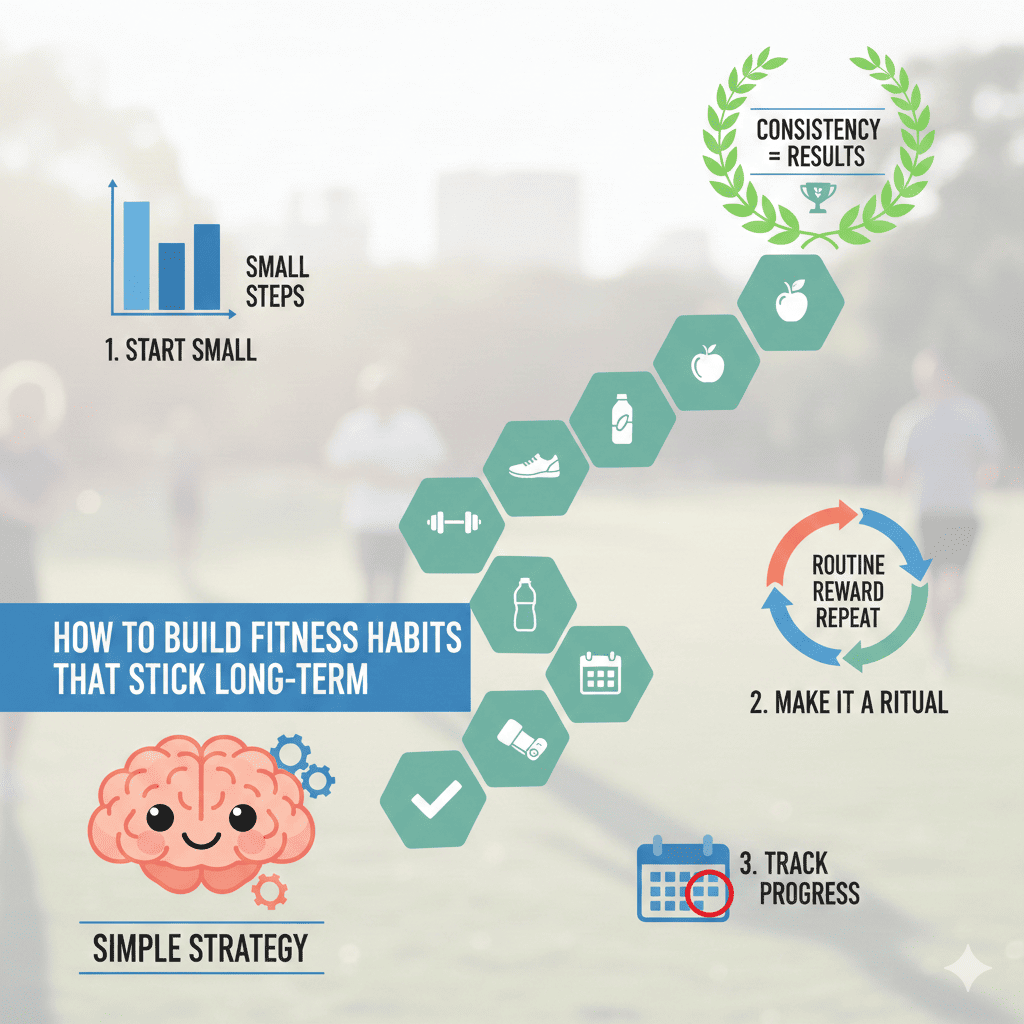
build fitness habits that stick long-term Starting a fitness routine is easy. The excitement of a new beginning, the promise of transformation, and the surge of motivation make those first few workouts feel effortless. But as weeks turn into months, that initial enthusiasm fades, and countless people find themselves back on the couch, their fitness goals abandoned once again. The real challenge isn’t starting—it’s continuing. The secret to lasting change lies in your ability to build fitness habits that stick long-term.
Understanding the science of habit formation and implementing proven strategies can transform your relationship with fitness from a temporary burst of activity into a permanent lifestyle change. This comprehensive guide will walk you through practical, research-backed methods to create sustainable fitness habits that become as automatic as brushing your teeth. Whether you’ve failed at fitness resolutions before or you’re starting fresh, these strategies will help you break the cycle of starting and stopping, finally achieving the consistency that leads to real results.
Understanding the Psychology of Habit Formation
Before diving into specific strategies, it’s crucial to understand how habits actually work. Your brain is a remarkably efficient organ that constantly seeks to conserve energy by creating automated behaviors. This automation process is what transforms conscious actions into unconscious habits.
The Habit Loop Framework
Every habit follows a three-part loop: cue, routine, and reward. The cue triggers your brain to initiate a behavior, the routine is the behavior itself, and the reward is the benefit your brain receives, which reinforces the loop. Understanding this framework is fundamental when you want to build fitness habits that stick long-term.
For example, if you want to establish a morning running habit, your cue might be placing your running shoes beside your bed. The routine is the run itself, and the reward could be the endorphin rush, the satisfaction of checking it off your list, or your morning coffee that you only allow yourself after exercising. By consciously designing these three elements, you take control of the habit formation process.
The Role of Neuroplasticity
Your brain physically changes in response to repeated behaviors through a process called neuroplasticity. Each time you repeat an action, you strengthen the neural pathways associated with that behavior, making it progressively easier and more automatic. This is why the first few weeks of any new habit feel difficult—your brain hasn’t yet built the necessary neural infrastructure.
Research suggests it takes anywhere from 18 to 254 days for a behavior to become automatic, with an average of 66 days. This wide range depends on the complexity of the habit, your consistency, and individual differences. The key takeaway is that habit formation requires patience and persistence through the initial resistance phase.
Motivation Versus Systems
One of the biggest misconceptions about fitness is that motivation is the key to success. In reality, motivation is unreliable and fleeting. Successful people don’t rely on motivation—they rely on systems and habits that function regardless of how they feel on any given day. When you build fitness habits that stick long-term, you create a framework that carries you forward even when motivation is absent.
1. Start Ridiculously Small
The most common mistake people make when establishing fitness habits is starting too big. Ambitious goals feel inspiring, but they’re often the reason habits fail. The principle of starting small isn’t about lowering your standards—it’s about respecting the psychology of behavior change.
The Two-Minute Rule
Make your new fitness habit so easy that you can’t say no. If you want to start exercising regularly, commit to just two minutes of movement. Put on your workout clothes. Do five push-ups. Walk around the block. This might seem insignificant, but you’re not trying to get fit with two minutes of exercise—you’re building the habit of showing up.
The genius of this approach is that it removes the psychological barrier of starting. Once you’re in your workout clothes or you’ve done those first five push-ups, you’ll often naturally continue because you’ve already overcome the hardest part: beginning. Even if you don’t continue, you’ve still reinforced the habit of showing up, which is the foundation everything else builds upon.
Scaling Over Time
After your tiny habit feels automatic—when you no longer debate whether to do it—then gradually increase the difficulty or duration. Add another minute. Include one more exercise. Extend your walk by a block. This progressive approach allows your identity and routines to catch up with your ambitions.
Many fitness enthusiasts report that their most successful transformation began with absurdly small commitments. One person started with the goal of putting on gym clothes each morning with no requirement to actually work out. Within weeks, the habit of getting dressed naturally evolved into regular workouts because the barrier to starting had been eliminated.
Consistency Beats Intensity
In the early stages of habit formation, consistency matters infinitely more than intensity. It’s better to do 10 minutes of exercise every single day than to do intense hour-long workouts three times per week if the latter isn’t sustainable. The daily repetition builds neural pathways faster and establishes the routine more firmly in your identity.
2. Implement Strategic Habit Stacking
Habit stacking is a powerful technique that leverages your existing routines to anchor new behaviors. Since you already have dozens of established habits throughout your day, you can use them as reliable cues for new fitness habits you want to develop.
The Habit Stacking Formula
The formula is simple: “After I [CURRENT HABIT], I will [NEW HABIT].” The existing habit serves as the trigger that prompts your new fitness behavior. This strategy is particularly effective when you want to build fitness habits that stick long-term because it integrates seamlessly into your existing life rather than requiring you to create entirely new time blocks.
For example: “After I pour my morning coffee, I will do 10 squats.” “After I brush my teeth at night, I will do a one-minute plank.” “After I eat lunch, I will take a 10-minute walk.” The existing habit provides both the reminder and the natural transition point for your new behavior.
Choosing the Right Anchor Habits
Select anchor habits that are firmly established, occur at a consistent time, and are closely related to your fitness goal. Your morning coffee happens reliably every day at roughly the same time, making it an excellent anchor. Conversely, “after I feel motivated” is a terrible anchor because it’s inconsistent and vague.
Consider the logical connection between your anchor and your new habit. Stacking stretching after your morning shower makes sense because you’re already in the bathroom and your muscles are warm. Stacking a protein shake after your existing lunch makes sense because you’re already in food preparation mode.
Stacking Multiple Habits
As your initial stacked habit becomes automatic, you can begin chaining multiple habits together into a sequence. This creates powerful routines that accomplish several fitness-related goals in one smooth flow. Your morning routine might evolve into: wake up, make bed, change into workout clothes, do 20 minutes of exercise, shower, prepare healthy breakfast, and review fitness goals for the day.
3. Design Your Environment for Success
Your environment exerts enormous influence over your behaviors, often operating beneath conscious awareness. By strategically modifying your surroundings, you can make desired behaviors easier and undesired behaviors harder, dramatically increasing your success rate in establishing fitness habits.
The Principle of Obvious Cues
Make the cues for your fitness habits impossible to miss. If you want to exercise in the morning, sleep in your workout clothes or place them on top of your alarm clock so you literally cannot ignore them. If you want to drink more water, fill several bottles and place them throughout your environment—on your desk, by your bed, in your car.
The inverse is equally powerful: remove cues for behaviors you want to avoid. If you’re trying to replace evening TV time with a walk, hide the remote control or disconnect the TV entirely. If you’re trying to avoid the vending machine at work, take a different route that doesn’t pass by it.
Reducing Friction for Good Habits
Every small obstacle between you and your desired behavior creates friction that makes the habit less likely to occur. Identify these friction points and eliminate them ruthlessly. If driving to the gym is preventing you from working out, create a home workout space. If you skip exercise because you can’t find clean workout clothes, lay them out the night before.
One incredibly effective strategy is to prepare your workout space the evening before. Lay out your yoga mat, set out your weights, queue up your workout video, fill your water bottle, and have your post-workout snack ready. In the morning, everything is prepared and waiting, requiring minimal activation energy to begin.
Creating Commitment Devices
A commitment device is a choice you make in the present that locks in better behavior in the future. Signing up for a class that charges a cancellation fee is a commitment device. Scheduling workouts with a friend who will be disappointed if you skip is a commitment device. Publicly declaring your goals on social media creates social pressure that functions as a commitment device.
These mechanisms work because they increase the cost of not following through, making the fitness habit more likely to occur even when motivation is low.
4. Establish a Non-Negotiable Schedule
Treating fitness as optional virtually guarantees inconsistency. When you want to build fitness habits that stick long-term, you must elevate your fitness commitments to the same level of importance as work meetings, medical appointments, and other non-negotiable obligations.
Finding Your Optimal Time
Identify when you have the highest likelihood of following through. For many people, morning workouts work best because there are fewer competing demands and decision fatigue hasn’t set in yet. Others find lunchtime or evening sessions more sustainable based on their energy patterns and daily responsibilities.
Experiment with different times to discover your personal sweet spot, but once you find it, protect that time fiercely. Consistency in timing reinforces the habit loop, making the behavior progressively more automatic.
The Power of Same Time, Same Place
Performing your fitness habit at the same time and in the same location each day provides powerful contextual cues that trigger the behavior automatically. Your brain begins associating that specific time and place with exercise, reducing the cognitive load required to initiate the activity.
This is why people who work out at the same gym at the same time each day often feel a pull to go there—their environment and schedule have become intertwined with the identity of being someone who exercises. You can create this same effect regardless of where or how you exercise.
Building Buffer Time
Schedule more time than you actually need for your fitness activity. If your workout takes 30 minutes, block out 45 minutes. This buffer prevents the stress of running late, accommodates days when things take longer than expected, and eliminates the excuse of not having enough time. It also allows for preparation and transition time, making the habit feel less rushed and more sustainable.
5. Track Your Progress Consistently
What gets measured gets managed. Tracking creates accountability, provides motivation during difficult periods, and offers tangible evidence of your progress when you want to build fitness habits that stick long-term. The act of tracking itself reinforces the behavior and strengthens your identity as someone who follows through.
Simple Tracking Methods
Your tracking system doesn’t need to be complicated. A simple calendar where you mark an X for each day you complete your habit can be remarkably effective. This creates a visual chain of success that you’ll be motivated to maintain. Comedian Jerry Seinfeld famously used this “don’t break the chain” method to maintain his daily writing habit.
Alternatively, use a habit tracking app that sends reminders and provides statistics about your consistency. Many people find that the simple act of checking a box provides a small hit of satisfaction that serves as an immediate reward for completing the habit.
Measuring What Matters
Track inputs rather than outcomes, especially in the early stages. You can control whether you show up for a workout, but you can’t directly control whether you lose weight or build muscle on any given day. Focus on behavior-based metrics: days exercised, workouts completed, minutes moved, and consistency percentages.
As your habits solidify, you can add outcome metrics like strength gains, endurance improvements, or body composition changes. These provide additional motivation, but they should never replace the tracking of your habitual behaviors, which are the true driver of long-term success.
Reviewing and Reflecting
Set aside time weekly to review your tracking data. Celebrate your consistency, identify patterns in your successes and failures, and adjust your approach based on what you learn. If you notice you always skip Friday workouts, perhaps you need to modify that day’s plan or move your workout to a different time. This reflective practice transforms tracking from passive record-keeping into active habit optimization.
6. Create Meaningful Rewards and Celebrations
Your brain needs reinforcement to cement new behaviors into habits. While exercise has inherent long-term benefits, those rewards are often too delayed to effectively drive habit formation. Creating immediate rewards accelerates the process when you work to build fitness habits that stick long-term.
Immediate Gratification Strategies
Link something you enjoy to your fitness habit. Only listen to your favorite podcast during workouts. Save a special coffee drink or smoothie as a post-exercise treat. Watch your favorite show only while on the treadmill or stationary bike. These immediate pleasures become associated with the exercise, creating positive emotional connections.
The reward should be immediate, satisfying, and ideally related to your fitness identity. Celebrating with junk food undermines your goals, but a relaxing bath, a favorite healthy meal, or an episode of a show you love aligns with your fitness aspirations while providing genuine enjoyment.
Celebrating Small Wins
Don’t wait until you’ve lost 20 pounds or run a marathon to celebrate. Acknowledge every successful day, every week of consistency, every small milestone. This might feel silly, but celebration triggers the release of dopamine, which reinforces the neural pathways associated with the behavior.
Give yourself genuine recognition for following through on days when it was difficult. That’s actually more worthy of celebration than easy days because you’re building the resilience and discipline that sustain long-term habits. Tell someone about your achievement, post your success in a supportive community, or simply pause to feel satisfaction before moving on with your day.
Building Intrinsic Motivation
While external rewards are useful initially, the ultimate goal is developing intrinsic motivation—exercising because you genuinely enjoy it and value how it makes you feel. Pay attention to the positive feelings during and after exercise: the energy, the stress relief, the sense of accomplishment, the improved mood. Consciously noting these internal rewards helps transition your motivation from external to internal.
Many long-term exercisers report that they no longer need external motivation because the exercise itself has become the reward. The energy they feel throughout the day, the mental clarity, and the sense of taking care of themselves provide all the reinforcement necessary to maintain the habit indefinitely.
7. Prepare for Obstacles and Setbacks
Perfect consistency is impossible. Life will inevitably disrupt your routine through illness, travel, family emergencies, and countless other circumstances. The difference between people who maintain fitness habits and those who don’t isn’t whether they face obstacles—it’s how they respond to them.
The Two-Day Rule
Never miss twice. If you miss a scheduled workout, that’s fine—life happens. But make it non-negotiable that you get back on track the next day. Missing once is an exception. Missing twice is the beginning of a new habit of not exercising. This rule provides flexibility while maintaining the fundamental consistency required for habit maintenance.
The two-day rule prevents the all-or-nothing thinking that derails many fitness journeys. You don’t need to restart, feel guilty, or consider yourself a failure because you missed a day. You simply make sure that the next scheduled workout happens, preserving the overall habit pattern.
Creating If-Then Plans
Anticipate common obstacles and create specific implementation intentions for handling them. These take the form: “If [OBSTACLE], then I will [SPECIFIC ACTION].” For example: “If it’s raining, then I will do a home workout video instead of running outside.” “If I’m traveling, then I will do a 10-minute bodyweight routine in my hotel room.” “If I’m sick, then I will do gentle stretching instead of my regular workout.”
These pre-planned responses eliminate the need for decision-making in the moment when obstacles arise. You’ve already decided how you’ll handle the situation, making follow-through far more likely.
Adjusting Versus Abandoning
When life gets busy or circumstances change, adjust your habits rather than abandoning them entirely. Reduce the duration but maintain the frequency. Simplify the routine but keep showing up. The key is preserving the pattern of the habit even if you must temporarily reduce its intensity.
This approach maintains your identity as someone who exercises and keeps the neural pathways active. When circumstances improve, you can easily scale back up because you never stopped entirely. Contrast this with stopping completely, which requires restarting from scratch and rebuilding momentum.
8. Find Your Tribe and Build Accountability
Humans are social creatures, and our behaviors are heavily influenced by the people around us. Leveraging social factors is one of the most powerful strategies to build fitness habits that stick long-term, providing motivation, accountability, and belonging.
The Power of Social Commitment
Sharing your fitness goals with others creates accountability that significantly increases follow-through rates. When you tell someone you’re going to work out, you’re more likely to do it to avoid the discomfort of disappointing them or appearing inconsistent. This works even better when you arrange to exercise with someone, as you’re less likely to skip when another person is depending on you.
Join a class, find a workout partner, or participate in online fitness communities. The social element transforms exercise from a solitary challenge into a shared experience, making it more enjoyable and sustainable. Many people report that the social connections they form around fitness become one of their primary motivators for maintaining consistency.
Surrounding Yourself with Fitness-Oriented People
You become the average of the people you spend the most time with. If your social circle normalizes sedentary behavior, maintaining fitness habits will require constant resistance. Conversely, if your friends and family prioritize health and fitness, those behaviors feel natural and expected.
Actively seek out fitness-minded individuals. This doesn’t mean abandoning existing friends, but rather expanding your social circle to include people whose habits you want to emulate. Their casual conversations about workouts, their approach to health, and their normalized fitness behaviors will positively influence your own habits through simple exposure.
Public Progress Sharing
Consider sharing your fitness journey publicly, whether through social media, a blog, or within a fitness community. Public progress creates positive peer pressure, generates encouragement from others, and often inspires people who are following your journey. The knowledge that others are watching can provide an extra push on difficult days.
However, be mindful of sharing in ways that feel authentic rather than performative. The goal is genuine accountability and community, not external validation. Share honestly about both successes and struggles, creating real connection rather than presenting a perfect facade.
9. Align Fitness with Your Identity
The most powerful long-term motivation comes from aligning your habits with your identity. When you see yourself as an active person, a runner, or someone who prioritizes health, your behaviors naturally flow from that self-concept. Identity-based habits are far more sustainable than outcome-based goals.
Shifting from Goals to Identity
Instead of saying “I want to run a 5K,” say “I am a runner.” Instead of “I want to lose weight,” say “I am someone who takes care of their body.” This subtle shift changes your relationship with the behavior. You’re not doing something to achieve a goal—you’re expressing who you are.
Every action you take is a vote for the type of person you want to become. Each workout, each healthy choice, each moment of consistency reinforces your evolving identity. Over time, these accumulated votes shift your self-concept, making the behaviors feel natural and aligned with who you are.
Evidence-Based Identity Building
Your brain needs evidence to believe a new identity. Fortunately, you create that evidence through your actions. Each time you exercise, you’re proving to yourself that you’re the type of person who exercises. Start collecting evidence immediately through small, consistent actions.
Keep a success journal where you record instances of your new identity in action. “Today I am someone who exercises because I did 10 minutes of yoga.” “Today I am a runner because I ran for 5 minutes.” This practice reinforces the identity shift and provides tangible proof during moments of doubt.
Long-Term Identity Integration
As your new identity solidifies, it begins influencing other areas of your life automatically. Someone who identifies as an athlete naturally gravitates toward healthier food choices, prioritizes sleep, and organizes their schedule around training. These secondary behaviors emerge without conscious effort because they’re congruent with the core identity.
This integration is how you truly build fitness habits that stick long-term—not through willpower and discipline, but through becoming the type of person for whom fitness is simply part of life.
10. Focus on Process Over Outcomes
Outcome goals like losing 30 pounds or running a marathon have their place, but process goals—focusing on the daily habits and systems—provide more reliable motivation and better results. When your satisfaction depends on outcomes beyond your direct control, disappointment becomes inevitable.
Defining Process Goals
Process goals focus on actions you can control: exercising four days per week, completing your planned workout, eating five servings of vegetables daily, or getting seven hours of sleep. These behaviors, consistently executed, naturally lead to your desired outcomes while providing more frequent opportunities for success and satisfaction.
Make your primary metric consistency rather than results. Aim for 90 percent adherence to your planned fitness habits. This approach keeps you focused on what matters most—showing up regularly—while providing flexibility for real life to happen without derailing your progress.
Trusting the Process
Results take time. Visible physical changes might not appear for weeks or months, even with perfect consistency. Strength gains occur gradually. Fitness improvements happen incrementally. If you’re only measuring outcomes, you’ll experience long periods of apparent stagnation that can destroy motivation.
By focusing on process, you experience wins every single day. You showed up. You completed your workout. You followed through on your commitment. These daily victories sustain motivation through the long journey toward your ultimate goals.
Embracing the Plateau
Progress isn’t linear. You’ll experience plateaus where results seem to stall despite continued effort. During these periods, process focus becomes especially critical. Continue executing your habits with confidence that adaptation is happening beneath the surface, even when it’s not yet visible.
Many people abandon their fitness habits during plateaus because they interpret the lack of visible progress as failure. Those who maintain process focus understand that consistency during plateaus is what separates temporary changes from permanent transformation.
Creating Your Personal Habit Blueprint
Armed with these strategies, you’re ready to design your personal plan to build fitness habits that stick long-term. This isn’t about implementing every strategy simultaneously—that would be overwhelming and counterproductive. Instead, select the approaches that resonate most with your situation and personality.
Your 30-Day Habit Foundation
Start with one ridiculously small fitness habit that you’ll perform daily for 30 days. Make it so easy that you have no excuse for skipping. Stack it with an existing habit to create a reliable trigger. Track your consistency on a calendar. That’s it. Nothing more complex needed for the first month.
During this foundational period, you’re not trying to get fit—you’re building the neural pathways and identity of someone who exercises consistently. You’re proving to yourself that you can follow through. You’re establishing the routine that everything else will build upon.
Gradual Expansion
After your tiny habit feels automatic—when you no longer debate whether to do it—begin gradually expanding. Add two minutes to your workout. Include an additional exercise. Add a second session per week. But maintain the core simplicity that made the initial habit sustainable.
Continue this progressive expansion over months, not weeks. Remember that you’re building a lifetime habit, not preparing for a beach vacation. Patience in this process pays exponential dividends in long-term consistency.
Continuous Refinement
Your fitness habits should evolve with you. Regularly assess what’s working and what isn’t. If morning workouts consistently don’t happen, try evenings. If you hate running, explore other activities. If your routine feels stale, introduce variety. The goal is sustainability, which requires adapting your approach as your life and preferences change.
The most successful fitness enthusiasts aren’t those who found perfect habits and never changed them. They’re people who continuously refine their approach, learning from both successes and failures, always optimizing for long-term consistency rather than short-term results.
Conclusion
The journey to build fitness habits that stick long-term isn’t about finding the perfect workout program or summoning superhuman discipline. It’s about understanding how habits form, respecting the psychology of behavior change, and implementing systems that work with your brain rather than against it.
Start small, focus on consistency over intensity, design your environment strategically, and align your behaviors with your evolving identity. Prepare for obstacles, leverage social accountability, and trust the process even when results aren’t immediately visible. These principles transform fitness from a temporary project into a permanent part of who you are.
Remember that every expert exerciser, every fitness influencer, every person you admire for their consistency started exactly where you are now. The difference is that they discovered what you now know: sustainable fitness isn’t built on motivation—it’s built on habits. And habits, when constructed properly, become effortless.
Your fitness transformation begins not with a dramatic overhaul of your entire life, but with one small, sustainable habit that you commit to today. Choose that habit, implement it using the strategies from this guide, and trust that consistency compounds over time into results beyond what any burst of motivation could ever achieve. The person you want to become is built one habit at a time, one day at a time, one small action at a time.
Start today. Start small. But most importantly, start building the fitness habits that will serve you for the rest of your life.
Also read this:
7 Best Evening Workouts for Weight Loss — Burn Fat Before Bed the Healthy Way
How to Increase Flexibility With Simple Stretches — 10-Minute Routine for Beginners
Best Workouts to Improve Balance and Stability — Simple Exercises You Can Do at Home