
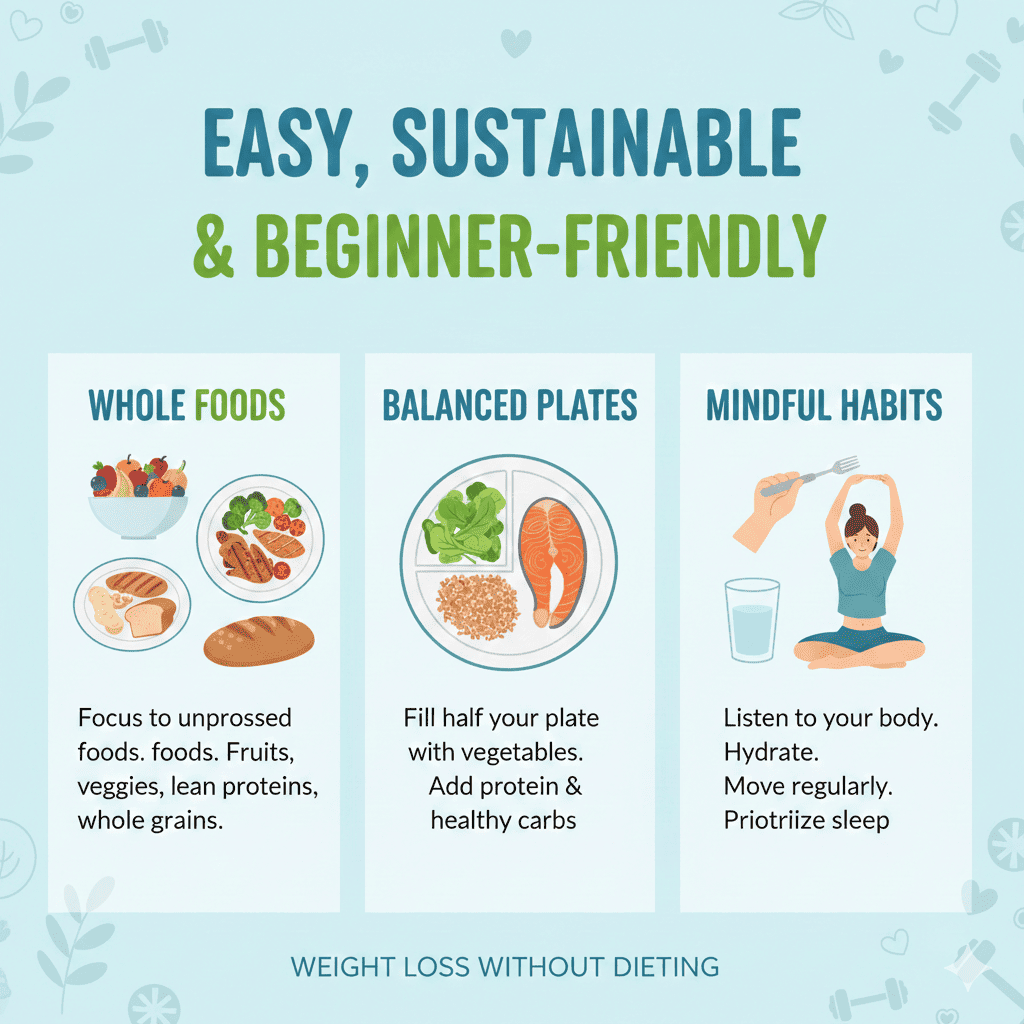
Healthy Eating Plan for Weight Loss Without Dieting — Easy, Sustainable & Beginner-Friendly
Are you exhausted from trying restrictive diets that leave you feeling deprived, hungry, and ultimately unsuccessful? You’re not alone. The truth is that traditional dieting often sets people up for failure, creating an unhealthy relationship with food and leading to the dreaded yo-yo effect. But what if there was a better way to lose weight without the misery of dieting?
Welcome to a revolutionary approach: a healthy eating plan for weight loss that emphasizes nourishment over restriction, satisfaction over deprivation, and lifestyle changes over temporary fixes. This comprehensive guide will show you how to transform your eating habits naturally, lose weight sustainably, and actually enjoy the process along the way.
Unlike fad diets that promise rapid results but deliver disappointment, this healthy eating plan for weight loss focuses on creating lasting behavioral changes that become second nature. You’ll learn to make better food choices without obsessing over calories, enjoy your meals without guilt, and achieve your weight loss goals while improving your overall health and wellbeing.
Understanding the Difference Between Dieting and Healthy Eating
Before diving into the specifics of your new eating plan, it’s essential to understand why this approach differs fundamentally from traditional dieting. This distinction forms the foundation of sustainable weight loss and long-term health.
What Makes Dieting Fail:
Traditional diets typically involve severe caloric restriction, elimination of entire food groups, rigid meal timing, and unsustainable rules that ignore individual preferences and lifestyles. These approaches trigger biological responses that work against weight loss, including metabolic slowdown, increased hunger hormones, muscle loss, and psychological stress. When you deprive yourself, your body fights back, making long-term success nearly impossible.
The Healthy Eating Advantage:
A healthy eating plan for weight loss works with your body rather than against it. This approach emphasizes nutrient-dense foods that satisfy hunger naturally, flexible guidelines that adapt to your lifestyle, gradual changes that become permanent habits, and a focus on overall health rather than just the number on the scale. You’ll eat real food in reasonable portions, enjoy treats occasionally without derailing progress, and develop a positive relationship with eating.
Psychological Benefits:
Beyond physical advantages, this mindset shift eliminates the stress and anxiety associated with dieting. You’ll stop labeling foods as “good” or “bad,” eliminate guilt around eating, develop intuitive hunger and fullness cues, and build confidence in your food choices. This mental freedom is just as important as the physical changes you’ll experience.
Sustainability Factor:
The most critical difference is sustainability. Diets have an end date, but a healthy eating plan for weight loss becomes your new normal. These aren’t temporary restrictions you’ll abandon once you reach your goal weight; they’re positive habits that support lifelong health and weight maintenance.
1. Master the Art of Portion Control Without Measuring
One of the most powerful strategies for weight loss doesn’t require counting calories, weighing food, or carrying measuring cups everywhere. Learning intuitive portion control allows you to eat the right amounts naturally while enjoying a variety of foods.
The Hand Method for Portions:
Your hands provide a convenient, personalized measuring tool that’s always with you. Use your palm to measure protein portions (about 3-4 ounces), your fist for carbohydrate servings like rice or pasta, your cupped hand for healthy fats like nuts or oils, and both hands cupped together for vegetable portions. This simple system takes the guesswork out of portions without requiring tedious measuring.
Visual Cues for Plating:
Create balanced meals using the plate method: fill half your plate with colorful vegetables, one quarter with lean protein, and one quarter with whole grain carbohydrates. This visual approach ensures proper nutritional balance while naturally controlling portions. Add a small serving of healthy fat, and you have a perfectly portioned meal that supports weight loss.
Mindful Eating Practices:
Slow down and pay attention while eating. Put your fork down between bites, chew thoroughly, and take at least 20 minutes to finish meals. This gives your brain time to receive fullness signals from your stomach, preventing overeating. Eliminate distractions like television or phones during meals to stay connected with your body’s hunger and satisfaction cues.
Understanding True Hunger:
Learn to distinguish between physical hunger and emotional eating. Physical hunger develops gradually, can be satisfied with various foods, and stops when you’re comfortably full. Emotional hunger appears suddenly, craves specific foods, and often leads to mindless overeating. Recognizing this difference helps you respond appropriately to your body’s actual needs.
Restaurant Strategies:
When dining out, immediately set aside half your meal to take home, share entrees with dining companions, order appetizer portions as main courses, and ask for sauces and dressings on the side. These strategies help you enjoy restaurant meals while maintaining portion control without feeling deprived.
Progressive Adaptation:
Start by reducing portions gradually rather than dramatically cutting portions overnight. Your stomach will naturally adjust over several weeks, making smaller portions feel satisfying. This gradual approach prevents the deprivation mindset that sabotages traditional diets.
2. Build Your Meals Around Whole, Nutrient-Dense Foods
The foundation of any effective healthy eating plan for weight loss is choosing foods that provide maximum nutrition with natural appetite control. Whole foods keep you satisfied longer, provide essential nutrients, and support optimal metabolism.
Prioritize Lean Proteins:
Protein is the most satiating macronutrient and essential for preserving muscle mass during weight loss. Include chicken breast, turkey, fish, eggs, Greek yogurt, cottage cheese, legumes, and lean beef in your meals. Aim for protein at every meal to stabilize blood sugar, reduce cravings, and maintain metabolism. Protein requires more energy to digest than other nutrients, slightly increasing your caloric expenditure.
Embrace Colorful Vegetables:
Vegetables should form the cornerstone of your eating plan. They’re low in calories but high in fiber, vitamins, and minerals that support weight loss and overall health. Fill your plate with leafy greens, cruciferous vegetables like broccoli and cauliflower, colorful peppers, tomatoes, cucumbers, zucchini, and mushrooms. The fiber in vegetables promotes fullness and aids digestion while providing minimal calories.
Choose Smart Carbohydrates:
Contrary to popular belief, carbohydrates aren’t the enemy of weight loss. The key is selecting complex carbohydrates that provide sustained energy and fiber. Opt for quinoa, brown rice, sweet potatoes, oats, whole grain bread, and legumes. These foods digest slowly, preventing blood sugar spikes and crashes that trigger hunger and cravings.
Include Healthy Fats:
Fat is essential for hormone production, vitamin absorption, and satiety. Include moderate amounts of avocados, nuts, seeds, olive oil, fatty fish like salmon, and nut butters. While calorie-dense, these fats help you feel satisfied and support various bodily functions crucial for health and weight management.
Fruit as Nature’s Dessert:
Fresh fruits provide natural sweetness along with fiber, vitamins, and antioxidants. Berries, apples, oranges, pears, and melons make excellent snacks or dessert alternatives. The fiber in whole fruit slows sugar absorption, making it a much better choice than fruit juice or processed sweets.
Minimize Processed Foods:
Gradually reduce consumption of packaged snacks, sugary beverages, refined grains, processed meats, and foods with long ingredient lists. These items are typically high in calories but low in nutrients, leaving you hungry soon after eating. When you do choose packaged foods, read labels carefully and select options with minimal ingredients you recognize.
3. Master Meal Timing and Frequency for Optimal Results
When you eat can be almost as important as what you eat. Strategic meal timing supports stable blood sugar, consistent energy levels, and natural appetite regulation, all crucial for a successful healthy eating plan for weight loss.
Start with a Protein-Rich Breakfast:
Beginning your day with protein sets the tone for balanced eating throughout the day. A substantial breakfast with 20-30 grams of protein reduces cravings, decreases overall daily calorie intake, and stabilizes blood sugar. Try eggs with vegetables, Greek yogurt with nuts and berries, or a protein-rich smoothie with greens and nut butter.
Space Meals Appropriately:
Eating every 3-4 hours prevents excessive hunger that leads to overeating. Plan three main meals with one or two small snacks if needed. This pattern maintains steady blood sugar and energy levels while preventing the ravenous hunger that derails healthy eating intentions.
Front-Load Your Calories:
Consume larger portions earlier in the day when you’re most active and need energy. Make breakfast and lunch your substantial meals, with a lighter dinner. This pattern aligns with your body’s natural metabolism and gives you time to burn calories before sleep.
Evening Eating Guidelines:
Try to finish eating at least 2-3 hours before bedtime. Late-night eating often involves poor food choices and excess calories since evening meals tend to be more leisurely and less active. Establishing an eating cutoff time can significantly reduce overall calorie intake without feeling restrictive.
Strategic Snacking:
Plan snacks that combine protein with fiber to maximize satiety. Good options include apple slices with almond butter, vegetables with hummus, Greek yogurt with berries, or a small handful of nuts with a piece of fruit. Avoid mindless snacking by portioning snacks ahead of time rather than eating directly from large packages.
Flexibility Within Structure:
While consistency helps establish healthy patterns, maintain flexibility for social events, special occasions, and schedule variations. A healthy eating plan for weight loss adapts to your life rather than controlling it. One off-plan meal won’t derail your progress if you return to your regular eating pattern at the next meal.
4. Hydration Strategies That Support Weight Loss
Proper hydration is often overlooked but plays a crucial role in weight management, appetite control, and overall health. Water supports every metabolic process in your body, including fat burning.
Daily Water Requirements:
Aim for at least 8-10 glasses of water daily, with more needed during exercise or hot weather. Start your day with a large glass of water to rehydrate after sleep and kickstart your metabolism. Keep water accessible throughout the day with a reusable bottle that tracks your intake.
Water Before Meals:
Drinking 16-20 ounces of water 20-30 minutes before meals can reduce appetite and prevent overeating. This simple strategy often leads to consuming fewer calories without consciously restricting food. The water helps fill your stomach, triggering early satiety signals.
Replace Sugary Beverages:
Liquid calories from sodas, sweetened coffee drinks, fruit juices, and energy drinks add up quickly without providing satiety. Replacing these beverages with water, unsweetened tea, or sparkling water eliminates hundreds of empty calories daily. If you crave flavor, infuse water with fresh fruits, cucumber, or herbs.
Hydration for Energy:
Dehydration often manifests as fatigue, which many people misinterpret as hunger. Before reaching for a snack, drink water first. Many times, proper hydration resolves the urge to eat. This simple practice prevents unnecessary calorie consumption while maintaining energy levels.
Herbal Tea Benefits:
Unsweetened herbal teas provide variety while supporting hydration. Green tea contains compounds that may slightly boost metabolism and fat burning. Peppermint tea can reduce appetite, while chamomile promotes relaxation that prevents stress-eating.
Monitoring Hydration Status:
Pay attention to urine color as a hydration indicator. Pale yellow indicates proper hydration, while dark yellow suggests you need more water. Thirst is actually a late indicator of dehydration, so drink water consistently throughout the day rather than waiting until you feel thirsty.
5. Smart Strategies for Dining Out and Social Situations
Social eating situations often derail weight loss efforts, but with the right strategies, you can enjoy dining out while maintaining your healthy eating plan for weight loss. These techniques allow you to participate fully in social life without sacrificing progress.
Restaurant Selection Tips:
Choose restaurants with healthy options and transparent menus showing preparation methods. Many establishments now provide nutritional information online, allowing you to plan your meal before arriving. Look for places offering grilled, baked, or steamed options rather than exclusively fried foods.
Menu Navigation Strategies:
Start by scanning for protein-based entrees with vegetable sides. Ask for substitutions like extra vegetables instead of fries or a side salad instead of chips. Request sauces and dressings on the side to control portions. Don’t hesitate to customize orders to fit your needs; most restaurants happily accommodate reasonable requests.
Portion Management:
Restaurant servings typically exceed reasonable portions by 2-3 times. Decide before eating how much you’ll consume and immediately set aside the rest. Share entrees, order from the appetizer menu, or request a to-go box with your meal and pack half before starting to eat.
Pre-Meal Planning:
Don’t arrive at restaurants extremely hungry. Have a small protein-rich snack beforehand to prevent overeating. Review the menu online and decide what you’ll order in advance, reducing impulsive decisions influenced by hunger or tempting descriptions.
Alcohol Considerations:
Alcoholic beverages contribute significant empty calories and lower inhibitions around food choices. If you choose to drink, alternate alcoholic drinks with water, select lower-calorie options like wine or spirits with soda water, and limit yourself to one or two drinks maximum.
Social Pressure Navigation:
Communicate your health goals with friends and family to gain support. Practice politely declining foods that don’t fit your plan without lengthy explanations. Remember that one meal won’t make or break your progress, so enjoy special occasions while returning to your regular eating pattern afterward.
Buffet and Party Strategies:
Survey all options before filling your plate at buffets. Use a smaller plate if available, fill it primarily with proteins and vegetables, and sit far from the food table to reduce mindless returns. At parties, position yourself away from snack tables and focus on socializing rather than continuous eating.
6. Meal Planning and Preparation for Success
Success with any healthy eating plan for weight loss requires preparation. When healthy options are readily available, you’re less likely to make poor food choices during moments of hunger or stress.
Weekly Planning Process:
Dedicate time each week to plan meals and create a shopping list. Choose recipes that use similar ingredients to minimize waste and simplify shopping. Plan for leftovers that provide easy lunches or quick dinners on busy days. Keep a rotation of 10-15 favorite meals to simplify planning while maintaining variety.
Efficient Grocery Shopping:
Shop the perimeter of the store where fresh produce, proteins, and dairy are located. Avoid inner aisles filled with processed foods except for specific staples like olive oil or whole grains. Never shop hungry, as this leads to impulse purchases of unhealthy items. Stick to your list to avoid temptation and overspending.
Batch Cooking Benefits:
Prepare large quantities of proteins like grilled chicken, hard-boiled eggs, or cooked legumes that serve as meal foundations throughout the week. Cook whole grains in batches and portion them for quick assembly. Pre-chop vegetables so they’re ready for salads, stir-fries, or snacking.
Strategic Food Storage:
Invest in quality food storage containers for portioning meals and snacks. Prepare complete meals in advance and refrigerate or freeze them for grab-and-go convenience. Store healthy snacks in visible locations while keeping tempting treats out of sight or eliminating them entirely from your home.
Kitchen Organization:
Keep your kitchen stocked with staples that support healthy eating: olive oil, vinegar, herbs and spices, canned beans, frozen vegetables, whole grain pasta, and lean proteins. Having these basics readily available makes healthy meal preparation quick and convenient.
Time-Saving Techniques:
Use a slow cooker or pressure cooker for hands-off meal preparation. Sheet pan dinners allow you to cook complete meals with minimal effort. Prepare overnight oats or chia pudding for effortless healthy breakfasts. The easier healthy eating becomes, the more likely you’ll maintain these habits long-term.
Flexible Meal Templates:
Develop simple meal templates rather than following complex recipes. For example: protein + roasted vegetables + grain, or salad + protein + healthy fat. This framework allows variety while simplifying preparation and decision-making.
7. Understanding and Managing Cravings Naturally
Cravings are normal and don’t indicate weakness or failure. Learning to manage them effectively is crucial for sustaining a healthy eating plan for weight loss without feeling deprived or constantly battling temptation.
Physical vs. Emotional Hunger:
Physical cravings often indicate nutritional needs or blood sugar imbalances. Emotional cravings stem from stress, boredom, or habit. Before acting on cravings, pause and assess whether you’re truly hungry or responding to emotions. Physical hunger accepts various foods, while emotional cravings demand specific items, usually sweets or comfort foods.
Nutritional Strategies:
Ensure you’re eating enough protein and fiber at meals to maintain stable blood sugar and sustained satiety. Deficiencies in certain nutrients can trigger cravings; for example, chocolate cravings might indicate magnesium needs. Eating balanced meals with adequate calories prevents the intense hunger that leads to uncontrolled eating.
Strategic Indulgence:
Completely forbidding favorite foods often intensifies cravings and can lead to binge eating. Instead, plan occasional, portion-controlled treats. Enjoy a small serving of something you love, eat it slowly and mindfully, and then return to your regular eating pattern without guilt.
Distraction Techniques:
When cravings strike, delay gratification for 10-15 minutes while engaging in another activity. Often, cravings pass when you redirect attention. Go for a walk, call a friend, work on a hobby, or drink a large glass of water. Many cravings are temporary and diminish when not immediately satisfied.
Healthy Substitutions:
Find nutritious alternatives that satisfy similar taste preferences. Craving something sweet? Try fresh fruit, dates, or Greek yogurt with honey. Want something crunchy? Choose air-popped popcorn, raw vegetables with hummus, or roasted chickpeas instead of chips. These substitutions provide satisfaction with better nutritional profiles.
Address Underlying Causes:
Chronic stress, poor sleep, and dehydration all intensify cravings. Prioritize 7-9 hours of quality sleep, manage stress through exercise or meditation, and maintain proper hydration. When your overall wellbeing improves, cravings naturally decrease in frequency and intensity.
Mindful Eating Practice:
When you do indulge, do so mindfully. Sit down, eliminate distractions, and truly savor each bite. Notice flavors, textures, and aromas. This approach increases satisfaction from smaller portions and prevents mindless overconsumption.
8. Incorporate Intuitive Eating Principles
Intuitive eating represents a paradigm shift from rule-based dieting to trusting your body’s innate wisdom. This approach aligns perfectly with a sustainable healthy eating plan for weight loss focused on long-term success rather than quick fixes.
Honor Your Hunger:
Respect biological hunger signals rather than ignoring them or eating on rigid schedules regardless of hunger. When you acknowledge hunger and feed your body adequately, you prevent the primal urge to overeat that follows extreme hunger. Skipping meals or ignoring hunger backfires, leading to overeating later.
Make Peace with Food:
Eliminate the mentality of “good” and “bad” foods. No single food will make you healthy or unhealthy; it’s your overall eating pattern that matters. When you give yourself permission to eat all foods, you remove the psychological power they hold, making it easier to enjoy them in moderation.
Challenge the Food Police:
Reject the internal critical voice influenced by diet culture that judges your food choices. Food is not a moral issue, and eating something you enjoy doesn’t make you “good” or “bad.” Release guilt associated with eating and focus on how different foods make you feel physically.
Respect Your Fullness:
Listen for signals that you’re comfortably satisfied and stop eating at that point. Pause mid-meal to assess your fullness level. Remember that you can eat again when hungry; there’s no need to finish everything on your plate if you’re no longer hungry.
Discover Satisfaction Factor:
Eat foods you actually enjoy in pleasant environments. When you derive pleasure from eating, you feel satisfied with less food. Eating foods you don’t enjoy just because they’re “healthy” often leads to feeling deprived and seeking additional food for satisfaction.
Honor Your Feelings Without Using Food:
Recognize that food won’t solve emotional problems. Find non-food ways to cope with stress, anxiety, boredom, or sadness. Develop a toolkit of activities that provide comfort or distraction without involving eating.
Respect Your Body:
Accept your genetic blueprint and work toward the healthiest version of yourself rather than an unrealistic ideal. Body respect makes it easier to reject harmful diet messages and treat yourself with care, including nourishing yourself appropriately.
Gentle Nutrition:
Choose foods that honor both your health and taste buds. Progress, not perfection, is the goal. One meal or snack won’t determine your health status; it’s the consistent choices you make over time that matter. This flexible approach makes healthy eating sustainable long-term.
9. Create a Supportive Environment for Success
Your environment significantly influences eating behaviors, often more than willpower alone. Structuring your surroundings to support your healthy eating plan for weight loss makes healthy choices the easy, default option.
Kitchen Environment Optimization:
Keep healthy foods visible and accessible while making unhealthy options less convenient. Place fruit in a bowl on the counter, prep vegetables and store them at eye level in the refrigerator, and position healthy snacks in front of less nutritious items. If you keep treats in the house, store them in opaque containers in inconvenient locations.
Plate and Bowl Size Matters:
Research shows people eat more from larger plates and bowls. Use smaller dinnerware to make portions appear larger, tricking your brain into feeling satisfied with less food. This simple environmental change can reduce calorie intake without conscious effort.
Eliminate Eating Triggers:
Identify situations that prompt unhealthy eating and modify them. If you always snack while watching television, find alternative activities or keep your hands busy with knitting or puzzles. If certain routes home lead you past tempting fast food restaurants, take different routes.
Social Support Network:
Share your goals with supportive friends and family who will encourage healthy choices. Join online communities or local groups focused on healthy living. Having accountability partners and cheerleaders makes the journey easier and more enjoyable.
Meal Environment Creation:
Eat at a designated dining area rather than in front of screens or while working. Set the table nicely even for solo meals, signaling that eating is an important activity worthy of attention. This ritual promotes mindful eating and better digestion.
Technology Tools:
Use apps to track eating patterns, plan meals, or find healthy recipes, but avoid obsessive calorie counting that can trigger disordered eating. Set phone reminders for hydration or planned meal times. Technology should support rather than control your eating behaviors.
Positive Visual Reminders:
Place motivational notes or pictures representing your health goals in visible locations. These serve as gentle reminders of your intentions without being punitive. Focus on positive messages about health and wellbeing rather than weight or appearance.
10. Sustainable Lifestyle Integration and Long-Term Success
The ultimate goal of a healthy eating plan for weight loss isn’t just reaching a target weight but creating lasting habits that support lifelong health and weight maintenance. This final component focuses on making your new eating patterns permanent.
Gradual Implementation:
Don’t attempt to change everything simultaneously. Choose one or two strategies from this guide and implement them fully before adding more. Sustainable change occurs gradually through small, consistent actions that compound over time. Overwhelming yourself with too many changes simultaneously often leads to abandonment of all efforts.
Flexible Consistency:
Aim for consistency over perfection. Following your healthy eating plan 80-90 percent of the time allows for flexibility while still producing results. Special occasions, vacations, and unexpected situations will arise; handle them with grace and return to your regular patterns without guilt or compensatory restriction.
Regular Self-Assessment:
Periodically evaluate what’s working and what needs adjustment. Your needs may change due to schedule shifts, life circumstances, or progress toward goals. Adapt your approach accordingly while maintaining core principles. This flexibility prevents the all-or-nothing thinking that derails many people.
Non-Scale Victories:
Measure success beyond the scale. Notice increased energy levels, improved mood, better sleep quality, enhanced physical capabilities, and positive changes in how clothes fit. These indicators often change before significant weight loss occurs and provide motivation when scale progress stalls.
Maintenance Mindset:
Recognize that reaching your goal weight is just the beginning. Maintaining weight loss requires the same habits that achieved it. View your healthy eating plan as a permanent lifestyle rather than a temporary means to an end. This mindset shift is crucial for avoiding weight regain.
Continued Learning:
Stay informed about nutrition and health, but be selective about information sources. Focus on evidence-based resources rather than trendy diets or conflicting information on social media. Continue developing cooking skills and trying new healthy recipes to maintain variety and enjoyment.
Self-Compassion Practice:
Treat yourself with the same kindness you’d offer a good friend. Everyone has moments of overeating or less-than-ideal food choices. Rather than spiraling into guilt and giving up, acknowledge what happened, identify what you’ll do differently next time, and move forward without self-punishment.
Professional Support When Needed:
Don’t hesitate to seek help from registered dietitians, nutritionists, or therapists specializing in eating behaviors if you struggle with implementation or have complicated relationships with food. Professional guidance can provide personalized strategies and support for unique challenges.
Realistic Expectations and Timeline
Understanding what to expect as you implement this healthy eating plan for weight loss helps maintain motivation and prevents discouragement during the natural ups and downs of the process.
Healthy Weight Loss Rate:
Aim for 1-2 pounds of weight loss per week, which represents sustainable fat loss rather than water weight or muscle loss. Some weeks you’ll lose more, some less, and occasionally the scale won’t move despite consistent efforts. This variability is normal and doesn’t indicate failure.
Initial Adjustment Period:
The first 2-3 weeks involve adapting to new eating patterns. You might experience increased hunger, cravings, or difficulty as your body adjusts. Push through this transition phase; it becomes significantly easier as new habits form and your body adapts to proper nourishment.
Progress Milestones:
Week 1-2: Reduced bloating, increased energy, improved digestion Week 3-4: Clothes fitting better, noticeable changes in how you feel Week 5-8: Visible physical changes, improved strength and stamina Week 9-12: Significant progress toward goals, new habits feeling natural Month 4+: Continued progress and habit solidification
Plateau Navigation:
Weight loss rarely occurs linearly. Plateaus are normal and temporary. When they occur, review your eating patterns for areas needing adjustment, increase physical activity, ensure adequate hydration and sleep, and practice patience. Most plateaus resolve naturally within 2-3 weeks.
Individual Variation:
Your results will differ from others based on starting weight, age, activity level, metabolism, hormones, and genetics. Focus on your own progress rather than comparing yourself to others. What matters is consistent improvement in your own health markers and wellbeing.
Conclusion: Your Journey to Lasting Health Begins Now
You now possess a comprehensive, sustainable healthy eating plan for weight loss that emphasizes nourishment over deprivation, flexibility over rigidity, and long-term success over quick fixes. This approach honors your body’s needs while helping you achieve your weight loss goals naturally and enjoyably.
Remember that this isn’t a diet with an end date but a new way of relating to food and nourishing your body. The strategies outlined in this guide work because they’re based on sound nutritional principles, respect human psychology, and adapt to real life. You won’t feel deprived, hungry, or restricted because you’re eating satisfying, delicious foods in appropriate amounts.
Success comes from consistent implementation of these principles, not from perfection. There will be challenging days, unexpected obstacles, and moments when you deviate from your plan. That’s not only normal but expected. What matters is your overall pattern of choices and your commitment to returning to healthy habits after life’s inevitable disruptions.
The most important step is simply beginning. Choose one or two strategies from this guide that resonate most with you and implement them this week. As these become comfortable, add additional practices gradually. Before you know it, these healthy eating habits will feel completely natural, and you’ll wonder why you ever thought deprivation-based dieting was the answer.
Your body is remarkably resilient and responsive to proper care. By nourishing it with whole foods, respecting hunger and fullness cues, and approaching eating with flexibility and self-compassion, you’ll not only lose weight but gain energy, health, and food freedom. This healthy eating plan for weight loss offers you the roadmap; now it’s time to take the first step on your journey to lasting change.
Trust the process, be patient with yourself, and celebrate every positive choice you make. Your future self will thank you for committing to sustainable health rather than another temporary diet. The transformation you seek is absolutely achievable, and it starts with the very next meal you eat. Make it a nourishing one.
Also read this:
How to Increase Body Strength at Home: Simple No-Equipment Exercises for Beginners
8 Best Morning Exercises to Boost Metabolism and Burn Calories All Day
12 Simple Weight Loss Techniques That Actually Work Long-Term (Backed by Science)