
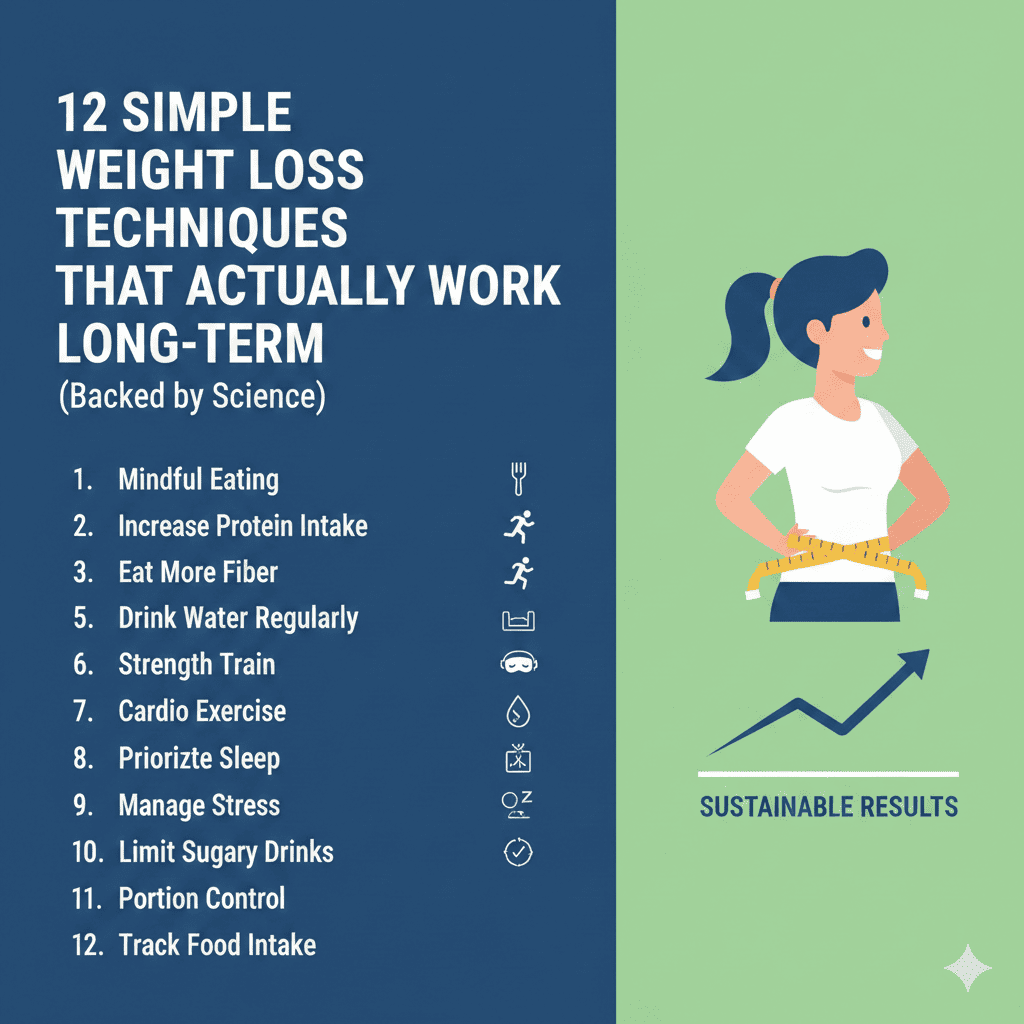
simple weight loss techniques The weight loss industry is flooded with gimmicks, fad diets, and miracle solutions that promise rapid results but deliver disappointment and frustration. Most people who lose weight regain it within a year, often ending up heavier than when they started. This cycle of temporary success followed by inevitable failure isn’t your fault—it’s the predictable outcome of unsustainable approaches that ignore basic human biology and psychology.
This comprehensive guide presents simple weight loss techniques that work differently. These aren’t quick fixes or extreme measures requiring superhuman willpower. Instead, they’re evidence-based strategies supported by scientific research and proven through real-world application by thousands of people who’ve achieved lasting weight loss. These simple weight loss techniques focus on gradual, sustainable changes that become permanent habits rather than temporary sacrifices you endure until reaching a goal weight.
Whether you need to lose ten pounds or a hundred, whether this is your first weight loss attempt or your twentieth, these techniques provide a roadmap for success. You’ll understand why previous attempts failed, learn how to create an environment that supports rather than sabotages your goals, and discover that sustainable weight loss doesn’t require deprivation, suffering, or abandoning foods you love.
Why Most Weight Loss Approaches Fail
The Biology of Weight Regain
Your body doesn’t understand that you’re intentionally trying to lose weight for health or appearance reasons. From a biological perspective, weight loss looks like starvation, triggering powerful adaptive responses designed to restore lost weight and prevent further loss. Your metabolism slows, hunger hormones increase, satiety hormones decrease, and food becomes more rewarding to your brain.
These adaptations made sense for our ancestors facing genuine food scarcity, but they sabotage modern intentional weight loss efforts. The more extreme and rapid your weight loss, the more aggressively your body fights back. This is why crash diets produce initial dramatic results followed by equally dramatic regain—you’re fighting against millions of years of evolutionary programming with nothing but willpower.
Sustainable weight loss requires working with your biology rather than against it. The simple weight loss techniques in this guide recognize these biological realities and structure your approach accordingly, creating conditions where your body cooperates with rather than resists your weight loss efforts.
The Psychology of Sustainable Change
Willpower is a finite resource that gets depleted throughout the day by every decision you make and every temptation you resist. Relying primarily on willpower to resist foods you love, force yourself to exercise when exhausted, and maintain rigid restrictions guarantees eventual failure. You’ll succeed temporarily while motivation is high, but when life gets stressful or motivation wanes—and it always does—willpower alone proves insufficient.
Successful long-term weight loss depends on creating systems and environments that make healthy choices easier and automatic. When nutritious food is readily available while junk food requires effort to access, you’ll naturally make better choices without depleting willpower. When exercise is built into your daily routine rather than requiring a separate decision, it happens consistently. These simple weight loss techniques emphasize environmental and systematic changes over willpower-dependent restrictions.
The Pitfalls of All-or-Nothing Thinking
simple weight loss techniques Many people approach weight loss with perfectionistic expectations. They follow their plan flawlessly for days or weeks, then experience a single setback—eating dessert at a party, missing a workout, exceeding their calorie target—and interpret this as complete failure. They abandon their efforts entirely, binge eating because “the day is already ruined,” and either quit altogether or plan to start over Monday.
This all-or-nothing thinking guarantees failure because perfection is impossible. Life includes celebrations, holidays, stressful periods, illnesses, and countless other disruptions to routine. Sustainable weight loss requires developing resilience and flexibility, treating setbacks as normal occurrences rather than catastrophic failures. One meal doesn’t define your progress any more than one workout creates fitness. These simple weight loss techniques embrace imperfection and provide strategies for quickly returning to helpful patterns after inevitable deviations.
1. Create a Modest Caloric Deficit
Understanding Energy Balance
Weight loss fundamentally requires consuming fewer calories than you expend, creating an energy deficit your body meets by burning stored fat. This isn’t an opinion or one theory among many—it’s thermodynamic reality backed by overwhelming scientific evidence. Every successful weight loss approach, regardless of specific foods emphasized or restricted, works by creating a caloric deficit.
However, the size of your deficit dramatically affects sustainability and outcomes. Aggressive deficits of 1,000+ calories daily produce rapid initial weight loss but trigger strong biological compensation, muscle loss alongside fat loss, and psychological deprivation that leads to eventual abandonment. Modest deficits of 300-500 calories daily produce slower but more sustainable weight loss, preserve lean muscle mass, and minimize adaptive responses.
This is one of the most crucial simple weight loss techniques: aim for losing 0.5-1% of your body weight weekly. For a 200-pound person, this means 1-2 pounds weekly. For a 150-pound person, 0.75-1.5 pounds weekly. This pace feels frustratingly slow initially but proves far more successful long-term than aggressive approaches.
Calculating Your Needs
Determining appropriate calorie intake doesn’t require complex formulas or expensive metabolic testing. Online calculators estimating your Total Daily Energy Expenditure (TDEE) based on age, sex, height, weight, and activity level provide reasonable starting points. Reduce your estimated TDEE by 300-500 calories for your initial target intake.
Track your intake and weight for 2-3 weeks. If you’re losing 0.5-1% of your body weight weekly, your target is appropriate. If weight isn’t changing, reduce intake by 200 calories. If you’re losing faster than 1% weekly, increase intake slightly to preserve muscle and sustainability. This empirical approach accounts for individual metabolic variations better than any formula.
The Quality Versus Quantity Debate
While caloric deficit is necessary for weight loss, food quality profoundly affects hunger, satiety, energy levels, and health. One hundred calories of candy affects your body differently than one hundred calories of chicken breast, even though the energy content is identical. Protein-rich foods increase satiety and preserve muscle during weight loss. Fiber-rich foods provide volume and sustained energy. Highly processed foods rich in added sugars and refined carbohydrates trigger blood sugar spikes and crashes that drive hunger and cravings.
Focus on whole, minimally processed foods as the foundation of your diet while maintaining your caloric deficit. This approach—emphasized throughout these simple weight loss techniques—makes adherence easier by naturally controlling hunger while delivering essential nutrients.
2. Prioritize Protein at Every Meal
The Unique Benefits of Protein
Protein is the most satiating macronutrient, meaning it keeps you full longer per calorie than carbohydrates or fats. Studies consistently show that increasing protein intake reduces overall calorie consumption without requiring conscious restriction—you naturally eat less because you’re less hungry. Protein also has the highest thermic effect of food, meaning your body burns more calories digesting and processing protein than other macronutrients.
During weight loss, adequate protein intake preserves lean muscle mass. When losing weight, your body can break down either fat or muscle for energy. Insufficient protein combined with lack of resistance training results in significant muscle loss alongside fat loss. This is problematic because muscle tissue burns calories even at rest, contributing to your metabolic rate. Losing muscle lowers your metabolism, making weight regain more likely and subsequent weight loss attempts more difficult.
Optimal Protein Targets
Research suggests that consuming 0.7-1.0 grams of protein per pound of body weight optimally supports weight loss. For a 180-pound person, this means 126-180 grams daily. This might sound high compared to typical intake, but it’s achievable by including protein sources at every meal and snack.
Distribute protein throughout the day rather than consuming it primarily at dinner. Each meal should include 25-40 grams of protein to maximize muscle protein synthesis and satiety. Breakfast is particularly important—starting your day with adequate protein reduces overall daily calorie intake by controlling hunger and cravings.
Practical Protein Strategies
Breakfast transformation: Replace typical high-carbohydrate breakfasts like cereal, toast, or pastries with protein-rich options: eggs with vegetables, Greek yogurt with nuts and berries, protein smoothies, or cottage cheese with fruit. This single change represents one of the most effective simple weight loss techniques for reducing daily calorie intake.
Protein-first eating: At each meal, eat your protein source first before other foods. This ensures adequate protein intake even if you’re too full to finish everything and naturally limits consumption of less satiating foods.
Convenient protein sources: Keep convenient protein options available for busy days: pre-cooked chicken breast, hard-boiled eggs, Greek yogurt, cottage cheese, protein powder, jerky, and canned tuna or salmon. Convenience prevents defaulting to less optimal choices when hungry and rushed.
3. Increase Your Daily Movement
Beyond Structured Exercise
While formal exercise is valuable, Non-Exercise Activity Thermogenesis (NEAT)—the calories burned through daily activities like walking, cleaning, fidgeting, and standing—accounts for significantly more daily calorie expenditure for most people. Sedentary individuals might burn only 200-300 calories through NEAT, while highly active individuals burn 1,000+ calories, representing a massive difference in daily energy expenditure.
Increasing NEAT is among the most practical simple weight loss techniques because it doesn’t require gym memberships, special equipment, or dedicated workout time. Small increases in daily movement accumulate into substantial calorie expenditure over weeks and months.
Practical Movement Strategies
The 10,000 steps target: While this number isn’t magical, aiming for 10,000 daily steps provides a concrete goal that ensures substantial activity. Most sedentary people average 3,000-5,000 steps daily. Increasing to 10,000 steps burns approximately 300-500 additional calories daily, creating a meaningful deficit without requiring dietary restriction.
Use a fitness tracker or smartphone to monitor daily steps. Find opportunities to increase movement: park farther from destinations, take stairs instead of elevators, walk while taking phone calls, have walking meetings, or take a brief walk after meals.
Movement breaks: Set reminders to stand and move for 2-3 minutes every hour if you have a sedentary job. These brief breaks not only increase NEAT but also improve focus, reduce musculoskeletal discomfort, and prevent the metabolic consequences of prolonged sitting.
Active hobbies: Engage in activities you enjoy that happen to burn calories: dancing, gardening, recreational sports, hiking, or playing actively with children or pets. When activity is enjoyable rather than obligatory, consistency becomes effortless.
Strategic Exercise Implementation
While NEAT increases should be your foundation, structured exercise provides additional benefits including muscle preservation, improved cardiovascular health, enhanced mood, and accelerated fat loss. However, exercise alone rarely produces significant weight loss because people typically overestimate calories burned and unconsciously compensate by eating more or moving less throughout the rest of the day.
Combine resistance training 2-3 times weekly with regular cardiovascular activity. Resistance training preserves muscle mass during weight loss—absolutely critical for maintaining metabolic rate and achieving an athletic appearance rather than simply becoming a smaller version of your current shape. Cardiovascular exercise improves heart health and burns calories but shouldn’t completely replace resistance training.
4. Master Your Sleep Schedule
The Sleep-Weight Connection
Sleep deprivation disrupts hormones regulating hunger and satiety. After poor sleep, ghrelin (your hunger hormone) increases while leptin (your satiety hormone) decreases, creating a hormonal environment that drives overeating. Studies show that sleep-deprived individuals consume 300-500 more calories daily than when well-rested, primarily from carbohydrate-rich snacks.
Poor sleep also impairs decision-making and willpower, making it harder to resist temptations. Your prefrontal cortex—the brain region responsible for impulse control and long-term thinking—functions poorly when sleep-deprived, while reward centers become hyperactive. This combination makes junk food nearly irresistible after inadequate sleep.
Additionally, insufficient sleep increases cortisol, a stress hormone that promotes fat storage, particularly in the abdominal region. Chronic sleep deprivation is also associated with insulin resistance, making it harder to lose weight and easier to gain it.
Sleep Optimization Strategies
Target seven to nine hours of quality sleep nightly. This isn’t optional for successful weight loss—it’s foundational. Improving sleep is one of the most underappreciated simple weight loss techniques because people don’t associate sleep with weight, yet optimizing sleep often produces dramatic improvements in hunger control and food choices.
Consistent schedule: Go to bed and wake at consistent times, even on weekends. This regulates your circadian rhythm, improving sleep quality and making it easier to fall asleep and wake naturally.
Sleep environment: Keep your bedroom cool (65-68°F is optimal for most people), completely dark, and quiet. Remove electronic devices or at minimum silence them and keep screens away from your bed. Your bedroom should be associated exclusively with sleep, not work, entertainment, or stressful activities.
Pre-sleep routine: Establish a relaxing routine in the hour before bed: reading, gentle stretching, meditation, or other calming activities. Avoid screens, intense exercise, large meals, caffeine, and alcohol, all of which interfere with sleep quality.
5. Manage Your Food Environment
Environmental Influence on Eating
simple weight loss techniques Your food environment—what foods are visible, easily accessible, and convenient—exerts enormous influence on what and how much you eat, often without conscious awareness. Studies show that people eat more when serving sizes are larger, when variety is greater, and when food is visible and convenient, regardless of hunger levels.
The most successful dieters don’t have superior willpower—they create environments where healthy choices are easy and default while unhealthy options require deliberate effort. This is among the most powerful simple weight loss techniques because it removes the need for constant decision-making and willpower.
Practical Environmental Modifications
Kitchen reorganization: Store nutritious foods at eye level in clear containers in the front of your refrigerator and pantry. Relegate less healthy options to opaque containers in inconvenient locations—back of high shelves, garage, or basement. Better yet, simply don’t purchase foods that sabotage your goals. You can’t eat what isn’t available.
Visual cues: Keep a fruit bowl visible on your counter. Pre-cut vegetables and store them in clear containers in your refrigerator. Make healthy options the path of least resistance when hungry and looking for something to eat.
Portion control tools: Use smaller plates and bowls—9-inch plates instead of 12-inch, for example. This visual trick makes portions appear larger, increasing satisfaction with less food. Research shows people eat less when using smaller dishes without feeling deprived.
Restaurant strategies: Share entrees, order appetizer portions as meals, box half your meal before eating, or order from lighter menu sections. Restaurant portions typically contain 2-3 times appropriate serving sizes. You don’t need to avoid restaurants, but strategic ordering prevents the calorie overload that derails progress.
Social Environment Considerations
Your social circle significantly influences your eating behaviors and weight. Obesity spreads through social networks, likely because norms around appropriate food choices, portion sizes, and activity levels are socially determined. Surrounding yourself with health-conscious individuals makes maintaining healthy habits easier.
This doesn’t mean abandoning friends who don’t share your goals, but it does mean actively cultivating relationships with people who support your efforts. Join fitness groups, healthy cooking classes, or online communities focused on sustainable weight loss. Having people who understand your journey and celebrate your progress provides invaluable support during challenging periods.
6. Practice Mindful Eating
The Problem with Distracted Eating
Most people eat while distracted—watching television, working at their computer, scrolling through phones, or driving. Distracted eating disconnects you from internal hunger and fullness cues, typically resulting in overconsumption. You’re not aware of what or how much you’re eating, so satisfaction signals don’t register until you’ve consumed far more than necessary.
Research shows that people eating while distracted consume significantly more than those eating without distractions and feel less satisfied afterward despite eating more. This lack of satisfaction often leads to seeking additional food shortly after finishing a meal, compounding the calorie excess.
Implementing Mindful Eating
Eliminate distractions: Eat at a table without screens, books, or other distractions. This single practice, while seemingly simple, represents one of the most effective simple weight loss techniques for naturally reducing intake without conscious restriction.
Eat slowly: Put your utensil down between bites. Chew thoroughly, noticing flavors and textures. This slows eating, giving satiety signals time to reach your brain before you’ve overeaten. It takes approximately 20 minutes for fullness signals to register, so eating quickly overrides this natural appetite regulation.
Check in mid-meal: Halfway through your meal, pause and assess your hunger level. Ask yourself if you’re still physically hungry or eating just because food remains on your plate. Give yourself permission to stop eating when satisfied rather than stuffed, regardless of remaining food.
Distinguish physical versus emotional hunger: Before eating, determine whether you’re physically hungry or eating for emotional reasons—boredom, stress, sadness, or habit. Physical hunger develops gradually, can be satisfied with various foods, and creates physical sensations like stomach growling. Emotional hunger appears suddenly, demands specific comfort foods, and persists even after eating until the underlying emotion is addressed.
Hunger Scale Awareness
Use a 1-10 hunger scale where 1 is ravenously hungry, 5 is neutral, and 10 is uncomfortably stuffed. Aim to eat when hunger reaches 3-4 and stop when reaching 6-7—satisfied but not full. Most people wait until reaching 1-2 before eating, then eat until reaching 8-9, creating excessive intake.
Regular meal timing helps prevent extreme hunger that leads to overeating. When ravenously hungry, you’re more likely to make poor food choices and eat rapidly without awareness. Eating at consistent times before reaching extreme hunger creates conditions for better choices and portion control.
7. Stay Consistently Hydrated
Hydration and Weight Loss
Adequate hydration supports weight loss through multiple mechanisms. Drinking water before meals reduces calorie intake—studies show people who drink 16 ounces of water before eating consume 75-90 fewer calories during the meal. Over time, this small reduction creates meaningful deficits.
Many people confuse thirst with hunger, eating when their body actually needs fluids. Staying well-hydrated helps distinguish true hunger from thirst, reducing unnecessary eating. Proper hydration also optimizes metabolism, improves exercise performance, reduces fatigue, and supports all physiological processes.
Practical Hydration Strategies
Aim for half your body weight in ounces of water daily as a baseline—a 160-pound person would target 80 ounces. This increases with exercise, hot weather, or high altitude. Your urine color indicates hydration status: pale yellow suggests adequate hydration, while dark yellow indicates you need more fluids.
Strategic timing: Drink 16 ounces of water upon waking to rehydrate after sleep. Drink another 16 ounces 30 minutes before each meal to reduce calorie intake. Keep water visible throughout the day—a filled water bottle on your desk serves as a reminder to drink.
Flavor enhancement: If plain water seems boring, infuse it with citrus, cucumber, mint, or berries. Unsweetened tea and coffee count toward hydration (caffeine’s diuretic effect is minimal at moderate doses). Avoid sugar-sweetened beverages entirely—liquid calories don’t promote satiety, making them particularly problematic for weight loss.
This represents one of the easiest simple weight loss techniques to implement because it requires no deprivation or significant behavior change, yet produces measurable improvements in appetite control and calorie intake.
8. Plan and Prepare Meals in Advance
The Power of Preparation
Decision fatigue—the declining quality of decisions after making many choices—significantly affects food choices. By evening, after making hundreds of decisions throughout the day, your willpower is depleted, making you vulnerable to poor choices. Coming home hungry without a plan virtually guarantees ordering takeout or eating whatever processed foods are convenient.
Meal planning and preparation eliminates these decision points when willpower is low. When healthy meals are prepared and ready to eat, you’ll eat them. When no preparation exists and you’re tired and hungry, you’ll eat whatever is easiest regardless of your goals.
Practical Meal Planning Approaches
Weekly planning: Dedicate 30 minutes weekly to planning meals and creating a shopping list. This ensures you have necessary ingredients and eliminates the daily “what’s for dinner” question that leads to poor decisions.
Batch cooking: Prepare multiple meals simultaneously. Cook several pounds of chicken breast, a large pot of rice or quinoa, and roast multiple trays of vegetables on Sunday. Combine these components in different ways throughout the week to create varied meals without daily cooking.
Strategic shortcuts: Use convenience items strategically: pre-washed salad greens, frozen vegetables, rotisserie chicken, or canned beans. These reduce preparation time while maintaining nutritional quality. The goal is making healthy eating realistic for busy lives, not achieving culinary perfection.
Container system: Invest in quality food storage containers. Portion meals into individual containers immediately after cooking, making it as easy to grab a healthy prepared meal as it would be to order takeout.
These simple weight loss techniques related to planning don’t require culinary skills or hours of time, just strategic thinking and basic preparation that removes obstacles to healthy eating.
9. Implement Strategic Indulgences
The Deprivation-Binge Cycle
Restrictive diets that completely eliminate favorite foods work temporarily while motivation is high, but eventually you’ll desire the forbidden foods intensely. When you inevitably eat them, the deprivation-driven binge consuming far exceeds what you would have eaten had you allowed moderate, planned consumption all along.
This cycle—strict restriction followed by loss of control—characterizes most failed diet attempts. The solution isn’t unlimited consumption of treat foods, but strategic, planned inclusion that satisfies desires without derailing progress.
Planned Treat Implementation
The 80/20 principle: Aim for 80% of your food intake to come from nutritious, minimally processed whole foods that support your goals. The remaining 20% can include less optimal foods you enjoy. This balance maintains the caloric deficit necessary for weight loss while preventing feelings of deprivation.
Calculate your 20% allowance: if eating 2,000 calories daily, 400 calories (about one treat meal or two smaller treats) can come from anything you want. This flexibility makes long-term adherence realistic because you’re never completely restricted from foods you love.
Conscious enjoyment: When eating treat foods, do so mindfully and without guilt. Sit down, eliminate distractions, and fully enjoy the experience. This provides maximum satisfaction from minimal consumption, unlike guilt-ridden eating where you barely taste food before it’s gone.
Distinguish want versus need: Before eating a treat, determine whether you genuinely want it or are eating out of habit, boredom, or social pressure. This one of several key simple weight loss techniques for reducing mindless consumption while maintaining psychological satisfaction.
10. Track Your Progress Comprehensively
Beyond the Scale
simple weight loss techniques The scale measures only one aspect of progress and often provides misleading information. Weight fluctuates 2-5 pounds daily based on water retention, digestive contents, hormonal changes, sodium intake, carbohydrate consumption, and exercise—none of which reflect fat gain or loss. This normal fluctuation causes unnecessary stress when people weigh daily and interpret increases as failure.
Additionally, successful body recomposition—losing fat while maintaining or building muscle—might not show dramatic scale changes because muscle is dense. You could be significantly leaner and more athletic-looking while weighing nearly the same.
Comprehensive Progress Tracking
Weekly weigh-ins: Weigh yourself once weekly at the same time under the same conditions—first thing in the morning after using the bathroom and before eating or drinking. This controls for daily fluctuations and provides more meaningful data about trends over time.
Progress photos: Take photos from front, side, and back views every two weeks in the same clothing, lighting, and location. Visual changes often precede scale changes and provide motivation during plateaus. You see yourself daily, making gradual changes hard to notice, but photos provide objective evidence of progress.
Measurements: Measure your waist, hips, thighs, arms, and chest monthly. Fat loss often occurs in areas not reflected by scale weight, and measurements capture this progress. Many people lose inches before losing significant weight.
Performance metrics: Track non-scale victories: increased energy, better sleep quality, improved mood, enhanced athletic performance, reduced medication needs, or compliments from others. These improvements matter as much or more than numbers on a scale and provide motivation during periods when weight isn’t changing.
Food and mood journaling: Note what you eat, but also how you feel—energy levels, hunger patterns, mood, and sleep quality. This reveals patterns between food choices and how you feel, creating intrinsic motivation for healthy eating beyond just weight loss.
Comprehensive tracking represents one of the most valuable simple weight loss techniques because it provides accurate feedback, reveals patterns, and maintains motivation when progress seems stalled.
11. Prioritize Stress Management
The Stress-Weight Connection
Chronic stress triggers cortisol release, which promotes fat storage, particularly in the abdominal region. Elevated cortisol also increases appetite, particularly for high-calorie comfort foods. This explains why stressed individuals often gain weight despite intentions to do otherwise—they’re fighting against powerful hormonal drives.
Stress also depletes willpower, reduces sleep quality, decreases motivation for exercise, and creates emotional states where food becomes a coping mechanism. Many people can maintain healthy habits during calm periods but completely abandon them when stress increases, creating a pattern where weight loss occurs during good times and regain happens during stressful periods.
Effective Stress Management Strategies
Regular relaxation practices: Implement daily stress reduction techniques: meditation, deep breathing exercises, yoga, nature walks, or any activity that calms your nervous system. Even 10 minutes daily provides measurable benefits for cortisol reduction and stress management.
Physical activity: Exercise is among the most effective stress management tools, reducing stress hormones while increasing endorphins. This dual benefit makes movement valuable beyond just calorie burning—it directly addresses a major obstacle to weight loss success.
Adequate sleep: Sleep deprivation increases stress hormones while impairing stress coping abilities. Prioritizing sleep, discussed earlier as one of the crucial simple weight loss techniques, simultaneously addresses multiple weight loss obstacles.
Social connection: Strong relationships buffer against stress effects. Regular contact with supportive friends and family, participation in community activities, or involvement in support groups provides emotional resources that prevent stress-driven overeating.
Professional support: If stress feels overwhelming or you’re using food as your primary coping mechanism, consider working with a therapist. Addressing underlying emotional issues often removes major barriers to weight loss success.
12. Build a Sustainable Maintenance Plan
The Maintenance Mindset
Most people approach weight loss with a temporary mindset: “I’ll follow this plan until reaching my goal weight, then return to normal eating.” This approach guarantees regain because “normal eating” is what created the excess weight initially. Sustainable success requires understanding that weight loss behaviors must continue, in modified form, indefinitely.
This doesn’t mean permanent restriction or misery—it means that the healthy habits developed during weight loss become your new normal rather than temporary sacrifices. The transition from weight loss to maintenance involves increasing calorie intake to match expenditure while maintaining the fundamental practices that created success.
Maintenance Strategy Implementation
Gradual transition: When reaching your goal weight, don’t immediately return to higher calorie intake. Increase calories gradually—add 100-200 calories weekly until weight stabilizes. This allows you to determine your maintenance calorie level while preventing rapid regain.
Continue tracking: Even during maintenance, periodic tracking provides accountability and early warning if weight creeps up. Many successful maintainers weigh weekly and have a 5-pound range. If exceeding this range, they temporarily reduce intake until returning to their target.
Maintain core habits: The simple weight loss techniques that created your success—prioritizing protein, staying active, sleeping adequately, managing stress, and eating mindfully—must continue indefinitely. These aren’t diet rules to eventually abandon but healthy life practices that support your long-term wellbeing.
Plan for challenges: Life includes vacations, holidays, stressful periods, and other disruptions. Develop strategies for managing these situations: maintaining activity during travel, making reasonable choices at celebrations without completely restricting yourself, and quickly returning to helpful patterns after temporary deviations.
Celebrate non-scale victories: Focus on maintaining the health improvements and quality of life enhancements from your weight loss rather than fixating exclusively on scale weight. Better energy, improved fitness, reduced disease risk, and enhanced confidence matter more than maintaining a specific number.
Creating Your Personalized Action Plan
You now understand twelve simple weight loss techniques backed by scientific evidence and proven through real-world application. However, knowledge alone changes nothing—implementation creates results. The key to success isn’t attempting all twelve techniques simultaneously but rather selecting a few to focus on initially, mastering them until they become automatic, then gradually incorporating additional strategies.
Start by identifying which techniques address your biggest obstacles. If poor sleep drives afternoon snacking, prioritize sleep optimization. If mindless eating while watching television is your primary issue, focus on mindful eating. If lack of movement characterizes your days, increase NEAT before worrying about other factors. Strategic focus on high-impact areas produces better results than scattered attention across all areas simultaneously.
Implement changes gradually. Add one new practice weekly or even monthly. This might seem frustratingly slow, but it’s far more effective than overhauling everything at once, feeling overwhelmed, and abandoning all changes within weeks. Sustainable transformation happens through accumulating small habits that compound over time, not through dramatic overhauls that prove unsustainable.
Track your implementation and results. Which techniques are you actually following consistently? Which create the biggest improvements in hunger, energy, and weight? This empirical approach allows you to personalize these simple weight loss techniques to your unique circumstances, preferences, and challenges.
Your Weight Loss Journey Starts Now
Sustainable weight loss isn’t complicated, though the weight loss industry benefits from making it seem mysterious and requiring special products, programs, or expertise. The truth is refreshingly simple: create a modest caloric deficit through techniques you can maintain indefinitely, and your body will release stored fat. The challenge isn’t understanding what to do—it’s consistently doing it.
These twelve simple weight loss techniques provide everything necessary for successful, lasting weight loss. They’re not glamorous or revolutionary—they’re fundamental practices that work because they align with human biology and psychology rather than fighting against them. No special foods, supplements, or equipment required. No extreme restrictions or complicated rules to follow.
The only remaining question is whether you’ll take action. Not perfect action or dramatic action, but consistent action in the right direction. One year from now, you’ll have either continued with current patterns and likely gained additional weight, or you’ll have implemented these evidence-based strategies and transformed your body and health.
Small decisions made consistently accumulate into major outcomes. Choosing the extra serving or choosing to stop when satisfied. Spending the evening on the couch or taking a 20-minute walk. Staying up watching television or going to bed at a reasonable hour. Getting fast food because it’s convenient or eating the healthy meal you prepared. These individual decisions seem insignificant, but their cumulative effect over weeks, months, and years determines whether you achieve your goals.
You don’t need motivation to start—action creates motivation, not the other way around. Begin with one technique today. Implement it imperfectly but consistently. Build from there. The person you’ll be six months from now is being created by the choices you make today. Make them count.
Also read this:
Beginner Running Guide: How to Start Running with Zero Experience in Just 14 Days
The Best 10-Minute Stretching Routine for People Who Sit All Day (Instant Pain Relief)
25 High-Protein Vegetarian Foods for Muscle Building: Complete List for Fast Muscle Gain