
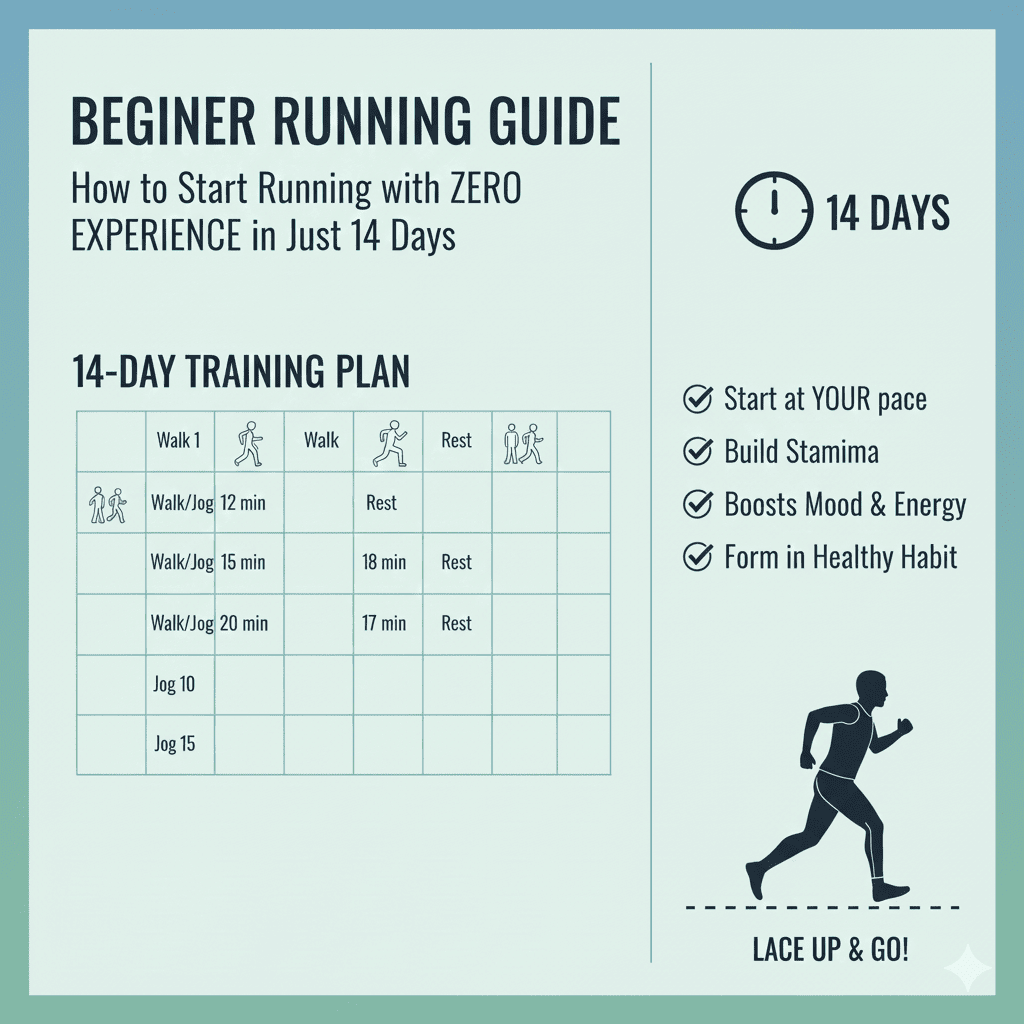
beginner running guide Running is one of the most accessible forms of exercise—it requires minimal equipment, can be done almost anywhere, and delivers incredible physical and mental health benefits. Yet for complete beginners, the prospect of starting a running routine can feel overwhelming. Where do you begin? How far should you run? What if you can’t even run for a minute without feeling exhausted? This comprehensive beginner running guide answers all these questions and provides a proven 14-day plan that will transform you from a complete non-runner into someone who can confidently run for extended periods.
Whether you’re looking to lose weight, improve cardiovascular health, reduce stress, or simply accomplish something you’ve always thought was beyond your capabilities, this beginner running guide will provide everything you need to succeed. You’ll learn proper running form, understand how to avoid common injuries, discover the mental strategies that separate those who quit from those who become lifelong runners, and follow a structured plan that gradually builds your endurance without overwhelming your body.
Why Running Is Perfect for Complete Beginners
The Unmatched Accessibility
Unlike many fitness pursuits that require gym memberships, specialized equipment, or specific locations, running requires nothing more than a decent pair of shoes and space to move. You can run in your neighborhood, at a local park, on trails, or even on a treadmill. This accessibility eliminates the most common barriers to starting an exercise routine—cost, convenience, and complexity.
Running also fits into virtually any schedule. You can run early in the morning before work, during lunch breaks, in the evening after responsibilities are handled, or even late at night if that’s when you have energy. A meaningful workout takes as little as twenty minutes, making it realistic even for the busiest individuals. This beginner running guide is designed specifically for people with limited time who want maximum results.
The Transformative Health Benefits
The cardiovascular improvements from running are remarkable and happen quickly. Within just a few weeks of consistent running, your heart becomes more efficient at pumping blood, your lungs expand their capacity, and your muscles develop more mitochondria—the cellular powerhouses that generate energy. This translates to feeling less winded during everyday activities, having more energy throughout the day, and reducing your risk of heart disease, stroke, and numerous other chronic conditions.
beginner running guide Running is also one of the most effective exercises for weight management. A person weighing 155 pounds burns approximately 300 calories during a 30-minute run at a moderate pace. More importantly, running elevates your metabolism for hours after you finish, creating a sustained calorie-burning effect. Combined with reasonable nutrition, running creates the caloric deficit necessary for fat loss.
Beyond physical benefits, running profoundly impacts mental health. It reduces symptoms of anxiety and depression, improves sleep quality, boosts self-confidence, and provides a meditative moving experience that many runners describe as therapeutic. The sense of accomplishment from following this beginner running guide and achieving goals you once thought impossible creates positive psychological momentum that extends into other areas of life.
Why the 14-Day Timeframe Works
Two weeks is the perfect duration for building a new habit without requiring overwhelming long-term commitment. It’s short enough to feel achievable while long enough to create real progress and establish patterns. Research on habit formation shows that the initial two weeks are the most critical period—if you can maintain consistency during this time, continuing becomes significantly easier.
This beginner running guide uses the 14-day framework strategically. By day fourteen, you’ll have completed multiple runs, experienced the progression from struggling through short distances to managing longer ones, and built enough momentum that continuing feels natural rather than forced. You’re not just learning to run—you’re becoming a runner.
1. Essential Preparation Before Your First Run
Choosing the Right Running Shoes
Footwear is your only significant investment when starting running, and it’s worth getting right. Don’t run in old sneakers, fashion shoes, or worn-out athletic shoes. Running shoes are specifically designed to cushion impact, support your foot’s natural movement, and reduce injury risk. The wrong shoes can lead to shin splints, knee pain, and other issues that derail your progress through this beginner running guide.
Visit a specialty running store if possible, where staff can analyze your gait and recommend shoes appropriate for your foot type and running style. If that’s not accessible, choose shoes with adequate cushioning in the heel and forefoot, a comfortable fit with about a thumb’s width of space beyond your longest toe, and appropriate arch support for your foot structure.
Replace running shoes every 300-500 miles, or roughly every six months for regular runners. Worn-out shoes lose their cushioning and support, significantly increasing injury risk. Consider tracking your mileage to know when replacement is necessary.
Appropriate Clothing Considerations
Comfortable, moisture-wicking clothing makes running more enjoyable. Cotton absorbs sweat and stays wet, creating discomfort and chafing. Instead, choose synthetic fabrics or merino wool that wick moisture away from your skin. For women, a supportive sports bra designed for high-impact activity is essential for comfort and long-term breast tissue health.
Dress in layers that can be removed as you warm up. A general rule is to dress as if it’s 15-20 degrees warmer than the actual temperature, since you’ll generate significant heat while running. In cold weather, protect your extremities—hands, ears, and head—where heat loss is greatest. In hot weather, light-colored, breathable clothing and a hat or visor protect against sun exposure.
Don’t let clothing concerns delay starting. You don’t need expensive gear to begin this beginner running guide. Start with whatever comfortable athletic clothing you have, then upgrade pieces gradually as you continue running.
Medical Considerations and Safety
beginner running guide Most healthy adults can safely begin a gradual running program, but certain conditions warrant medical consultation first. If you have pre-existing heart conditions, uncontrolled high blood pressure, diabetes, joint problems, or significant obesity, discuss your plans with a physician before starting. This isn’t meant to discourage you—it’s about ensuring you approach running safely and with appropriate modifications if needed.
Pay attention to warning signs during running. Mild muscle fatigue and breathing hard are normal and expected. Sharp pain, chest discomfort, severe shortness of breath, dizziness, or nausea are not normal and indicate you should stop and seek medical evaluation if symptoms persist.
Consider your running environment’s safety. Choose well-lit routes, avoid isolated areas, be visible to traffic, and stay aware of your surroundings. If running before dawn or after dusk, wear reflective gear and consider a headlamp or flashlight. Some runners carry identification and a phone for emergencies.
Setting Realistic Expectations
The beginning of this beginner running guide requires honest acknowledgment: the first few runs will feel challenging. You might feel breathless, awkward, and wonder if you’ll ever find running enjoyable. This is completely normal and temporary. Every accomplished runner experienced this phase. The difference between those who became runners and those who quit isn’t natural talent—it’s persistence through the initial difficulty.
Set process goals rather than outcome goals. Instead of “I want to run a 5K in under 30 minutes,” focus on “I will complete every workout in this 14-day plan.” The former creates pressure and potential disappointment; the latter emphasizes consistency and creates achievable daily victories. Trust that outcomes follow process.
2. Understanding Proper Running Form
The Foundation of Efficient Running
Proper form conserves energy, reduces injury risk, and makes running feel easier. While everyone’s running stride is slightly unique based on their body structure, certain biomechanical principles universally apply. Many beginners sabotage their progress by running with inefficient form that creates unnecessary stress on joints and wastes energy.
Your posture while running should be upright with a slight forward lean from the ankles, not the waist. Imagine a string attached to the top of your head gently pulling you upward. Your shoulders should be relaxed and down, not hunched up toward your ears. Many runners unconsciously tense their shoulders when they get tired or uncomfortable—periodically check and relax them.
Your arms play a crucial supporting role. Bend your elbows at roughly 90 degrees and swing your arms forward and back, not across your body. Your hands should reach approximately to your hip bones as they swing back and to about mid-chest as they swing forward. Keep your hands relaxed—imagine holding a potato chip between your thumb and fingers that you don’t want to crush.
Foot Strike and Cadence
Foot strike—how your foot contacts the ground—has been extensively debated in running communities. The truth is that heel striking, midfoot striking, and forefoot striking can all work depending on your body and running pace. However, overstriding—landing with your foot far in front of your body—creates braking forces and increases impact stress regardless of which part of your foot lands first.
Focus on landing with your foot beneath your body rather than far in front of it. This naturally happens when you maintain a cadence—steps per minute—of around 170-180. This faster, shorter stride pattern reduces impact forces and improves efficiency. During this beginner running guide, don’t obsess over exact numbers, but if you’re taking heavy, plodding steps, try increasing your turnover rate.
Your feet should move in a gentle, quiet manner. If you’re pounding loudly with each step, you’re likely overstriding and landing too heavily. Imagine running on ice or trying to move quietly—this mental cue often automatically improves form.
Breathing Patterns
Many beginners hold their breath or breathe shallowly, quickly becoming exhausted. Breathe deeply from your diaphragm, not just your chest. Your belly should expand on inhales, not just your chest rising and falling. This delivers more oxygen with each breath and promotes relaxation.
beginner running guide Breathe through both your nose and mouth. While nose breathing alone works at very easy paces, most runners need the increased airflow that mouth breathing provides. Don’t force specific breathing patterns like “inhale for three steps, exhale for two.” Let your body find its natural rhythm, which will vary based on your pace and fitness level.
If you’re so breathless that you can’t speak in short sentences, you’re running too hard. The “talk test” is an excellent gauge of appropriate intensity during this beginner running guide. You should be able to speak, even if it’s somewhat difficult. If you can only gasp single words, slow down.
Common Form Mistakes to Avoid
Looking down at the ground rather than ahead causes neck strain and poor posture. Look at the ground about 10-20 feet ahead of you, which naturally positions your head and neck properly. Bouncing excessively with each step wastes energy. Your movement should be primarily forward, not up and down. Imagine running beneath a low ceiling that forces you to stay level.
Tensing your entire body, particularly your upper body, wastes energy and creates discomfort. Periodically do a mental scan from head to toe, relaxing any tension you notice. Clenching your fists is a common manifestation of tension—keep your hands loose and relaxed throughout your run.
3. The Complete 14-Day Running Plan
Day 1: The Foundation Run
Total Time: 20 minutes
- Warm-up: 5-minute brisk walk
- Main workout: Alternate 1 minute of easy jogging with 2 minutes of walking. Repeat this cycle 5 times.
- Cool-down: 3-minute easy walk
This first session in your beginner running guide establishes your baseline. The pace for jogging should be conversational—you could maintain a conversation if someone were beside you, even if you’d rather not. Don’t sprint or run hard. The goal is completing the time, not impressing anyone with your speed.
After completing this workout, note how you feel. Some muscle soreness in the next day or two is normal, especially in your calves and shins. This shouldn’t be sharp pain, just the dull ache of muscles adapting to new demands.
Day 2: Active Recovery
Total Time: 20-30 minutes
Recovery doesn’t mean doing nothing—it means active movement without running. Go for a leisurely walk, do gentle stretching or yoga, ride a bike at an easy pace, or swim slowly. The goal is promoting blood flow to aid recovery without creating additional stress.
Pay attention to your body today. Are you experiencing appropriate muscle soreness or concerning pain? Soreness is symmetric, dull, and improves with gentle movement. Pain is often one-sided, sharp, and worsens with activity. The former is normal; the latter requires rest and possibly medical evaluation.
Day 3: Building on Success
Total Time: 22 minutes
- Warm-up: 5-minute brisk walk
- Main workout: Alternate 1.5 minutes of easy jogging with 2 minutes of walking. Repeat 5 times.
- Cool-down: 3-minute easy walk
You’re adding just 30 seconds to your jogging intervals, a manageable increase that builds endurance without overwhelming your system. This progressive overload principle—gradually increasing demands on your body—is fundamental to this beginner running guide. Small, consistent increases create adaptation without injury.
Day 4: Rest Day
Complete rest. No running, no cross-training—just normal daily activities. Rest days are when your body repairs micro-damage from training and builds back stronger. Skipping rest days doesn’t make you tougher; it prevents the adaptations you’re working to create and increases injury risk.
Use this day to plan logistics for continuing your running routine. Have you identified safe, enjoyable routes? Are your shoes appropriate? Do you need any additional clothing items? Addressing these practical matters now prevents them from becoming excuses later.
Day 5: Extending Your Intervals
Total Time: 24 minutes
- Warm-up: 5-minute brisk walk
- Main workout: Alternate 2 minutes of easy jogging with 2 minutes of walking. Repeat 5 times.
- Cool-down: 4-minute easy walk
Your jogging and walking intervals are now equal. This is a significant psychological milestone—you’re spending as much time running as recovering. Notice how your breathing and recovery improve compared to Day 1. These tangible improvements provide motivation to continue this beginner running guide.
Day 6: Cross-Training
Total Time: 30 minutes
Engage in any non-running cardiovascular activity. Cycling, swimming, rowing, dancing, or brisk walking all improve your aerobic capacity without the impact stress of running. This variety reduces repetitive stress while maintaining fitness momentum.
Alternatively, focus on strength training, particularly for your core and lower body. Squats, lunges, planks, and glute bridges complement your running by strengthening muscles that support proper form and reduce injury risk.
Day 7: Milestone Session
Total Time: 25 minutes
- Warm-up: 5-minute brisk walk
- Main workout: Alternate 2.5 minutes of easy jogging with 1.5 minutes of walking. Repeat 5 times.
- Cool-down: 4-minute easy walk
You’re not only running longer intervals but recovering during shorter walking breaks. This represents substantial progress from Day 1. Take a moment after this run to acknowledge your accomplishment. One week ago, this might have seemed impossible. Now it’s done.
Day 8: Active Recovery
Similar to Day 2—gentle movement without running. Consider incorporating stretching focused on areas that feel tight: calves, hip flexors, hamstrings, and quadriceps. Flexibility work supports your running by maintaining range of motion and reducing muscle tightness.
Day 9: Pushing the Envelope
Total Time: 26 minutes
- Warm-up: 5-minute brisk walk
- Main workout: Alternate 3 minutes of easy jogging with 1.5 minutes of walking. Repeat 5 times.
- Cool-down: 4-minute easy walk
Three-minute running intervals represent a significant endurance challenge for beginners. If you struggle to complete three minutes, there’s no shame in breaking it into two 1.5-minute segments with brief 15-second walk breaks. The goal throughout this beginner running guide is progression at your pace, not following a rigid plan that doesn’t fit your current fitness level.
Day 10: Rest Day
beginner running guide Complete rest. By now, you might notice you’re feeling restless on rest days—this is a positive sign that running is becoming part of your identity. Resist the urge to run anyway. Rest days are not optional components of training; they’re essential elements. Your body needs this recovery to adapt to the training stimulus.
Day 11: Nearly Continuous Running
Total Time: 27 minutes
- Warm-up: 5-minute brisk walk
- Main workout: Alternate 4 minutes of easy jogging with 1 minute of walking. Repeat 4 times.
- Cool-down: 4-minute easy walk
You’re now running for extended periods with brief recovery walks. This session demonstrates how far you’ve progressed. Four-minute intervals likely seemed impossible on Day 1. Now they’re achievable, even if challenging.
Day 12: Cross-Training
Another non-running cardiovascular or strength session. By now, you should notice that these alternative activities feel easier than they did two weeks ago. Your improved cardiovascular fitness from following this beginner running guide transfers to all physical activities.
Day 13: The Long Interval Challenge
Total Time: 28 minutes
- Warm-up: 5-minute brisk walk
- Main workout: Run for 5 minutes, walk for 2 minutes. Repeat 3 times.
- Cool-down: 4-minute easy walk
Five-minute running intervals are substantial accomplishments for new runners. Remember that your pace should still be conversational. If you need to slow down during the five minutes, that’s fine—slowing down is better than stopping.
Day 14: The Culminating Run
Total Time: 30 minutes
- Warm-up: 5-minute brisk walk
- Main workout: Run for 8 minutes, walk for 2 minutes, run for 7 minutes, walk for 2 minutes, run for 6 minutes
- Cool-down: 3-minute easy walk
This final session of your initial beginner running guide includes running for 21 of the 30 minutes—70% of the workout. From struggling through one-minute intervals to comfortably managing eight minutes represents remarkable progress in just two weeks.
After completing this run, take time to reflect on your journey. You’ve transformed from someone who couldn’t run a minute to someone who can run continuously for eight minutes. This accomplishment proves you’re capable of far more than you initially believed.
4. Nutrition and Hydration for New Runners
Fueling Your Running Journey
You don’t need special running nutrition for the short durations in this beginner running guide, but overall diet quality significantly impacts your performance and recovery. Focus on whole, minimally processed foods—lean proteins, colorful vegetables and fruits, whole grains, and healthy fats. These provide the vitamins, minerals, and macronutrients your body needs to adapt to training.
Carbohydrates are your primary fuel source for running. Don’t fall for low-carb trends while increasing your running volume. Your body preferentially uses carbohydrates for moderate to high-intensity exercise. Whole grains, fruits, and starchy vegetables should comprise a significant portion of your diet.
Protein supports muscle recovery and adaptation. Aim for a palm-sized portion of protein with each meal. This becomes increasingly important as your running volume increases beyond this initial 14-day plan.
Hydration Strategies
Proper hydration affects performance, recovery, and how running feels. Dehydration increases perceived effort, reduces endurance, and impairs temperature regulation. Drink water consistently throughout the day, not just around runs. A reasonable baseline is half your body weight in ounces daily, more on days you run or in hot weather.
For the short runs in this beginner running guide, you don’t need to drink during the run itself. However, drink water beforehand—about 8-16 ounces in the hour before running. After your run, rehydrate by drinking 16-24 ounces of water for every pound lost during the run (weigh yourself before and after to gauge fluid loss).
Your urine color is a simple hydration indicator. Pale yellow indicates proper hydration; dark yellow suggests you need more fluids. Clear urine might indicate overhydration, which can be problematic for electrolyte balance.
Timing Your Meals Around Running
Running on a completely full stomach is uncomfortable for most people. Ideally, allow 2-3 hours after a substantial meal before running. If running in the early morning before eating, that’s fine for these short durations—many people prefer running fasted.
If you need a pre-run snack, choose easily digestible carbohydrates eaten 30-60 minutes before running: a banana, toast with honey, or a small bowl of oatmeal. Avoid high-fiber, high-fat, or dairy-heavy foods immediately before running, as these slow digestion and can cause discomfort.
After your run, eating within an hour or two supports recovery, though exact timing is less critical than meeting your daily nutritional needs. A balanced meal with protein and carbohydrates replenishes energy stores and provides building blocks for muscle repair.
5. Overcoming Mental Barriers and Building Consistency
The Inner Game of Running
Physical fitness develops relatively quickly, but mental toughness—the ability to continue when discomfort tells you to stop—requires cultivation. Every run includes a moment when your mind suggests quitting. Learning to recognize this voice and continue anyway is essential to success with this beginner running guide.
That inner voice isn’t truth; it’s your brain’s protection mechanism trying to conserve energy and avoid discomfort. Acknowledge the thought without obeying it. “I notice I’m thinking this is hard and I should stop. I’m going to continue for two more minutes and reassess.” Often, the urge to quit passes once you push through the initial resistance.
Break runs into manageable chunks mentally. Instead of thinking “I have five more minutes,” think “I’ll run to that tree, then reassess.” Achieving small, visible goals creates momentum and makes the overall run feel less daunting.
Creating Unbreakable Consistency
Motivation is unreliable—some days you’ll feel eager to run, other days you’ll want to skip it. Discipline and systems, not motivation, create consistency. Schedule your runs like important appointments. Decide exactly when and where you’ll run for each session in this beginner running guide, eliminating daily decision-making that creates opportunities to skip.
Prepare the night before. Lay out your running clothes, set your alarm if running in the morning, and plan your route. These small actions create commitment and remove friction between intention and action.
Consider the “never miss twice” rule. Life happens—sometimes you’ll legitimately need to skip a planned run. That’s acceptable, but never skip two consecutive sessions. One missed run is a disruption; two missed runs is the beginning of quitting. If you miss a run, the next scheduled session is absolutely non-negotiable.
Finding Your Running Community
While this beginner running guide can be followed independently, connecting with other runners provides support, accountability, and motivation. Look for local running groups welcoming to beginners—many running stores host weekly group runs at various paces. Online communities on social media or apps like Strava allow you to share your progress and encourage others.
Having someone to run with, even occasionally, makes running more enjoyable and helps you stick with it. Running groups also provide valuable advice about local routes, races, and navigating common challenges.
Celebrating Progress
Acknowledge your accomplishments throughout this journey. Completing each run deserves recognition—you’re building a new identity as someone who runs. Some people mark completed workouts on a calendar, creating a visual representation of consistency. Others share their progress with friends or on social media, leveraging external accountability and support.
Consider rewarding yourself after completing the 14-day plan. This doesn’t mean food rewards—you’re not a dog, and food isn’t a prize for exercise. Instead, reward yourself with new running gear, a massage, or another treat that supports your new identity as a runner.
6. Preventing and Managing Common Beginner Issues
Recognizing Normal Discomfort Versus Injury
Distinguishing between the acceptable discomfort of adaptation and the warning signs of injury is crucial for completing this beginner running guide safely. Muscle fatigue during runs is normal—your muscles are learning new movement patterns and building endurance. Muscle soreness that appears 12-48 hours after running, called delayed onset muscle soreness, is also normal and typically resolves within a few days.
Sharp pain during running, pain that worsens throughout a run, pain that persists for more than a few days, or pain that’s asymmetric—affecting only one leg or one specific spot—warrants attention. When in doubt, take an extra rest day and see if symptoms resolve. If pain persists, consult a healthcare professional before continuing.
Common Running Injuries and Prevention
Shin splints: Pain along the front of your lower leg, typically caused by doing too much too soon or running in worn-out shoes. Prevention includes gradual progression (which this plan follows), proper footwear, and strengthening exercises for calves and shins.
Runner’s knee: Pain around or behind the kneecap, often from weak hip and glute muscles failing to stabilize the leg during running. Prevention includes strength training for hips and glutes, proper footwear, and gradual mileage increases.
Plantar fasciitis: Sharp pain in the heel or arch of the foot, especially during first steps in the morning. Prevention includes adequate rest between runs, proper shoes with good arch support, and calf stretching.
Achilles tendinitis: Pain and stiffness in the Achilles tendon at the back of your heel. Prevention includes gradual training progression, calf strengthening and stretching, and avoiding sudden increases in hill running or speedwork.
The single best injury prevention strategy is the gradual progression built into this beginner running guide. Increasing distance or intensity too quickly is the primary cause of running injuries. Patience and consistency, even when you feel capable of more, protects you from setbacks.
Managing Side Stitches and Breathing Difficulties
Side stitches—sharp pains in your side during running—are common for beginners. While their exact cause isn’t fully understood, they’re related to diaphragm stress and possibly reduced blood flow to the diaphragm. If you experience a side stitch, slow down or walk, press your hand into the painful area while taking deep breaths, and focus on exhaling fully.
Preventing side stitches involves avoiding large meals or high-fat foods shortly before running, staying hydrated, and warming up properly. Many runners find that side stitches decrease in frequency as their cardiovascular fitness improves.
Breathing difficulties often stem from running too fast. Remember the talk test—if you can’t speak in short sentences, you’re running too hard. Slow down to a pace where breathing feels sustainable, even if this seems embarrassingly slow. Speed develops naturally over time; forcing it prematurely just makes running miserable.
7. What Comes After the 14 Days
Continuing Your Running Progression
Completing this beginner running guide is a beginning, not an ending. You’ve built a foundation of cardiovascular fitness and running habit, but you’re capable of much more. The next step is continuing to increase your running time while maintaining the same principles: gradual progression, adequate recovery, and patience.
A reasonable next goal is running continuously for 20-30 minutes without walking breaks. From there, many runners work toward completing a 5K race, which becomes an achievable goal with a few more weeks of training. The key is maintaining the same approach that brought you success during these 14 days—consistency over intensity, gradual progression, and listening to your body.
Setting New Goals
Goals provide direction and motivation for continued running. Some runners are motivated by distance goals—running continuously for 30 minutes, then 45, eventually reaching an hour or more. Others prefer event goals—completing a 5K, then a 10K, perhaps eventually a half marathon. Some runners focus on performance goals—running a 5K in under 30 minutes, for example.
Choose goals that excite you personally, not what you think you should want. If racing doesn’t appeal to you, that’s perfectly fine—you can run purely for health, stress relief, and enjoyment without ever pinning on a race bib. This beginner running guide has given you the tools; where you take them is entirely your choice.
Becoming a Lifelong Runner
The transformation from non-runner to runner happens gradually, but there’s a moment when your identity shifts. You stop being “someone trying to start running” and become “a runner.” This shift isn’t about running a certain distance or achieving a specific pace—it’s about consistency and self-conception.
Protect this new identity by maintaining consistency even when initial enthusiasm fades. The early months of running are exciting because progress is rapid and obvious. Eventually, progress slows, and running becomes routine. This is when many people quit, but it’s actually when running becomes most valuable—a reliable constant in your life that provides physical health, mental clarity, and a sense of accomplishment regardless of what else is happening.
Consider running your gift to your future self. Every run you complete today is an investment in the person you’ll be next month, next year, and decades from now. The health benefits compound over time, and the discipline you develop transfers to other areas of your life.
Your Journey Begins Now
You’ve reached the end of this beginner running guide, but you’re standing at the beginning of something potentially life-changing. Everything you need to transform from a complete non-runner into someone who runs confidently is contained in the preceding sections. The only remaining question is whether you’ll take the first step.
Two weeks from now, you could be someone who runs regularly, who has completed nine running sessions, who has proven to yourself that you’re capable of far more than you believed. Or you could still be someone who thinks about starting, who has good intentions but no action, who wonders if they could ever become a runner.
The difference between these two futures is decided by what you do today. Not tomorrow, not next Monday when conditions are perfect, not after you lose a few pounds or get in better shape first—today. Right now. The perfect moment to start never arrives because perfection is an illusion that prevents action.
This beginner running guide has removed every excuse and every barrier. You know what to do, how to do it, and why it matters. You understand that the first runs will be challenging, that progress happens gradually, and that consistency matters more than perfection. You have a clear, structured plan that requires just 20-30 minutes of your day.
Thousands of people who once couldn’t run a single minute now run marathons, not because they possessed special talent or advantages, but because they started and kept going. You’re equally capable. The only difference between people who run and people who don’t is that runners decided to start and then honored that decision through consistent action.
Close this guide. Put on your running shoes. Complete Day 1 of the plan. Everything changes from there. Your running journey begins with a single step—make it today.
Also read this:
The Best 10-Minute Stretching Routine for People Who Sit All Day (Instant Pain Relief)
25 High-Protein Vegetarian Foods for Muscle Building: Complete List for Fast Muscle Gain
10 Daily Exercises to Reduce Belly Fat Naturally — Fast Results Without Dieting