
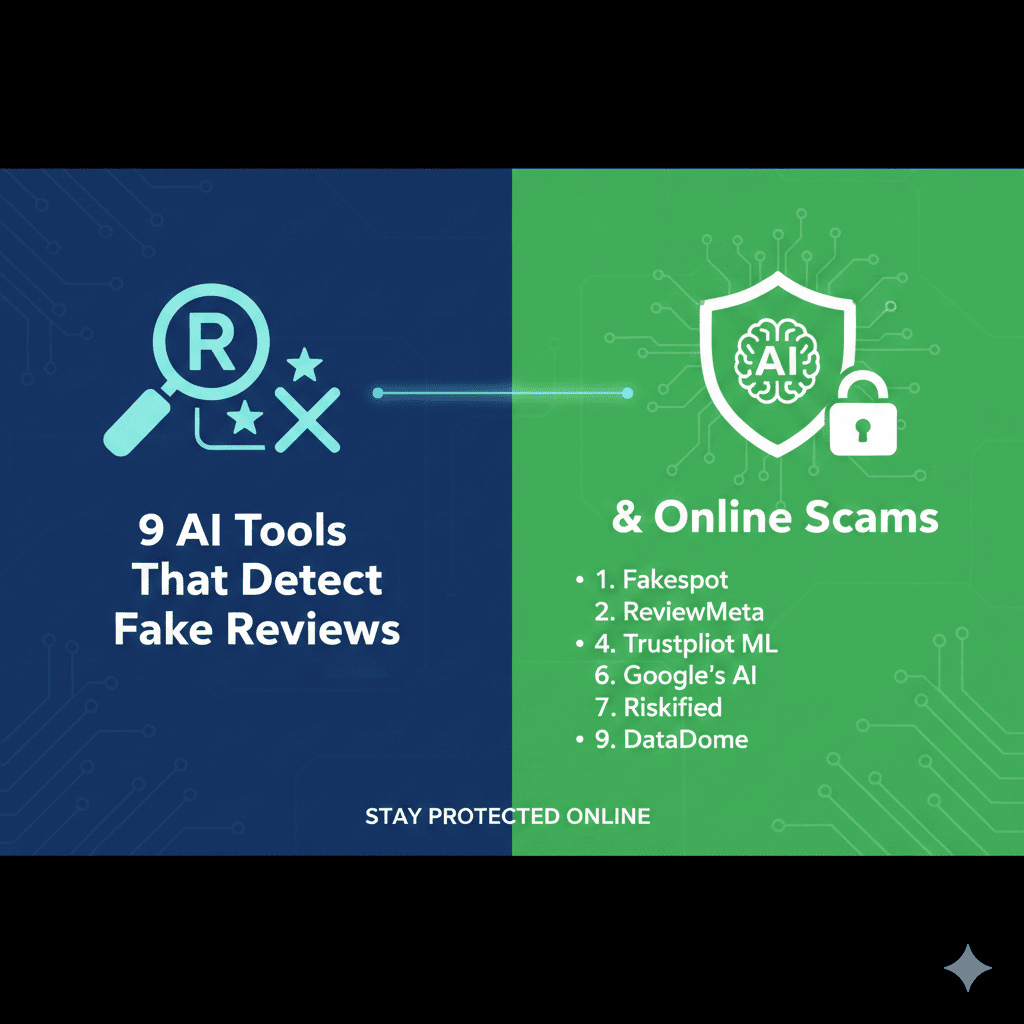
detect fake reviews and online scams The explosion of online shopping and digital services has created an unprecedented challenge for consumers: distinguishing genuine feedback from fabricated reviews and identifying legitimate businesses among increasingly sophisticated scams. Research indicates that up to thirty percent of online reviews may be fake, costing consumers billions in misguided purchases and exposing them to fraudulent schemes.
Traditional methods of spotting suspicious reviews—checking for generic language, looking for patterns, or relying on gut instinct—no longer suffice against professional review manipulation services and AI-generated fake content. Fortunately, artificial intelligence has emerged as a powerful weapon in this battle, offering tools that can detect fake reviews and online scams with remarkable accuracy.
These sophisticated AI systems analyze thousands of data points invisible to human readers, identifying patterns, linguistic anomalies, behavioral signals, and network connections that expose fraudulent activity. From browser extensions that evaluate product reviews in real-time to comprehensive platforms that assess website legitimacy, these tools are transforming how consumers protect themselves online.
This comprehensive guide explores nine essential AI tools designed to detect fake reviews and online scams, examining their capabilities, strengths, and practical applications to help you shop, browse, and conduct business online with confidence.
Understanding the Fake Review and Online Scam Landscape
Before examining specific detection tools, understanding the scope and sophistication of modern review fraud and online scams provides crucial context for why AI-powered protection has become necessary.
The Economics of Fake Reviews
detect fake reviews and online scams Review manipulation has evolved into a multi-billion dollar industry. Businesses purchase fake reviews through specialized services that employ writers, bots, and coordinated networks to inflate ratings and bury negative feedback. These services range from crude operations posting obvious spam to sophisticated agencies creating believable review profiles with purchase histories and varied activity patterns.
The incentive structure is powerful: products with higher ratings and more reviews convert dramatically better than competitors, creating immense pressure on sellers to game the system. For every legitimate business building reputation honestly, several others take shortcuts through fraudulent reviews.
Evolution of Online Scams
Online scams have similarly evolved from obvious phishing emails with poor grammar to sophisticated operations using cloned websites, stolen branding, professional copywriting, and even customer service teams. Modern scam sites often look identical to legitimate retailers, complete with security badges, customer testimonials, and professional product photography.
Cryptocurrency scams, investment fraud, romance scams, and fake charity schemes have become increasingly prevalent, with artificial intelligence ironically being used by scammers to create more convincing personas and communications.
Why Traditional Detection Fails
detect fake reviews and online scams Human intuition struggles against professional fraud operations. Fake reviewers know the red flags consumers look for and specifically engineer their content to avoid detection. They vary language patterns, space out posting times, create diverse reviewer profiles, and even include both positive and mildly negative comments to appear authentic.
Similarly, sophisticated scam websites invest in appearing legitimate, purchasing security certificates, using professional designs, and even temporarily fulfilling some orders to build credibility before disappearing with larger amounts of money.
This is where AI tools that detect fake reviews and online scams become invaluable, analyzing patterns and connections no human could practically evaluate.
1. Fakespot: Comprehensive Review Analysis Platform
Fakespot stands as one of the most established and trusted tools to detect fake reviews and online scams across major e-commerce platforms, utilizing advanced machine learning algorithms trained on millions of verified authentic and fraudulent reviews.
Core Detection Capabilities
Fakespot analyzes reviews from Amazon, Yelp, TripAdvisor, Best Buy, Walmart, and other major platforms, examining linguistic patterns, reviewer behavior, temporal posting patterns, and suspicious correlations. The system assigns reliability grades from A to F, indicating the trustworthiness of a product’s overall review profile.
The AI evaluates dozens of signals including review language complexity, emotional authenticity, specific product detail mentions, reviewer account age and activity patterns, geographic clustering of reviews, and timing patterns that suggest coordinated campaigns.
Beyond individual review assessment, Fakespot identifies suspicious reviewer networks where the same accounts repeatedly review products from specific sellers or brands, suggesting paid review arrangements rather than organic customer feedback.
Browser Extension Features
The Fakespot browser extension provides real-time protection while shopping, automatically analyzing product pages as you browse. A simple letter grade appears directly on product listings, allowing instant trustworthiness assessment without leaving your shopping flow.
Detailed breakdowns show adjusted ratings that remove suspected fake reviews, helping you understand what genuine customers actually think. This adjusted rating often differs dramatically from the displayed rating, revealing products with artificially inflated reputations.
Mobile App Functionality
detect fake reviews and online scams Fakespot’s mobile apps for iOS and Android bring the same protection to mobile shopping, crucial since over sixty percent of online shopping now occurs on smartphones. The apps can analyze products by scanning barcodes while in physical stores, helping you research items before purchasing.
Voice-activated analysis allows hands-free review checking, particularly useful when comparing multiple products or shopping in environments where typing is inconvenient.
Pricing and Accessibility
Fakespot offers its core review analysis completely free for consumers, funded through partnerships and premium features for businesses monitoring their own review profiles. This accessibility makes comprehensive review fraud detection available to everyone regardless of budget.
Premium business subscriptions provide detailed analytics for brands monitoring their product reputations and identifying competitor review manipulation.
Best Use Cases
Fakespot excels for regular online shoppers, particularly those purchasing products in categories prone to review fraud: electronics, beauty products, supplements, phone accessories, and home goods. The tool is essential before making significant purchases where review credibility heavily influences decisions.
2. ReviewMeta: Statistical Analysis for Amazon Reviews
ReviewMeta specializes exclusively in Amazon review analysis, using statistical methodologies and machine learning to detect fake reviews and online scams specifically within Amazon’s ecosystem, the platform most heavily targeted by review manipulation.
Statistical Detection Methodology
ReviewMeta applies rigorous statistical analysis to identify anomalies that indicate fraudulent activity. The system examines review timing clusters, looking for suspicious bursts of positive reviews that suggest coordinated campaigns. It analyzes reviewer overlap between competing products, which often indicates paid review services working for multiple sellers.
The tool identifies suspicious phrase patterns, generic language that appears across multiple unrelated products, and overly enthusiastic language that deviates from authentic customer feedback patterns. It also detects deleted reviews, an important signal since sellers often remove negative feedback through Amazon’s reporting systems.
Adjusted Rating Calculations
Perhaps ReviewMeta’s most valuable feature is its adjusted rating calculation that filters out suspected fake reviews to show what genuine customers likely think. This adjusted rating frequently differs by a full star or more from the displayed rating, dramatically changing product evaluation.
The system provides transparency by showing exactly which reviews it flagged as suspicious and why, allowing you to examine the reasoning and make informed judgments about whether to trust the analysis.
Report Card System
detect fake reviews and online scams Each analyzed product receives a detailed report card breaking down multiple fraud indicators: rating trend anomalies, suspicious reviewer behavior, phrase repetition patterns, unverified purchase ratios, and review timing irregularities. This granular breakdown helps you understand not just whether reviews seem fake but specifically what patterns raise concerns.
Visual graphs illustrate rating distribution over time, making sudden influxes of five-star reviews immediately apparent. Reviewer participation charts show whether feedback comes from diverse customers or concentrated accounts.
Browser Extension Integration
The ReviewMeta browser extension seamlessly integrates analysis into your Amazon shopping experience, displaying adjusted ratings and fraud risk assessments directly on product pages. One-click access to full report cards provides deep analysis when needed without interrupting browsing.
Limitations and Strengths
ReviewMeta’s exclusive Amazon focus means it provides no protection for other platforms, requiring supplementary tools for comprehensive coverage. However, this specialization enables deeper, more accurate analysis of Amazon-specific manipulation tactics.
The tool works best for products with substantial review volumes where statistical analysis can identify meaningful patterns. Products with few reviews provide less data for reliable assessment.
Ideal Users
ReviewMeta suits Amazon power users and anyone making significant purchases on the platform. The statistical rigor appeals to analytically-minded shoppers who appreciate detailed explanations rather than simple trust scores.
3. Trustpilot: Business Verification and Review Authentication
While Trustpilot functions primarily as a review platform, its sophisticated AI systems to detect fake reviews and online scams have made it a trusted resource for evaluating business legitimacy across industries beyond traditional e-commerce.
Multi-Layer Fraud Detection
Trustpilot employs machine learning algorithms that analyze review content, reviewer behavior, and business response patterns to identify fraudulent activity. The system automatically flags suspicious reviews for manual investigation by specialized fraud detection teams.
Advanced natural language processing identifies reviews that deviate from authentic customer feedback patterns, including overly promotional language, generic statements lacking specific experiences, and emotionally manipulated content designed to trigger strong reactions.
The platform’s AI monitors for organized review campaigns, identifying when multiple accounts post similar content within short timeframes or when reviewer networks repeatedly interact with the same businesses.
Business Verification System
Trustpilot’s business verification process provides crucial context for evaluating company legitimacy. Verified businesses undergo identity confirmation, contact information validation, and operational status checks that reduce scam risk.
The verification badge signals that a company has been authenticated and maintains active communication with Trustpilot, though it doesn’t guarantee business quality or ethical practices. However, the absence of verification for businesses claiming Trustpilot profiles raises immediate red flags.
Review Invitation Transparency
Trustpilot tracks how businesses collect reviews, flagging operations that exclusively solicit feedback from satisfied customers while ignoring dissatisfied ones. This invitation bias detection helps identify artificially positive profiles that don’t reflect genuine customer experiences.
The platform distinguishes between reviews from verified customers and unverified submissions, allowing you to weigh feedback accordingly. Profiles dominated by unverified positive reviews warrant skepticism.
Red Flag Indicators
detect fake reviews and online scams Trustpilot’s interface highlights several warning signs: sudden rating changes, unusual review patterns, high percentages of one-star and five-star reviews with few moderate ratings (suggesting polarization or manipulation), and businesses that don’t respond to negative feedback.
The platform’s transparency reports show how many reviews have been removed for violating guidelines, with high removal rates indicating either fraudulent activity or contentious business practices.
Cross-Platform Business Assessment
Beyond individual reviews, Trustpilot helps assess overall business legitimacy, particularly for lesser-known online retailers and service providers. A complete absence from Trustpilot for an established business raises concerns, as does a recently created profile for a company claiming years of operation.
Best Applications
Trustpilot works best for evaluating online businesses, service providers, and companies you’re unfamiliar with before committing to purchases or contracts. The platform particularly excels for assessing international retailers, subscription services, and B2B providers where other review platforms provide limited coverage.
4. ScamAdviser: AI-Powered Website Trust Assessment
ScamAdviser takes a holistic approach to helping users detect fake reviews and online scams by analyzing entire websites rather than individual reviews, providing comprehensive trust assessments for online retailers and service providers.
Comprehensive Website Analysis
ScamAdviser’s AI evaluates over forty different factors to calculate website trust scores, examining domain age and registration details, server location and hosting provider reputation, SSL certificate authenticity, contact information legitimacy, and connections to known scam networks.
The system checks whether businesses provide transparent ownership information, verifiable physical addresses, legitimate customer service contacts, and realistic company histories. Discrepancies between claimed and actual business details trigger red flags.
Owner and Location Verification
One of ScamAdviser’s most valuable features is owner verification, identifying who actually operates websites and where they’re genuinely located. Many scam sites claim to be US or European businesses while operating from high-risk jurisdictions known for hosting fraudulent operations.
The tool reveals when website registration information uses privacy protection services to hide ownership, a common tactic among fraudulent operations. While privacy protection has legitimate uses, its presence warrants additional scrutiny, especially combined with other risk factors.
Review and Reputation Aggregation
ScamAdviser aggregates reviews and complaints from multiple sources, providing broader perspective than any single platform. The system searches for mentions across review sites, forums, social media, and consumer protection databases, identifying patterns of complaints or warnings.
This aggregation often reveals scams that have positive reviews on their own sites or affiliated platforms while generating numerous complaints elsewhere.
Real-Time Scam Database
ScamAdviser maintains an updated database of reported scam websites, cross-referencing analyzed sites against known fraudulent operations. This database integration provides immediate warnings for confirmed scams, even if they’ve recently changed domains or branding.
Browser Extension Protection
detect fake reviews and online scams The ScamAdviser browser extension provides proactive protection, automatically checking websites as you visit them and displaying trust scores before you enter personal information or payment details. Prominent warnings appear for high-risk sites, preventing you from unknowingly engaging with scam operations.
Limitations to Consider
ScamAdviser’s analysis works best for established websites with digital footprints. Very new legitimate businesses may receive lower trust scores simply due to recent domain registration and limited online history. The tool should supplement rather than replace other evaluation methods.
The system occasionally produces false positives, flagging legitimate small businesses that lack extensive web presence or use privacy protection for valid reasons.
Optimal Use Scenarios
ScamAdviser excels for vetting unfamiliar online retailers, particularly when considering purchases from unknown brands or suspiciously low-priced offers. The tool is essential for evaluating investment opportunities, online services requiring upfront payment, and any website requesting sensitive personal information.
5. Google Transparency Report and Safe Browsing
Google’s Safe Browsing technology and Transparency Report tools represent some of the most comprehensive resources to detect fake reviews and online scams, leveraging Google’s massive data infrastructure and AI capabilities to protect billions of users.
Safe Browsing Protection
Google Safe Browsing examines billions of URLs daily, identifying websites that host malware, phishing schemes, unwanted software, and social engineering attacks. The AI-powered system analyzes website content, structure, behavior, and connections to known malicious operations.
Chrome, Firefox, and Safari integrate Safe Browsing protection, automatically warning users before visiting dangerous sites. These warnings have prevented millions of scam victimizations, making Safe Browsing one of the internet’s most important security layers.
Phishing and Deceptive Site Detection
The system identifies sophisticated phishing operations that impersonate legitimate businesses to steal credentials and financial information. Machine learning algorithms analyze visual similarity to authentic sites, URL patterns designed to confuse users, and form structures optimized for credential harvesting.
Google’s AI detects deceptive tactics including fake security warnings, misleading download buttons, and social engineering schemes that manipulate users into taking harmful actions.
Transparency Report Insights
Google’s Transparency Report provides public access to Safe Browsing data, allowing you to check specific websites for safety issues. The report shows current status, historical problems, and detailed explanations of identified threats.
This transparency enables informed decision-making about whether to trust websites, particularly when other signals seem mixed or concerning.
Integrated Gmail Protection
Gmail uses related AI systems to identify phishing emails, suspicious links, and scam messages before they reach your inbox. The system analyzes sender reputation, message content, link destinations, and attachment characteristics to flag potential threats.
This email protection extends scam detection beyond websites to communications, catching fraudulent investment schemes, fake package delivery notifications, and impersonation attempts.
Limitations and Scope
Google Safe Browsing excels at detecting technical threats and obvious scams but doesn’t evaluate subjective factors like business quality, customer service, or likelihood of delivering products as advertised. A safe website according to Safe Browsing may still be a poorly rated business or unreliable seller.
The system focuses on immediate security threats rather than comprehensive business legitimacy assessment, making it one component of thorough scam detection rather than a complete solution.
Integration with Other Tools
Safe Browsing works best as foundational protection supplemented by review analysis tools and business verification platforms. The absence of Safe Browsing warnings indicates a site isn’t hosting malware or obvious phishing, but doesn’t confirm the business is trustworthy or reviews are authentic.
Best Practices
Treat Safe Browsing warnings extremely seriously—very few false positives reach users, so flagged sites genuinely pose risks. However, don’t assume sites without warnings are automatically trustworthy; apply additional verification for unfamiliar businesses and high-value transactions.
6. TheReviewIndex: Machine Learning Review Synthesis
TheReviewIndex applies sophisticated machine learning to detect fake reviews and online scams while going further to synthesize genuine feedback into actionable insights, helping you understand what authentic customers actually think.
Fake Review Filtering
detect fake reviews and online scams TheReviewIndex analyzes Amazon product reviews using natural language processing and behavioral pattern recognition to identify and filter suspected fraudulent feedback. The system examines linguistic authenticity, reviewer credibility, temporal posting patterns, and content specificity.
Unlike simple spam filters, TheReviewIndex’s AI understands context and nuance, distinguishing between genuinely enthusiastic customers and artificially inflated praise. The system recognizes when reviews lack product-specific details that authentic users naturally include.
Genuine Review Synthesis
After filtering suspected fakes, TheReviewIndex synthesizes remaining authentic reviews into organized summaries highlighting commonly mentioned positives and negatives. This synthesis reveals genuine customer consensus obscured by review manipulation.
The tool categorizes feedback by aspect—performance, durability, value, design, customer service—making it easy to evaluate products based on characteristics most important to you. This organization proves particularly valuable for complex products with hundreds of reviews.
Spam Score Transparency
Each analyzed product receives a spam score indicating the suspected percentage of fake reviews. This transparency helps you understand confidence levels and make informed decisions about how much weight to give overall ratings.
Products with high spam scores warrant extreme skepticism, while low spam scores suggest generally reliable feedback that can guide purchase decisions.
Detailed Review Breakdowns
TheReviewIndex provides granular analysis showing which specific reviews appear authentic versus suspicious, allowing you to examine flagged content and assess whether you agree with the AI’s evaluation. This transparency builds trust and helps you understand detection methodology.
Category Expertise
The platform focuses primarily on product categories most prone to review fraud: electronics, accessories, beauty products, and home goods. This specialization enables more accurate detection calibrated to category-specific manipulation tactics.
Usage Considerations
TheReviewIndex works exclusively with Amazon, requiring alternative tools for other platforms. The service operates through a website interface rather than browser extension, adding an extra step to your research process but providing more detailed analysis than quick-check extensions.
Ideal User Profile
TheReviewIndex suits thorough researchers making significant purchases who want comprehensive understanding beyond simple trust scores. The detailed synthesis particularly benefits buyers researching complex products where understanding specific strengths and weaknesses matters more than overall ratings.
7. Norton Safe Web: Comprehensive Threat Analysis
Norton Safe Web leverages Symantec’s decades of cybersecurity expertise to detect fake reviews and online scams, offering comprehensive threat analysis that extends beyond simple malware detection to evaluate overall site safety.
Multi-Dimensional Safety Assessment
Norton Safe Web analyzes websites across multiple threat vectors: malware distribution, phishing operations, suspicious advertising networks, privacy concerns, and community-reported issues. This holistic approach identifies risks that single-focus tools might miss.
The AI-powered system examines site reputation over time, tracking changes that might indicate legitimate businesses being compromised or scam operations cycling through domains to avoid detection.
Community-Powered Intelligence
Norton Safe Web incorporates community reporting where users can flag suspicious sites and share experiences with potentially fraudulent operations. This crowdsourced intelligence supplements automated analysis, catching emerging scams before they establish significant online footprints.
The system weights community reports based on reporter credibility and report specificity, filtering noise while amplifying genuine warnings.
Detailed Threat Categorization
When Norton identifies issues, it provides specific categorizations: computer threats, identity theft risks, annoyance factors, and trust indicators. This granularity helps you understand exactly what risks a site poses and make informed decisions.
A site might be technically safe from malware but receive warnings for aggressive advertising or privacy concerns, information crucial for deciding whether to engage.
Integration with Norton Products
Norton Safe Web integrates with Norton Security products, providing automatic protection for Norton users. Browser warnings prevent accidental visits to dangerous sites, while email protection blocks links to identified threats.
This seamless integration creates comprehensive protection that works in the background without requiring constant manual checking.
Mobile Protection
Norton Mobile Security brings the same protection to smartphones, crucial since mobile browsing often involves smaller screens and faster clicking that can lead to inadvertently visiting malicious sites.
Accessibility
Norton Safe Web offers free website checking through its online interface, allowing anyone to verify site safety before visiting. This accessibility democratizes access to enterprise-level threat intelligence without requiring paid subscriptions.
Best Applications
Norton Safe Web excels for general web browsing protection, particularly valuable when clicking links from emails, social media, or advertisements where destination legitimacy is uncertain. The tool provides essential protection for families, elderly individuals, and anyone less experienced with identifying online threats.
8. Sitejabber: Consumer Review Verification Platform
Sitejabber combines verified consumer reviews with AI-powered fraud detection to detect fake reviews and online scams, focusing particularly on online retailers and service providers that may not have extensive presence on other platforms.
Verified Purchase Reviews
Sitejabber emphasizes verified purchase reviews where the platform confirms reviewers actually conducted transactions with reviewed businesses. This verification dramatically reduces fake review prevalence since posting requires proof of genuine customer relationships.
The verification badge appears prominently on reviews, allowing you to quickly identify feedback from confirmed customers versus unverified claims.
Business Accreditation Process
Sitejabber offers business accreditation after evaluating company legitimacy, business practices, customer service quality, and review response patterns. Accredited businesses meet higher standards than simple profile creation, providing additional trust signals.
The accreditation process includes verification of business registration, contact information validation, and assessment of complaint resolution practices.
Complaint and Review Analysis
The platform’s AI analyzes review patterns across businesses, identifying suspicious activities like coordinated positive review campaigns, fake negative reviews posted by competitors, and unusual reviewer behavior suggesting manipulation.
Sentiment analysis evaluates whether reviews reflect genuine customer experiences or artificial constructs designed to manipulate perceptions. The system flags reviews with generic language, excessive emotional manipulation, or suspicious praise patterns.
Response Rate Tracking
detect fake reviews and online scams Sitejabber tracks how businesses respond to negative reviews, with responsive companies generally proving more legitimate than those ignoring complaints. Scam operations typically abandon profiles after accumulating negative reviews, while legitimate businesses engage with customer concerns.
Cross-Platform Verification
Sitejabber encourages cross-referencing reviews with other platforms, providing links to businesses’ presences on Trustpilot, Better Business Bureau, and social media. Consistency across platforms suggests authenticity, while contradictions raise red flags.
Search and Discovery Features
The platform’s search functionality helps you proactively research businesses before engaging, particularly valuable for unfamiliar online retailers or service providers found through advertisements or social media.
Practical Applications
Sitejabber works best for evaluating mid-sized online retailers and service providers that may lack extensive Amazon or major platform presence. The tool particularly excels for researching subscription services, educational programs, online courses, and digital products where review manipulation is common.
9. BBB Scam Tracker: Community-Powered Fraud Prevention
The Better Business Bureau’s Scam Tracker provides a unique community-driven approach to helping consumers detect fake reviews and online scams, combining crowdsourced reporting with BBB’s extensive business verification infrastructure.
Crowdsourced Scam Database
BBB Scam Tracker aggregates reports from consumers who’ve encountered fraudulent operations, creating a searchable database of current scam tactics, affected demographics, and geographic patterns. This real-time intelligence helps users recognize emerging threats before they become widespread.
The platform categorizes scams by type—online purchase fraud, phishing, employment scams, investment fraud, romance scams—making it easy to research specific threat categories relevant to your situation.
Geographic and Demographic Analysis
Scam Tracker provides geographic heat maps showing where specific scams are most prevalent and demographic breakdowns revealing which age groups and populations are most frequently targeted. This contextual information helps you assess personal risk levels.
Understanding scam distribution patterns enables proactive protection, particularly valuable for vulnerable populations more frequently targeted by specific fraud types.
Detailed Scam Reports
Each scam report includes detailed information about tactics used, how victims were contacted, what information was requested, and financial losses incurred. These specifics help you recognize similar operations before becoming victimized.
The reports often include actual communications from scammers, allowing you to compare suspicious messages you receive against documented fraud attempts.
Business Profile Integration
BBB Scam Tracker integrates with traditional BBB business profiles, allowing you to research company legitimacy while simultaneously checking for scam reports. This dual-purpose functionality streamlines the verification process.
BBB accreditation and ratings provide additional context for evaluating businesses, though accreditation requires fees that many small legitimate businesses don’t pay, so absence shouldn’t automatically indicate untrustworthiness.
Educational Resources
The platform provides extensive educational content explaining common scam tactics, red flags to watch for, and protective measures. This education empowers users to become more sophisticated at identifying threats independently.
Regular updates highlight new scam variations and evolving tactics, keeping users informed about the constantly changing fraud landscape.
Reporting Mechanism
BBB Scam Tracker’s reporting system allows you to contribute your experiences, helping protect others from similar scams. The ease of reporting encourages participation, strengthening the database’s comprehensiveness.
Limitations and Strengths
Scam Tracker relies on voluntary reporting, meaning not all scams appear in the database. Recently emerged frauds may not yet have significant report volumes, reducing effectiveness for cutting-edge operations.
However, the platform excels for identifying established scam patterns and provides crucial education that generic fraud detection tools don’t offer.
Optimal Usage
Use BBB Scam Tracker as part of comprehensive research before engaging with unfamiliar businesses, particularly for service providers, employment opportunities, investment offers, and online relationships where scam prevalence is high. The tool particularly benefits older adults and less tech-savvy individuals who may be more vulnerable to social engineering tactics.
Implementing a Multi-Tool Protection Strategy
No single tool perfectly identifies all fake reviews and scams. The most effective protection comes from strategically combining multiple resources, creating layered defenses that catch threats individual tools might miss.
Layered Verification Approach
Start with browser-integrated tools like Fakespot or Norton Safe Web that provide automatic preliminary screening. These catch obvious threats and fraudulent operations without requiring conscious effort.
For significant purchases or unfamiliar businesses, conduct deeper research using specialized tools. Check Amazon products with both Fakespot and ReviewMeta to see if different analytical approaches reach consistent conclusions.
Verify business legitimacy using ScamAdviser and BBB Scam Tracker, cross-referencing findings across platforms. Consistency across independent tools dramatically increases confidence, while contradictions warrant additional investigation.
Red Flag Recognition
Develop sensitivity to common warning signs that warrant tool-based verification: prices dramatically lower than competitors, pressure tactics emphasizing limited-time offers, requests for unusual payment methods, vague or missing contact information, recently created websites for supposedly established businesses, and exclusively positive reviews without nuanced feedback.
When intuition suggests something seems wrong, trust that instinct and verify thoroughly before proceeding.
Platform-Specific Strategies
Tailor your approach to specific platforms based on their vulnerability to fraud. Amazon requires review-focused tools like ReviewMeta and TheReviewIndex. Unfamiliar online retailers need comprehensive site analysis through ScamAdviser and Norton Safe Web.
Service providers and B2B companies warrant Trustpilot and Sitejabber research, while general web browsing benefits from automatic Safe Browsing protection supplemented by Norton Safe Web for additional scrutiny.
Time Investment Calibration
Scale verification effort to transaction value and risk. Routine purchases under twenty dollars may only warrant quick Fakespot checks, while major purchases, service contracts, or investments justify comprehensive multi-tool research taking thirty minutes or more.
The time invested in thorough verification is negligible compared to the cost, hassle, and stress of scam victimization.
Staying Current
Fraud tactics evolve constantly as scammers adapt to detection methods. Periodically review new tools and updated features in existing platforms. Follow cybersecurity news and consumer protection resources to stay informed about emerging threats.
Join online communities focused on consumer protection and scam awareness where users share current threats and effective detection strategies.
The Future of AI-Powered Fraud Detection
The ongoing arms race between fraudsters and detection systems ensures continuous evolution in tools that detect fake reviews and online scams. Understanding emerging trends helps you prepare for the changing landscape.
Advanced Pattern Recognition
Next-generation AI will identify increasingly subtle manipulation patterns as machine learning models train on larger datasets of confirmed fraud. These systems will detect organized networks even when individual reviews appear authentic, recognizing subtle linguistic signatures and behavioral patterns invisible to current technology.
Cross-platform analysis will identify when the same fraud operations work across multiple review sites and e-commerce platforms, providing comprehensive protection regardless of where you shop.
Behavioral Biometrics
Emerging technologies will analyze how users interact with websites—mouse movements, typing patterns, navigation behaviors—to distinguish legitimate customers from bots and paid reviewers. These behavioral signals are extremely difficult to fake at scale, making them powerful fraud indicators.
Real-Time Verification
Future systems will verify reviewer identities and purchase authenticity in real-time, potentially eliminating fake reviews at the source rather than detecting them after publication. Blockchain technology and decentralized verification systems may create tamper-proof review ecosystems.
Predictive Scam Detection
AI will increasingly predict which new websites and operations are likely scams before they victimize significant numbers of people, analyzing registration patterns, infrastructure choices, and network connections to identify fraudulent operations at inception.
Personalized Risk Assessment
Advanced AI will provide personalized protection calibrated to individual vulnerability factors, offering heightened scrutiny for demographics or situations where you’re statistically more at risk while streamlining experiences for lower-risk scenarios.
Conclusion
The proliferation of fake reviews and online scams represents one of the internet’s most persistent challenges, undermining trust in digital commerce and costing consumers billions annually. The sophisticated tools designed to detect fake reviews and online scams outlined in this guide provide essential protection in an increasingly complex digital landscape.
Fakespot and ReviewMeta offer specialized Amazon protection with different analytical approaches that complement each other effectively. Trustpilot and Sitejabber provide broader business verification across industries and platforms. ScamAdviser and Norton Safe Web deliver comprehensive website legitimacy assessment. TheReviewIndex synthesizes authentic feedback into actionable insights. Google Safe Browsing provides foundational security for everyday browsing. BBB Scam Tracker offers community-powered fraud intelligence and education.
The most effective protection strategy combines multiple tools, creating layered defenses that catch threats individual systems might miss. Browser extensions provide automatic preliminary screening, while specialized platforms offer deep analysis for significant decisions.
As AI technology evolves, these tools will become increasingly sophisticated at identifying manipulation and fraud. However, scammers will simultaneously adopt more advanced tactics, ensuring the ongoing need for vigilance and multi-tool verification strategies.
Investing time in learning and implementing these detection tools for fake reviews and online scams pays substantial dividends through avoided losses, reduced stress, and increased confidence in online transactions. The digital marketplace offers unprecedented convenience and selection, but only when you can distinguish genuine opportunities from fraudulent traps designed to exploit unwary consumers.
detect fake reviews and online scams Your best protection combines powerful AI tools with informed skepticism, healthy caution, and the wisdom to recognize that if something seems too good to be true, it probably warrants thorough verification before you commit your money or personal information.
Also read this:
7 AI Branding Tools That Create Full Brand Identities Automatically