
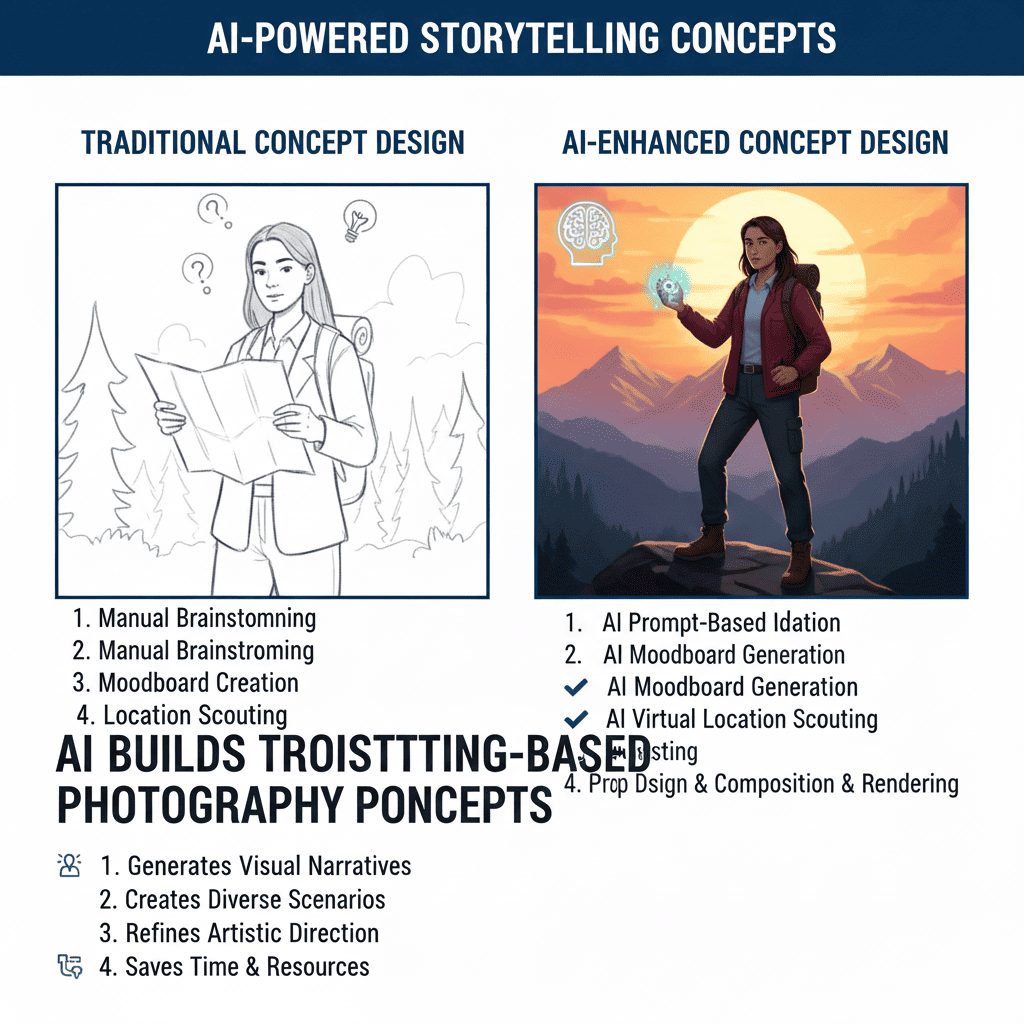
Photography transcends mere image capture when it tells compelling stories. The difference between a collection of beautiful images and a powerful photographic narrative lies in conceptual planning, thematic coherence, and emotional progression. Now, artificial intelligence is revolutionizing how photographers build storytelling-based photography projects, offering tools that generate narrative concepts, develop character arcs, and create cohesive visual storylines that resonate with audiences on profound emotional levels.
1. The Power of Narrative in Photography
Understanding why story matters in photography reveals why AI tools that build storytelling-based photography concepts have become transformative for visual artists.
Why Stories Captivate Audiences
Human brains are wired for narrative. We remember stories 22 times more effectively than isolated facts, and emotional narratives trigger neural coupling between storyteller and audience. Photographs that tell stories create deeper engagement, longer viewing times, and more meaningful connections than technically perfect but narratively empty images.
Story-driven photography portfolios generate 3-5 times more social media engagement, receive preferential treatment from editorial publications, and command premium pricing from clients seeking meaningful rather than merely decorative imagery. The market increasingly values narrative sophistication alongside technical excellence.
Traditional Concept Development Challenges
Developing cohesive photographic narratives traditionally requires extensive planning, research, and creative brainstorming. Photographers spend hours conceptualizing themes, developing shot lists, creating mood boards, and ensuring narrative consistency across projects.
Many talented photographers struggle with this conceptual phase despite possessing excellent technical and compositional skills. The blank page of a new project can paralyze creativity, while mid-project narrative confusion can derail promising concepts. These challenges waste time, create stress, and prevent photographers from realizing their full storytelling potential.
The Gap Between Vision and Execution
Photographers often envision ambitious narrative projects but lack frameworks for translating abstract ideas into concrete shooting plans. A vague concept about “urban isolation” or “family connections” needs transformation into specific scenes, subjects, lighting approaches, and sequential arrangements before cameras can capture it.
This translation requires narrative construction skills distinct from photographic technique. Not all photographers possess both skill sets equally, creating frustration when technical capabilities exceed conceptual development abilities.
2. How AI Generates Photographic Narratives
Modern artificial intelligence systems that help photographers build storytelling-based photography projects utilize sophisticated natural language processing and creative algorithms.
Natural Language Processing for Concept Generation
AI platforms analyze text inputs describing themes, emotions, or basic concepts, then generate comprehensive narrative frameworks. These systems draw from vast databases of storytelling structures, archetypal narratives, and successful photographic series to propose detailed project concepts.
The AI understands narrative components including character development, conflict structures, emotional arcs, thematic symbolism, and resolution patterns. It applies this understanding to photography-specific contexts, suggesting visual metaphors, location types, subject approaches, and sequential arrangements that serve narrative purposes.
Pattern Recognition from Successful Stories
Training data for these AI systems includes analyses of award-winning photo essays, published photographic narratives, museum-exhibited series, and editorial photography. The algorithms identify patterns distinguishing compelling narratives from random image collections.
This pattern recognition enables the AI to understand what makes stories work—setup and payoff relationships, tension building and release, symbolic consistency, and emotional progression. The system applies these principles when generating new concepts tailored to your specific creative vision.
Multi-Modal Creative Synthesis
Advanced AI platforms synthesize information from multiple sources when developing narrative concepts. They analyze reference images you provide, consider your portfolio’s existing aesthetic, incorporate location and resource constraints, and adapt suggestions to your stated objectives.
This synthesis produces concepts that feel personalized rather than generic, reflecting your unique creative voice while providing structured narrative frameworks that strengthen storytelling coherence.
Iterative Refinement Capabilities
Unlike static creative tools, AI narrative generators engage in dialogue, refining concepts through iterative conversation. You can request specific adjustments, explore alternative directions, or deepen particular narrative elements, with the AI adapting its suggestions based on your feedback.
This collaborative refinement process mirrors working with a creative director or editor, providing intelligent pushback, alternative perspectives, and detailed development of promising directions.
3. Leading AI Platforms for Narrative Development
Several platforms now offer specialized capabilities to help photographers build storytelling-based photography concepts with varying approaches and strengths.
ChatGPT and Claude for Narrative Brainstorming
Large language models like ChatGPT and Claude excel at generating detailed photographic narrative concepts from simple prompts. These AI assistants can develop complete project proposals including thematic statements, shot lists, location suggestions, mood descriptions, and sequential arrangements.
The conversational interface allows iterative development, where you refine concepts through dialogue. Ask the AI to deepen emotional resonance, adjust tone, incorporate specific visual elements, or restructure narrative progression. The system maintains context across the conversation, building increasingly sophisticated concepts.
These platforms generate supporting materials including artist statements, project descriptions for grant applications, social media campaign narratives, and exhibition wall text. This comprehensive support addresses both creative and practical project needs.
For photographers seeking inspiration, these AI systems can analyze existing work, identify narrative patterns, and suggest directions for series expansion or thematic deepening. They serve as creative partners throughout project lifecycles.
Midjourney for Visual Narrative Exploration
Midjourney’s AI image generation capabilities enable visual exploration of narrative concepts before shooting. Generate reference images depicting scenes, moods, lighting conditions, and compositional approaches aligned with your narrative vision.
This visual brainstorming helps crystallize abstract narrative ideas into concrete visual targets. You can explore multiple aesthetic directions quickly, identifying which visual treatments best serve your story before committing to production.
The platform’s remix and variation features allow iterative refinement of visual concepts, developing cohesive aesthetic languages for entire narrative projects. This ensures visual consistency supporting rather than distracting from narrative coherence.
Midjourney-generated images serve as mood boards, client presentations, and shooting references, bridging the gap between conceptual vision and practical execution.
Notion AI for Project Organization
Notion’s integrated AI assists with organizing complex narrative photography projects. The system helps structure project databases, develop shot lists, create production timelines, and maintain narrative consistency documentation.
Notion AI can analyze your written project concepts and automatically generate structured production plans, identifying necessary shots, location requirements, prop needs, and scheduling considerations. This translation from creative concept to practical execution plan streamlines project management.
The platform’s AI writing assistant helps develop narrative descriptions, refine thematic statements, and create coherent project documentation that maintains narrative focus throughout production.
Descript for Audio Narrative Integration
For photographers creating multimedia narratives incorporating audio elements, Descript’s AI tools assist with script development, voiceover generation, and audio-visual synchronization.
The platform’s AI can generate narrative voiceover scripts based on your photographic concepts, suggest audio mood elements complementing visual narratives, and help structure audio-visual storytelling that enhances photographic impact.
This capability expands narrative possibilities beyond still imagery, enabling more immersive storytelling experiences that combine photography with complementary audio narratives.
Storyline Creator by Runway ML
Runway ML offers specialized tools for visual storytellers, including narrative structure templates adapted for photographic projects. The platform provides AI-assisted storyboarding, sequence planning, and narrative arc development specifically designed for visual media.
The system helps photographers map emotional progressions across image sequences, ensuring each photograph serves specific narrative functions. It identifies gaps in narrative coverage and suggests additional shots that strengthen story completeness.
Runway’s integration with image editing and generation tools creates a comprehensive environment for developing and refining narrative photography concepts from initial ideation through final production.
4. Developing Complete Narrative Concepts with AI
Using AI effectively to build storytelling-based photography projects requires strategic approaches that maximize these tools’ creative capabilities.
Starting with Theme and Emotion
Begin by providing the AI with core thematic ideas and intended emotional impacts. Rather than requesting specific shots, describe the feelings you want to evoke, the questions you want to explore, or the human experiences you want to illuminate.
For example, instead of “I want to photograph old buildings,” provide richer context: “I want to explore how abandoned spaces hold memories of past lives, creating melancholy contemplation about impermanence and the passage of time.” This emotional and thematic grounding enables AI to generate more sophisticated narrative frameworks.
The AI will expand these themes into specific narrative structures, suggesting symbolic elements, visual metaphors, character types, and sequential progressions that embody your thematic intentions.
Building Character-Driven Narratives
Even when photographing landscapes or objects, compelling narratives often benefit from implied or explicit character elements. AI platforms can help develop character concepts that anchor narratives and provide emotional entry points for viewers.
Describe character archetypes, background stories, or emotional states, and the AI will suggest how to represent these photographically. This might include specific wardrobe choices, activity suggestions, environmental contexts, or symbolic props that reveal character without requiring explicit portraiture.
For documentary projects, AI can help develop frameworks for revealing subject personalities and experiences through environmental portraits, detail shots, and narrative sequencing that builds viewer understanding progressively.
Creating Narrative Arc Structures
Strong photographic narratives follow arc structures—setup, development, climax, and resolution. AI tools help map these structures specifically for visual storytelling, suggesting how many images each section requires and what narrative functions individual photographs should serve.
The AI considers pacing—knowing when rapid-fire image sequences create energy and when slower contemplative progressions serve reflective themes. It suggests where establishing shots orient viewers, where detail images deepen understanding, and where powerful single images can carry climactic narrative weight.
This structural guidance prevents common problems like front-loaded narratives that lose momentum or aimless collections that never build toward meaningful conclusions.
Incorporating Symbolic Consistency
Effective narratives employ recurring visual symbols that create thematic unity and deepening meaning through repetition and variation. AI platforms identify opportunities for symbolic elements based on your themes, suggesting objects, colors, compositional patterns, or environmental features that can recur meaningfully.
The system helps develop symbol evolution—how symbolic elements might transform or accumulate meaning as narratives progress. This sophisticated approach to visual symbolism elevates casual photography into layered storytelling that rewards careful viewing.
5. Genre-Specific Narrative Applications
Different photography genres benefit from specialized approaches to build storytelling-based photography projects using AI assistance.
Documentary and Photojournalism
Documentary narratives require balancing authentic observation with coherent storytelling. AI tools help develop ethical frameworks for documentary projects, suggest approaches that reveal truth while maintaining narrative engagement, and identify story angles that give broader significance to specific subjects.
The AI can analyze news contexts, suggest complementary perspectives, and help develop multi-layered documentaries that avoid oversimplification. It proposes interview questions, identifies locations worth exploring, and suggests ways to represent abstract social issues through concrete visual evidence.
For photojournalists, AI assistance includes developing story pitches, identifying publication angles, and crafting narratives that meet editorial needs while maintaining documentary integrity.
Portrait Series and Character Studies
Portrait narratives explore human complexity, relationships, and identity. AI platforms suggest approaches for revealing personality through environmental context, props, activities, and sequential development across multiple images.
The systems propose theme variations—showing subjects in multiple contexts that reveal different facets, developing temporal narratives showing transformation over time, or creating comparative structures that illuminate similarities and differences across diverse subjects.
AI-generated character background development helps photographers understand subjects more deeply, even when these backgrounds remain implicit in final images. This deeper understanding informs more insightful photographic approaches.
Conceptual and Fine Art Projects
Fine art photography often explores abstract concepts requiring sophisticated symbolic translation. AI excels at suggesting visual metaphors, identifying artistic references, and developing conceptual frameworks that give concrete form to philosophical ideas.
The systems can reference art history, literary traditions, and philosophical concepts, connecting your work to broader cultural conversations. This contextual grounding strengthens conceptual depth and provides rich material for artist statements and critical engagement.
AI tools help balance abstraction and accessibility, ensuring conceptual work remains engaging rather than impenetrably obscure while maintaining intellectual sophistication.
Commercial Storytelling
Brand campaigns and commercial projects require narratives that serve marketing objectives while remaining authentic and engaging. AI platforms help develop commercial narratives that don’t feel like advertisements, finding emotional cores that resonate with target audiences.
The systems analyze brand identities, suggest authentic ways to embody brand values photographically, and develop campaign narratives that tell compelling stories while achieving commercial goals. This balances artistic integrity with client objectives.
6. Practical Workflow Integration
Maximizing AI’s ability to build storytelling-based photography concepts requires integrating these tools strategically into creative workflows.
Pre-Production Planning
Use AI during initial project conception to generate multiple narrative directions quickly. Explore 5-10 different narrative approaches to the same theme, evaluating which frameworks best align with your vision, resources, and objectives.
Generate comprehensive shot lists from selected narrative concepts, with AI suggesting specific scenes, moments, compositional approaches, and technical considerations for each narrative beat. These detailed plans guide efficient shooting that ensures narrative completeness.
Create production timelines with AI assistance, identifying scheduling challenges, resource requirements, and logistical considerations that might impact narrative execution. This preparation prevents mid-production narrative compromises due to inadequate planning.
On-Location Narrative Maintenance
Bring AI-generated narrative frameworks on location through mobile devices, referencing narrative objectives while shooting. Use AI tools to assess coverage during breaks, identifying narrative gaps requiring additional shooting.
Some photographers use conversational AI during shoots to problem-solve unexpected challenges, asking for alternative approaches when planned shots prove impossible or discovering better narrative possibilities than originally conceived.
This real-time narrative support maintains story focus even amid shooting chaos, ensuring captured images serve cohesive narrative purposes rather than fragmenting into disconnected documentation.
Post-Production Narrative Editing
After shooting, use AI to analyze captured images against original narrative frameworks, identifying strongest images for each narrative function. The AI can suggest sequence orders, evaluate narrative flow, and identify where additional images might strengthen story completeness.
Generate multiple sequence variations with AI assistance, exploring different narrative structures using the same image set. This experimentation often reveals superior narrative arrangements not apparent during initial planning.
AI tools help write supporting text—titles, captions, artist statements, and project descriptions—that verbally reinforce visual narratives without redundancy or contradiction.
Narrative Evolution Across Projects
Use AI to analyze completed narrative projects, identifying strengths, weaknesses, and opportunities for development. The systems can recognize emerging thematic interests across your portfolio, suggesting directions for future work that deepen or expand established narrative territories.
This portfolio-level narrative analysis helps photographers develop cohesive bodies of work rather than disconnected individual projects, building reputations around specific narrative expertise.
7. Overcoming Creative Challenges with AI
AI assistance proves particularly valuable when photographers encounter common obstacles that prevent them from effectively build storytelling-based photography projects.
Breaking Through Creative Blocks
When facing blank-page paralysis, AI conversation generates starting points through rapid ideation. Describe vague interests or emotional states, and the AI proposes multiple narrative frameworks worth exploring.
The system’s ability to connect disparate ideas often sparks unexpected creative directions. Feed the AI seemingly unrelated concepts, and it will identify surprising narrative connections that open fresh creative territories.
This creative momentum breaks paralysis without dictating final directions, providing scaffolding that supports rather than constrains creative exploration.
Deepening Surface Concepts
Many photographers start with attractive but shallow concepts—visually appealing ideas lacking narrative depth. AI platforms help deepen these concepts by asking probing questions, identifying underlying themes, and suggesting layers of meaning that transform pretty pictures into meaningful narratives.
The AI might recognize that your “urban architecture” concept actually explores themes of human scale, power structures, or isolation. This thematic clarification transforms generic subject matter into specific narrative investigations with clear storytelling purposes.
Maintaining Narrative Coherence
Long-term projects risk narrative drift as photographers shoot across weeks or months. AI tools help maintain coherence by regularly reviewing captured work against original narrative frameworks, identifying when shooting begins diverging from intended stories.
The systems suggest corrective approaches that realign shooting with narrative objectives or help recognize when organic narrative evolution represents improvement rather than drift, adapting original frameworks to accommodate discovered possibilities.
Solving Mid-Project Problems
When planned approaches prove ineffective during shooting, AI provides rapid problem-solving through alternative narrative suggestions. Describe what’s not working, and the system proposes adjusted approaches, alternative angles, or restructured narratives that work with rather than against encountered realities.
This adaptive support prevents project abandonment when original plans meet obstacles, helping photographers salvage and redirect troubled projects.
8. Ethical Considerations in AI-Assisted Storytelling
Using AI to build storytelling-based photography concepts raises important ethical questions requiring thoughtful navigation.
Maintaining Authentic Creative Voice
The primary ethical concern involves preserving authentic creative voice while using AI assistance. The risk exists that AI-generated concepts might homogenize photographic storytelling, with multiple photographers pursuing similar AI-suggested narratives.
Solution: Use AI for structural support and brainstorming while maintaining personal creative authority over thematic choices, emotional approaches, and final executions. The AI should amplify your unique voice rather than replace it with algorithmic generic suggestions.
Attribution and Transparency
When AI contributes significantly to narrative concept development, questions arise about appropriate attribution and transparency regarding AI involvement in creative processes.
Best practice: Be transparent about AI assistance when relevant, particularly in grant applications, editorial submissions, or educational contexts. Frame AI as a tool supporting your creative vision rather than claiming sole authorship of collaboratively developed concepts.
Documentary Ethics and AI Planning
Documentary photography carries special ethical obligations regarding truth and representation. Using AI to plan documentary narratives might create conflicts between authentic observation and predetermined story structures.
Approach: Use AI to develop flexible frameworks that guide rather than dictate documentary shooting. Remain open to narratives that emerge organically from subjects and situations rather than forcing realities into AI-generated narrative templates.
Cultural Sensitivity and AI Limitations
AI systems trained primarily on Western narrative traditions might suggest culturally inappropriate approaches when developing projects about non-Western subjects or for non-Western audiences.
Mitigation: Supplement AI suggestions with research, consultation with cultural experts, and awareness of AI’s cultural limitations. Use AI for structural support while seeking human guidance on cultural nuance and sensitivity.
9. Measuring Narrative Success
Evaluating whether AI assistance effectively helps photographers build storytelling-based photography projects requires appropriate success metrics.
Audience Engagement Metrics
Track how narrative-focused work performs compared to previous non-narrative projects. Measure social media engagement rates, gallery viewing duration, publication acceptance rates, and client satisfaction scores.
Photographers typically report 40-60% increases in meaningful engagement metrics after systematically developing stronger narrative frameworks with AI assistance, validating the approach’s effectiveness.
Critical Reception and Recognition
Submit narrative projects to competitions, publications, and exhibitions. Juried recognition often correlates with narrative sophistication, providing external validation of storytelling quality.
Many photographers experience improved competition success after implementing AI-assisted narrative development, with judges specifically noting enhanced storytelling coherence in feedback.
Personal Creative Satisfaction
Monitor your own satisfaction with project outcomes. Effective AI assistance should increase creative fulfillment by enabling more ambitious narrative projects and reducing frustration with conceptual development challenges.
If AI collaboration enhances rather than diminishes creative satisfaction, the approach succeeds regardless of external metrics. Photography ultimately serves personal creative needs as much as audience engagement.
Commercial Impact
For professional photographers, track whether stronger narrative capabilities attract higher-quality clients, command premium pricing, or open new market opportunities.
Photographers developing narrative expertise often transition from commodity work to specialized creative services, with corresponding financial benefits reflecting increased perceived value.
Conclusion: Embracing AI as Creative Partner
The ability to build storytelling-based photography concepts with AI assistance represents a fundamental expansion of creative capabilities. These tools don’t replace photographer creativity—they amplify it, providing structural frameworks, narrative expertise, and conceptual development support that enable more ambitious and sophisticated visual storytelling.
Photography’s future belongs to visual artists who combine technical excellence with narrative sophistication. AI democratizes access to narrative development skills traditionally requiring years of study or natural storytelling aptitude. Now, photographers at all experience levels can develop compelling narrative frameworks that give purpose and coherence to their image-making.
The most successful photographers won’t be those who reject AI assistance in favor of unaided creativity, nor those who abdicate creative control to algorithmic suggestions. Success will come to photographers who strategically leverage AI’s narrative generation capabilities while maintaining authentic creative voices and personal artistic visions.
Also read this: