
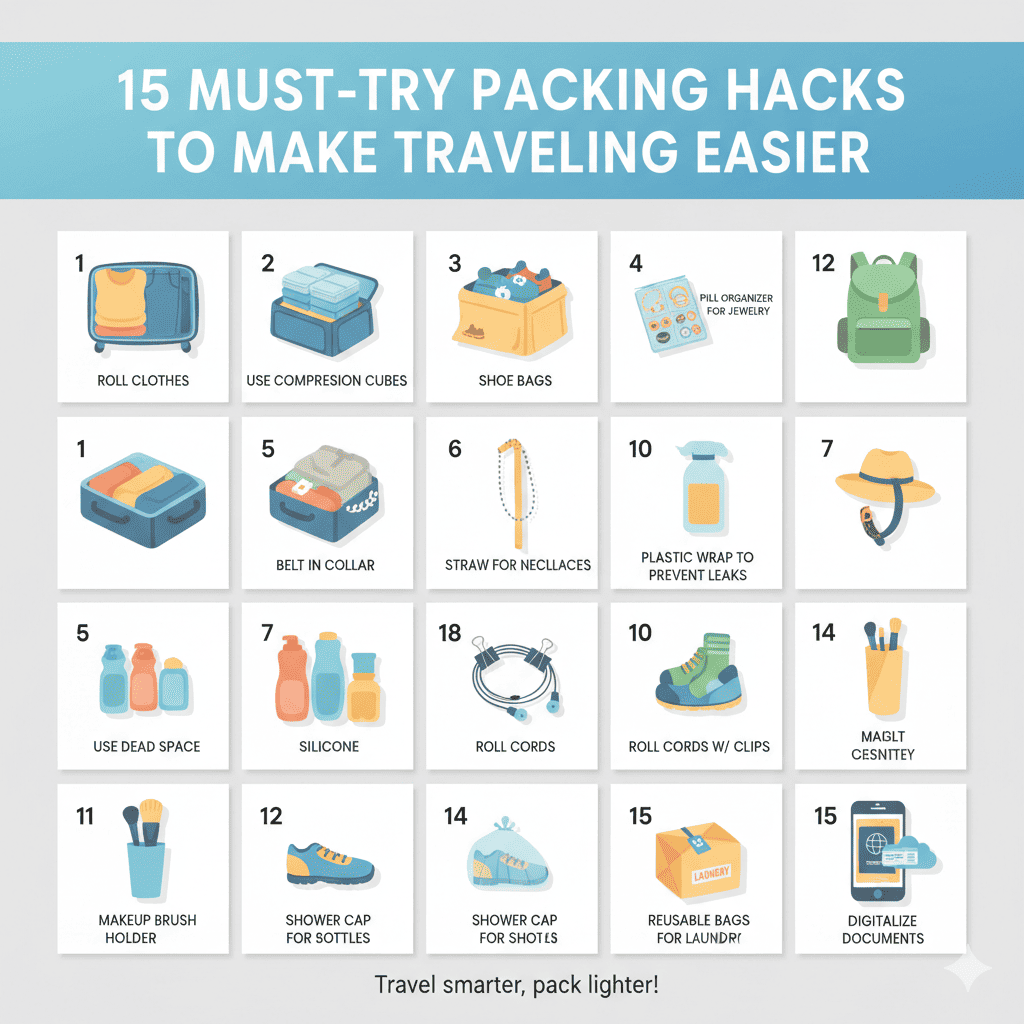
Traveling should be an exciting adventure, not a stressful ordeal that begins with wrestling an overstuffed suitcase. Whether you’re a seasoned globetrotter or planning your first big trip, mastering the art of efficient packing can transform your entire travel experience. The right Packing Hacks to Make Traveling Easier can help you fit more items in less space, keep everything organized, and ensure you arrive at your destination with wrinkle-free clothes and easy access to essentials.
The difference between chaotic packing and strategic packing is often just a few simple techniques. These proven methods have been tested by frequent travelers, flight attendants, and packing experts who understand that smart packing isn’t just about fitting everything in—it’s about creating a system that makes your journey smoother from start to finish.
In this comprehensive guide, you’ll discover 15 game-changing Packing Hacks to Make Traveling Easier that will revolutionize how you prepare for any trip, whether it’s a weekend getaway or a month-long international adventure.
1. The Rolling Method: Maximize Space and Minimize Wrinkles
The rolling method is perhaps the most transformative packing technique you can adopt. Instead of folding your clothes flat, tightly roll each item into compact cylinders. This simple change delivers multiple benefits that make it one of the most essential Packing Hacks to Make Traveling Easier.
Why Rolling Works
When you roll clothes, you create more usable space in your luggage. Rolled items fit together like puzzle pieces, filling gaps that folded clothes leave empty. Studies on packing efficiency show that rolling can increase your packing capacity by 20-30% compared to traditional folding methods.
Beyond space savings, rolling reduces wrinkles significantly. The tight roll prevents creases from forming along fold lines, which means your clothes look fresher when you unpack. For dress shirts, pants, and even dresses, rolling maintains the fabric’s integrity better than folding.
How to Roll Effectively
Start by laying your garment flat and smoothing out any wrinkles. For t-shirts, fold the sleeves inward, then roll from the bottom hem to the collar. For pants, fold them in half lengthwise, then roll from the ankle toward the waist. Dresses can be rolled from the hem upward, keeping the bodice area smooth.
The key is creating tight, uniform rolls that won’t unravel during transit. Once you’ve mastered this technique, you’ll wonder how you ever packed any other way.
2. Packing Cubes: Your Ultimate Organization System
Packing cubes are rectangular fabric containers that compartmentalize your luggage, transforming chaotic packing into an organized system. These ingenious tools have become indispensable for travelers who value efficiency and order.
The Power of Compartmentalization
Packing cubes allow you to categorize items logically. Use one cube for tops, another for bottoms, a third for undergarments and socks, and a fourth for accessories. This organization means you can find exactly what you need without unpacking your entire suitcase.
When you arrive at your destination, you can simply transfer cubes directly into drawers, essentially unpacking in seconds. For multi-destination trips, packing cubes make it easy to live out of your suitcase without creating chaos.
Compression Cubes for Extra Space
Compression packing cubes feature an additional zipper that compresses contents, removing excess air and creating even more space. These are particularly valuable for bulky items like sweaters or jackets. Some travelers report fitting 50% more items when using compression cubes effectively.
Color-coding your cubes takes organization to the next level. Assign each family member a different color, or use colors to denote clean versus dirty clothes during your trip.
3. The Bundle Wrapping Technique: Zero Wrinkles Guaranteed
The bundle wrapping method, also known as the bundle method, is a sophisticated packing technique that virtually eliminates wrinkles while maximizing space. This method involves layering and wrapping clothes around a central core object.
How Bundle Wrapping Works
Start with your largest, most wrinkle-prone items like blazers, dress shirts, or dresses. Place a central core object (like a toiletry bag or a rectangular packing cube) in the middle of your packing surface. Layer garments around this core, alternating direction with each piece.
Begin wrapping each item around the core, one at a time, tucking and smoothing as you go. The result is a single, compact bundle where each garment supports the others, preventing the creases that form from traditional folding.
Benefits Beyond Wrinkle Prevention
This technique creates a structured, organized package that fits perfectly in rectangular suitcases. Because everything is connected, nothing shifts during transit. You can also unwrap items selectively without disturbing the entire bundle—simply unwrap what you need and rewrap when finished.
Business travelers particularly appreciate this method for keeping suits and formal wear impeccable. The bundle method proves that with the right technique, you can pack formal attire without sacrificing quality for convenience.
4. Shoe Stuffing: Utilizing Dead Space Brilliantly
Shoes are bulky, awkward items that consume valuable luggage space, but they also contain hollow space that savvy travelers can exploit. Shoe stuffing is one of the cleverest Packing Hacks to Make Traveling Easier because it turns wasted space into valuable storage.
What to Pack Inside Shoes
Socks, underwear, belts, chargers, jewelry, and other small items fit perfectly inside shoes. This not only saves space but also helps shoes maintain their shape during transit. Rolling socks into balls creates perfect shoe stuffers that keep expensive footwear from getting crushed.
For delicate items like jewelry or electronics, wrapping them in socks provides cushioning and protection. Chargers and cables can be coiled and stuffed into shoes to prevent tangling with other items in your bag.
Protecting Your Luggage from Dirty Shoes
Always place shoes in shower caps or plastic bags before packing them. Shower caps, in particular, are perfect shoe protectors—they’re free from hotels, stretchy enough to accommodate various shoe sizes, and they keep dirt contained while allowing you to utilize the interior space.
Position shoes along the bottom and sides of your suitcase where their rigid structure provides structural support. This creates a protective frame for softer items packed in the middle.
5. The Outfit Planning Strategy: Pack with Purpose
One of the most common packing mistakes is bringing too many “just in case” items. The outfit planning strategy eliminates overpacking by having you plan specific outfits before you pack a single item.
Creating Your Capsule Travel Wardrobe
Start by researching your destination’s weather and planned activities. List each day of your trip and assign specific outfits to specific activities. This exercise reveals redundancies and helps you pack only what you’ll actually wear.
Build your travel wardrobe around a cohesive color palette—typically two or three neutral colors with one or two accent colors. When everything coordinates, you can mix and match pieces to create multiple outfits from fewer items. A black and white base with navy accents, for example, allows maximum versatility with minimum items.
The One-Week Rule
Most experienced travelers follow a simple principle: pack for one week maximum, regardless of trip length. After seven days, you’ll need to do laundry anyway, so packing more than a week’s worth of clothes is unnecessary weight. Many hotels offer laundry services, and portable laundry solutions exist for budget travelers.
Photograph your planned outfits before packing them. This photo reference serves two purposes: it helps you remember what you packed, and it provides outfit inspiration when you’re getting dressed during your trip.
6. Travel-Size Toiletries: Meeting Regulations While Saving Space
Toiletries can be surprisingly heavy and space-consuming. Mastering travel-size toiletries is essential for efficient packing, especially for carry-on travel where liquid restrictions apply.
The 3-1-1 Rule and Beyond
For carry-on luggage, the TSA requires liquids in containers of 3.4 ounces (100ml) or less, all fitting in a single quart-sized clear plastic bag. Rather than viewing this as a restriction, see it as an opportunity to minimize unnecessary weight.
Invest in quality, reusable travel-size containers rather than buying travel-size products. Fill these containers from full-size products at home, which is more economical and environmentally friendly. Silicone bottles are particularly durable and won’t leak, even when squeezed in packed luggage.
Solid Alternatives to Liquids
Solid toiletries—shampoo bars, soap bars, solid deodorant, toothpaste tablets—bypass liquid restrictions entirely. These products have evolved significantly and now match or exceed the quality of liquid alternatives. A single shampoo bar can replace multiple bottles and takes up minimal space.
Many accommodations provide basic toiletries. Before packing full-size items, check what your hotel offers. Often, you can skip packing shampoo, conditioner, soap, and lotion entirely.
7. The Layering Technique: Efficient Packing for Various Climates
Packing for trips involving multiple climates or unpredictable weather requires strategic layering. Rather than packing heavy, single-purpose items, focus on versatile pieces that layer effectively.
The Three-Layer System
The base layer sits against your skin and manages moisture. Lightweight, breathable materials like merino wool or synthetic blends work well because they can be worn multiple times without odor.
The middle layer provides insulation. Fleece pullovers, light sweaters, or down vests add warmth without bulk. These items should be easy to remove as temperatures change throughout the day.
The outer layer protects against wind and precipitation. A quality rain jacket or windbreaker serves multiple purposes and takes minimal space when compressed. Look for packable options that fold into their own pockets.
Versatility Over Specialization
One versatile jacket that works for multiple conditions beats packing three specialized jackets. A water-resistant, insulated jacket with removable layers adapts to various weather conditions while occupying the space of a single item.
Similarly, pants that convert to shorts, scarves that become blankets, and shirts that transition from day to evening maximize wardrobe options while minimizing packed items.
8. Strategic Shoe Selection: The Three-Pair Maximum
Shoes are the heaviest, bulkiest items in most luggage. Limiting yourself to three pairs—wearing one and packing two—forces strategic selection while dramatically reducing luggage weight.
Choosing Your Three Pairs
Your worn pair should be comfortable walking shoes suitable for all-day exploration. These shoes should be broken in, supportive, and appropriate for your destination’s terrain. Athletic shoes, comfortable sneakers, or walking shoes fill this role.
Your first packed pair should be versatile dress shoes suitable for nicer restaurants, cultural venues, or business meetings. Choose neutral colors that coordinate with multiple outfits.
Your second packed pair addresses specific needs: sandals for beach destinations, hiking boots for outdoor adventures, or formal heels for special events. This pair should serve a purpose your other shoes cannot.
Wearing Your Bulkiest Shoes
Always wear your heaviest, bulkiest shoes during travel. This keeps weight out of your luggage and frees up valuable packing space. Even if they’re not the most comfortable flight shoes, you can remove them once seated.
Before packing shoes, take photos of your sole patterns. If you lose shoes during your trip, these photos help you replace them with similar styles.
9. Compression Bags: Physics Working in Your Favor
Compression bags use physical pressure to remove air from clothing, dramatically reducing volume. While similar to packing cubes, compression bags offer even greater space savings for specific items.
When to Use Compression Bags
Bulky items like sweaters, jackets, and puffy coats compress remarkably well. Removing air can reduce volume by 60-80%, transforming a space-hogging jacket into a compact package.
For longer trips requiring more clothing, compression bags allow you to pack 7-10 days of clothes in a carry-on that would normally hold only 3-4 days’ worth. This capability can eliminate checked baggage fees and streamline your travel experience.
Vacuum vs. Manual Compression
Traditional vacuum compression requires electrical outlets and isn’t practical for travel. Roll-up compression bags, however, require only manual pressure to remove air. Simply place items inside, seal the bag, and roll from the bottom to force air out through a one-way valve.
Space bags designed specifically for travel are more durable than household storage versions. Look for bags with quality seals and valves that won’t fail during transit.
10. The Digital Document Strategy: Paperless Travel
Modern technology enables paperless travel, reducing clutter while ensuring you never lose critical documents. Creating a digital document system is one of the smartest Packing Hacks to Make Traveling Easier in the digital age.
Essential Digital Copies
Scan or photograph your passport, driver’s license, credit cards, travel insurance, vaccination records, prescriptions, and itinerary. Store these in multiple locations: email them to yourself, save them in cloud storage (Google Drive, Dropbox, iCloud), and keep copies on your phone.
When traveling internationally, having digital passport copies expedites replacement if yours is lost or stolen. Embassy staff can verify your identity more quickly with a photo copy than without any documentation.
Secure Storage Methods
Use password-protected folders or encrypted apps for sensitive documents. Standard photo libraries aren’t secure enough for passport and credit card information. Apps like LastPass, 1Password, or dedicated travel document apps provide encrypted storage with biometric access.
Share copies with a trusted person at home. If you lose access to your devices, someone else can email you the documents you need.
Reservation Consolidation
Rather than carrying multiple paper confirmations, consolidate everything in a travel app like TripIt, which automatically organizes flight confirmations, hotel reservations, rental car bookings, and restaurant reservations from your email into a single, accessible itinerary.
11. The Jewelry Organization Solution: Tangled No More
Jewelry is notoriously difficult to pack—necklaces tangle, earrings separate, and valuable pieces get lost in luggage. Simple solutions keep jewelry organized and accessible.
The Straw Method for Necklaces
Thread delicate chains through plastic drinking straws, then fasten the clasp. The straw prevents tangling while protecting chains from damage. This method works for bracelets too and takes seconds to implement.
For multiple necklaces, use a pill organizer. Each compartment holds a different piece, keeping everything separated and organized. Weekly pill organizers are perfect for week-long trips.
Creative Container Solutions
Contact lens cases are perfect for earrings—one pair per side, clearly visible and protected. These tiny cases take almost no space and snap shut securely.
Button-up shirts can hold stud earrings. Simply fasten earrings through buttonholes, keeping pairs together and preventing loss. When you unpack, your earrings are right there on your shirt.
Ice cube trays, wrapped in plastic wrap, create a protective jewelry organizer for multiple pieces. Each cube holds a different item, and the plastic wrap prevents anything from falling out.
12. The Charger and Cable Management System: Untangle Your Electronics
Electronic devices are essential for modern travel, but their cables and chargers create frustrating tangles. Implementing a simple organization system eliminates this hassle.
Cable Organization Techniques
Binder clips keep cables coiled and labeled. Clip them to the edge of a pencil case or small pouch, with the metal handles providing a convenient place to wrap cables. Label each clip with masking tape to identify which cable belongs to which device.
Toilet paper tubes or paper towel tubes cut to size make excellent cable organizers. Fold cables and slide them into tubes, then pack tubes in a single bag. This prevents tangling and makes it easy to identify specific cables.
For a more permanent solution, cable organizers with elastic bands or Velcro straps keep individual cables neatly coiled. Spend ten minutes organizing at home, and you’ll save hours of frustration during your trip.
The Universal Charging Station
A multi-port USB charger reduces the number of wall adapters you need to pack. A single device can charge your phone, tablet, e-reader, and power bank simultaneously, requiring only one outlet.
For international travel, a universal adapter with multiple USB ports is invaluable. Choose adapters with surge protection to safeguard expensive electronics from voltage fluctuations.
13. The Laundry Bag System: Separating Clean from Dirty
Maintaining organization throughout your trip is just as important as initial packing. The laundry bag system ensures clean and dirty clothes never mix.
Two-Bag Strategy
Pack two laundry bags or large ziplock bags—one for dirty clothes, one for wet items (swimsuits, towels, workout clothes). As your trip progresses, clean items decrease while dirty items increase, but they remain separated and contained.
Scented dryer sheets placed in the dirty clothes bag absorb odors and keep your luggage smelling fresh. Replace the sheet every few days for maximum effectiveness.
Compression for Dirty Clothes
On return trips, dirty clothes compress more than clean clothes without causing wrinkles (because you’re washing them anyway). Use compression bags exclusively for worn items, freeing up space for souvenirs and purchases.
Some travelers pack dirty clothes in the shoes they wore during the trip, maximizing every cubic inch of luggage space on the return journey.
14. The Medication and Health Supply Organization: Accessible and Secure
Medications and health supplies require special attention when packing. They must be accessible, organized, and protected from damage.
Prescription Medication Best Practices
Keep prescription medications in original containers with labels clearly visible. This is legally important and helps you identify medications quickly. Pack medications in your carry-on bag, never in checked luggage, to ensure access if bags are delayed.
Bring a few extra days’ worth of medication beyond your trip duration. Travel delays happen, and having backup medication prevents serious problems.
First Aid and Health Essentials
Create a compact first aid kit containing bandages, pain relievers, antihistamines, antacids, anti-diarrheal medication, and any other medicines you use regularly. Small plastic containers or a pencil case work perfectly for organization.
Include a list of your medications, dosages, and prescribing doctors. If you need medical care abroad, this information helps healthcare providers make informed decisions.
For contact lens wearers, bring extra contacts and a backup pair of glasses. Pack contact solution in your checked bag if it exceeds liquid limits, and bring a small travel bottle in your carry-on.
15. The Quarantine Outfit: Strategic Airplane Clothing
What you wear during travel impacts your comfort and efficiency. Your “travel day” outfit should be strategic, comfortable, and functional—essentially the most important of all Packing Hacks to Make Traveling Easier.
Layering for Variable Temperatures
Airplane temperatures vary dramatically. A lightweight, removable layer (cardigan, hoodie, or jacket) adapts to temperature changes without taking up luggage space. Scarves serve double duty as blankets on cold flights.
Wear your bulkiest items during travel. That puffy jacket or heavy boots take valuable suitcase space but disappear when you’re wearing them.
Functional Fashion Choices
Choose clothing with pockets. Travel pants with zippered pockets keep passports, phones, and wallets secure and accessible without requiring a bag. Neck pouches or money belts provide additional security for valuable documents.
Wear slip-on shoes for easy removal during security screening. Avoid complicated laces or buckles that slow you down in security lines.
Compression socks improve circulation during long flights, reducing swelling and discomfort. They’re especially important for flights over four hours.
Outfit Versatility
Your travel day outfit should work for your arrival destination. If you’re flying from winter to summer, wear layers you can remove and pack once you land. If going from casual to business, choose pieces that transition easily—like dark jeans that pass for business casual with the right top and shoes.
Conclusion: Mastering the Art of Efficient Packing
These 15 Packing Hacks to Make Traveling Easier transform packing from a stressful chore into a streamlined process. The techniques discussed here—from rolling clothes to strategic shoe selection, from digital documents to jewelry organization—work together to create a comprehensive packing system that saves space, reduces stress, and enhances your entire travel experience.
The key to successful packing isn’t just knowing these techniques; it’s consistently applying them. Start implementing these hacks on your next trip, even if it’s just a weekend getaway. As these methods become habitual, you’ll develop an intuitive sense for efficient packing that makes preparation effortless.
Remember that efficient packing isn’t about deprivation—it’s about optimization. You’re not packing less; you’re packing smarter. By eliminating redundancy, maximizing space, and maintaining organization, you create room for what truly matters: the experiences, memories, and perhaps a few souvenirs from your journey.
The most seasoned travelers understand that how you pack directly impacts how you travel. A well-organized suitcase means less time searching for items, more mobility with lightweight luggage, and greater peace of mind knowing everything has its place. These benefits compound throughout your trip, making every day easier and more enjoyable.
Start with a few techniques that resonate most with your travel style, then gradually incorporate others. Before long, you’ll be the traveler who breezes through airports with a perfectly organized carry-on while others struggle with oversized, overstuffed luggage.
Also read this:
The Psychology Behind High-Converting Sales Pages