
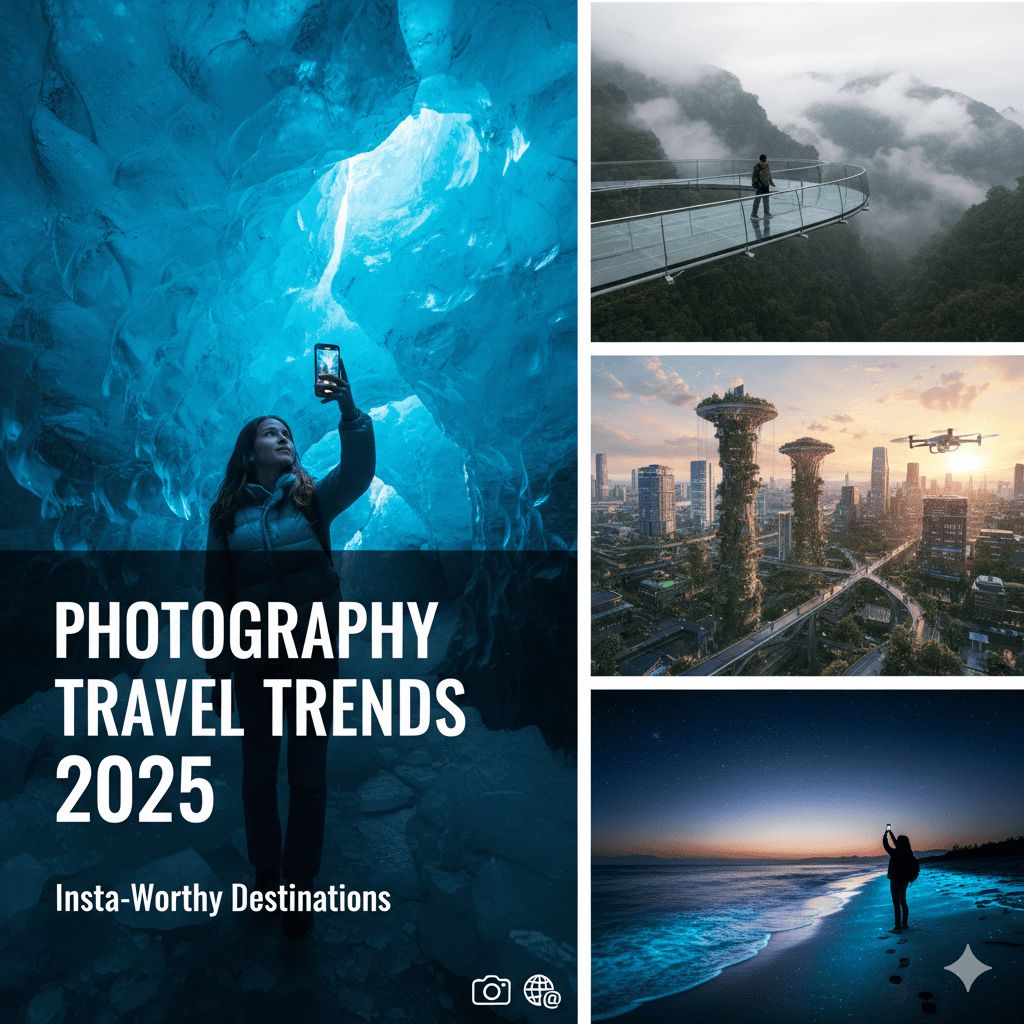
The way we travel has been forever transformed by the rise of visual storytelling. In 2025, photography isn’t just a way to document your journey—it’s often the driving force behind destination choices, itinerary planning, and travel experiences themselves. The photography travel trends of this year showcase how travelers are increasingly seeking locations that offer not just beautiful sights, but captivating frames, perfect lighting, and those magical moments that translate into stunning visual narratives.
From drone enthusiasts capturing epic aerial landscapes to smartphone photographers mastering golden hour portraits, from professional travel photographers chasing the perfect shot to Instagram influencers curating aesthetically cohesive feeds—visual storytelling has become the universal language of modern travel. Every destination now competes not just on experiences but on “Instagrammability,” and travelers are more visually literate than ever before.
The modern photography traveler carries sophisticated equipment in compact packages, understands composition and lighting, researches locations through visual platforms like Instagram and Pinterest, and plans trips around optimal photography conditions. They wake before dawn for sunrise shots, stay out past sunset for blue hour magic, and scout locations with the same dedication professional photographers once reserved for paid assignments.
But 2025’s photography travel trends reveal something deeper than mere vanity or social media obsession. Photography has become a way to truly see destinations, to slow down and observe, to find beauty in details, and to create lasting memories that go beyond the superficial. Let’s explore the most compelling trends shaping photography-focused travel this year.
1. Drone Photography Destinations and Aerial Perspectives
The democratization of drone technology has revolutionized photography travel trends, opening up perspectives previously available only to those with access to helicopters or planes. In 2025, drone photography has matured from novelty to essential tool for travel photographers seeking unique viewpoints.
The Aerial Revolution in Travel Photography
Drones allow photographers to capture sweeping landscapes, reveal patterns invisible from ground level, and create cinematic establishing shots that provide context and scale. Modern drones are compact, intelligent, and capable of capturing professional-quality imagery that would have required significant budgets just years ago.
Top Drone Photography Destinations
Iceland offers endless drone photography opportunities with its dramatic landscapes including waterfalls, glaciers, volcanic terrain, and black sand beaches. The stark contrasts, geometric patterns of ice formations, and otherworldly scenery create images that feel almost alien. Popular spots like Kirkjufell mountain, Diamond Beach, and the highlands reveal their true majesty from aerial perspectives.
Namibia provides some of Earth’s most striking aerial photography with the towering red dunes of Sossusvlei, the eerie Deadvlei with its ancient dead trees, and the dramatic Skeleton Coast. The patterns, colors, and scales visible from above transform these landscapes into abstract art.
Great Barrier Reef, Australia showcases nature’s artistry from above with vibrant blues, intricate coral formations, and the famous Heart Reef. Aerial drone photography reveals the reef’s incredible scope and beauty in ways underwater photography cannot capture.
Drone Photography Considerations
Successful drone travel requires understanding regulations, which vary dramatically by country and location. Some destinations strictly prohibit drones while others require permits, registration, or restrict flight in certain areas. Responsible drone photographers research regulations beforehand, respect privacy and protected areas, and prioritize safety over shots.
2. Golden Hour and Blue Hour Destinations
Light makes or breaks photography, and photography travel trends in 2025 show travelers increasingly planning around optimal lighting conditions. Golden hour (the hour after sunrise and before sunset) and blue hour (the twilight period) have become sacred times for photography-focused travelers.
Why Lighting Windows Matter
These magical lighting windows offer soft, directional light that flatters subjects, creates dramatic shadows, and bathes scenes in warm or cool tones that elevate ordinary locations to extraordinary. Photography travelers structure entire days around these brief periods when light transforms the world.
Destinations Perfect for Golden Hour Magic
Santorini, Greece is legendary for sunset photography with its white-washed buildings, blue domes, and Aegean Sea views. The golden light reflects off whitewashed walls, creating a soft glow that makes every angle photogenic. Oia’s sunset crowds testify to this location’s reputation, but photography-savvy travelers also explore less crowded villages like Pyrgos.
Monument Valley, USA offers quintessential American Southwest photography with massive sandstone buttes dramatically lit during golden hours. The red rock formations glow brilliantly in warm light while long shadows create depth and drama. Photographers often camp or stay overnight to capture both sunrise and sunset.
Bagan, Myanmar features thousands of ancient temples scattered across plains, creating incredible sunrise and sunset photography opportunities. Hot air balloons drifting over temples at dawn add additional visual interest, while climbers ascending temples at sunset create silhouettes against colorful skies.
Chasing the Perfect Light
Photography travelers scout locations during midday to plan evening and morning shoots, use apps like PhotoPills to predict sun position and golden hour timing, and often visit the same location multiple times hoping for optimal conditions. This dedication to lighting separates casual snapshots from compelling travel photography.
3. Minimalist and Negative Space Photography Locations
Contemporary photography travel trends show strong interest in minimalist aesthetics—compositions featuring vast empty spaces, simple elements, and clean lines that create powerful images through what’s excluded rather than included.
The Power of Simplicity
Minimalist travel photography requires locations offering clean backgrounds, simple color palettes, and uncluttered scenes. These images feel modern, meditative, and allow viewers’ eyes to rest on essential elements without distraction.
Prime Minimalist Photography Destinations
Salar de Uyuni, Bolivia provides Earth’s largest salt flat, creating a seemingly infinite white expanse perfect for minimalist composition. During rainy season, the thin water layer creates mirror reflections that blur lines between earth and sky. A single figure, vehicle, or structure becomes a powerful focal point against overwhelming emptiness.
White Sands National Park, USA offers pristine white gypsum dunes creating clean, minimal landscapes. The monochromatic environment with subtle shadows and curves allows photographers to create abstract, almost otherworldly images with minimal elements.
Maldives Sandbanks feature tiny islands of white sand surrounded by turquoise water meeting azure sky, creating three-band compositions of perfect simplicity. These locations offer ultimate minimalism where nature itself has stripped away everything non-essential.
Techniques for Minimalist Travel Photography
Photographers seeking minimalist images use techniques like long exposure to smooth water and clouds, careful framing to eliminate cluttered elements, and positioning subjects to create maximum negative space. These images require patience, planning, and often returning to locations when conditions align perfectly.
4. Urban Photography and Street Art Destinations
Cities offer endless photographic opportunities, and photography travel trends reveal growing fascination with urban exploration, street art documentation, and architectural photography. Modern cities understand visual appeal drives tourism and actively cultivate photogenic spaces.
The Urban Photography Renaissance
Urban photography captures energy, diversity, culture, and humanity in concentrated form. Street photographers document daily life, architecture photographers capture structural beauty, and street art enthusiasts seek ever-changing outdoor galleries adorning city walls.
Cities Leading Urban Photography Tourism
Tokyo, Japan mesmerizes photographers with neon-lit streets, perfectly organized subway systems, minimalist architecture alongside traditional temples, and juxtapositions of old and new. Neighborhoods like Shibuya, Shinjuku, and Harajuku offer different aesthetics, while quieter areas provide intimate street photography opportunities.
Valparaíso, Chile captivates with hills covered in vibrant street art, colorful houses, and bohemian character. The city functions as an open-air museum where artists continuously create new murals, providing photography subjects that reward repeat visits.
Dubai, UAE showcases futuristic architecture with the Burj Khalifa, Museum of the Future’s striking design, and ultra-modern structures creating sci-fi worthy compositions. The city’s commitment to architectural innovation provides photographers with constantly evolving subjects.
Street Photography Ethics and Approaches
Urban photography requires cultural sensitivity, respect for privacy, and understanding of local customs regarding photographing people. Many travelers now embrace “candid street portrait” approaches, engaging with subjects before photographing rather than shooting secretly, creating more authentic and ethical imagery.
5. Wildlife and Nature Photography Safari Destinations
Wildlife photography has exploded in popularity as equipment becomes more accessible and travelers seek meaningful connections with nature. This aspect of photography travel trends combines adventure, patience, and the thrill of capturing wild animals in natural habitats.
The Appeal of Wildlife Photography Travel
Wildlife photography teaches patience, observation, and respect for nature while creating opportunities for incredible imagery. These trips often support conservation efforts through tourism dollars that incentivize wildlife protection.
Premier Wildlife Photography Destinations
Masai Mara, Kenya offers classic African safari photography with the Great Migration providing dramatic wildlife action. Photographers capture predator-prey interactions, river crossings, and intimate animal portraits against savanna backdrops. Golden hour light transforms the landscape while dust kicked up by moving herds creates atmospheric conditions.
Pantanal, Brazil surpasses the Amazon for wildlife photography accessibility with open wetlands allowing clearer views and better lighting. Jaguars, capybaras, caimans, and countless bird species provide subjects, while professional guides understand photographers’ needs for positioning and patience.
Svalbard, Norway attracts polar wildlife photographers seeking polar bears, Arctic foxes, walruses, and seabirds in dramatic Arctic landscapes. The extreme environment and unique light conditions create images impossible to capture elsewhere.
Wildlife Photography Preparation
Serious wildlife photography travelers invest in telephoto lenses, research animal behavior, join specialized photography tours with guides trained in positioning for optimal shots, and practice ethical wildlife photography that never disturbs or stresses animals for images.
6. Underwater Photography Destinations
Underwater photography represents one of the fastest-growing photography travel trends as waterproof camera technology improves and becomes more affordable. The underwater world offers alien landscapes, vibrant colors, and unique subjects that captivate viewers.
The Underwater Photography Boom
Advancements in underwater housings for cameras and smartphones, along with action cameras like GoPros, have made underwater photography accessible. Divers and snorkelers now document marine life with quality previously requiring specialized, expensive equipment.
World-Class Underwater Photography Locations
Raja Ampat, Indonesia boasts the planet’s highest marine biodiversity with pristine coral reefs, massive schools of fish, manta rays, and incredible macro subjects. The water clarity and variety of subjects make this a bucket-list destination for underwater photographers.
Cenotes of Mexico provide unique freshwater photography opportunities in limestone sinkholes with crystal-clear water, dramatic light beams penetrating from above, and hauntingly beautiful cave systems. These locations offer otherworldly images combining adventure and artistry.
Red Sea, Egypt offers excellent visibility, abundant marine life, and historic wrecks providing compelling underwater subjects. The region’s accessibility and established diving infrastructure attract photographers from beginners to professionals.
Underwater Photography Techniques
Successful underwater photography requires understanding how water affects light and color, using strobes or video lights to restore colors absorbed by water, mastering buoyancy control for stable shooting, and developing patience to approach skittish marine life without causing stress.
7. Astrophotography and Dark Sky Destinations
The night sky has captured human imagination forever, and modern photography travel trends show explosive growth in astrophotography travel as light pollution awareness increases and digital cameras improve low-light performance.
The Dark Sky Movement
Astrophotography travel combines environmental advocacy (protecting dark skies from light pollution), scientific appreciation, and artistic expression. These trips take photographers to remote locations where Milky Way visibility and star-filled skies inspire awe.
Best Astrophotography Destinations
Atacama Desert, Chile offers some of Earth’s clearest skies thanks to high altitude, dry climate, and minimal light pollution. Photographers capture the Milky Way arching over salt flats, volcanoes, and lunar-like landscapes. The region hosts major astronomical observatories, and some offer public access.
NamibRand Nature Reserve, Namibia is Africa’s first International Dark Sky Reserve, providing pristine night skies above red dunes and desert landscapes. The Southern Hemisphere stars visible from Namibia include views of the Magellanic Clouds and galactic center that Northern Hemisphere astrophotographers rarely see.
Jasper National Park, Canada holds Dark Sky Preserve status with minimal light pollution in the Canadian Rockies. Photographers capture Milky Way reflections in alpine lakes, stars above iconic peaks, and occasional auroras during solar activity.
Astrophotography Preparation
Night sky photography requires sturdy tripods, wide-angle lenses with large apertures, knowledge of camera manual settings, apps for planning Milky Way positions, and patience for long exposures. Many destinations offer astrophotography workshops teaching specialized techniques.
8. Cultural Heritage and Ancient Sites Photography
Historical sites attract photographers seeking to document humanity’s architectural and cultural achievements. This enduring aspect of photography travel trends combines education, preservation documentation, and artistic interpretation of ancient wonders.
Photographing History
Cultural heritage photography requires balancing respect for sacred or historically significant sites with artistic vision. These images preserve cultural memory while inspiring viewers to appreciate and protect heritage sites.
Iconic Heritage Photography Destinations
Angkor Wat, Cambodia captivates photographers with its massive temple complexes, intricate carvings, and tree-entwined ruins. Sunrise over Angkor Wat has become iconic, but photographers also explore lesser-known temples like Ta Prohm where massive tree roots create surreal compositions.
Petra, Jordan offers rose-red rock architecture carved into cliffs, with the Treasury facade providing one of travel photography’s most recognizable images. Beyond the famous entrance, the vast archaeological site rewards exploration with countless photographic opportunities.
Machu Picchu, Peru combines Inca architecture with dramatic mountain scenery. Photographers capture the classic overview from the Sun Gate, explore lesser-known angles within the site, and incorporate surrounding peaks like Huayna Picchu into compositions.
Responsible Heritage Site Photography
Many heritage sites restrict tripods, drones, or commercial photography requiring permits. Flash photography can damage ancient pigments and artifacts. Respectful photographers research restrictions, avoid touching fragile surfaces while composing shots, and share images in ways that promote preservation rather than exploitation.
9. Seasonal and Weather-Dependent Photography Destinations
Some locations transform seasonally or during specific weather events, creating limited windows for extraordinary photography. These photography travel trends see travelers timing trips precisely to capture ephemeral conditions.
The Art of Timing
Seasonal photography travel requires flexibility, backup plans when conditions don’t cooperate, and sometimes returning multiple times before capturing desired images. This dedication separates passionate photography travelers from casual tourists.
Destinations Defined by Seasons or Weather
Cherry Blossom Season, Japan transforms the country into pink and white wonderlands for roughly two weeks annually. Photographers track sakura forecasts, wake early to beat crowds at famous spots like Kyoto’s temples, and seek lesser-known locations for fresh perspectives on this seasonal phenomenon.
Northern Lights Regions (Iceland, Norway, Finland, Alaska, Canada) draw photographers during winter months when auroras are visible. Success requires clear skies, solar activity, and patience—photographers often wait hours in freezing conditions hoping for aurora displays.
Lavender Fields, Provence bloom for just weeks in summer, creating purple landscapes that photographers flock to capture. The Valensole plateau becomes a photography pilgrimage site where timing, weather, and luck determine whether images match expectations.
Weather Photography Techniques
Storm photography, fog-shrouded landscapes, snow-covered scenes, and dramatic clouds add atmosphere and mood. Photography travelers increasingly embrace imperfect weather, recognizing that rain, mist, and storms create compelling imagery unavailable during “perfect” conditions.
10. Smartphone Photography and Mobile-First Destinations
While professional cameras still dominate serious travel photography, smartphone photography has matured into legitimate artistic medium. Modern photography travel trends acknowledge that phone cameras’ computational photography capabilities produce images rivaling traditional cameras in many situations.
The Smartphone Photography Revolution
Latest smartphones feature multiple lenses, night modes, portrait modes with adjustable depth, and AI-powered processing that allows amateur photographers to achieve professional-looking results. This democratization means beautiful travel photography requires only the device already in most pockets.
Mobile-Friendly Photography Destinations
Instagram Museums and Immersive Experiences have proliferated globally—purpose-built spaces designed specifically for smartphone photography. TeamLab installations in Tokyo and Shanghai, Museum of Ice Cream locations, and countless themed photo spaces prioritize Instagrammable moments over traditional museum experiences.
Color-Coordinated Cities like Chefchaouen (Morocco’s blue city), Guatapé (Colombia’s colorful town), and Burano (Italy’s rainbow island) provide vibrant, saturated environments that photograph beautifully even with basic smartphone cameras. These destinations understand their visual appeal drives tourism.
Architecture Designed for Social Media includes locations like Seoul’s Starfield Library, Dubai’s Museum of the Future, and Singapore’s Jewel Changi Airport—spaces architecturally designed with photography in mind, featuring perfect symmetry, dramatic perspectives, and photogenic elements.
Mobile Photography Techniques
Smartphone photographers use third-party camera apps for manual control, editing apps like Lightroom Mobile and VSCO for post-processing, and accessories like clip-on lenses, mini tripods, and gimbals for stabilization. Many professional photographers now shoot entire projects on smartphones, proving it’s vision—not equipment—that creates compelling imagery.
Conclusion: Capturing the World in 2025
The photography travel trends of 2025 reveal that visual storytelling has become inseparable from how we experience and share travel. Photography has evolved from simple documentation to primary motivation, transforming how destinations market themselves and how travelers plan and experience journeys.
This shift brings both opportunities and challenges. Photography encourages travelers to truly see destinations, noticing details, waiting for perfect moments, and developing aesthetic appreciation. The pursuit of compelling images slows travelers down, teaching patience and observation. Photography provides purpose beyond passive sightseeing, creating active engagement with environments.
However, the obsession with capturing perfect images can sometimes prevent presence—experiencing moments through screens rather than direct sensory engagement. Overtourism at photogenic locations damages fragile environments and cultural sites. The pressure to create social media-worthy content can reduce complex travel experiences to superficial image collection.
Also read this:
Food Travel Trends 2025: Eat Your Way Around the World