
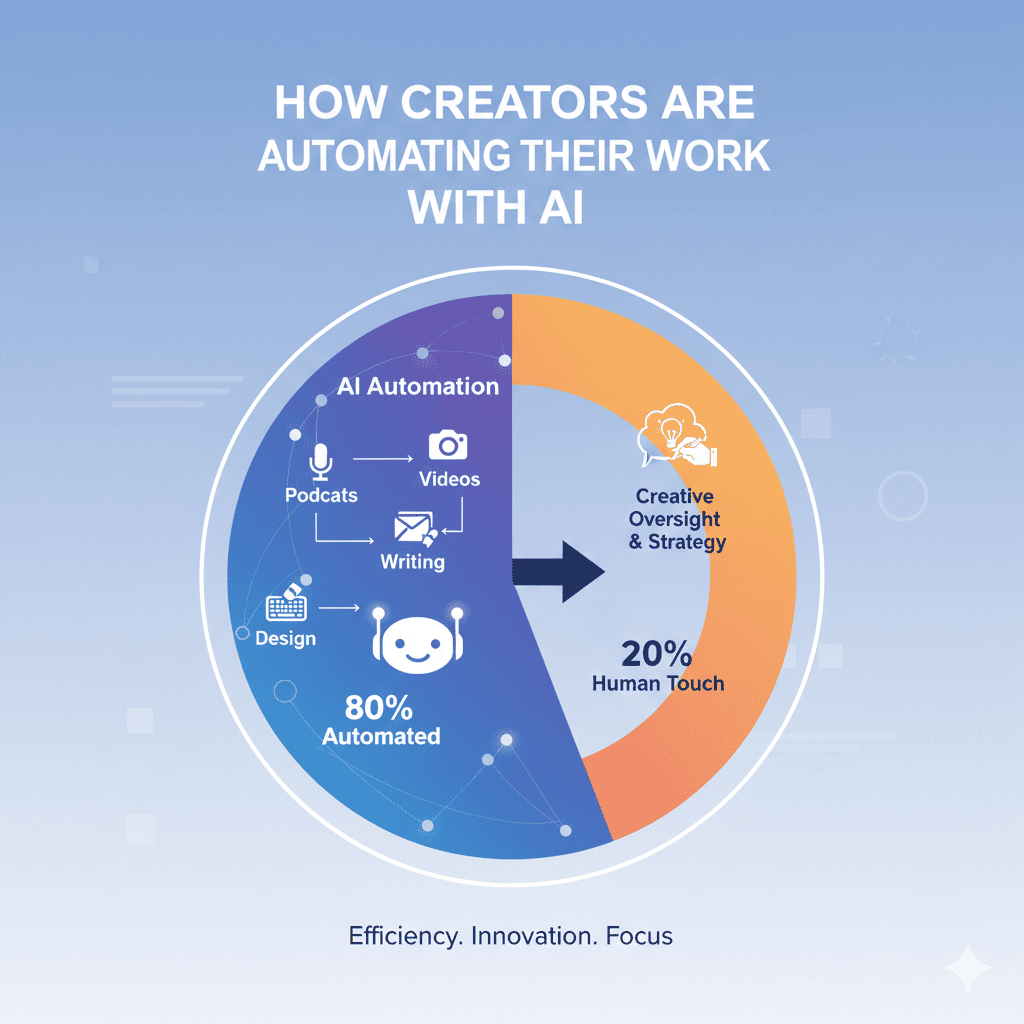
The creator economy has exploded in recent years, but so have the demands on content creators. Between scripting, editing, posting, engaging with audiences, and managing multiple platforms, creators often find themselves drowning in administrative tasks that eat away at their creative time. But here’s the game-changing secret: creators are automating 80% of their work using artificial intelligence, and they’re producing better content while working fewer hours.
This isn’t about replacing creativity—it’s about amplifying it. AI tools have evolved from simple automation to intelligent assistants that handle repetitive tasks, optimize workflows, and free creators to focus on what they do best: creating compelling content that resonates with their audience.
In this comprehensive guide, we’ll explore exactly how modern creators are leveraging AI to transform their workflows, the specific tools they’re using, and how you can implement these strategies to reclaim your time while scaling your content output.
The Creator Time Crisis: Why Automation Matters
Before diving into the solutions, let’s understand the problem. The average content creator spends approximately 60-70% of their time on tasks that aren’t directly related to content creation. They’re editing thumbnails, responding to comments, scheduling posts, analyzing metrics, writing captions, researching trends, and managing endless administrative work.
This reality creates a painful paradox: the more successful you become, the less time you have to create the content that made you successful in the first place. Many creators hit a ceiling where they simply can’t produce more content without burning out or hiring expensive teams.
This is precisely why creators are automating 80% of their work—not because they’re lazy, but because they’re strategic. They recognize that their unique voice, perspective, and creative vision can’t be outsourced, but the countless supporting tasks absolutely can be.
1. Content Ideation and Research: Never Run Out of Ideas Again
One of the most time-consuming challenges creators face is the constant need for fresh content ideas. Staring at a blank screen, scrolling through competitor content for inspiration, and second-guessing whether an idea will resonate can consume hours each week.
AI-Powered Idea Generation
Modern creators use AI tools to generate dozens of content ideas in minutes. By feeding AI systems information about their niche, target audience, and past successful content, they receive tailored suggestions that align with their brand and audience interests.
These tools analyze trending topics across platforms, identify content gaps in your niche, and suggest angles that haven’t been overdone. What once took hours of manual research now happens in seconds.
Trend Analysis and Topic Research
AI systems can monitor thousands of sources simultaneously—something humanly impossible. They track trending hashtags, emerging topics in your industry, seasonal content opportunities, and even predict what topics are gaining momentum before they peak.
Creators use these insights to stay ahead of the curve, creating content about trending topics while they’re still fresh rather than jumping on bandwagon trends after everyone else has covered them.
Audience Question Mining
AI tools can scan through your comments, DMs, forum discussions, and social media mentions to identify the most common questions and concerns your audience has. This creates an endless stream of content ideas directly sourced from the people you’re trying to reach.
2. Content Creation: From Blank Page to First Draft in Minutes
The actual content creation process—whether writing, scripting, or outlining—is where creators are automating 80% of their work most dramatically. While the final creative polish remains human-driven, AI handles the heavy lifting of structure, research, and first drafts.
Script and Article Writing
AI writing assistants can generate comprehensive first drafts based on your outline, topic, and tone preferences. For video creators, this means transforming a simple bullet-point outline into a full script with hooks, transitions, and calls-to-action.
The key is treating AI as a collaborator, not a replacement. Creators input their ideas, review the AI-generated draft, then add their personality, unique insights, and authentic voice. This approach cuts writing time by 50-70% while maintaining authenticity.
Content Repurposing at Scale
Perhaps one of the most powerful automation strategies is using AI to repurpose existing content across multiple platforms. A single YouTube video can become a blog post, several social media posts, an email newsletter, and short-form video clips—all with minimal additional effort.
AI tools can transcribe video content, extract key points, reformulate ideas for different platforms, and even adjust tone to match platform-specific conventions. This means creating once and publishing everywhere, dramatically multiplying your content output.
SEO Optimization
For written content, AI tools analyze search intent, suggest relevant keywords, recommend optimal content structure, and even predict how content will perform in search rankings. This eliminates hours of manual keyword research and SEO guesswork.
3. Video Production: Editing and Enhancement Automation
Video creators spend massive amounts of time in editing—often spending 5-10 hours editing a single video. AI-powered editing tools have revolutionized this process, allowing creators to automate 80% of their work in post-production.
Automated Video Editing
Modern AI video editors can automatically cut out filler words, pauses, and mistakes, identify the best takes from multiple recordings, add jump cuts to maintain pacing, and even select music that matches the video’s mood and energy level.
What once required meticulous frame-by-frame editing now happens automatically, reducing editing time from hours to minutes. Creators simply review the AI-generated edit and make final creative adjustments.
Subtitle and Caption Generation
AI transcription services generate accurate subtitles in minutes, including speaker identification, proper punctuation, and timestamps. These can be automatically formatted for different platforms—from YouTube’s full subtitles to Instagram’s text-heavy reels style.
Studies show that captioned videos get significantly higher engagement, but manual captioning is painfully slow. AI solves this entirely.
Thumbnail and Graphics Creation
AI design tools can generate multiple thumbnail variations based on your video content, brand colors, and proven high-performing templates. Some even A/B test different designs and provide click-through rate predictions.
These tools analyze thousands of successful thumbnails in your niche and apply those design principles to your content, helping you create eye-catching visuals without spending hours in Photoshop.
4. Social Media Management: Consistent Presence Without Constant Work
Maintaining an active presence across multiple social platforms is exhausting. Between posting, engaging, responding, and monitoring, social media management can easily consume 2-3 hours daily. This is another area where creators are automating 80% of their work with remarkable results.
Intelligent Scheduling and Posting
AI-powered scheduling tools don’t just post at preset times—they analyze when your specific audience is most active and engaged, automatically optimizing posting times for maximum reach. They can also adjust posting frequency based on performance patterns.
More advanced systems can even automatically format content for different platforms, adjusting aspect ratios, caption length, and hashtag strategies based on each platform’s best practices.
Engagement Automation
While authentic engagement requires a personal touch, AI tools can handle the repetitive aspects. They can filter spam comments, flag important messages requiring responses, generate suggested replies to common questions, and even auto-respond to frequently asked questions with personalized answers.
This doesn’t mean ignoring your audience—it means spending your engagement time on meaningful interactions rather than answering “What camera do you use?” for the hundredth time.
Hashtag and Caption Optimization
AI tools analyze your content and automatically suggest relevant, high-performing hashtags. They can also generate multiple caption variations optimized for engagement, test different call-to-action phrases, and adapt your messaging for different audience segments.
5. Analytics and Performance Tracking: Data-Driven Decisions Made Simple
Understanding what content works and why is crucial for growth, but analyzing metrics across multiple platforms is time-consuming and often confusing. AI analytics tools transform raw data into actionable insights.
Automated Reporting
Instead of manually compiling metrics from different platforms, AI systems create comprehensive performance reports that highlight key trends, compare current performance to past periods, and identify your best and worst-performing content.
These reports go beyond basic numbers to explain why certain content performed well, what patterns emerge from your successful posts, and what adjustments could improve future content.
Predictive Analytics
Advanced AI systems can predict which content topics, formats, or posting strategies are likely to perform best based on historical data and current trends. This helps creators make informed decisions about what to create next rather than guessing.
Competitor Analysis
AI tools continuously monitor your competitors’ content performance, identifying what’s working in your niche, spotting content gaps you could fill, and alerting you to emerging trends before they become oversaturated.
6. Email Marketing: Building Relationships on Autopilot
Email remains one of the most valuable channels for creators to build direct relationships with their audience, but managing an email list requires significant time investment. Here’s where automation truly shines.
Automated Welcome Sequences
AI-powered email systems can create personalized welcome sequences that adapt based on subscriber behavior, segment audiences automatically based on interests and engagement, and optimize send times for each individual subscriber.
Content to Newsletter Transformation
AI tools can automatically transform your latest content into engaging newsletter formats, pulling key points, quotes, and highlights, adding relevant links and calls-to-action, and formatting everything for optimal readability.
Some creators have completely automated their weekly newsletters, with AI compiling their latest content, relevant industry news, and personalized recommendations for each subscriber.
Subject Line Optimization
AI systems test and optimize email subject lines for higher open rates, analyzing which phrases, emojis, and formats resonate with your specific audience. They can generate dozens of variations and predict which will perform best before sending.
7. Monetization and Business Management: Automate Your Income Streams
As creators build businesses around their content, administrative tasks multiply. Creators are automating 80% of their work in business management, allowing them to scale revenue without scaling workload.
Sponsorship and Brand Deal Management
AI tools can identify potential brand partnerships that align with your content and values, draft sponsorship proposals and rate cards, track campaign performance and deliverables, and even negotiate initial terms based on your requirements.
Product and Course Creation
For creators selling digital products, AI can help create course outlines and lesson plans, write sales page copy and email sequences, generate supplemental materials and workbooks, and even handle customer onboarding.
Financial Tracking and Tax Preparation
AI accounting tools automatically categorize expenses, track income across multiple platforms, generate financial reports, and prepare tax documentation. This eliminates hours of bookkeeping and reduces costly accounting errors.
8. Community Management: Scale Personal Connection
As your audience grows, maintaining personal connections becomes increasingly challenging. Smart automation helps creators stay connected without being overwhelmed.
Intelligent Comment Management
AI systems can prioritize comments that need your personal response, auto-approve genuine engagement while filtering spam, identify trending discussion topics in your community, and surface valuable audience feedback and testimonials.
DM and Email Filtering
AI assistants can triage messages by priority and topic, draft suggested responses for approval, automatically handle common inquiries (availability, pricing, basic questions), and schedule follow-ups for important conversations.
Community Insights
AI tools analyze community conversations to identify hot topics and concerns, reveal what content your audience wants more of, spot potential content collaborators or featured community members, and detect early signs of community issues requiring attention.
9. Collaboration and Workflow Management: Streamline Team Operations
For creators working with teams—even small ones—AI automation dramatically improves coordination and efficiency.
Project Management Automation
AI project management tools can automatically assign tasks based on team member expertise and availability, track project progress and flag potential delays, generate status reports for stakeholders, and optimize workflows based on past project performance.
Asset Organization and Retrieval
AI-powered digital asset management systems automatically tag and categorize your content, images, videos, and files, making everything instantly searchable. No more digging through folders looking for that one clip from three months ago.
Collaboration Coordination
AI assistants can schedule meetings considering everyone’s time zones and preferences, summarize meeting notes and extract action items, follow up on pending tasks and deadlines, and coordinate file sharing and version control.
10. Learning and Skill Development: AI as Your Personal Coach
The creator landscape evolves rapidly. Staying current with new platforms, features, and best practices is crucial but time-consuming. AI helps creators learn efficiently.
Personalized Learning Recommendations
AI learning platforms analyze your content goals and skill gaps, then recommend specific tutorials, courses, and resources. They create customized learning paths based on your schedule and learning style.
Performance-Based Coaching
AI coaches analyze your content performance and provide specific improvement suggestions, identifying exactly what techniques to learn next for maximum impact on your growth trajectory.
Trend Education
AI systems monitor industry changes and automatically brief you on new features, platform updates, emerging content formats, and algorithm changes that affect your content strategy.
Implementing AI Automation: Your Action Plan
Understanding the possibilities is exciting, but implementation is where transformation happens. Here’s how to start automating 80% of your work without becoming overwhelmed.
Start with Your Biggest Time Drain
Identify which tasks consume the most time with the least creative value. For most creators, this is editing, scheduling, or research. Choose one area and implement AI automation there first.
Build Your AI Tool Stack Gradually
You don’t need every tool immediately. Start with 2-3 core tools that address your primary pain points. Popular starting combinations include an AI writing assistant, an automated scheduling tool, and a video editing tool.
Maintain Your Authentic Voice
The goal isn’t to become robotic—it’s to amplify your humanity. Always review AI-generated content and add your personality, unique insights, and authentic perspective. Use AI as your assistant, not your replacement.
Measure and Optimize
Track how automation affects your productivity and content quality. Are you creating more content? Is engagement maintaining or improving? Is your stress level decreasing? Use these metrics to refine your approach.
Stay Updated
AI tools evolve rapidly. What was impossible six months ago might now be automated. Set aside time monthly to explore new tools and features that could further streamline your workflow.
The Future of AI-Powered Content Creation
The trend of creators automating 80% of their work is accelerating, not slowing down. Emerging AI capabilities will soon include real-time video editing during recording, AI avatars for consistent content output, voice cloning for multilingual content, and predictive content strategies that tell you what to create before trends emerge.
The creators who embrace these tools now will have a significant competitive advantage. They’ll produce more content with less effort, maintain better work-life balance, scale faster without burning out, and stay ahead of platform and audience changes.
Common Concerns About AI Automation
“Won’t AI make my content feel generic?”
Only if you let it. AI handles structure and repetitive tasks, but your unique perspective, experiences, and personality make content special. Think of AI as spell-check for content creation—it improves efficiency without replacing your voice.
“Will my audience know I’m using AI?”
They might, and increasingly they won’t care if the content delivers value. Authenticity isn’t about doing everything manually—it’s about genuine connection and valuable content. Many successful creators openly discuss their AI tools as part of their workflow transparency.
“Isn’t this cheating?”
Using AI is no more cheating than using editing software, cameras, or microphones. These are tools that enhance your capability to share your message. Professional creators optimize their process to create the best possible content—AI is simply the latest evolution of that optimization.
“What if AI replaces creators entirely?”
AI can’t replicate human experience, emotion, connection, and creative vision. Audiences follow creators for their unique perspective and personality. AI amplifies these qualities by handling the mechanical tasks that distract from creative work.
Conclusion: Reclaim Your Creative Time
The creator economy rewards consistency, quality, and connection. But maintaining all three while managing the endless administrative burden of content creation is unsustainable without smart automation.
Creators who are automating 80% of their work aren’t working less—they’re working smarter. They’ve reclaimed hours each week previously lost to repetitive tasks and reinvested that time in creative development, audience connection, skill building, and personal wellbeing.
The transformation doesn’t happen overnight, but every automated task compounds over time. Start small, choose tools strategically, and gradually build an AI-powered workflow that amplifies your creativity rather than replacing it.
The question isn’t whether you can afford to implement AI automation—it’s whether you can afford not to. Your competitors are already using these tools. Your audience expects consistent, high-quality content. And you deserve a sustainable creator lifestyle that doesn’t require sacrificing your health, relationships, or creativity.
The future of content creation isn’t about working harder—it’s about working smarter with AI as your tireless assistant, handling the 80% of work that drains your energy so you can focus on the 20% that truly matters: creating content that connects, inspires, and resonates with your audience.
Start today. Choose one task to automate this week. Experience the time savings firsthand. Then build from there. Your future self—the one creating twice as much content in half the time while actually enjoying the creative process—will thank you for taking this first step.
Also read this:
ColorOS 16 AI Face Brightening: The Feature Everyone Is Talking About
The Viral AI Avatar Trend: How People Are Redesigning Themselves